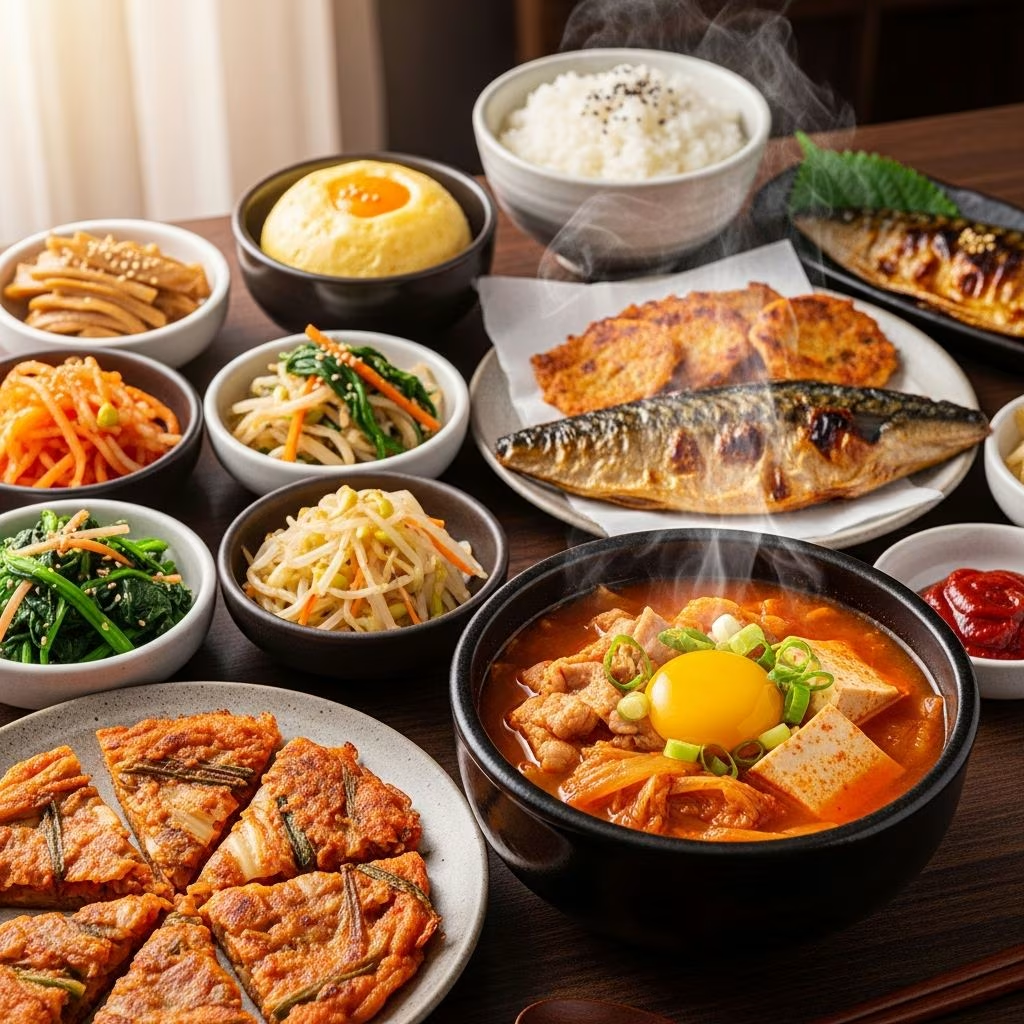
Korean breakfasts emphasize balance with steamed rice, warming soups, and a variety of small side dishes known as banchan. These meals provide sustained energy through proteins, vegetables, and fermented elements like kimchi, making them ideal for busy mornings or leisurely weekends.
The Essence of Korean Morning Meals
Unlike Western breakfasts heavy on sweets or fried items, Korean versions focus on savory, nutrient-dense foods. A typical spread includes a bowl of rice, a hearty soup such as doenjang guk (soybean paste soup), and 2-3 banchan like seasoned spinach or cucumber salad. This combination supports digestion and keeps you full until lunch. Rice water or plain water forms the soup base, enhancing umami without added stocks.
Modern twists incorporate quick assemblies like gyeran bap (egg rice) using leftovers, appealing to urban lifestyles. These dishes highlight Korea’s culinary philosophy of harmony in flavors—sweet, sour, spicy, and salty—in every bite.
Quick Egg Rice Bowls for Busy Mornings
Gyeran bap stands out as a 5-minute powerhouse. Fry an egg in butter until crispy-edged, mix with leftover rice, a dash of soy sauce, and sesame oil. Top with green onions for freshness. This simple dish delivers protein and carbs efficiently.
- Ingredients (1 serving): 1 cup cooked rice, 1-2 eggs, 1 tsp butter, 1 tsp soy sauce, ½ tsp sesame oil, chopped green onion.
- Steps: Heat butter in a pan, fry egg sunny-side up. Mix rice with soy and sesame oil. Plate rice, top with egg and onions.
Variations include soft tofu egg rice: crumble silken tofu into hot rice, add a fried egg and gochujang for heat.
Hearty Soups to Warm the Soul
Soybean paste soup (doenjang guk) is a breakfast staple, simmered with spinach, onions, tofu, and chilies. Its earthy depth comes from doenjang, a fermented soybean paste rich in probiotics.
| Ingredient | Quantity | Role |
|---|---|---|
| Doenjang | 5 tbsp | Umami base |
| Spinach | 7 oz | Nutrient boost |
| Tofu | 4.5 oz | Protein |
| Water/Rice water | 6 cups | Broth |
- Boil water, dissolve doenjang, gochujang, and gochugaru.
- Add garlic, onions, greens, tofu; simmer 7-8 minutes.
Pair with rice and banchan for a complete meal serving 5-6.
Spicy Protein-Packed Bowls
Spicy tuna bibimbap mixes canned tuna with gochujang, mayo, and olive oil over rice, sided with kimchi. High in omega-3s, it’s ready in minutes. Jalapeño soy-marinated eggs add tang: soak boiled eggs in soy-water mix with ginger and sesame.
- Tuna Bowl Ingredients: 1 can tuna, 2-3 tsp gochujang, 1 tsp mayo, rice, kimchi.
- Egg Marinade: 6-8 eggs, ½ cup soy sauce, ½ cup water, 1 jalapeño, ginger, sesame seeds. Marinate 30 minutes to 4 days.
These fusion elements make Korean breakfast accessible globally.
Vegetable Banchan for Balance
Banchan like namul (seasoned spinach) or oi muchim (cucumber salad) add crunch and vitamins. Stir-fry spinach with sesame oil and salt; toss cucumbers in vinegar, gochugaru, and garlic.
Oyster mushroom skillets with kimchi and eggs offer a gluten-free option, blending earthiness with fermentation.
Meat and Veggie Porridges
Beef and vegetable porridge (juk) comforts with tender beef, carrots, and rice simmered into a creamy base. Onion, potato, and egg versions provide variety.
- Steam rice, sauté onions/carrots/potatoes, add broth and beef; top with green onion and sesame.
Modern Korean-Inspired Twists
Combine kimchi, eggs, and mushrooms in a skillet for bold flavors. Or build a 10/10 bowl with rice, veggies, soup soy, and kimchi. These adapt traditions for health-conscious eaters.
Nutritional Benefits of Korean Breakfasts
Fermented foods like doenjang and kimchi support gut health via probiotics. Eggs and tofu provide complete proteins; veggies offer fiber. Balanced macros prevent mid-morning crashes.
Essential Pantry Staples
- Gochojang, gochugaru: Heat and color.
- Doenjang: Fermented depth.
- Sesame oil/seeds: Nutty finish.
- Rice, kimchi: Core elements.
Tips for Authentic Flavors
- Use rice water for soups to mellow flavors.
- Balance spice with mild sides.
- Prep banchan ahead for quick assemblies.
FAQ
What is a traditional Korean breakfast?
Rice, soup (e.g., doenjang guk), and banchan like spinach or eggs.
Are Korean breakfasts healthy?
Yes, rich in veggies, proteins, and probiotics for sustained energy.
Can I make Korean breakfast quickly?
Absolutely—gyeran bap takes 5 minutes with leftovers.
What if I can’t find doenjang?
Substitute miso, but adjust saltiness.
Is rice necessary for Korean breakfast?
Traditional yes, but porridges or bowls adapt well.
References
- 4 Quick & Easy Korean Breakfast! – YouTube — Aaron and Claire. 2023. https://www.youtube.com/watch?v=fvuHXumNbus
- How To Make Korean Breakfast At Home — Aaron and Claire. 2023-10-01. https://aaronandclaire.com/traditional-korean-breakfast-you-can-make-at-home/
- (5-Minute) High Protein Korean-Inspired Breakfast — A Bright Moment. 2023. https://abrightmoment.com/5-minute-high-protein-korean-inspired-breakfast/
- 21 Must-Try Korean Breakfast Foods — Beyond Kimchee. 2023. https://www.beyondkimchee.com/korean-breakfast-foods/
- Korean Inspired 10/10 Breakfast Recipe — Samsung Food. 2023. https://app.samsungfood.com/recipes/10754a11258f3a244ad9a4950597c3f05b0