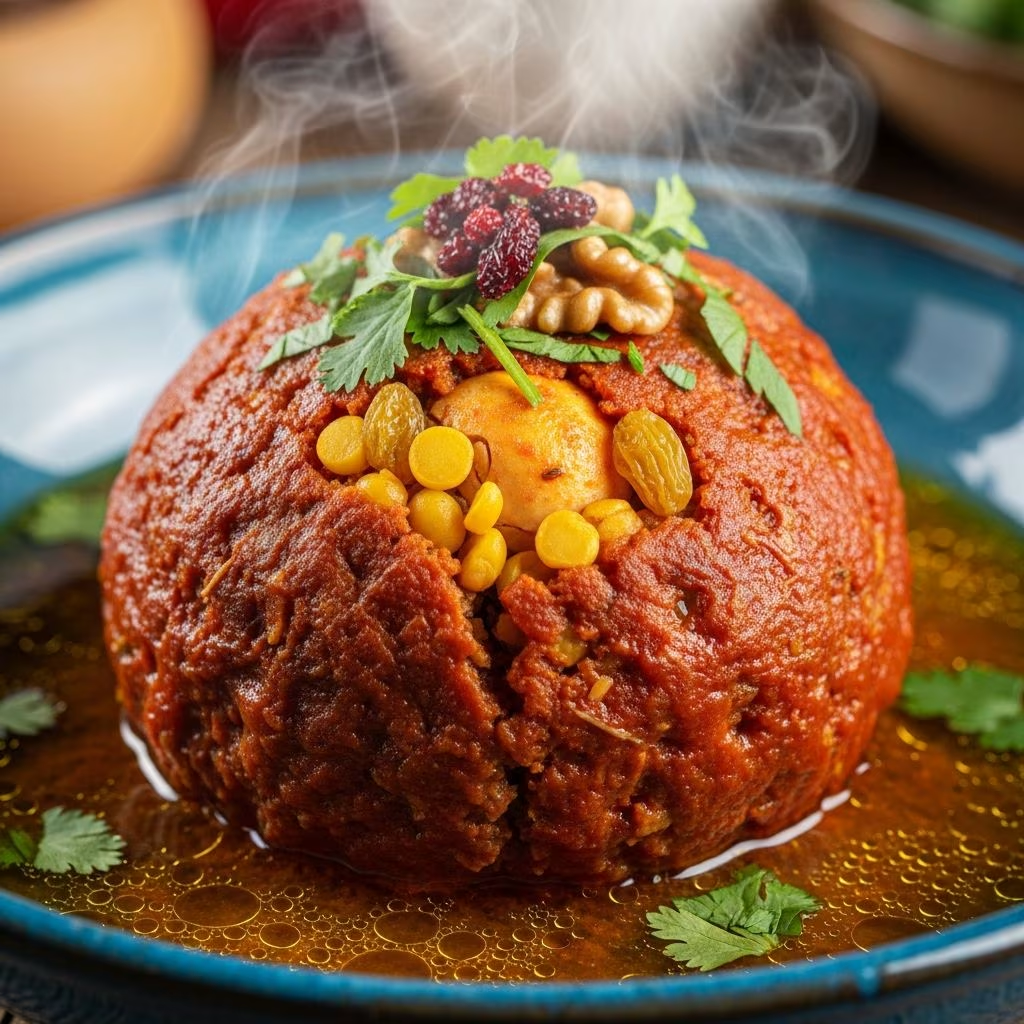
These massive, flavorful orbs represent the pinnacle of Persian culinary ingenuity, originating from the vibrant city of Tabriz in northwest Iran. Koofteh Tabrizi, often called the king of meatballs, combines ground meat with grains, herbs, and pulses into a resilient shell that encases a treasure of dried fruits, nuts, and caramelized onions. Simmered gently in a fragrant tomato-based broth, they deliver layers of sweet, savory, and tangy notes in every bite.
The Heritage Behind Koofteh Tabrizi
Koofteh Tabrizi traces its roots to the Azerbaijani region, where family gatherings and feasts feature these impressive dishes. The name ‘koofteh’ derives from the Persian verb meaning ‘to pound’ or ‘beat,’ reflecting the labor-intensive kneading process that creates a smooth, cohesive mixture resistant to cracking during cooking. Historically prepared for special occasions, this recipe has evolved while preserving core techniques passed down through generations.
Tabriz, a Silk Road hub, influenced its diverse fillings—drawing from Central Asian fruits and Mediterranean herbs—making it a fusion of flavors. Today, it symbolizes hospitality, with sizes often rivaling softballs to feed multiple diners.
Essential Ingredients for Authentic Flavor
Building the perfect koofteh requires balance between binding agents, seasonings, and fillings. Ground beef or lamb forms the base, bolstered by parboiled split peas and soaked rice for structure and tenderness.
- Meat base: 1-2 kg ground beef or lamb (80-85% lean for juiciness)
- Grains and pulses: 1 cup short-grain rice (like Calrose), ½-¾ cup yellow split peas
- Aromatics: 2-3 grated onions, fresh herbs (parsley, coriander, tarragon, thyme)
- Spices: Turmeric, black pepper, salt, dried mint, advieh (Persian spice blend)
- Fillings: Pitted prunes, walnuts, barberries, dried cherries, fried onions
- Sauce components: Tomato paste, onions, turmeric, cinnamon, saffron
Variations abound: some add bulgur for extra chew, eggs for binding, or hard-boiled eggs quartered inside for surprise elements.
Step-by-Step Preparation Guide
Patience defines koofteh-making; rushing leads to disintegration. Plan for overnight resting.
Prep the Grains and Pulses
Soak rice 1-4 hours, parboil split peas until half-tender (20-30 minutes). Cook rice with bulgur in water, butter, salt, and turmeric until al dente—firm inside to expand during simmering.
Create the Meat Mixture
Grind beef with onions and cooked peas into a paste using a food processor. Combine with cooled grains, eggs, turmeric, pepper. Knead vigorously, then refrigerate overnight. Next day, incorporate chopped herbs and salt. ‘Beat’ by lifting and slamming handfuls back into the bowl 10-20 times for elasticity.
Assemble the Fillings
Fry onions golden; pit prunes. Mix 1-2 tbsp each per meatball: walnuts, prunes, barberries, cherries, fried onions. For larger versions, add apricot halves or marrow.
Shape the Meatballs
Portion 150-300g per ball (yields 6-10). Hollow center with thumb, stuff generously, seal seamlessly. Pass between oiled palms 5-10 times to smooth.
Simmer in Sauce
Sauté onions, bloom tomato paste with turmeric, cinnamon, cloves. Add water (6-10 cups), saffron, salt. Low boil sauce, slip in meatballs gently. Simmer covered 1-1.5 hours until floating and sauce thickens.
Ingredient Variations Across Recipes
| Component | Common | Variations | Source Notes |
|---|---|---|---|
| Meat | Ground beef | Lamb/veal mix, lamb mince | |
| Grains | Rice + split peas | Rice + bulgur | |
| Herbs | Parsley, coriander | Thyme, tarragon, summer savory | |
| Fillings | Prunes, walnuts | Barberries, apricots, eggs | |
| Sauce Spices | Turmeric, tomato | Cinnamon, nutmeg, saffron |
These adaptations reflect regional tweaks, like sour cherries in northern Iran or zereshk for tartness.
Tips for Perfect Texture and Taste
- Knead relentlessly: Aim for dough-like stickiness; under-kneading causes cracks.
- Oil hands: Prevents sticking during shaping.
- Gentle simmer: High heat bursts skins; maintain low bubble.
- Rest overnight: Flavors meld, gluten relaxes.
- Test seasoning: Fry a small patty before full batch.
- Size matters: Larger meatballs need longer cook (up to 2 hours).
Avoid overstuffing to prevent leaks. If sauce thins, simmer uncovered.
Common Mistakes and Fixes
Beginners often face crumbling or bland results. Here’s a troubleshooting table:
| Issue | Cause | Solution |
|---|---|---|
| Meatballs fall apart | Insufficient beating | Knead/throw mixture longer |
| Dry texture | Overcooked grains | Parboil only; cook in shell |
| Watery sauce | Too much liquid | Reduce or add paste |
| Bland flavor | Under-seasoned mix | Taste raw mix (safe with beef) |
| Cracked skins | High heat | Low simmer, cover partially |
Pairing Suggestions and Serving Ideas
Serve hot with basmati rice, pickled garlic, and fresh sabzi (herb platter). Garnish with saffron threads, cinnamon dusting. Complements yogurt-cucumber salad (mast-o-khiar) to cut richness.
For feasts, slice open to reveal fillings. Leftovers reheat well in sauce; freeze up to 3 months.
Health and Nutritional Notes
Per large meatball (approx. 250g): ~600 calories, high protein (40g), carbs from rice/peas. Rich in iron from meat/pulses, antioxidants from fruits/herbs. Balance with veggies; use lean meat to reduce fat.
Frequently Asked Questions (FAQs)
Can I make Koofteh Tabrizi vegetarian?
Substitute meat with mashed lentils, chickpeas; add vital wheat gluten for binding. Results firmer but flavorful.
How long do they keep?
Refrigerate 3-4 days in sauce; freeze cooked 2-3 months.
What’s the best meat?
Lamb for authenticity, beef for milder taste. Mix 50/50 veal-lamb tenderizes.
Why beat the mixture?
Develops gluten-like network from rice/flour, ensuring integrity.
Gluten-free option?
Use short-grain rice only, skip bulgur; xanthan gum binds if needed.
Advanced Techniques for Chefs
Incorporate bone marrow for luxury, or smoke sauce base. Experiment with quince paste in fillings for autumn twists. Pressure cook halves time but monitor tenderness.
References
- Koofteh Tabrizi – A traditional Persian Meatball — Cooking with Zahra. 2020-03-01. https://cookingwithzahra.com/https-cookingwithzahra-com-2020-03-koofteh-tabrizi/
- KOOFTEH TABRIZI کوفته تبریزی — Persian Mama. N/A. https://persianmama.com/koofteh-tabrizi/
- How To Make Persian Koofteh Tabrizi — YouTube (Video). N/A. https://www.youtube.com/watch?v=5OKI6HCHz5o
- Koofteh Tabrizi — My Persian Kitchen. N/A. http://www.mypersiankitchen.com/koofteh-tabrizi/
- Kofteh Tabrizi: Persian Meatballs in Tomato Sauce — The Storied Recipe. N/A. https://thestoriedrecipe.com/persian-meatballs/