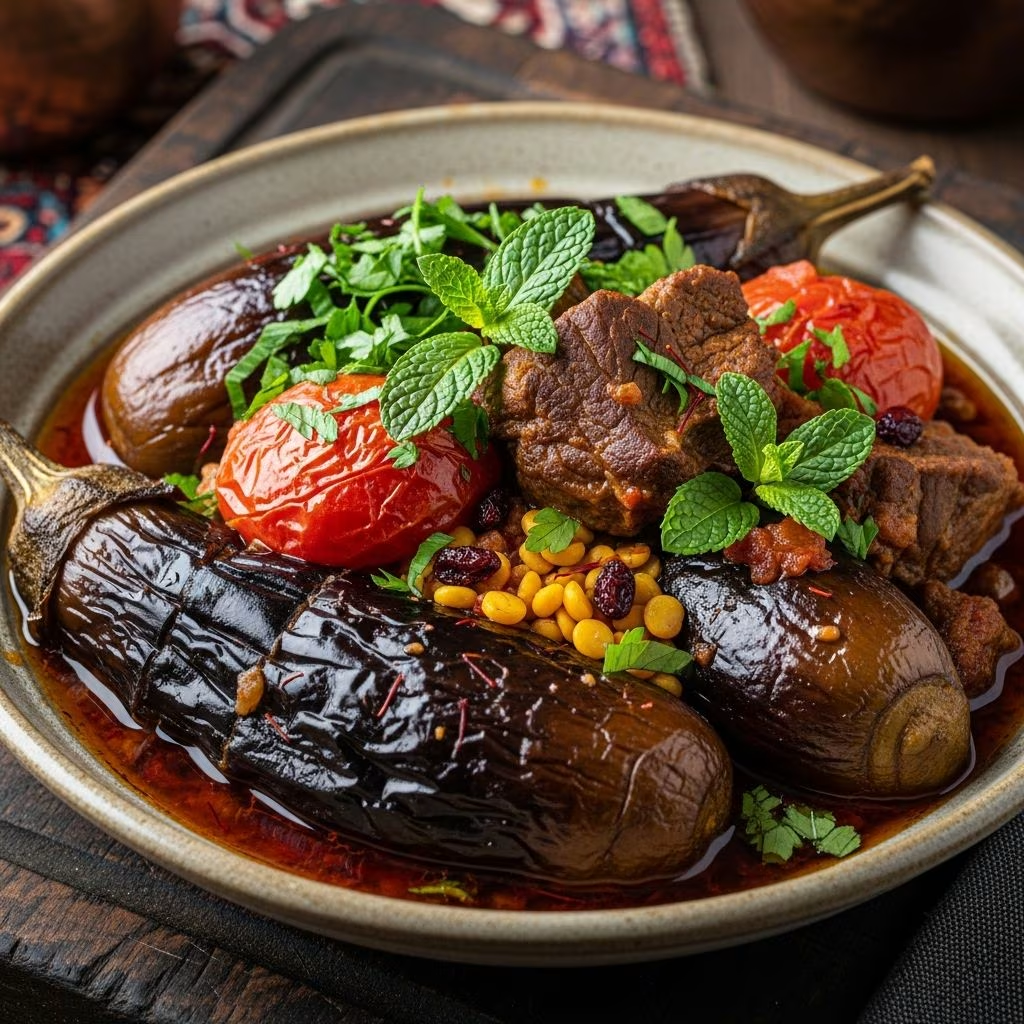
Khoresh Bademjan stands as a cornerstone of Persian culinary tradition, where eggplants transform into silky softness within a vibrant tomato-based sauce. This stew, known as khoresh bademjan, balances savory depths with tangy accents, often featuring lamb or beef alongside aromatic spices like turmeric and saffron. Rooted in Iranian home cooking, it simmers slowly to meld flavors, making it a comforting dish served atop fluffy rice.
The Essence of Persian Stews
In Persian gastronomy, khoresh refers to thick, flavorful stews that form the heart of meals. Unlike thin soups, these dishes emphasize slow cooking to develop complex profiles. Khoresh Bademjan highlights bademjan—eggplants—paired with proteins and a medley of herbs and fruits for acidity. Traditional versions use lamb or beef, but adaptations with chickpeas or split peas cater to vegetarian palates.
The dish’s appeal lies in its versatility. Core elements include fried or baked eggplants, onions, tomato paste, and stock, infused with cinnamon, bay leaves, and lime. This combination yields a glossy sauce that clings to rice, embodying Persian harmony of sweet, sour, and savory.
Core Ingredients and Their Roles
Selecting quality ingredients ensures authenticity. Eggplants provide the stew’s namesake texture, absorbing sauces while softening to melt-in-mouth tenderness.
- Eggplants: Choose firm, glossy ones; Japanese varieties work well for their slim shape and fewer seeds.
- Proteins: Lamb shoulder or beef chuck for richness; substitutes like kidney beans or chickpeas for plant-based options.
- Aromatics: Onions, garlic, turmeric for base; saffron for golden hue and floral notes.
- Acids: Lime juice, dried limes (limoo amani), sour grapes, or pomegranate molasses for tang.
- Tomatoes: Paste and fresh for body and umami.
These elements create a symphony where eggplants soak up the sauce, meats tenderize over low heat, and spices whisper subtle warmth.
Step-by-Step Traditional Recipe
Prepare a classic meat-based Khoresh Bademjan for 4-6 servings. Total time: about 2 hours.
- Prep Eggplants: Cube or slice 4 medium eggplants, salt generously, and let drain 30 minutes to remove bitterness. Rinse, pat dry, and fry in oil until golden. Bake alternative: 400°F for 25 minutes.
- Cook Meat: In a pot, brown 1 lb cubed lamb or beef with 1 onion, 1 tsp turmeric, black pepper. Add 3 cups water or stock; simmer 1-1.5 hours until fork-tender.
- Build Sauce: Sauté 1 sliced onion golden, add 3 tbsp tomato paste, fry 2 minutes. Stir in 1 tsp saffron (bloomed in hot water), cinnamon stick, bay leaf.
- Combine: Add cooked meat with broth, fried eggplants, 1-2 tbsp lime juice or sour grapes. Simmer 30-45 minutes until thickened.
- Rest: Let sit 15 minutes off heat for flavors to integrate.
Serve over basmati rice with tahdig—crispy rice bottom—for crunch contrast.
Vegetarian and Vegan Adaptations
Plant-powered versions maintain heartiness without meat. Use yellow split peas, chickpeas, or kidney beans for protein.
| Variation | Key Swap | Unique Twist |
|---|---|---|
| Yellow Split Peas | Beef → 1 cup split peas (soaked) | Pomegranate concentrate + orange/lemon juice for sweet-sour |
| Kidney Beans | Lamb → ½ cup dried beans (overnight soak) | Mint-pine nut garnish; basmati side |
| Chickpeas | Meat → 2 cans drained chickpeas | Allspice + saffron; vegan butter-soft eggplants |
These swaps reduce cooking time to 1 hour, ideal for weeknights. Simmer beans with onions first for creaminess.
Flavor Balancing Techniques
Persian stews thrive on equilibrium. Too oily? Drain eggplant excess post-frying. Lacking tang? Add limoo amani or verjuice gradually. Saffron’s expense yields big impact: grind ⅛ tsp, steep in 2 tbsp hot water.
For silkiness, partially mash eggplants into sauce during final simmer. Cinnamon and bay provide subtle warmth without overpowering. Taste iteratively, adjusting salt, pepper, and acid.
Perfect Pairings and Serving Suggestions
Khoresh Bademjan shines with Persian rice. Steam basmati infused with saffron, layer with barberries (zereshk), fried onions, almonds for jeweled effect.
- Tahdig: Yogurt-saffron crust or potato layer for texture.
- Salads: Shirazi (cucumber-tomato-herb) for freshness.
- Breads: Lavash or barbari to sop sauce.
- Garnishes: Parsley, pomegranate seeds, toasted nuts.
Pair with doogh (yogurt drink) to cut richness.
Common Pitfalls and Pro Tips
Avoid soggy eggplants by salting and frying hot/fast. Undercooked meat toughens; use pressure cooker for 15 minutes if rushed. Sauce too thin? Simmer uncovered or add tomato paste.
- Pro Tip 1: Bloom saffron properly for max color/flavor.
- Pro Tip 2: Frozen sour grapes (ghooreh) intensify sourness.
- Pro Tip 3: Bake eggplants oil-free for lighter versions.
Nutritional Profile
Per serving (traditional lamb, ~300g): ~350 calories, 20g protein, 25g fat, 15g carbs. Eggplants offer fiber, antioxidants; tomatoes lycopene. Vegetarian cuts fat, boosts plant protein. Rich in vitamins A, C from produce.
Historical Roots and Cultural Significance
Khoresh Bademjan traces to ancient Persia, where eggplants arrived via Silk Road. Stews symbolized hospitality, shared at Nowruz. Modern diaspora adapts it globally, preserving heritage.
Frequently Asked Questions
What is Khoresh Bademjan?
A Persian stew of eggplants in tomato sauce with meat or veggies, spiced and tangy.
Can I make it vegan?
Yes, swap meat for beans/chickpeas; use olive oil.
How long does it last?
Refrigerate 3-4 days; freeze 2 months. Reheat gently.
Substitute for saffron?
Turmeric for color, but misses floral depth.
Best eggplant type?
Italian or Japanese; avoid large globe for seeds.
Exploring Variations Across Regions
In Iran, northern versions lean tart with more lime; southern add heat via pepper. Diaspora recipes incorporate local twists, like chicken. Experiment with sumac or verjuice for personalization.
References
- Khoresh Bademjan (Persian Lamb & Aubergine Casserole) — Saffron and Herbs. 2022-02-05. https://saffronandherbs.com/2022/02/05/khoresh-bademjan/
- Khoresh Bademjan Recipe (Persian Eggplant Stew) — LinsFood. N/A. https://www.linsfood.com/khoresh-bademjan-persian-eggplant-stew/
- VEGETARIAN KHORESH BADEMJAN — Persian Mama. N/A. https://persianmama.com/vegetarian-khoresh-bademjan/
- Khoresh Bademjan – Persian Eggplant Stew — Spice Chronicles. N/A. https://spicechronicles.com/khoresh-bademjan-persian-eggplantfrom-silk-road-vegetarian/
- KHORESH BADEMJAN — Persian Mama. N/A. https://persianmama.com/khoresh-bademjan-persian-eggplant-stew-with-beef/