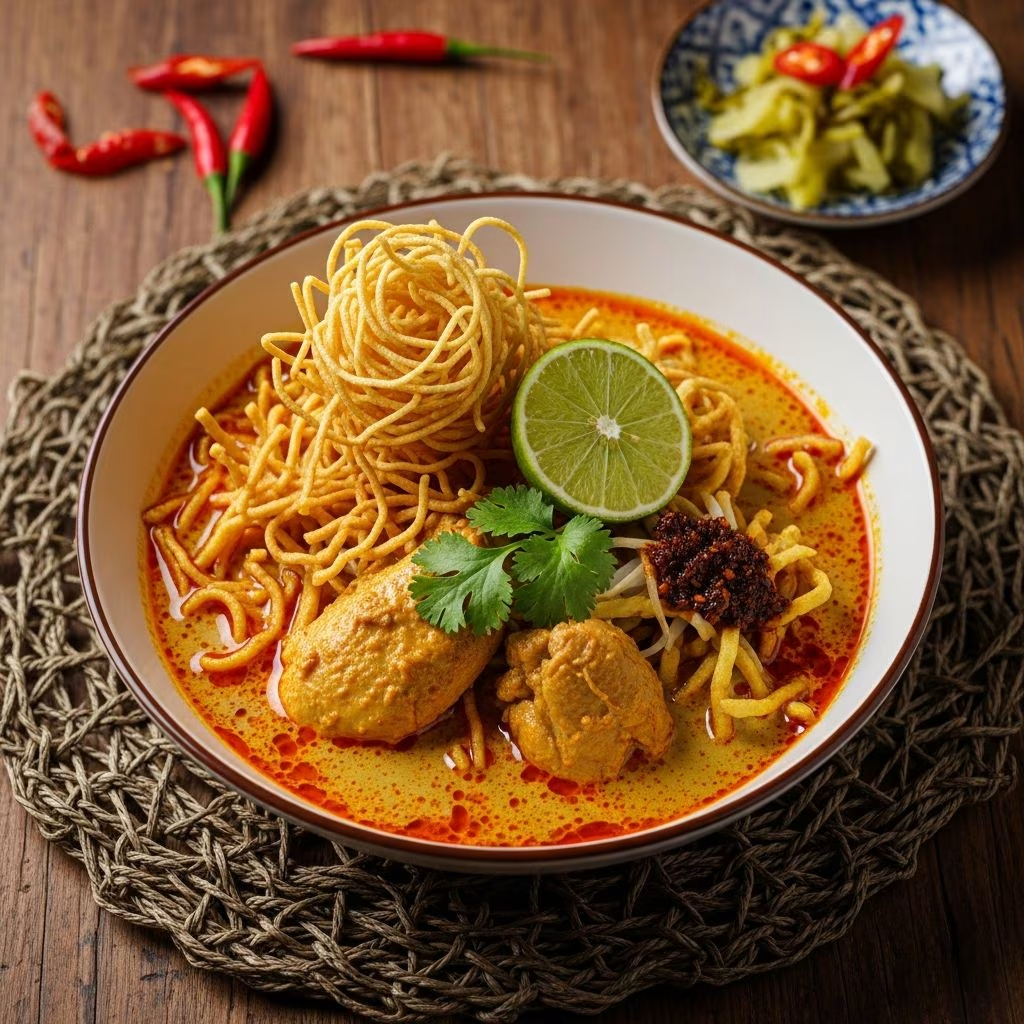
Khao Soi Gai stands as one of the most cherished dishes from Northern Thailand, blending creamy coconut milk with aromatic spices and tender chicken in a soul-warming noodle soup. This culinary gem, originating from Chiang Mai, captivates with its harmonious mix of rich broth, fresh toppings, and crispy noodle accents, making it a must-try for Thai food enthusiasts worldwide.
The Heritage and Cultural Roots of Khao Soi Gai
Khao Soi Gai traces its origins to the vibrant street food scene of Northern Thailand, particularly Chiang Mai, where it has evolved over generations. Historians suggest influences from Chinese-Muslim traders from Yunnan province, who introduced noodle soups adapted with local Thai ingredients like coconut milk and curry pastes. Unlike Southern Thai curries, this dish avoids pork, favoring chicken or beef to honor its multicultural roots.
Traditionally served by street vendors, Khao Soi Gai embodies the region’s bold yet balanced flavors—spicy, tangy, sweet, and savory. It’s a staple at festivals and family gatherings, symbolizing comfort and hospitality. Variations exist across Laos and Myanmar, but the Northern Thai version remains the gold standard, celebrated for its silky broth and textural contrasts.
Signature Ingredients That Define the Dish
The magic of Khao Soi Gai lies in its fresh, bold components. Key elements include:
- Coconut milk: Provides creaminess and mellows spices.
- Curry paste: A homemade blend of chilies, galangal, lemongrass, garlic, shallots, turmeric, and coriander for depth.
- Chicken: Thighs or drumsticks for juiciness, simmered until tender.
- Egg noodles: Fresh or dried, boiled fresh for each serving.
- Toppings: Crispy fried noodles, pickled shallots, lime wedges, cilantro, and mung bean sprouts for crunch and brightness.
Condiments like fish sauce, palm sugar, and lime juice allow customization of saltiness, sweetness, and acidity, ensuring every bowl suits individual tastes.
Step-by-Step Guide to Crafting Authentic Khao Soi Gai
Preparing Khao Soi Gai at home is straightforward, yielding restaurant-quality results in about an hour. This recipe serves 4 generously.
Ingredients Table
| Component | Ingredients | Quantity |
|---|---|---|
| Paste | Dried chilies, lemongrass, galangal, garlic, shallots, turmeric, coriander, cumin | Varied (see detailed list) |
| Broth | Coconut milk, chicken broth, chicken thighs | 2 cans milk, 3 cups broth, 1.5 lbs chicken |
| Noodles & Toppings | Egg noodles, mung sprouts, red onion, lime, crispy wontons | 1 lb noodles, assorted fresh items |
1. Prepare the Curry Paste
Soak dried red chilies in hot water for 15 minutes, then drain. In a food processor, combine chilies, chopped lemongrass (tender parts only), galangal slices, garlic cloves, shallots, ginger, kaffir lime leaves or zest, turmeric powder, coriander, cumin, salt, and oil. Pulse into a vibrant paste. This base infuses the dish with its signature warmth.
2. Cook the Chicken and Aromatics
Heat oil in a large pot over medium heat. Sauté the paste for 3-5 minutes until fragrant and oil separates. Add bite-sized chicken pieces, stirring to coat. Include sliced onions, minced garlic, and chilies; cook until chicken browns slightly.
3. Build the Broth
Pour in chicken broth and coconut milk, stirring well. Add mung bean sprouts, fish sauce, dark soy sauce, coconut or palm sugar, lime juice, and chili flakes. Simmer uncovered for 20-25 minutes until chicken is tender and flavors meld. Adjust seasoning—more sugar for sweetness, fish sauce for umami.
4. Prepare Noodles and Crispy Toppings
Boil fresh egg noodles until al dente, reserving some for frying. Heat oil to 350°F and fry noodle portions until golden and crisp. Slice red onions thinly for pickling in vinegar, lime, and sugar.
5. Assemble and Serve
Divide boiled noodles into bowls, ladle hot broth and chicken over top. Garnish generously with crispy noodles, pickled onions, cilantro, mint, lime wedges, and sprouts. Serve with condiments on the side.
Pro Tips for Elevating Your Khao Soi Gai
- Fresh paste is key: Grinding your own ensures potency; store-bought works in a pinch but lacks vibrancy.
- Balance the broth: Taste iteratively—aim for equal parts spicy, sour, sweet, salty.
- Crispy elements: Fry noodles just before serving to maintain crunch.
- Make-ahead: Broth improves overnight; reheat gently to avoid curdling coconut milk.
- Variations: Swap chicken for shrimp, tofu, or beef; use rice noodles for gluten-free.
Nutritional Profile and Health Benefits
Khao Soi Gai offers a nutrient-dense meal. Coconut milk provides healthy fats and medium-chain triglycerides for energy. Turmeric’s curcumin aids anti-inflammation, while lemongrass and galangal support digestion. A serving (about 1.5 cups broth with noodles) delivers roughly 600-700 calories, 30g protein, rich in vitamins A and C from toppings.
Opt for low-sodium broth and less oil for a lighter version. The fiber from sprouts and herbs promotes gut health, making it a balanced indulgence.
Common Mistakes to Avoid
Novices often overcook noodles, leading to mushiness—boil briefly and rinse in cold water. Skipping the paste-frying step results in raw flavors; always sauté until aromatic. Too much coconut milk can overwhelm; use full-fat for creaminess but balance with broth.
Pairing Suggestions and Serving Ideas
Enjoy Khao Soi Gai with Thai iced tea or a crisp Singha beer to cut richness. For sides, try fresh spring rolls or cucumber salad. It’s ideal for weeknight dinners or impressing guests at gatherings.
Frequently Asked Questions (FAQs)
What makes Khao Soi Gai different from other Thai curries?
It features a richer coconut base, crispy noodle topping, and Northern spice profile, distinct from red or green curries.
Can I make it vegetarian?
Yes, replace chicken with tofu or mushrooms, and use soy sauce instead of fish sauce.
How spicy is Khao Soi Gai?
Moderately spicy; adjust chilies in the paste for mild to fiery levels.
What’s the best noodle for authenticity?
Chinese-style egg noodles, fresh if possible, for perfect chew.
Can I freeze leftovers?
Freeze broth separately from noodles; thaw and reheat gently.
Exploring Regional Variations
While Chiang Mai’s version reigns supreme, Burmese Khao Soi leans drier with wheat noodles, and Laotian styles incorporate more dill. Experiment to find your favorite twist.
Mastering Khao Soi Gai opens doors to Thai home cooking mastery, delivering restaurant magic in your kitchen.
References
- Khao Soi Gai (Northern Thai Coconut Curry Noodles Soup with Chicken) — Thatsspicychick.com. 2023. https://thatspicychick.com/khao-soi-gai/
- Chicken Khao Soi (Thai Coconut Curry Noodle Soup) — Thewoksoflife.com. 2022-05-12. https://thewoksoflife.com/chicken-khao-soi/
- Khao Soi: Northern Thai Curry Noodle Soup Recipe — Hot-thai-kitchen.com. 2021. https://hot-thai-kitchen.com/kao-soi/
- Easy Khao Soi Recipe: Thai Coconut Curry Noodle Soup — Feastingathome.com. 2023-10-15. https://www.feastingathome.com/thai-coconut-noodle-soup-khao-soi/
- Northern Thai Curry Noodles with Chicken (Khao Soi Gai) — Unileverfoodsolutions.co.th. 2024. https://www.unileverfoodsolutions.co.th/en/recipe/northern-thai-curry-noodles-with-chicken-khao-soi-gai–R0070502.html