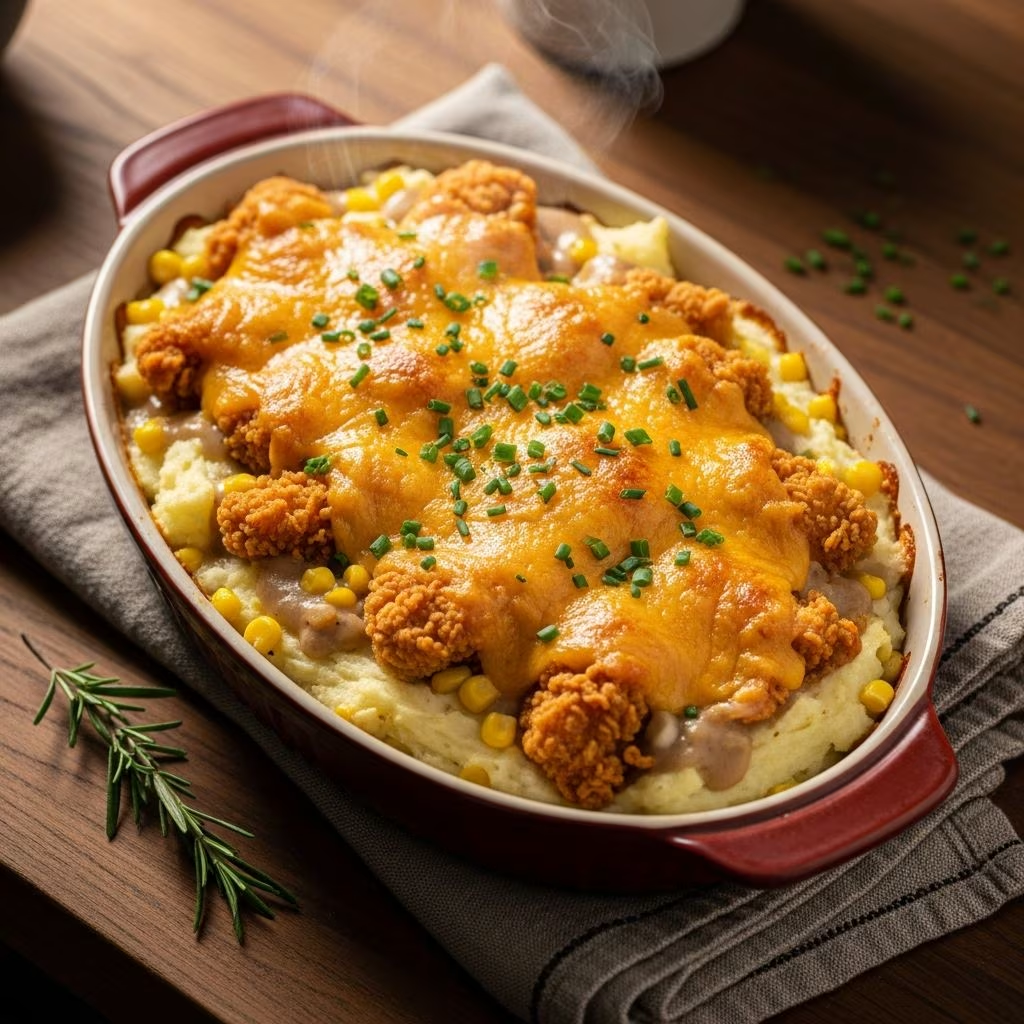
The KFC Famous Bowl has become a beloved menu staple that combines satisfying comfort food elements into one delicious serving. Many home cooks have sought ways to recreate this restaurant favorite in their own kitchens, leading to the development of casserole versions that capture all the same flavors and textures. This baked adaptation offers an excellent alternative for feeding a family or hosting gatherings, as it transforms the individual bowl format into a shareable dish that serves multiple people at once.
Understanding the Core Concept Behind This Casserole
The appeal of the original KFC bowl lies in its strategic layering of distinct components. Each element contributes specific textures and flavors—creamy base, tender vegetables, protein, rich topping, and savory sauce. The casserole version maintains this same architectural approach but adapts it for oven preparation and larger quantities. By stacking these ingredients in a baking dish rather than assembling them in individual bowls, home cooks can achieve restaurant-quality results while saving time and effort.
Essential Ingredients You’ll Need to Gather
Creating this casserole successfully requires gathering quality components that work in harmony. The foundation begins with mashed potatoes, which can come from multiple sources. Many cooks prefer convenience options like frozen varieties from specialty retailers or prepared boxed potatoes, while others advocate for homemade versions using fresh potatoes, butter, and cream. The quantity typically ranges from 2.5 to 6 cups depending on your desired serving size and preference for a heartier base.
The protein component traditionally consists of popcorn chicken, though alternatives provide flexibility for different dietary preferences and availability. Frozen popcorn chicken, chicken nuggets, and breaded chicken tenders all work effectively when prepared according to package directions. Some variations introduce grilled or blackened chicken options for those seeking lighter preparations.
Corn serves as the vegetable layer, with frozen whole kernel corn being the standard choice due to its reliability and year-round availability. Canned corn works equally well provided the liquid is thoroughly drained before addition. The corn should be thawed and heated before incorporation into the casserole to ensure even cooking temperatures throughout the dish.
Cheese functions as both a binding agent and flavor enhancer. Shredded cheddar cheese appears most frequently in recipes, though Colby jack and reduced-fat variations offer excellent alternatives. The quantity ranges from half a cup to two full cups depending on how cheese-forward you prefer your final dish.
Chicken gravy, whether homemade, prepared from packets, or jarred, ties all components together with savory richness. Approximately half to full cup of gravy per serving ensures adequate moisture and flavor distribution throughout the casserole.
Step-by-Step Assembly and Baking Instructions
Proper assembly follows a logical sequence that ensures even distribution and optimal cooking results. Begin by preheating your oven to 400 degrees Fahrenheit, as this temperature allows the casserole to heat through while lightly browning the cheese topping without burning any elements.
Prepare your baking vessel by spraying a 9×13-inch dish with nonstick cooking spray or applying a light butter coating. This crucial step prevents sticking and ensures easy serving. Spread your mashed potatoes in an even, compact layer across the bottom of the prepared dish. If using cold or hardened potatoes, briefly microwaving them for 1-2 minutes facilitates easier spreading and creates a more uniform base.
Layer your heated corn directly over the potatoes, distributing it evenly across the entire surface. This prevents any spots from having excessive corn while others remain sparse. Follow with your cooked and cut chicken pieces, arranging them in a uniform layer. Cutting frozen popcorn chicken into quarters or bite-sized pieces facilitates better integration and more consistent texture throughout the finished casserole.
Place the casserole into the preheated oven uncovered for approximately 15 minutes to allow the layers to heat through and begin integrating flavors. Remove from the oven and evenly distribute your shredded cheese across the entire surface, ensuring complete coverage. Return the dish to the oven for an additional 5 minutes, allowing the cheese to melt completely without browning excessively.
While the cheese melts, prepare your gravy according to package directions or heat prepared gravy until steaming. Upon removing the casserole from the oven, pour the warm gravy evenly over the melted cheese layer. Some recipes recommend returning the casserole to the oven for 7-10 additional minutes after adding gravy to allow further integration and ensure all components reach optimal serving temperature.
Ingredient Variations and Customization Options
| Component | Primary Option | Alternative Choices |
|---|---|---|
| Mashed Potatoes | Boxed instant potatoes | Homemade, frozen prepared, leftovers |
| Protein | Popcorn chicken | Chicken nuggets, breaded tenders, grilled strips |
| Vegetables | Frozen corn | Canned corn, mixed vegetables, peas |
| Cheese Type | Cheddar | Colby jack, reduced-fat varieties, Mexican blend |
| Gravy | Chicken gravy packet | Beef gravy, jarred versions, homemade |
The beauty of this casserole format lies in its adaptability to personal preferences and dietary restrictions. Those seeking reduced-fat versions can substitute lighter cheese options and opt for grilled rather than breaded chicken products. Individuals with specific protein preferences might experiment with turkey-based alternatives or plant-based chicken substitutes, adjusting cooking times as needed.
Seasonal considerations also allow for creative ingredient swaps. Spring preparations might incorporate fresh corn when available, while winter versions can benefit from premium frozen selections. Adding optional garnishes like fresh parsley, crispy bacon bits, or green onions after baking adds color, texture, and sophisticated flavor profiles that elevate the casual comfort food nature of this dish.
Serving Recommendations and Portion Guidance
This casserole format naturally serves multiple people, making it ideal for family dinners, potluck contributions, and gathering preparations. A standard 9×13-inch casserole typically yields 6 to 8 servings depending on appetite sizes and complementary side dishes. Consider serving this alongside simple green salads, steamed vegetables, or fresh fruit to balance the richness of the cheese and gravy components.
For optimal presentation, allow the casserole to rest for 5-10 minutes after removal from the oven before serving. This settling period allows the layers to stabilize, making cleaner portions possible and ensuring each serving captures the full depth of flavors rather than appearing separated or messy on the plate.
Storage, Make-Ahead, and Reheating Strategies
This casserole stores well in standard refrigeration, remaining fresh for 3-4 days when properly covered. Transfer leftover portions to airtight containers to prevent drying and flavor absorption of refrigerator odors. Reheating can occur in the oven at 350 degrees for 15-20 minutes until heated through, or in individual portions using microwave settings at 50% power for 2-3 minutes per serving.
Make-ahead preparation offers significant time-saving advantages for busy households. Assemble the casserole through the cheese layer and refrigerate overnight, then proceed with the initial baking step. This modification may require adding 5 minutes to the initial baking time to account for cold ingredient temperatures. Alternatively, complete the entire casserole, cool thoroughly, and freeze for up to 3 months. Thaw overnight in the refrigerator before reheating.
Frequently Asked Questions About This Casserole
Can I prepare this casserole without using frozen ingredients?
Absolutely. Homemade mashed potatoes, fresh corn kernels, and grilled chicken breast pieces all work effectively. Cooking times may adjust slightly depending on ingredient temperatures, but the fundamental preparation method remains unchanged. Fresh corn should be briefly blanched before incorporation to ensure proper texture.
What gravy options provide the best results?
Chicken gravy represents the most authentic choice, maintaining flavor harmony with the poultry-based components. However, brown gravy, beef gravy, or even mushroom-based options create interesting variations while maintaining the savory element crucial to the dish’s success.
Is this recipe suitable for dietary restrictions?
Yes, with modifications. Reduced-fat cheese satisfies lower-calorie requirements, grilled chicken replaces breaded versions for lighter preparations, and homemade components replace processed options for those prioritizing whole foods. Gluten-free diets require attention to gravy and chicken product selections.
How can I prevent the cheese from becoming rubbery or brown?
Limiting the final baking time to exactly 5 minutes after cheese application prevents overdrying. If additional heating is needed after adding gravy, keep the oven at 350 degrees rather than 400 to gently warm components without aggressive browning.
What side dishes pair well with this casserole?
Light, fresh accompaniments balance the richness effectively. Garden salads with vinaigrette dressing, steamed green vegetables, coleslaw, or fresh fruit presentations provide excellent contrasts. Simple rolls or cornbread offer familiar comfort food pairings.
Why This Casserole Format Surpasses Individual Bowl Assembly
While the original KFC Famous Bowl remains delicious, the casserole adaptation offers practical advantages for home cooking scenarios. Preparation time decreases significantly when components combine in a single dish rather than individual assembly. Cost efficiency improves due to bulk purchasing opportunities and reduced waste. Energy consumption decreases when baking a single large dish versus multiple small bowls or multiple oven visits.
From an entertaining perspective, presenting a beautiful casserole at the table creates impressive visual presentation while maintaining the casual, crowd-pleasing nature of comfort food. Guests can serve themselves according to appetite preferences, and leftovers consolidate into single containers rather than multiple individual portions.
Final Thoughts on This Accessible Home Recipe
This casserole demonstrates how restaurant favorites transform into accessible, efficient home-cooked dishes that maintain the essential character of the original while offering practical advantages. The straightforward ingredient list and minimal technical skill requirements make this recipe accessible to cooks of all experience levels. Whether preparing weeknight family dinners, hosting casual gatherings, or contributing to potluck events, this casserole delivers consistent satisfaction and reliable deliciousness that explains its popularity among home cooks seeking convenient comfort food solutions.
References
- Copycat KFC Chicken Bowl Casserole — The Pound Dropper. 2024. https://thepounddropper.com/copycat-kfc-chicken-bowl-casserole/
- KFC Famous Bowl Casserole Recipe — Gonna Want Seconds. 2024. https://www.gonnawantseconds.com/kfc-famous-bowl-casserole-recipe/
- KFC Bowl Casserole — CincyShopper. 2024. https://cincyshopper.com/kfc-bowl-casserole/
- Copycat KFC Bowls — Tornadough Alli. 2024. https://tornadoughalli.com/copycat-kfc-bowls/