Persian cuisine has gifted the world many culinary treasures, and among its most celebrated contributions is kateh, a deceptively simple yet profoundly satisfying rice preparation method. This traditional cooking technique represents centuries of Iranian culinary wisdom, streamlined into an accessible process that transforms basic ingredients into something extraordinary. Unlike more elaborate rice cooking methods that require parboiling, draining, and multiple stages of preparation, kateh offers a straightforward approach that relies on precision and timing rather than complexity.
Understanding Kateh: Beyond the Basic Rice Dish
Kateh occupies a unique position in Persian cuisine as the everyday rice preparation, distinct from more formal steamed rice presentations yet equally valued in family meals and casual dining. The name itself, derived from Persian terminology, reflects the cooking method’s emphasis on simplicity and directness. What makes kateh particularly appealing to contemporary home cooks is its efficiency—the entire process, from washing the rice to final serving, typically requires less than an hour.
The fundamental principle underlying kateh preparation involves cooking rice with a precise water-to-rice ratio in a covered pot, allowing all liquid to absorb naturally without the need for draining or additional manipulation. This method produces rice grains that are tender and flavorful, with a characteristic texture that falls between the lightness of steamed rice and the stickiness of risotto. The result is neither fluffy nor clumped, but rather pleasantly soft with each grain maintaining its individual integrity.
Essential Ingredients and Their Roles
Creating authentic kateh requires understanding how each ingredient contributes to the final dish. The quality of these components directly influences the cooking outcome and the satisfaction derived from the meal.
- White Basmati Rice: The traditional choice for kateh, with its elongated grain structure and delicate flavor profile. Two to three cups serves four to six people adequately.
- Water: The volume of water determines whether the rice achieves optimal tenderness. The standard formula involves approximately 1.5 times the volume of rice, though adjustments may be necessary based on rice type and personal preference.
- Salt: A crucial seasoning element that should be dissolved at the beginning of cooking to ensure even distribution throughout the rice. Typically one to two teaspoons suffices for three cups of rice.
- Cooking Fat: Whether using ghee, clarified butter, or neutral vegetable oils, this ingredient adds richness and prevents sticking. Three to four tablespoons distributed during cooking produces optimal results.
The Critical First Step: Washing Your Rice
Many home cooks underestimate the importance of properly washing rice before cooking, viewing it as an optional step. In Persian cooking, and particularly for kateh preparation, this step proves absolutely essential to achieving the desired texture. Rice contains surface starch that, if not removed, causes grains to clump together and create a gummy consistency rather than the light, distinct texture kateh should possess.
The washing process involves placing rice in a large bowl and covering it completely with cold water. Using your hand, gently agitate the rice with a circular motion, then carefully pour off the cloudy water. This process should be repeated four to five times, until the water draining from the rice runs clear rather than milky. For those using American long-grain varieties rather than imported basmati, the washing frequency may be reduced to two or three times, as these varieties contain less surface starch.
After the final wash, drain the rice thoroughly using a fine-mesh colander, ensuring no excess water remains trapped between grains. Some cooks allow the drained rice to sit briefly before cooking, which can help it absorb the cooking liquid more uniformly.
Mastering the Water-to-Rice Ratio
The single most important factor in successful kateh preparation is achieving the correct proportion of water to rice. This ratio determines whether the finished dish emerges tender and perfectly cooked or dry and unappetizing. Understanding how this ratio works provides the foundation for confident, consistent results.
The traditional Persian formula uses approximately two parts water to one part rice. However, this guideline requires refinement based on several variables. The type of rice being used affects water absorption rates—imported basmati rice typically requires more water than domestically grown long-grain varieties. The altitude at which you’re cooking also influences outcomes, as water boils at lower temperatures in elevated locations, extending cooking times and potentially requiring additional liquid.
For three cups of rice, combine four and one-half cups of water with the washed, drained rice. Some cooks prefer to measure water by using the finger-knuckle method: pour enough water into the pot until it reaches the line at your knuckle when your finger rests on top of the rice. This traditional Persian technique provides a surprisingly accurate measurement for those practicing the method regularly.
The Cooking Process: From Beginning to Completion
Once ingredients are measured and prepared, the cooking process unfolds in several distinct stages, each serving a specific purpose in developing the rice’s characteristic texture and flavor.
Initial Boiling Phase
Combine the washed rice, measured water, salt, and one tablespoon of the cooking fat in a heavy-bottomed pot with a tight-fitting lid. Stir gently with a wooden spoon to ensure the salt dissolves evenly throughout the liquid. Position the pot over medium-high or high heat and bring the contents to a vigorous boil, which typically requires five to seven minutes. As the mixture heats, you may observe small bubbles forming across the surface—this indicates the water has reached boiling temperature.
Water Absorption Stage
Once boiling begins, reduce the heat to medium and leave the pot uncovered. This stage continues for approximately fifteen to twenty minutes, during which the rice gradually absorbs the surrounding water. Resist the urge to stir or disturb the rice during this period, as the disruption can release additional starch and compromise the texture. Instead, simply allow the water level to gradually decrease as the rice absorbs it. You’ll notice steam beginning to rise from the pot’s surface as the water diminishes.
The Transition Point
When most of the visible water has been absorbed and you observe small steam holes beginning to form on the rice’s surface, the pot has reached a critical transition point. At this moment, drizzle the remaining cooking fat (approximately two to three tablespoons) over the rice’s surface and cover the pot tightly with its lid. For enhanced crust formation, some cooks place a folded kitchen towel between the lid and pot rim, which absorbs excess steam and creates the characteristic crispy bottom layer called tahdig.
The Final Steaming Phase
Reduce the heat to low and maintain this setting for the final twenty to thirty minutes of cooking. During this phase, residual moisture finishes cooking the rice while the direct heat source creates the prized crust layer on the pot’s bottom. The gentle, indirect heat allows the rice to become fully tender while the fat and gentle warmth create browning at the bottom.
Creating and Serving the Tahdig: The Crispy Bottom Layer
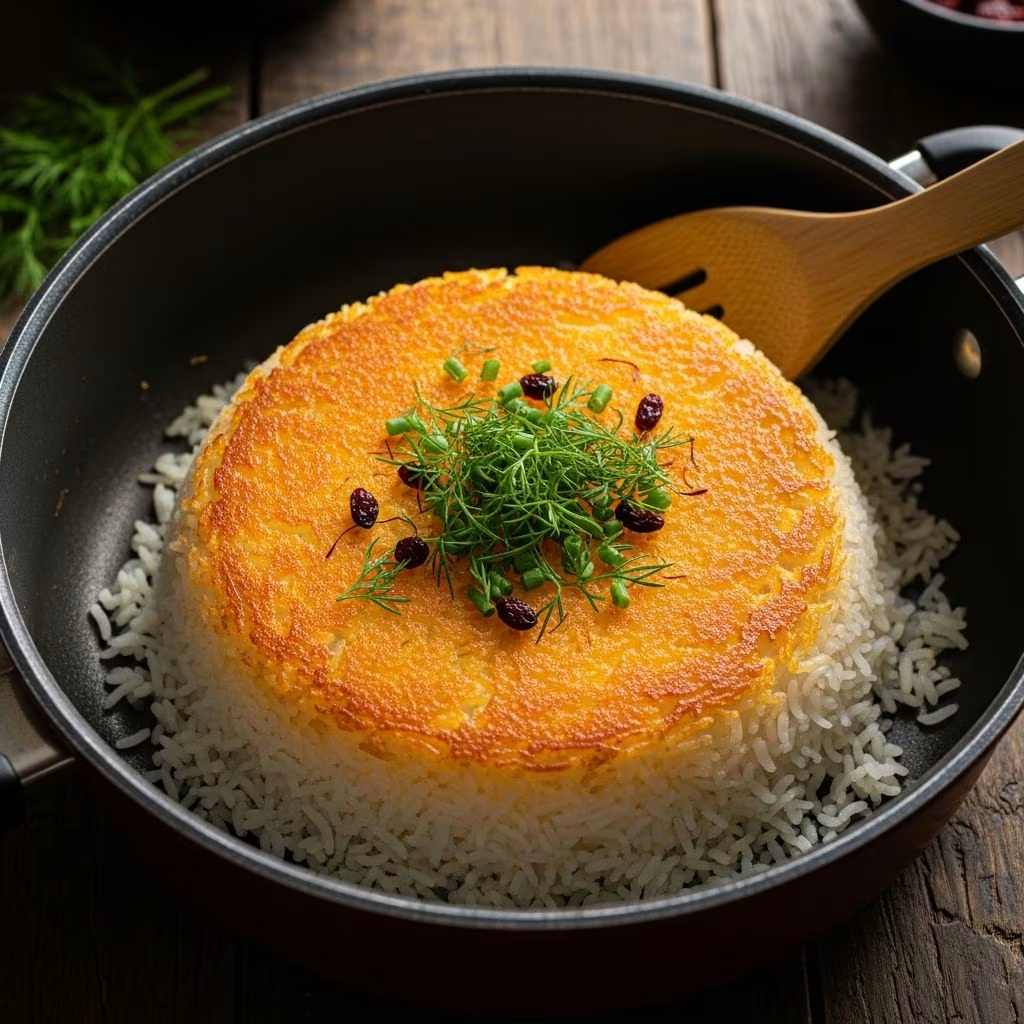
A defining characteristic of properly prepared kateh is the tahdig—the golden-brown, crispy rice layer that forms on the bottom of the cooking pot. This element transforms a simple rice dish into something more complex and satisfying, providing textural contrast to the soft cooked grains above. Many Persian cooks consider tahdig the prize of the meal, eagerly awaiting its arrival when the rice is inverted.
To encourage tahdig formation, ensure sufficient fat is present in the pot when you transition to low-heat steaming. The combination of direct heat from below and the protective layer provided by the kitchen towel creates ideal conditions for browning without burning. The towel absorbs excess steam that would otherwise condense back into the rice and soften the forming crust.
When serving, begin by gently loosening the rice from the pot’s sides using a fork, working carefully to avoid breaking the crust layer below. For dramatic presentation, place a large serving platter over the pot, secure both handles firmly, and invert the entire contents onto the platter. The complete rice mold, with the glossy brown tahdig prominently displayed on top, creates an impressive culinary presentation.
Troubleshooting Common Kateh Challenges
| Problem | Likely Cause | Solution |
|---|---|---|
| Rice remains crunchy or hard | Insufficient water or premature end to cooking | Add water gradually and extend steaming time |
| Rice turns mushy or gummy | Excess water or inadequate rice washing | Use less water and wash rice more thoroughly |
| No tahdig forms | Insufficient fat or heat too low | Increase fat amount and ensure steady low heat |
| Tahdig burns black | Heat too high or towel blocks steam too completely | Reduce heat and loosen towel placement |
| Rice sticks and won’t invert | Inadequate fat or crust too thin | Ensure proper fat distribution and longer steaming |
Variations and Adaptations
While basic kateh remains unchanged across Persian households, certain adaptations suit different preferences and dietary requirements. Some cooks add a portion of yogurt mixed with saffron to the bottom of the pot before spreading the rice, creating distinct layering and color variation. Others incorporate herbs, spices, or even small amounts of pre-cooked meat or beans into the rice before the final steaming stage.
For those without access to imported basmati rice, American long-grain varieties work adequately with water reduction—approximately three cups of water per two cups of rice. The resulting texture differs slightly, becoming slightly stickier, but remains acceptable. Cooking fat can be adjusted based on preference; some prefer butter’s rich flavor while others favor neutral oils that allow the rice’s inherent taste to shine through.
Serving Suggestions and Pairings
Kateh serves as a versatile foundation for countless Persian meals. Its simple, comforting nature complements rich stews, vibrant herb-based dishes, and grilled proteins beautifully. Fresh herbs like parsley, dill, and cilantro scattered over finished kateh add brightness and cultural authenticity. Accompanying the rice with yogurt, fresh vegetables, and pickled items creates a complete, satisfying meal.
In traditional Persian dining, kateh occupies the role of humble foundation—the essential component that allows other flavors to shine while providing substance and satisfaction. Its everyday nature makes it equally at home in formal dinner settings or simple family gatherings.
Frequently Asked Questions
Can I make kateh in a rice cooker? Yes, modern rice cookers accommodate kateh preparation, though the tahdig development becomes more challenging without direct heat control.
How long can prepared kateh be stored? Refrigerate leftover kateh in an airtight container for up to four days, reheating gently with a small amount of water or broth.
What’s the difference between kateh and Persian steamed rice? Steamed rice requires parboiling and draining, producing fluffier grains, while kateh cooks entirely in the pot, yielding softer, less separated grains.
Is kateh vegetarian? Yes, kateh naturally accommodates vegetarian and vegan diets; simply substitute vegetable oil for ghee or butter.
Why does my tahdig sometimes stick too much? Increase the amount of cooking fat or reduce heat slightly to prevent excessive browning and adhesion.
References
- Easy Kateh Recipe: Perfect Persian Stove-Top Rice — Patient.info. Accessed 2026. https://patient.info/recipes/vegan-recipes/kateh-persian-stove-top-rice
- Kateh – Persian Plain Rice Recipe — Rozina’s Persian Kitchen. 2019-07-31. https://rozinaspersiankitchen.wordpress.com/2019/07/31/persian-kateh-rice/
- Kateh (Persian Rice – The Easy Way) — Saffron & Herbs. 2020-11-15. https://saffronandherbs.com/2020/11/15/kateh/
- Kateh – Persian Style Plain and Simple Rice — Turmeric & Saffron. 2011-09-01. https://turmericsaffron.blogspot.com/2011/09/kateh-persian-style-plain-and-simple.html
- KATEH | PERSIAN QUICK RICE — Persian Mama. Accessed 2026. https://persianmama.com/kateh-persian-quick-rice/