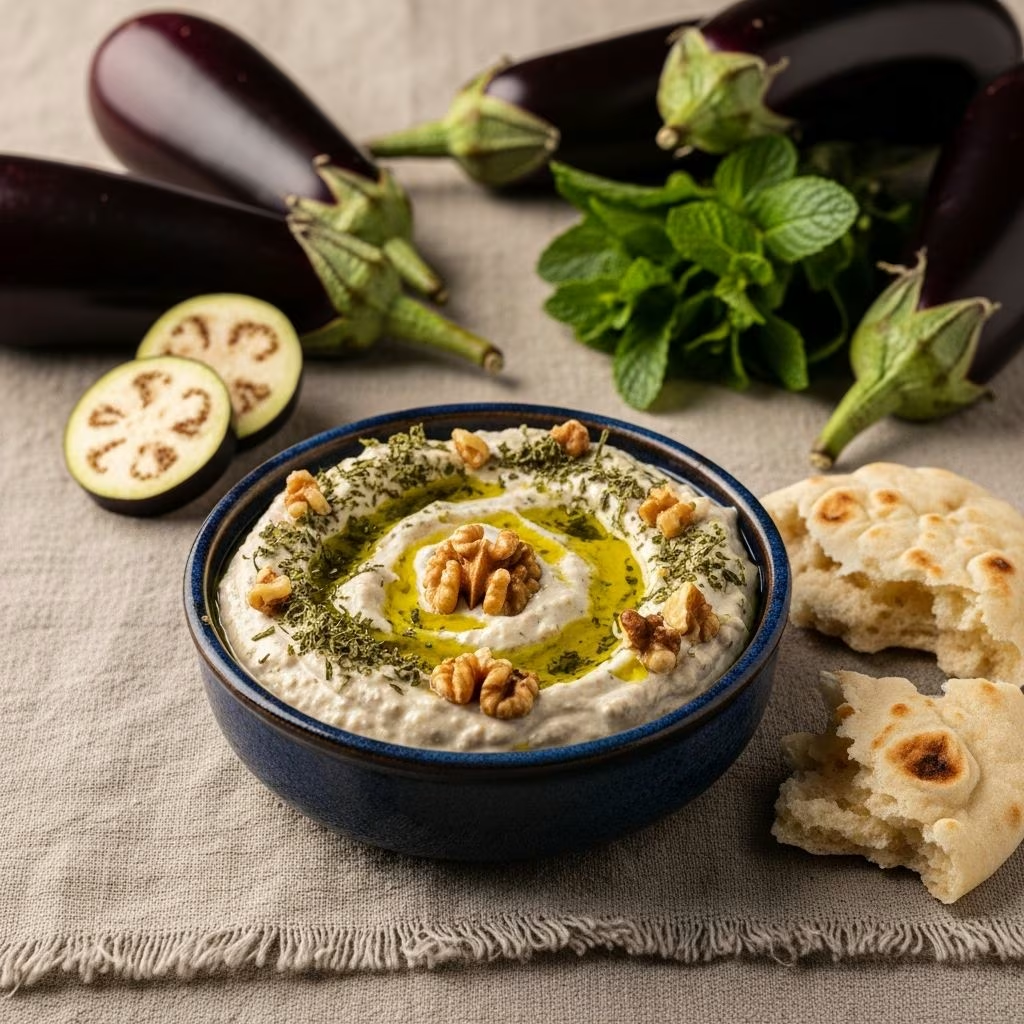
Kashke Bademjan is a classic Persian appetizer that captivates with its smoky eggplant base, deeply caramelized onions, pungent garlic, and tangy kashk—a fermented dairy product that adds a unique creamy tang. This dip, often enjoyed warm or at room temperature, embodies the essence of Persian cuisine’s balance of savory, earthy, and aromatic elements. Rooted in Middle Eastern traditions, it pairs perfectly with flatbreads like barbari or lavash, making it an ideal starter for gatherings or a simple snack at home.
The Heritage and Appeal of Kashke Bademjan
This dish traces its origins to Persian culinary practices, where eggplant, known as bademjan, holds a starring role in numerous recipes due to its versatility and ability to absorb flavors. The addition of kashk distinguishes it, providing a fermented sharpness reminiscent of yogurt but with a thicker, more intense profile. Historically served during festive meals or as part of a mezze spread, Kashke Bademjan highlights simple ingredients transformed through patient cooking techniques like slow caramelization and roasting.
What makes this dip stand out is its textural contrast: the velvety mashed eggplant against crispy garnishes of fried onions, walnuts, and mint-infused oil. It’s naturally vegetarian, gluten-free, and can be adapted for vegan diets by swapping kashk with plant-based alternatives. Its popularity spans home kitchens to restaurants, appreciated for both flavor depth and ease of preparation once key steps are mastered.
Essential Ingredients for Authentic Flavor
Gathering the right components is crucial for replicating the dish’s signature taste. Here’s a breakdown of the core ingredients and their roles:
- Eggplants (2-4 medium globe or Italian varieties): The foundation, providing smoky tenderness when roasted. Choose firm, heavy ones with smooth, dark skin for optimal meatiness.
- Onions (1-2 large): Thinly sliced and caramelized to sweetness, forming the aromatic base. Reserve some for garnish.
- Garlic (4-6 cloves, minced): Adds sharp pungency that mellows during cooking.
- Kashk (½-1 cup): The tangy star; substitute with Greek yogurt or sour cream if unavailable.
- Dried Mint (1-2 tbsp): Infuses herbal freshness, often bloomed in oil for garnish.
- Turmeric (½ tsp): Lends golden color and subtle earthiness.
- Olive Oil (3-4 tbsp): For sautéing and richness; use extra virgin for best flavor.
- Walnuts (2 tbsp, chopped): Optional crunch and nutty depth.
- Salt, Pepper, Saffron (optional pinch steeped in water): For seasoning and luxurious aroma.
These elements combine to create layers of flavor: sweetness from onions, smokiness from eggplant, tang from kashk, and herbs from mint.
Step-by-Step Recipe Instructions
Preparing Kashke Bademjan involves about 1-1.5 hours, mostly hands-off. This yields 4-6 servings.
Prepare the Eggplants
Preheat oven to 425°F (220°C). Prick whole eggplants with a fork, place on a lined baking sheet, and roast for 40-50 minutes until charred and soft. Alternatively, sear slices in hot oil for 2-3 minutes per side on stovetop for deeper browning. Cool slightly, peel (discard stems), and mash the flesh roughly. This step removes excess moisture and intensifies flavor.
Carmelize the Onions
In a large skillet over medium heat, warm 1-2 tbsp oil. Add thinly sliced onions and a pinch of salt. Cook 40-60 minutes, stirring occasionally, lowering heat as they soften and turn deep golden. Patience here yields sweet, jammy results—remove 2 tbsp for topping.
Build the Dip
To the onions, stir in minced garlic and dried mint for 1 minute until fragrant. Add mashed eggplant, turmeric, saffron water (if using), and a splash of stock or water. Simmer covered 15-30 minutes until thickened. Stir in kashk, adjust salt/pepper, and cook 5-10 more minutes for creaminess.
Garnish and Serve
Transfer to a shallow bowl. Top with reserved onions, walnuts, a drizzle of mint oil (heat oil with extra dried mint), and fresh mint sprigs. Serve warm with bread.
| Step | Time | Key Tip |
|---|---|---|
| Roast Eggplants | 45 min | Char skin for smoke |
| Carmelize Onions | 40-60 min | Low heat prevents burning |
| Simmer Dip | 20-30 min | Mash for smooth texture |
| Total Prep | 1.5 hrs | Make ahead, reheat gently |
Helpful Tips and Common Mistakes to Avoid
Select Quality Eggplants: Avoid spongy ones; darker globe types are meatier. Salt slices and drain 30-60 minutes to reduce bitterness.
Perfect Caramelization: Don’t rush onions—low, slow heat is key. If they stick, add a splash of water.
Kashk Handling: Add late to preserve tang; thin with water if too thick. For vegan version, use coconut yogurt.
Texture Tweaks: Blend smooth or leave chunky. If bitter, add ½ tsp sugar.
Storage: Refrigerate up to 4 days; freezes 1 month. Reheat stovetop with a lid.
Beginners often undercook onions or over-roast eggplant, leading to raw sharpness or mush. Taste iteratively for balance.
Variations to Suit Your Taste
- Lighter Version: Grill or air-fry eggplants instead of oil-searing.
- Spicy Kick: Add cayenne or Aleppo pepper.
- Nut-Free: Skip walnuts, top with pomegranate seeds for tartness.
- Saffron Luxe: Steep threads in hot water for floral notes.
- Stovetop Only: Fry peeled eggplant pieces directly.
These adaptations maintain authenticity while accommodating diets or pantries.
Perfect Pairings and Serving Suggestions
Serve Kashke Bademjan as part of a mezze: alongside hummus, tabbouleh, or stuffed grape leaves. Flatbreads soak up the dip ideally, but try pita chips, veggies (carrots, cucumbers), or even as a baked potato topping.
Pair with Persian rice dishes like tahdig or grilled kebabs for full meals. For drinks, opt for herbal teas, yogurt lassis, or light wines like Sauvignon Blanc to cut richness.
Nutritional Profile and Health Benefits
Per serving (about ½ cup): ~150 calories, 10g fat, 12g carbs, 4g protein, high in fiber from eggplant (aids digestion), antioxidants (nasunin in skin fights inflammation), and probiotics from kashk (gut health). Low-carb, heart-friendly with olive oil’s monounsaturated fats.
| Nutrient | Amount | Benefit |
|---|---|---|
| Fiber | 5g | Digestion support |
| Vitamin C | 10% DV | Immune boost |
| Potassium | 400mg | Heart health |
Frequently Asked Questions (FAQs)
What is kashk, and what can replace it?
Kashk is fermented dried yogurt, salty and tangy. Use sour cream, Greek yogurt, or vegan alternatives.
Can I make this ahead?
Yes, prepare up to 2 days early; flavors deepen. Reheat gently.
Is frying eggplants necessary?
No, roasting is healthier and easier, yielding similar results.
How do I reduce eggplant bitterness?
Salt and drain slices, or add sugar post-cooking.
Vegetarian or vegan?
Naturally vegetarian; vegan with plant-based kashk sub.
Conclusion: Elevate Your Table with Kashke Bademjan
Mastering this dip opens doors to Persian flavors—simple yet profound. Experiment confidently, drawing from time-tested methods for memorable results.
References
- Kashke Bademjan (Persian Eggplant Dip) — Mission Food Adventure. 2023-05-15. https://mission-food.com/kashke-bademjan/
- Kashke Bademjan – Persian Eggplant Dip — Unicorns in the Kitchen. 2022-08-10. https://www.unicornsinthekitchen.com/kashke-bademjan-persian-eggplant-dip/
- Kashke Bademjan (Persian Eggplant Dip) — Cooking With Ayeh. 2024-02-20. https://cookingwithayeh.com/kashke-bademjan-persian-eggplant-dip/
- Persian Eggplant Dip (Kashke Bademjan) — Family Spice. 2021-11-05. https://familyspice.com/daring-cooks-middle-eastern-mezze/
- KASHKE BADEMJAN EGGPLANT AND WALNUT DIP — Persian Mama. 2020-09-12. https://persianmama.com/eggplant-and-walnut-dip-kashke-bedemjan/
- Persian Eggplant Dip: Kashke Bademjan — YouTube (Silk Road Recipes). 2023-07-18. https://www.youtube.com/watch?v=U8nrxtmeM8s