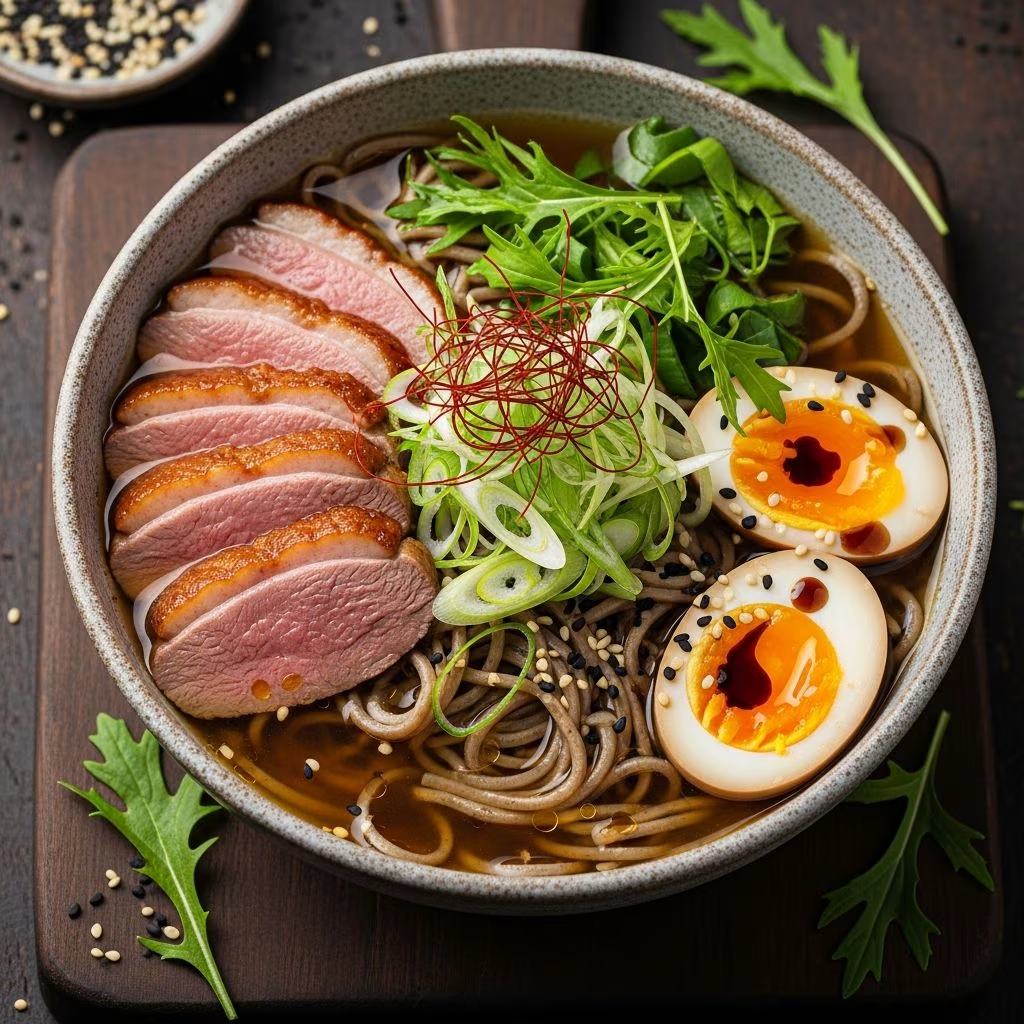
Indulge in the savory depths of Kamo Nanban Soba, a traditional Japanese dish that pairs nutty buckwheat noodles with succulent duck and a robust dashi broth. This soup stands out for its balance of rich fats from the duck, subtle smokiness from charred leeks, and clean umami flavors, making it a comforting yet sophisticated meal.
The Allure of Kamo Nanban Soba in Japanese Culinary Tradition
Kamo Nanban Soba, sometimes called Duck Soba, traces its roots to Japan’s soba culture, where buckwheat noodles meet premium proteins like duck. Unlike everyday chicken or vegetable broths, this version uses duck’s natural fattiness to elevate the soup’s profile, creating a luxurious mouthfeel that clings to each noodle strand. Historically, duck was a rare choice in Japanese kitchens due to its bold taste, but in Kamo Nanban, it shines by infusing the dashi with deep, savory notes.
The dish’s name, ‘nanban,’ hints at a style involving chunky vegetables like leeks, charred for added depth. Served hot in deep bowls, it warms from the inside out, ideal for cooler evenings or as a hearty lunch. Its appeal lies in simplicity: just a handful of ingredients yield complex flavors, proving that masterful Japanese cooking often relies on quality over quantity.
Essential Ingredients for Authentic Flavor
To recreate Kamo Nanban Soba at home, source fresh, high-quality components. Here’s a breakdown of key elements:
- Soba Noodles: Made from buckwheat flour, these provide an earthy, slightly chewy texture. Opt for 100% buckwheat for purity, avoiding wheat-blended versions that dilute the nutty taste.
- Duck Breast: Skin-on for rendering fat that bastes the meat and enriches the broth. Aim for 300g to serve 4, ensuring even cooking.
- Japanese Leeks (Naganegi): Thick white parts cut into 5cm lengths, charred for smokiness. Regular leeks work as substitutes.
- Dashi Stock: The umami backbone, made from kombu, shiitake, and bonito flakes. Use 1000ml for balanced seasoning.
- Soy Sauces and Seasonings: A mix of dark (koikuchi) and light (usukuchi) soy, mirin, and sake for gloss, sweetness, and depth. Quantities: 2.5 tbsp each soy, 100ml mirin, 2 tsp sake.
- Garnishes: Finely chopped green onions and shichimi togarashi for freshness and heat.
These ingredients harmonize: duck fat tempers the soba’s earthiness, while charred leeks add textural contrast.
Step-by-Step Recipe: Crafting Perfect Duck Soba Soup
Preparation takes about 30 minutes, yielding 4 servings. Follow these precise steps for restaurant-level results.
Prepare the Duck Breast
- Pat 300g skin-on duck breast dry. Score the skin in a crosshatch pattern (0.5cm apart) to help fat render without curling.
- Season both sides with salt and pepper.
- Place in a cold pan, skin-side down, over medium heat. Cook 4 minutes until golden, flip for 30 seconds, then rest wrapped in foil for 3 minutes.
- Return to pan, skin-down, for 3 minutes, basting with rendered fat. Rest again. This dual-fry method ensures crispy skin and juicy meat.
Char the Leeks and Build the Broth
- Reserve 100g duck fat. Fry 100g leek whites (5cm pieces) in the pan until charred.
- Add leeks to a pot with 1000ml dashi, 2.5 tbsp dark soy, 2.5 tbsp light soy, 100ml mirin, and 2 tsp sake. Simmer 1-2 minutes to mellow alcohol.
- Strain if desired, but chunky elements add authenticity.
Cook and Assemble
- Boil soba noodles per package (usually 4-5 minutes). Rinse in cold water to stop cooking and remove starch.
- Divide noodles into bowls. Ladle hot broth over, top with 2-3 leek pieces and 2-3 thin duck slices per serving.
- Garnish with chopped green onions and shichimi.
| Step | Time | Key Tip |
|---|---|---|
| Duck Frying | 10 min | Start cold pan for even rendering |
| Broth Simmer | 5 min | Balance soy for color and salt |
| Noodle Cook | 5 min | Rinse thoroughly to avoid gumminess |
| Assembly | 2 min | Serve immediately for hot noodles |
Pro Techniques for Elevating Your Soba
Achieve pro status with these tips drawn from expert methods:
- Dashi Mastery: Soak kombu and shiitake overnight for superior stock, then infuse with bonito post-simmer for clarity.
- Leek Char: Use a kitchen torch or broiler for even charring without sogginess.
- Duck Perfection: Oven-finish at 180°C for 5 minutes if thicker breasts are used, ensuring medium-rare center.
- Noodle Timing: Cook al dente; overcooking leads to mush. Ice bath green onion curls for garnish flair.
- Seasoning Balance: Taste broth before serving—adjust mirin for sweetness if duck fat dominates.
Common pitfalls: Skipping the cold-pan start causes splattering; not resting duck leads to dry slices.
Nutritional Profile and Dietary Adaptations
One serving (1/4 recipe) offers approximately 550 calories: high protein (30g from duck), complex carbs from soba (60g), and healthy fats. Buckwheat provides fiber and antioxidants; dashi adds minerals without excess sodium if light soy is prioritized.
Adaptations:
- Vegetarian: Swap duck for grilled shiitake or tofu; use vegetable dashi.
- Gluten-Free: Pure buckwheat soba is naturally GF; confirm labels.
- Low-Sodium: Reduce soy by half, rely on dashi umami.
- Spicy Twist: Amp shichimi or add rayu chili oil.
Pairing Suggestions and Serving Ideas
Serve Kamo Nanban Soba in insulated bowls to retain heat. Pair with:
- Drinks: Hot green tea or chilled sake to cut richness.
- Sides: Pickled ginger, sunomono salad, or steamed greens for acidity.
- Occasions: Weeknight dinners, izakaya nights, or winter gatherings.
For upscale presentation, fan duck slices artfully atop noodles, with curls of green onion.
Frequently Asked Questions (FAQs)
What if I can’t find naganegi leeks?
Use standard leeks or spring onions’ white parts; charring mimics the effect.
Can I make this ahead?
Prep duck and broth up to 2 days early; cook noodles fresh to avoid sogginess.
Is duck necessary, or can I substitute?
Chicken works but lacks fat richness; try pork belly for a twist.
How do I store leftovers?
Keep components separate; reheat broth and noodles individually.
What’s the best soba brand?
Hakubaku Organic or Japanese imports for authentic texture.
Variations to Explore Beyond Tradition
Experiment with:
- Cold Version (Hiyashi Kamo Soba): Chill broth, serve over iced noodles with sesame dressing.
- Seafood Twist: Add prawns or scallops for coastal flair.
- Vegetable Boost: Shiitake, enoki, and spinach for heartiness.
- Fusion: Miso-enriched broth or ramen-style eggs.
These keep the core intact while personalizing.
Mastering Kamo Nanban Soba unlocks a world of Japanese noodle artistry—its simplicity belies profound satisfaction. Gather ingredients and simmer up this gem soon.
References
- Duck Soba Noodle Soup (Kamo Nanban Soba) — Sudachi Recipes (Yuto Omura). 2023. https://sudachirecipes.com/duck-soba/
- Duck Soba Noodle Soup (Kamo Nanban) — Asian Inspirations. 2023. https://asianinspirations.com.au/recipes/duck-soba-noodle-soup-kamo-nanban/
- Duck Soba Noodle Soup (Kamo Nanban) by Chef Masa Arakane — YouTube (Asian Inspirations). 2023-09-01. https://www.youtube.com/watch?v=cUsMQCLq5gU
- Japanese Duck Soba Noodle Soup Recipe (Kamo Nanban Soba) — YouTube. 2023. https://www.youtube.com/watch?v=_uzTArOEryM
- How to Make Kamo Nanban Soba (Japanese Duck Noodle Soup Recipe) — Japanese Taste. 2023. https://japanesetaste.com/blogs/japanese-taste-recipes/how-to-make-kamo-nanban-soba-japanese-duck-noodle-soup-recipe