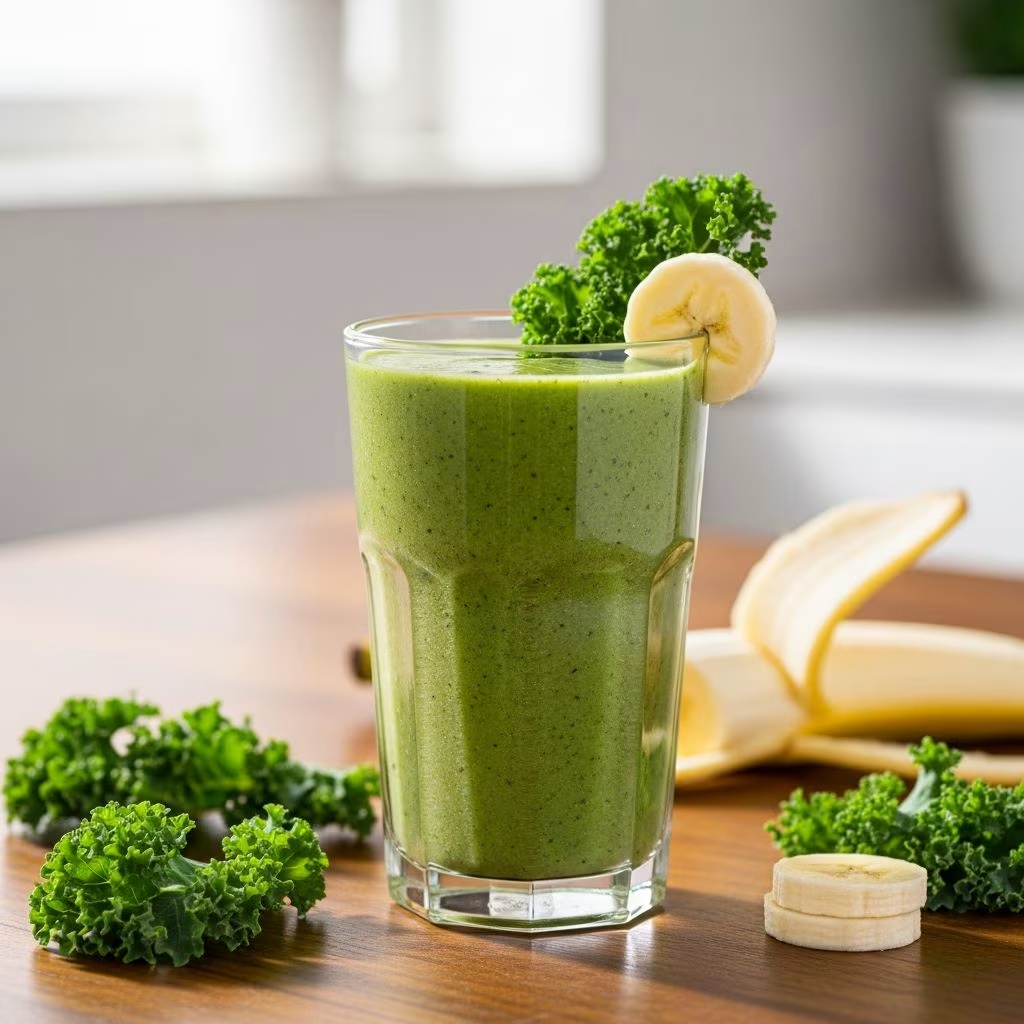
Blending kale and bananas creates a powerhouse drink that combines earthy greens with sweet, creamy fruit for a smooth, satisfying sip. This recipe delivers vitamins, fiber, and sustained energy without complexity, making it ideal for busy mornings or quick snacks.
Why This Smoothie Stands Out for Daily Wellness
Kale brings a wealth of antioxidants, vitamins A, C, and K, supporting immune function and bone health. Bananas add potassium and natural sugars for steady energy release. Together, they form a balanced base that’s gentle on the stomach yet filling.
Health organizations highlight leafy greens like kale for their role in reducing inflammation and promoting heart health. The USDA notes kale’s high nutrient density, providing more than daily vitamin needs per serving. Bananas complement this with digestible carbs, aiding workout recovery per sports nutrition guidelines.
Essential Ingredients for Perfect Balance
Gather these staples for one serving:
- 2 cups fresh kale leaves, stems removed for smoother texture
- 1 ripe banana, peeled (frozen for chillier consistency)
- 1 cup unsweetened almond milk or plant-based alternative
- ½ cup frozen pineapple chunks for tang
- ½ cup frozen strawberries for antioxidant punch
- 1 tablespoon peanut butter or collagen powder for protein boost
These components ensure creaminess without dairy, keeping it vegan-friendly. Ripe bananas provide natural sweetness, reducing added sugar needs.
Step-by-Step Blending Guide
- Prep your blender: Pour liquid first—almond milk into the base—to facilitate smooth blending and prevent sticking.
- Incorporate greens: Add kale next. Pulse briefly to break down fibers, avoiding gritty bits especially with standard blenders.
- Layer fruits: Include banana, frozen pineapple, and strawberries. The frozen elements chill and thicken naturally, skipping ice.
- Boost with extras: Stir in peanut butter or protein powder last on low speed to preserve texture.
- Blend and serve: Process on high until velvety, about 1-2 minutes. Pour into a glass and enjoy immediately.
For best results, use a high-speed blender. If yours is weaker, thaw frozen fruit slightly or blend in stages.
Nutritional Breakdown and Benefits
This smoothie packs roughly 300 calories, 26g protein (with add-ins), 7g fiber, and ample vitamins. Kale contributes iron and calcium; fruits offer hydration-supporting electrolytes.
| Nutrient | Amount per Serving | Daily Value % |
|---|---|---|
| Calories | 300 | 15% |
| Protein | 26g | 52% |
| Fiber | 7g | 25% |
| Vitamin C | 120mg | 133% |
| Potassium | 900mg | 19% |
Data adapted from ingredient analyses; actual values vary by brands. Supports digestion, satiety, and recovery.
Customizing for Taste and Dietary Needs
Adapt easily:
- Milder greens: Swap kale for spinach or baby kale to tone down bitterness.
- Lower sugar: Use half banana plus avocado for creaminess with fewer carbs.
- Nut-free: Opt for sunflower seed butter or skip it.
- Protein punch: Add vanilla whey or plant protein; aim for 20-30g total.
- Tropical twist: Increase pineapple or add mango.
Experiment to match preferences while retaining nutrition.
Common Blending Challenges and Fixes
Too thick? Add more liquid gradually. Gritty texture? Blend greens with liquid first. Not sweet enough? Riper bananas or a date work wonders. Frozen fruit prevents dilution unlike ice.
Store leftovers in airtight containers up to 24 hours; shake before drinking as separation occurs.
Pairing Ideas for Meals and Snacks
Enjoy solo or with nuts for breakfast. Post-workout, it replenishes glycogen. For lunch, pair with oatmeal. Kids love it blended extra smooth.
Health Insights from Nutrition Experts
Leafy greens in smoothies improve veggie intake, per CDC recommendations. A study in the Journal of the Academy of Nutrition and Dietetics shows blended greens retain bioavailability. Potassium from bananas aids blood pressure control, as per American Heart Association.
Collagen or plant proteins enhance muscle repair, backed by ISSN position stands on recovery nutrition.
Frequently Asked Questions
Can I make this without a fancy blender?
Yes, but blend greens first and use thawed fruit to ease the process.
Is it okay for weight loss?
Absolutely—high fiber promotes fullness; customize to lower calories by reducing fruit.
How long does it last in the fridge?
Up to 24 hours; nutrients degrade minimally if sealed.
Can I use fresh fruit instead of frozen?
Yes, but add ice for chill; frozen yields better thickness.
What’s the best milk substitute?
Oat or coconut water for subtle flavor; water lightens it up.
Scaling Up for Family or Meal Prep
Double ingredients for two; freeze in portions. Batch prep kale by washing and portioning weekly. Use silicone molds for popsicles—healthy treats!
Variety prevents boredom: rotate berries or add ginger for spice.
Sustainable Sourcing Tips
Choose organic kale to minimize pesticides. Buy frozen fruits in bulk for less waste. Local bananas reduce carbon footprint.
This approach aligns with EPA guidelines on sustainable eating.
References
- Simple Green Smoothies: Kale Banana Smoothie Recipe — Simple Green Smoothies. 2023. https://simplegreensmoothies.com/kale-banana-smoothie/
- Banana Kale Smoothie — Plant Based on a Budget. 2023-05-15. https://plantbasedonabudget.com/banana-kale-smoothie/
- Banana Kale Smoothie — Free Your Fork. 2024. https://www.freeyourfork.com/banana-kale-smoothie/
- USDA FoodData Central: Kale and Banana Nutrition — United States Department of Agriculture. 2025-01-10. https://fdc.nal.usda.gov/
- CDC: Increasing Vegetable Intake Through Smoothies — Centers for Disease Control and Prevention. 2024-08-20. https://www.cdc.gov/nutrition