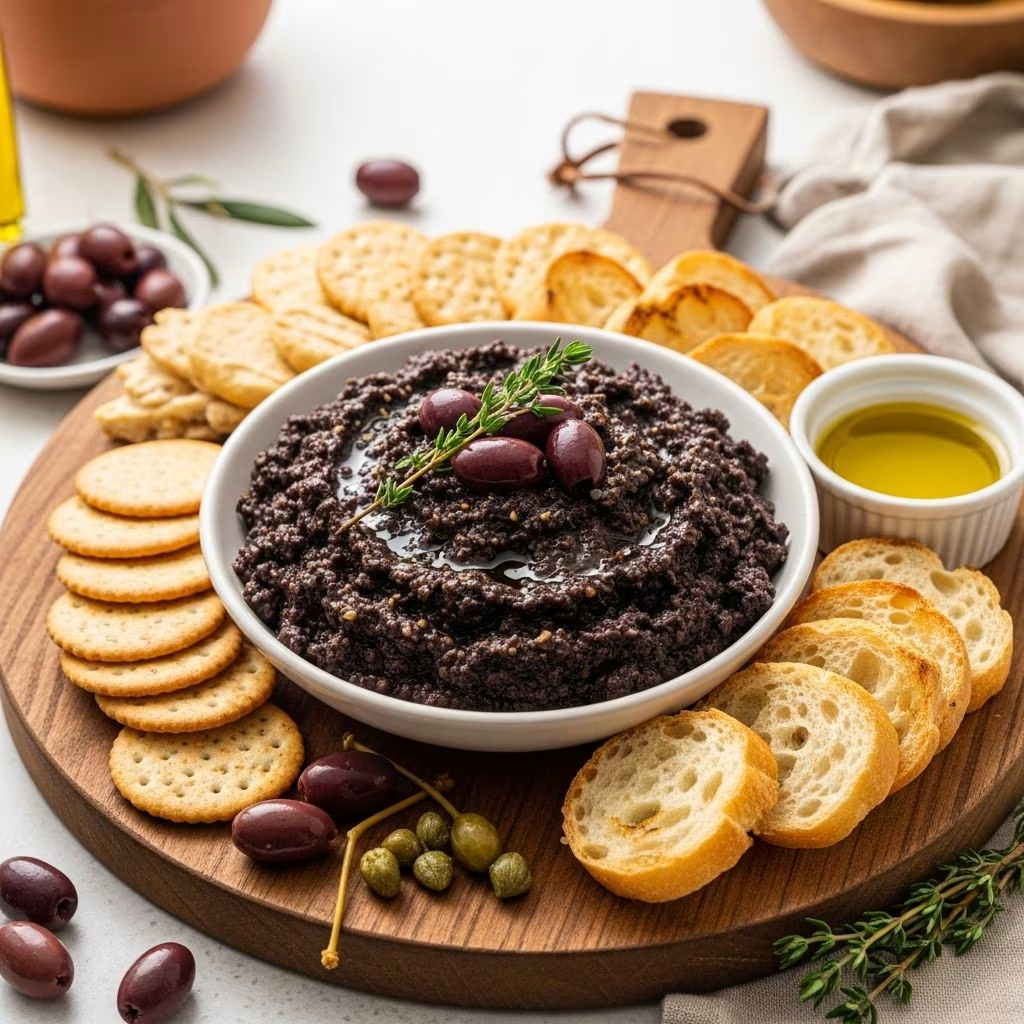
Immerse yourself in the rich, savory world of Kalamata olive tapenade, a staple of Mediterranean cuisine that transforms humble pantry staples into an explosion of flavor. This versatile spread, characterized by its deep purple hue and pungent brininess, originates from the sun-drenched groves of Greece and the Provençal kitchens of France. With just a food processor and a handful of ingredients, you can create a dip that’s equally at home on a rustic charcuterie board or as a zesty pasta topping.
The Essence of Kalamata Olives
Kalamata olives stand at the heart of this recipe, prized for their meaty texture and robust, fruity notes. Unlike milder green varieties, these plump black olives deliver a salty punch balanced by subtle almond-like undertones. Sourced from the Peloponnese region, they are cured in a red wine vinegar brine, which imparts their signature wrinkled appearance and intense taste.
Selecting high-quality, pitted Kalamata olives is crucial—opt for those packed in olive oil or brine without artificial additives to preserve authenticity. A standard 375ml jar yields about 1.5 cups drained, forming the base for most recipes. Their natural oils contribute to the tapenade’s silky consistency without excess added fat.
Core Ingredients for Authentic Flavor
Building layers of taste requires precision. Here’s a breakdown of essential components:
- Kalamata olives: 1.5 cups pitted and drained, the salty foundation.
- Garlic cloves: 1-2, minced for aromatic sharpness.
- Capers: 1-1.5 tablespoons, rinsed and drained, adding tangy salinity.
- Fresh parsley or herbs: 1-3 tablespoons chopped, for bright, earthy contrast.
- Lemon juice: 1 teaspoon fresh-squeezed, to cut through richness.
- Extra-virgin olive oil: 1-3 tablespoons, for emulsification and smoothness.
- Seasonings: Black pepper, oregano, or chili flakes to taste.
Variations abound: Incorporate pine nuts or Parmesan for nutty creaminess, sun-dried tomatoes for sweetness, or anchovy paste for umami depth.
Step-by-Step Preparation Guide
Mastering tapenade is straightforward, taking under 15 minutes. Use a food processor for efficiency, aiming for a coarse chop rather than a smooth puree to retain texture.
- Prep garlic: Pulse 1-2 peeled cloves until finely minced, preventing raw bitterness.
- Add mains: Toss in olives, capers, herbs, lemon juice, and seasonings. Process in short bursts for 10-20 seconds.
- Emulsify: With the motor running low, drizzle in olive oil gradually until the mixture binds into a cohesive paste. Scrape sides as needed.
- Rest and taste: Transfer to a bowl, cover, and let flavors meld for 1 hour at room temperature or overnight in the fridge. Adjust salt sparingly—olives and capers provide ample brininess.
For mortar-and-pestle purists, pound ingredients sequentially for superior control over texture, though this extends prep to 20-30 minutes.
Texture and Consistency Tips
The ideal tapenade clings to a spoon without being oily or pasty. Too dry? Add olive oil incrementally. Too smooth? Pulse less or incorporate nuts for crunch. Room temperature serving enhances spreadability—chill only for storage.
| Common Issues | Solutions |
|---|---|
| Bitter aftertaste | Use less garlic or soak olives in water 30 minutes prior. |
| Overly salty | Rinse olives and capers thoroughly; balance with lemon. |
| Separates | Emulsify slowly with running processor. |
| Lacks depth | Infuse oil with herbs or add roasted garlic. |
Creative Serving Suggestions
Elevate tapenade beyond the basics:
- Crostini or bruschetta: Spread on toasted baguette slices topped with goat cheese or burrata.
- Charcuterie boards: Pair with cured meats, cheeses, and crudités for contrast.
- Pasta enhancer: Stir into hot linguine with cherry tomatoes and feta.
- Protein boost: Top grilled fish, chicken, or steak for Mediterranean flair.
- Vegetarian mains: Stuff into bell peppers or layer in veggie lasagna.
For brunch, swirl into scrambled eggs or serve with fresh figs and prosciutto.
Nutritional Profile and Health Benefits
This dip packs antioxidants from olives’ polyphenols, supporting heart health and reducing inflammation. A 2-tablespoon serving offers roughly 100 calories, 10g healthy fats (mostly monounsaturated), 1g protein, and negligible carbs. Garlic and herbs provide antimicrobial properties, while lemon adds vitamin C.
Customize for diets: Vegan by default; gluten-free on appropriate crackers; low-sodium by reducing capers.
Storage and Make-Ahead Strategies
Tapenade stores refrigerated in an airtight jar for up to 2 weeks—its flavors intensify over time. Freeze in ice cube trays for portions lasting 3 months; thaw overnight. Avoid metal containers to prevent olive discoloration.
Recipe Variations for Every Palate
Spicy Harissa Twist
Blend in 1 tsp harissa paste and extra chili flakes for North African heat.
Green Olive Fusion
Mix equal parts Kalamata and Castelvetrano olives with basil for milder notes.
Creamy Nutty Version
Toasted pine nuts (1/4 cup) and Parmesan elevate it to pesto-like luxury.
Sun-Dried Tomato Infusion
Chop 4 oil-packed tomatoes for sweet-tart balance.
Pairing Wine and Beverages
Complement the brininess with crisp whites like Assyrtiko or Vermentino. Rosé from Provence mirrors the Provençal roots. For cocktails, try a dirty martini or chilled ouzo.
Frequently Asked Questions
Can I make tapenade without a food processor?
Yes, finely chop all ingredients by hand and mash with a fork for rustic texture.
Are anchovies necessary?
No, they’re optional for umami; capers suffice as a vegan alternative.
How do I pit olives if unpitted?
Smash gently with a chef’s knife side, pop out pits, and chop.
Is tapenade safe for pregnant women?
In moderation, yes—choose pasteurized olives to minimize risks.
Can I use it as a sandwich spread?
Absolutely; layer on turkey, provolone, and arugula for a gourmet sub.
Advanced Techniques for Chefs
Experiment with infused oils—rosemary or garlic—for custom profiles. Slow-roast olives beforehand for caramelized sweetness. For large batches, scale proportionally but process in stages to avoid overheating.
Incorporate into compound butters or aiolis for multi-use versatility. During holidays, tint with beet powder for festive appeal without altering taste.
References
- Kalamata Olive Tapenade — Mia Kouppa. 2023-05-15. https://miakouppa.com/recipe-kalamata-olive-tapenade/
- Easy Kalamata Olive Tapenade Recipe — The Conscientious Eater. 2024-02-10. https://theconscientiouseater.com/tapenade-recipe-with-step-by-step-instructions/
- Kalamata Olive Tapenade — A Sweet Pea Chef. 2023-08-22. https://www.asweetpeachef.com/kalamata-olive-tapenade/
- Olive Tapenade Recipe — Love and Lemons. 2024-01-05. https://www.loveandlemons.com/olive-tapenade/
- Easy Olive Tapenade Recipe and Brie Crostini — Ain’t Too Proud to Meg. 2023-11-12. https://ainttooproudtomeg.com/easy-olive-tapenade-recipe-and-brie-crostini/
- Quick Kalamata Tapenade — Cook the Story. 2023-06-18. https://cookthestory.com/kalamata-tapenade-recipe/
- 7 Mouth Watering Recipes Using Black Olive Tapenade — Arlotta Food. 2024-03-20. https://arlottafood.com/blogs/simple-uses-recipe-ideas/recipes-using-black-olive-tapenade