Ground lamb offers a distinctive alternative to traditional beef burgers, providing a richer, more nuanced flavor profile that has graced Mediterranean and Middle Eastern cuisines for centuries. When combined with aromatic spices and finished with a cooling yogurt-based sauce, lamb burgers transform into an elegant yet accessible dish suitable for weeknight dinners or entertaining guests. This comprehensive guide explores every aspect of crafting exceptional lamb burgers, from ingredient selection through presentation.
Understanding Ground Lamb as Your Base Ingredient
Ground lamb differs significantly from ground beef in both flavor and texture. The meat carries subtle gamey notes that pair exceptionally well with warm spices like cumin, coriander, and rosemary. When purchasing ground lamb, look for meat that appears bright pink to red, indicating freshness. The fat content typically ranges from 15-20%, which provides necessary moisture and flavor during cooking. Many home cooks appreciate blending ground lamb with a small percentage of ground pork to mellow the pronounced flavor while maintaining the burger’s essential character.
Quality matters significantly when selecting your primary ingredient. Sourcing lamb from reputable butchers or specialty meat markets often yields superior results compared to pre-packaged options. If grinding your own lamb at home, work with cold meat and equipment to achieve the ideal texture for burger patties.
Building Aromatic Flavor Through Strategic Spice Combinations
The spice profile forms the backbone of memorable lamb burgers. Unlike beef burgers that rely heavily on salt and pepper, lamb burgers benefit from layered spice combinations that complement rather than overpower the meat’s natural character.
Essential Dry Spices
- Ground cumin — provides warm, earthy undertones that ground lamb naturally amplifies
- Ground coriander — adds subtle citrus notes and subtle sweetness
- Smoked paprika — contributes depth and mild smokiness without heat
- Black pepper — enhances overall seasoning and adds light pungency
- Sea salt — essential for seasoning and flavor development
Fresh Aromatics and Herbs
Fresh ingredients elevate lamb burgers beyond one-dimensional spiced patties. Minced garlic provides pungent notes that marry well with yogurt-based accompaniments, while fresh herbs introduce brightness and complexity. Traditionally, recipes incorporate parsley, mint, and dill—herbs that have paired with lamb in Mediterranean and Middle Eastern cooking for generations. Some preparations include finely minced onions sautéed until soft before incorporation, which adds subtle sweetness and texture variation.
A common practice involves adding breadcrumbs soaked in water or milk to the mixture, which helps bind ingredients and promotes moisture retention during cooking. However, many contemporary recipes omit this step, relying instead on the meat’s natural binding properties when gently combined.
The Art of Mixing and Forming Patties
The technique employed when combining ingredients directly influences the final burger’s texture and quality. Overworking the meat mixture creates dense, tough patties, while under-mixing results in crumbly burgers that fall apart during cooking. The ideal approach involves gently folding ingredients together using clean hands, mixing only until components distribute evenly.
Once combined, divide the mixture into four equal portions. Gently shape each portion into a patty approximately three-quarters to one-half inch thick. Many cooks create a shallow indentation in the center of each patty using their thumb—this simple technique prevents the burger from puffing upward excessively during cooking, resulting in more even heat distribution and thorough doneness.
For optimal results, refrigerate formed patties on a parchment-lined baking sheet for at least 30 minutes before cooking. This resting period allows the meat to relax and flavors to meld, promoting better structural integrity during the cooking process.
Cooking Methods: Skillet Versus Grill
Two primary cooking approaches suit lamb burgers, each offering distinct advantages depending on equipment availability and weather conditions.
Skillet Cooking
Cooking in a cast-iron or stainless steel skillet provides superior control over heat intensity and allows precise monitoring of doneness. Heat one tablespoon of olive oil over medium-high heat until the surface shimmers—this critical step ensures immediate browning when the patty contacts the hot surface. Once oil reaches the correct temperature, carefully place patties into the skillet without crowding. Resist the urge to move burgers during the initial cooking phase, as movement disrupts crust formation. After approximately three minutes, flip each patty and cook the second side for an additional three minutes for medium doneness. The internal temperature should reach 160°F (71°C) for food safety when measured with an instant-read thermometer inserted into the thickest portion of the patty.
Grilling Method
Grilling introduces subtle smokiness and creates attractive grill marks that enhance presentation. Preheat the grill to medium-high temperature, approximately 375-400°F (190-200°C). Oil the grill grates to prevent sticking. Place patties directly over heat and cook for approximately six minutes per side, depending on thickness and desired doneness. The cooler edge of a gas grill or the indirect heat zone of a charcoal grill accommodates burgers that require extended cooking to reach proper internal temperatures without developing overly dark exteriors.
Regardless of cooking method, allow finished burgers to rest on a clean plate for three to five minutes before serving. This resting period permits juices to redistribute throughout the meat, maximizing flavor and moisture in every bite.
Crafting the Perfect Yogurt Sauce
The yogurt sauce represents the counterpoint to lamb’s richness, providing cooling creaminess and tangy brightness that cuts through the meat’s robust flavors.
Core Yogurt Sauce Recipe
- One cup Greek yogurt (provides thickness and mild tang)
- One to two cloves garlic, finely minced (infuses pungent freshness)
- One tablespoon lemon juice (adds brightness and acidity)
- One-half teaspoon sea salt (enhances all flavors)
- One-quarter teaspoon ground black pepper
- One tablespoon minced fresh dill or parsley (optional but recommended)
Combine these ingredients in a small bowl, stirring gently until thoroughly incorporated. The sauce develops additional flavor dimension when prepared at least one hour before serving, allowing component flavors to meld and intensify. Some preparations incorporate feta cheese crumbled directly into yogurt for additional complexity and textural interest.
Sauce Variations Worth Exploring
Beyond the basic yogurt formula, creative variations accommodate diverse palates and ingredient availability. Mint-infused versions echo Greek and Middle Eastern traditions, while dill-forward preparations complement the meat’s richness. Some recipes incorporate cucumber, either finely diced or grated and squeezed dry to prevent excessive moisture. This approach creates a homemade tzatziki-style sauce that offers refreshing vegetable texture alongside dairy creaminess.
Strategic Toppings and Assembly Techniques
Thoughtful topping selections elevate lamb burgers from satisfying to memorable. Fresh arugula contributes peppery notes that harmonize with lamb’s richness, while softer lettuces provide gentler textural contrast. Thick-cut tomato slices deliver bright acidity and juicy freshness. Thinly sliced red onions introduce sharp bite, though pickling these onions in lime juice and salt for two hours mellows their intensity while adding subtle complexity.
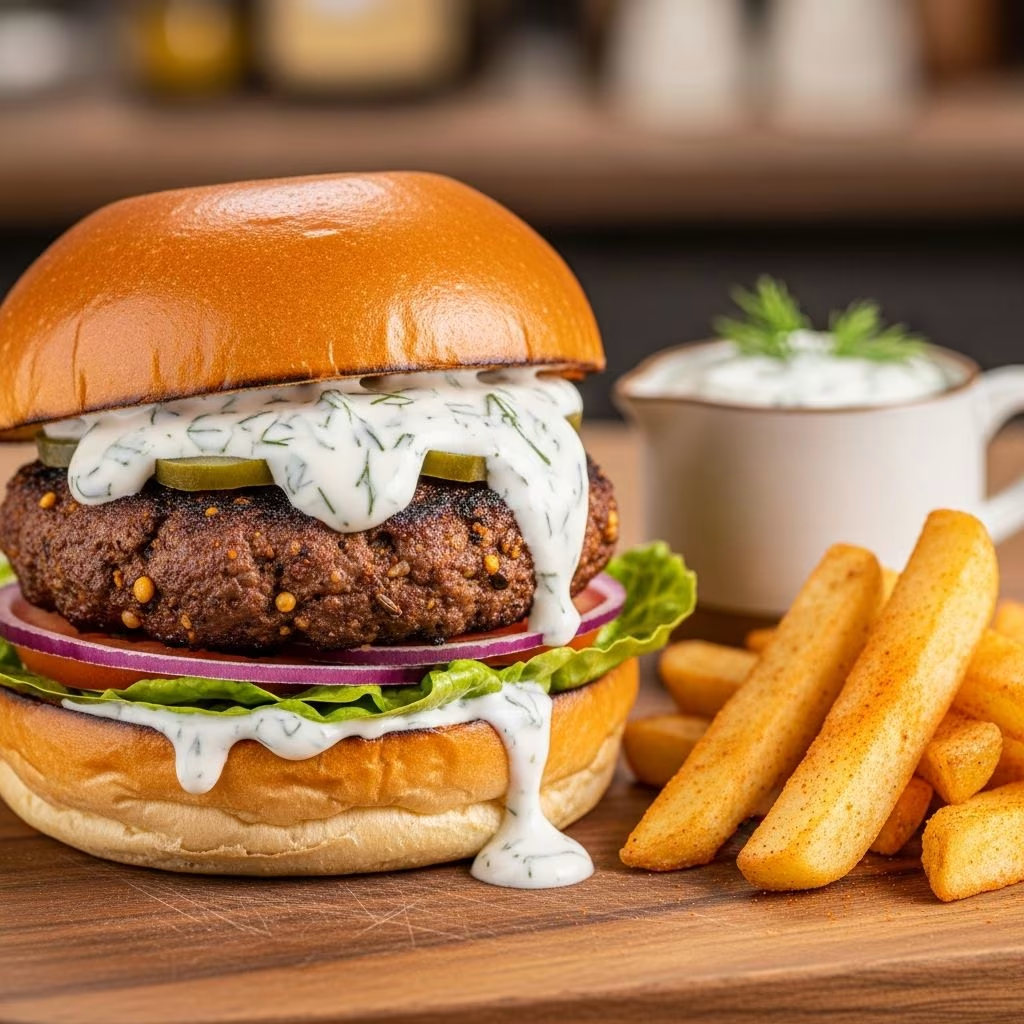
Burger buns deserve equal consideration as the patty itself. Brioche buns offer rich creaminess that complements lamb’s gamey notes, while sesame seed varieties add nutty flavor and textural interest. Pita bread pockets accommodate burgers beautifully, allowing easy consumption and elegant presentation. Toasting buns lightly on the grill or in a dry skillet prior to assembly creates structural integrity and subtle caramelized flavor.
Assembly Sequence for Optimal Flavor Distribution
- Position the bottom bun on your work surface, cut-side up
- Spread a generous layer of yogurt sauce onto the bottom bun
- Add fresh arugula or lettuce leaves to create a moisture barrier
- Position the warm lamb patty directly onto the greens
- Arrange tomato slices and pickled onions atop the patty
- Add additional yogurt sauce if desired
- Crown with the top bun and serve immediately
Make-Ahead Strategies and Storage Guidance
Preparing components in advance streamlines weeknight execution and accommodates entertaining scenarios. Ground lamb mixtures can be combined and refrigerated up to eight hours before forming and cooking. This advance preparation allows flavors to develop and meld, often resulting in superior final products. Yogurt sauce maintains quality when covered and refrigerated for up to two days, while pickled onions improve with time and develop deeper flavor complexity over hours.
Uncooked patties freeze exceptionally well when placed on parchment-lined baking sheets and transferred to freezer bags after freezing. This approach prevents clumping and permits cooking individual burgers as needed. Cook frozen patties directly from the freezer, adding approximately two additional minutes per side to account for their lower starting temperature.
Frequently Asked Questions About Lamb Burgers
Can I substitute beef for lamb in these recipes?
While beef represents a viable substitute, flavor and texture will differ significantly. Reduce spice quantities slightly when working with beef, as the meat’s milder character makes strong spices more prominent. Consider increasing garlic and fresh herbs to compensate for beef’s less complex flavor profile.
What internal temperature indicates lamb burger doneness?
Ground lamb, like all ground meat, should reach an internal temperature of 160°F (71°C) as measured by an instant-read thermometer. This temperature ensures foodborne pathogen elimination while maintaining juiciness when cooking techniques incorporate adequate fat content.
Does lamb burger preparation require special equipment?
A simple cast-iron skillet or grill suffices for excellent results. Many cooks prefer cast-iron for its heat retention properties and superior browning capability. No specialized burger equipment proves necessary, though a meat thermometer confirms doneness accuracy.
How can I prevent lamb burgers from tasting too gamey?
Lamb’s characteristic flavor becomes less pronounced when the meat is blended with pork, as the pork’s milder character tempers lamb’s intensity. Additionally, generous use of fresh herbs, citrus, and yogurt-based sauces effectively counterbalance any strong flavors while creating balanced, sophisticated compositions.
Should I use Greek yogurt or regular yogurt for the sauce?
Greek yogurt stands as the superior choice due to its thicker consistency and more pronounced tangy flavor. Its higher protein content creates a sauce with better structural integrity that clings to burgers rather than dripping off. Regular yogurt’s greater water content results in thinner, less stable sauces, though it remains acceptable when Greek yogurt proves unavailable.
Nutritional Considerations and Serving Suggestions
Lamb burgers offer substantial protein content alongside beneficial nutrients including iron, zinc, and B vitamins essential for energy metabolism. Ground lamb contains fat-soluble vitamins including vitamin D when sourced from grass-fed animals. The addition of yogurt sauce increases calcium intake while the fresh vegetable toppings contribute fiber and essential micronutrients.
Serve lamb burgers alongside Mediterranean-inspired accompaniments: crispy oven-roasted potato wedges, cucumber salad with dill vinaigrette, or simple mixed greens with lemon vinaigrette. These pairings complement the burger’s flavor profile while creating balanced, satisfying meals suitable for casual dining or formal entertaining.
Conclusion
Mastering lamb burgers with yogurt sauce opens culinary possibilities that extend far beyond traditional ground beef preparations. Through thoughtful spice selection, proper mixing technique, strategic cooking methods, and complementary accompaniments, home cooks can reliably produce restaurant-quality results. Whether preparing weeknight family dinners or hosting entertaining gatherings, these versatile burgers impress consistently while remaining accessible to cooks of varying skill levels. The interplay between lamb’s robust character and yogurt sauce’s cooling brightness creates memorable flavor combinations that justify lamb’s status as a superior burger base worthy of exploration and regular preparation.
References
- Lamb Burgers with Rosemary Yogurt Sauce — Simply Organic. Retrieved April 2026. https://www.simplyorganic.com/recipes/lamb-burgers-with-rosemary-yogurt-sauce
- Greek Lamb Burger with Yogurt Mint Sauce — Cooking With Ruthie. 2016. https://cookingwithruthie.com/2016/09/21/greek-lamb-burger-yogurt-mint-sauce/
- Lamb Burgers with Feta Yogurt Sauce — Rachel Cooks. Retrieved April 2026. https://www.rachelcooks.com/lamb-burgers/
- Lamb Burgers with Pickled Onions and Yogurt Sauce — Amanda Haas Cooks. 2019. https://www.amandahaascooks.com/2019-1-20-lambburgers/
- Lamb Burgers with Yogurt Sauce and Arugula — American Made Grills. Retrieved April 2026. https://americanmadegrills.com/blogs/recipes/lamb-burgers-with-yogurt-sauce-and-arugula
- Juicy Ground Lamb Burgers with Tzatziki — Well Seasoned Studio. Retrieved April 2026. https://www.wellseasonedstudio.com/ground-lamb-burgers-with-tzatziki/