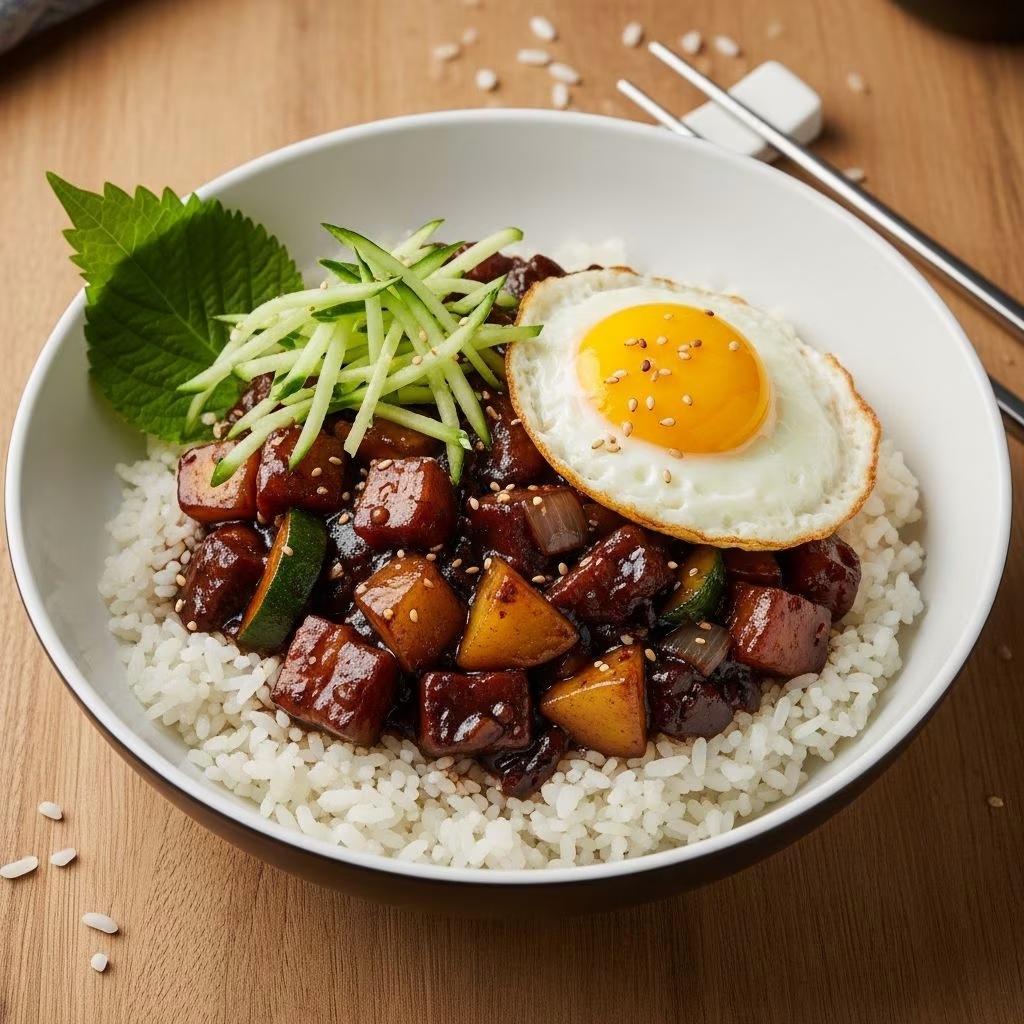
Experience the comforting embrace of jjajangbap, a staple Korean dish where a luscious, glossy black bean sauce cascades over steaming rice. This rice-based twist on the iconic jjajangmyeon swaps noodles for grains, creating a hearty bowl that’s faster to prepare and equally indulgent. Rooted in Korean-Chinese fusion cuisine, jjajangbap highlights chunjang—a fermented black soybean paste that delivers deep, umami-rich flavors. With tender pork, diced vegetables like potatoes and zucchini, and a quick-thickening slurry, it’s ready in about 25 minutes, making it ideal for busy evenings.
The Allure of Korean Black Bean Sauce Dishes
Jjajangbap emerged from the cultural blend of Korean and Chinese immigrants in Incheon during the early 20th century. While jjajangmyeon (noodles with black bean sauce) dominates menus, the rice version offers convenience without sacrificing taste. The sauce’s signature shine comes from a starch slurry, clinging perfectly to each rice grain for maximum flavor absorption.
This dish balances savory, sweet, and slightly salty notes. Chunjang provides earthiness, sugar tempers bitterness, and oyster sauce adds brininess. Aromatics like garlic, ginger, and green onions build a fragrant base, while proteins and veggies ensure a complete meal.
Essential Ingredients for Authentic Flavor
Gathering the right components is key to nailing jjajangbap’s taste profile. Focus on quality chunjang from Korean brands, as variations in saltiness and sweetness affect the final sauce.
- Protein: Pork belly or ground pork (5-8 oz), diced for tenderness. Substitutes include beef, chicken, or tofu for vegetarian options.
- Vegetables: Onion (1 medium, chopped), zucchini (1 cup cubed), potato (1-1.5 cups diced), cabbage (optional, 1 cup chopped), carrot (1/2 for color).
- Sauce Base: Chunjang (2-3 Tbsp), oyster sauce (1-1.5 Tbsp), sugar (1/2-4 tsp), soy sauce (to taste), cooking wine or mirin (1 Tbsp for deglazing).
- Aromatics: Garlic (2 tsp minced), ginger (1 tsp grated), green onions (1/3 cup chopped).
- Thickener: Cornstarch or potato starch slurry (2 Tbsp starch + 3 Tbsp water).
- Other: Neutral oil (4 Tbsp), water or broth (1-1.5 cups), sesame oil for garnish, steamed rice, fried egg.
Pro Tip: Prep all ingredients mise en place style, as the cooking process moves quickly to preserve veggie crunch.
Step-by-Step Guide to Cooking Jjajangbap
Follow this streamlined method for foolproof results. Total time: 25 minutes for 2-4 servings.
- Sauté Protein: Heat 2 Tbsp oil in a wok over medium-high. Add pork cubes, season with salt and pepper, and cook until browned (3-4 minutes). Remove and set aside.
- Build Aromatics: In the same wok, add remaining oil. Sauté garlic, ginger, and white parts of green onions (1 minute). Stir in chunjang and fry for 1-2 minutes to release flavors—don’t burn it.
- Add Veggies: Toss in onion, zucchini, potato, and cabbage. Stir-fry 2-3 minutes until softened. Deglaze with cooking wine or mirin, scraping browned bits.
- Simmer Sauce: Pour in water/broth and sugar. Return pork, bring to boil, then simmer 8-10 minutes until potatoes are tender. Taste and adjust with soy sauce or more chunjang.
- Thicken: Mix slurry, add gradually while stirring. Simmer 2 minutes until glossy and thick. Drizzle sesame oil.
- Serve: Spoon over hot rice, top with fried egg, green onion slices, and optional pickled radish.
Ingredient Variations and Substitutions
Customize jjajangbap to dietary needs or pantry staples while keeping the essence intact.
| Original | Substitution | Notes |
|---|---|---|
| Pork belly | Tofu or mushrooms | Vegetarian-friendly; add extra seasoning for umami. |
| Potato | Sweet potato | Sweeter profile, roast for deeper flavor. |
| Chunjang | Chinese black bean sauce + miso | Approximate substitute; adjust salt. |
| Cornstarch | Potato starch or arrowroot | Similar thickening power. |
| White rice | Brown rice or quinoa | Healthier base, longer cook time. |
For spicier versions, stir in gochujang (1 tsp). Kids love milder, veggie-heavy bowls.
Perfecting the Sauce: Tips from Korean Home Cooks
The magic lies in the sauce’s clingy texture and balanced taste. Fry chunjang briefly to mellow bitterness, and always taste before thickening—brands vary. Use a wok for even heat distribution, and low-sodium broth prevents oversalting. Common pitfalls: overcooking veggies (keep al dente) or lumpy slurry (whisk vigorously).
Storage: Refrigerate leftovers up to 3 days. Reheat with a splash of water to loosen sauce. Freezes well for 1 month.
Nutritional Profile and Health Benefits
A single serving (1/4 recipe over 1 cup rice) offers about 550 calories, 25g protein, 70g carbs, 18g fat. Fermented chunjang provides probiotics for gut health, while veggies boost fiber and vitamins. Potatoes add potassium; pork supplies iron. Opt for lean proteins to lighten it up.
Pairing Suggestions for a Complete Meal
- Sides: Danmuji (pickled radish), kimchi, egg soup (gyeran guk).
- Drinks: Barley tea (boricha) or soju for adults.
- Next Level: Top with cucumber salad or blanched spinach.
Frequently Asked Questions (FAQs)
What is the difference between jjajangbap and jjajangmyeon?
Jjajangbap uses rice instead of wheat noodles, making it quicker and gluten-optional.
Where can I buy chunjang?
Korean grocery stores or online; brands like Ottogi or Nongshim are reliable.
Can I make jjajangbap vegan?
Yes—use tofu, mushrooms, and vegetable broth. Skip oyster sauce or use mushroom-based alternative.
How do I prevent a bitter sauce?
Fry chunjang on low heat and balance with sugar.
Is jjajangbap spicy?
No, it’s savory-sweet. Add gochugaru for heat.
Why Jjajangbap Deserves a Spot in Your Rotation
This versatile dish transforms simple ingredients into a restaurant-worthy meal. Its quick prep, bold taste, and adaptability make it a go-to for families and solo diners alike. Experiment with seasonal veggies or proteins to keep it fresh.
References
- Black Bean Sauce Over Rice (Jjajangbap) — Chef Chris Cho. 2023-01-15. https://chefchrischo.com/jjajangbap/
- Jjajangbap (Rice with Black Bean Sauce) — Seasoned by Jin. 2023-05-20. https://seasonedbyjin.com/jjajangbap-rice-with-black-bean-sauce/
- Jajangbap (Korean Black Bean Sauce Over Rice) — Winnie Kison. 2024-02-10. https://winniesbalance.com/jajangbap-korean-black-bean-sauce-over-rice/