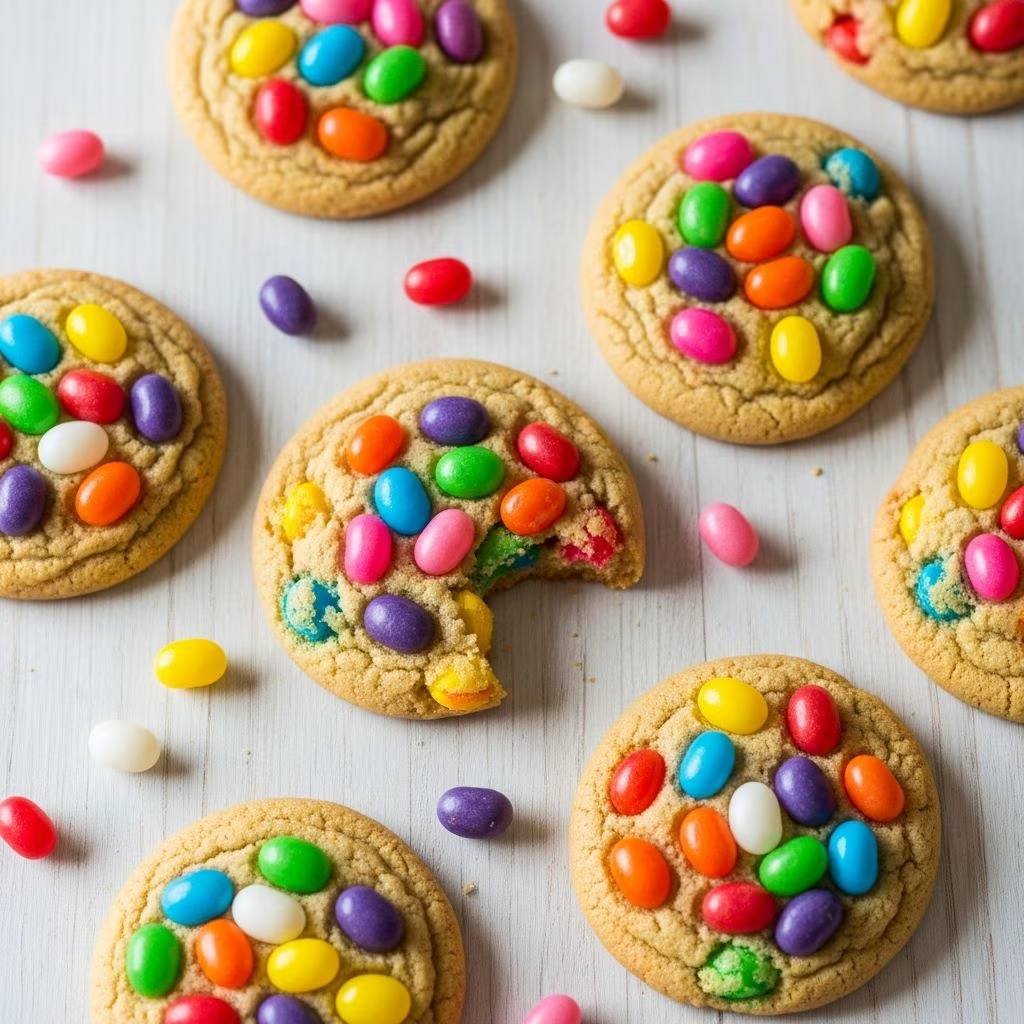
Jelly bean cookies represent a delightful fusion of classic cookie-making traditions with playful, colorful decorative elements. These treats offer bakers of all skill levels an opportunity to create visually stunning desserts that appeal to both children and adults. Whether you’re preparing for a holiday celebration, planning a special event, or simply seeking a fun baking project, jelly bean cookies deliver both ease and impressive results. The versatility of these cookies lies in their ability to adapt to various flavor profiles and textures, from ultra-soft and chewy varieties to crunchier, more structured options.
Understanding the Foundation of Jelly Bean Cookie Recipes
The fundamental appeal of jelly bean cookies stems from their combination of familiar baking techniques with the unexpected visual impact of colorful candies. Most traditional jelly bean cookie recipes build upon basic sugar cookie or pudding-based dough foundations, allowing the jelly beans to shine as the star ingredient. The dough serves as a neutral canvas, providing texture and structure while allowing the vibrant colors and fruity flavors of the jelly beans to take center stage.
What makes these cookies particularly beginner-friendly is the minimal number of specialized ingredients required. Most home bakers already stock the essential components in their pantries, with jelly beans often being the only item requiring a shopping trip. This accessibility makes jelly bean cookies an ideal choice for those new to baking, as well as experienced bakers seeking quick, satisfying projects.
Essential Ingredients and Their Functions
Creating successful jelly bean cookies begins with understanding how each ingredient contributes to the final product. The following components work together to produce cookies with the desired texture, flavor, and structural integrity:
- All-Purpose Flour: Provides the structural foundation for the cookies, contributing to their texture and crumb structure. Typical recipes call for between two and three cups, depending on the desired consistency.
- Butter: Delivers rich flavor and creates tenderness in the cookie crumb. Using softened butter ensures proper creaming with sugar, which incorporates air and produces a lighter texture.
- Sugars: Both granulated and brown sugar are commonly used. Granulated sugar contributes sweetness and structure, while brown sugar adds moisture and creates a chewier texture due to its molasses content.
- Eggs: Bind ingredients together and contribute moisture. Large eggs at room temperature mix more effectively with other wet ingredients, creating a more cohesive dough.
- Leavening Agents: Baking soda and baking powder control how the cookies rise and spread in the oven. These ensure the cookies achieve the desired thickness and texture.
- Salt: Enhances overall flavor depth and balances sweetness, often used in quantities ranging from one-quarter to one-half teaspoon.
- Flavor Enhancers: Vanilla extract, almond extract, or instant pudding mix add complexity and depth to the cookie base, creating a more sophisticated taste profile.
- Jelly Beans: The signature ingredient, these candies should be cut into halves or quarters to prevent them from sinking too deep into the cookies during baking.
Methods for Incorporating Jelly Beans into Your Dough
The technique used to incorporate jelly beans significantly impacts both the visual presentation and structural integrity of the finished cookies. There are several proven approaches that bakers employ to achieve different results.
The folding-in method involves gently stirring halved or quartered jelly beans into the completed dough using a rubber spatula. This approach prevents excessive crushing of the candies and allows them to remain somewhat visible throughout the dough. This method works particularly well when making softer, chewier cookies where the jelly beans can partially sink into the dough during baking.
The top-pressing technique involves placing whole or partial jelly beans onto unbaked cookies after scooping them onto the baking sheet. This method ensures maximum visual impact and allows the jelly bean flavors to remain more distinct. Pressing the candies gently into the dough ensures they adhere during baking and won’t slide off as the cookies spread and bake.
Mixed-distribution involves some combination of both methods, with some jelly beans worked into the dough while others are pressed onto the surface. This approach offers visual interest and flavor complexity, with some jelly beans baking completely into the cookie while others partially surface.
Detailed Baking Instructions and Temperature Considerations
Proper baking technique ensures consistent results and prevents common issues such as overdone edges or underbaked centers. Most jelly bean cookie recipes call for an oven temperature of 350 degrees Fahrenheit, a moderate heat that allows the cookies to bake through without browning too quickly.
Before beginning the baking process, prepare your workspace properly. Line baking sheets with parchment paper to prevent sticking and ensure even heat distribution. Preheating the oven for at least ten to fifteen minutes allows the heat to distribute evenly throughout the cooking chamber.
When scooping dough, use a standardized cookie scoop to ensure uniform baking times and consistent cookie sizes. Space cookies approximately one inch apart on the baking sheet to allow for spreading without cookies merging together. Baking times typically range from ten to fifteen minutes, depending on desired thickness and texture. The cookies are ready when the edges appear lightly golden and the tops feel set when gently touched, though they should still feel slightly soft to the touch.
Cooling procedures are equally important as baking itself. Allow cookies to rest on the baking sheet for approximately five minutes after removing them from the oven. This resting period allows the structure to set slightly, making it easier to transfer them without breaking. Subsequently transfer the cookies to a wire rack to cool completely, which prevents moisture from accumulating on the bottom and making them soggy.
Variations and Flavor Adaptations
While classic jelly bean cookies offer excellent results, numerous variations allow for creative experimentation. Coconut and oatmeal variations introduce textural complexity and nutty flavors that complement the sweetness of jelly beans beautifully. Adding one and one-half cups of old-fashioned rolled oats and one and one-quarter cups of unsweetened coconut transforms the cookie base into something more substantial and fiber-rich.
Pudding mix variations provide an easy way to add subtle flavor complexity. Instant vanilla pudding mix creates particularly soft, tender cookies with enhanced moisture retention. Other pudding flavors such as butterscotch, pistachio, or white chocolate can personalize the recipe and create unique taste combinations.
For biscotti lovers, jelly beans work beautifully in twice-baked cookie preparations. The twice-baking method creates a crisp, crunchy texture that contrasts wonderfully with the chewy jelly bean candies. This variation requires rolling dough into logs, baking until golden, cooling, slicing diagonally, and returning to the oven for additional baking.
Bar cookie formats offer yet another dimension to jelly bean cookie preparation. Pressing dough into rectangular pans and baking until golden produces cookies that maintain consistent thickness and require minimal portioning. This method reduces baking time to approximately fifteen minutes and simplifies serving at gatherings.
Storage and Shelf Life Management
Proper storage extends the enjoyment of freshly baked jelly bean cookies. Room temperature storage in an airtight container maintains freshness for three to five days, though cookies are typically consumed well before this period. For extended preservation, place cookies in a freezer-safe container and store in the freezer for up to three months. Thaw cookies at room temperature for approximately thirty minutes before serving.
Dough preparation offers additional flexibility. Cookie dough can be rolled into balls and refrigerated for one to two hours before baking, or frozen for later use. Frozen dough balls require an additional two to three minutes of baking time compared to room-temperature dough.
Frequently Asked Questions About Jelly Bean Cookies
Why do my jelly bean cookies spread too much during baking?
Excessive spreading typically results from one of several factors: using softened rather than room-temperature butter, adding too much flour during mixing, or not allowing dough to chill sufficiently. Reducing baking soda and baking powder slightly can also help control spread. Additionally, ensure your oven temperature is accurate using a separate oven thermometer.
Can I use regular sugar instead of brown sugar in jelly bean cookies?
Yes, though the results differ slightly. Using only granulated sugar produces cookies with a crispier texture and less pronounced chewiness. For the chewy texture most people prefer, maintain at least a three-to-one ratio of brown sugar to granulated sugar.
What type of jelly beans work best in cookies?
Standard fruit-flavored jelly beans work excellently in most recipes. For premium results, select jelly beans with robust flavor profiles that won’t become too subtle during baking. Avoid licorice or herb-flavored varieties unless specifically desired, as their strong flavors can overpower the cookie base.
How can I prevent jelly beans from sinking to the bottom of cookies?
Cutting jelly beans into halves or quarters rather than leaving them whole helps them distribute more evenly throughout the dough. Additionally, folding them in gently near the end of mixing rather than early in the process helps prevent them from settling to the bottom.
Are jelly bean cookies suitable for gift-giving?
Absolutely. The vibrant colors and festive appearance of jelly bean cookies make them particularly attractive for gift packages. Package them in clear cellophane bags tied with ribbons, or arrange them in attractive containers. They maintain quality for several days, making them practical gifts.
Scaling Recipes for Different Occasions
The basic jelly bean cookie recipe adapts easily to different quantities. For small gatherings, preparing a half-batch yields approximately twelve to eighteen cookies. Standard full recipes typically produce twenty-four to thirty cookies, adequate for most household needs. Doubling recipes creates sufficient quantities for larger gatherings or gift-giving.
When scaling recipes, maintain ingredient proportions carefully. Increasing all ingredients by the same percentage ensures balanced flavors and proper baking characteristics. Be aware that doubling baking soda and baking powder may require only a one-and-a-half-fold increase rather than a full doubling, as leavening agents can sometimes be excessive at larger scales.
Seasonal and Holiday Applications
Jelly bean cookies shine particularly brightly during springtime celebrations. Easter gatherings benefit from the festive appearance these cookies provide, with jelly beans evoking the holiday’s traditional candy associations. Their colorful presentation makes them natural centerpieces for dessert tables and party platters.
Beyond Easter, jelly bean cookies adapt well to other celebrations. Baby showers can feature pastel-colored jelly bean selections. Birthday parties benefit from the playful, child-friendly appearance. Summer gatherings appreciate the bright colors and cheerful aesthetic these cookies provide. With thoughtful jelly bean color selection, these cookies work for virtually any occasion requiring festive baked goods.
Nutritional Considerations and Serving Suggestions
While jelly bean cookies represent indulgent treats rather than nutritious foods, understanding their basic nutritional profile helps with informed consumption. A single cookie typically contains approximately 100 to 150 calories, depending on size and specific recipe formulation. Sugar content varies by recipe but generally falls between 8 and 15 grams per cookie. These cookies pair well with milk, coffee, tea, or hot chocolate for balanced snacking experiences.
For those with dietary restrictions, recipe modifications can accommodate various needs. Using gluten-free flour blends creates cookies suitable for celiac disease or gluten sensitivity, though texture may differ slightly from traditional versions. Vegan butter and egg substitutes enable plant-based adaptations, though achieving identical results may require experimentation.
References
- The Rebel Chick Jelly Bean Cookies Recipe — The Rebel Chick. Accessed April 10, 2026. https://therebelchick.com/jelly-bean-cookies/
- Sally’s Baking Addiction Jelly Bean Sugar Cookies — Sally’s Baking Addiction. Accessed April 10, 2026. https://sallysbakingaddiction.com/jellybean-sugar-cookies/
- Lord Byron’s Kitchen Chewy Jelly Bean Cookies — Lord Byron’s Kitchen. Accessed April 10, 2026. https://www.lordbyronskitchen.com/chewy-jelly-bean-cookies/
- Eggland’s Best Jelly Bean Biscotti Recipe — Eggland’s Best. Accessed April 10, 2026. https://www.egglandsbest.com/recipes/jelly-bean-biscotti