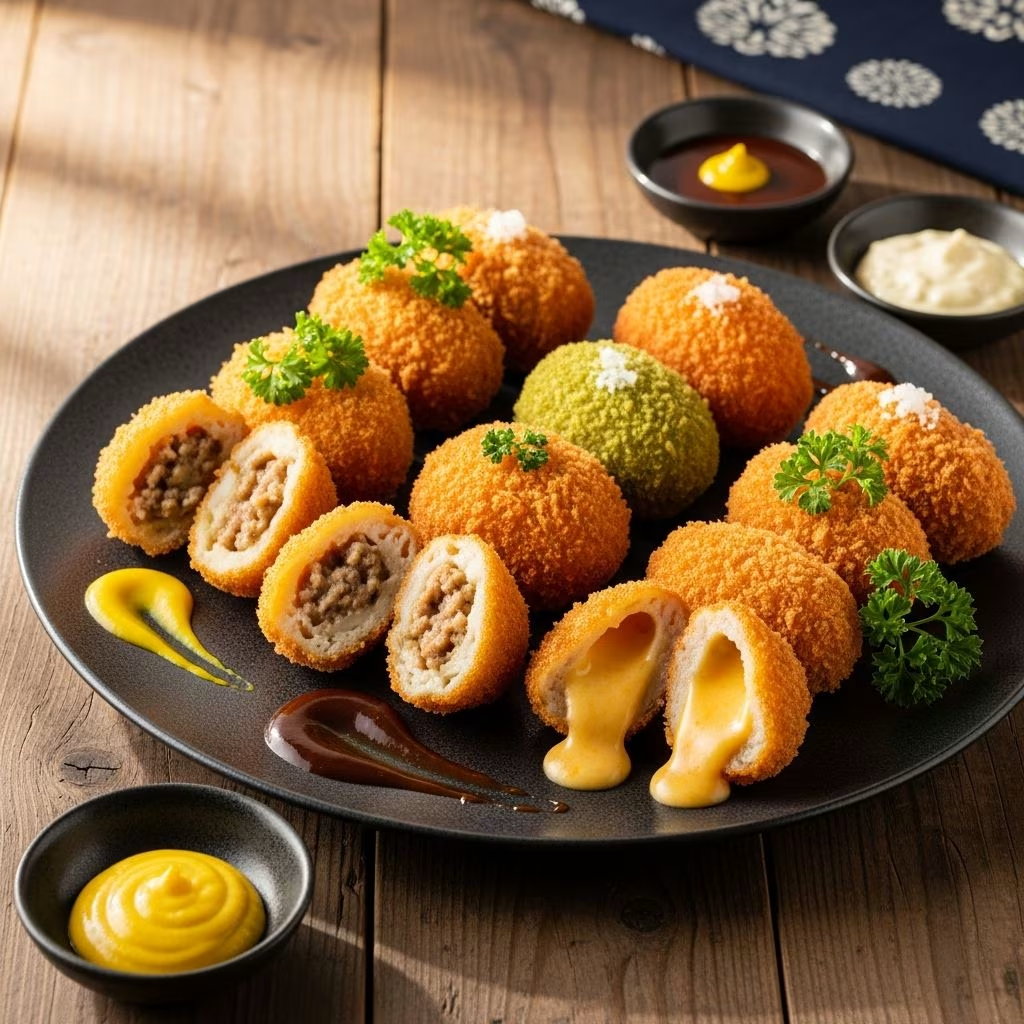
Japanese korokke, or potato croquettes, represent a perfect fusion of Western influence and Japanese ingenuity, delivering a satisfying crunch outside with a creamy, flavorful interior. These golden patties have become a staple in homes and yatai street stalls across Japan, offering comfort in every bite.
The Origins and Rise of Korokke in Japan
Korokke arrived in Japan during the Meiji era in the late 19th century, inspired by French croquettes but adapted with local ingredients like potatoes and affordable meats. What started as an elite dish evolved into everyday fare, especially post-World War II when potatoes and ground meat became accessible protein sources. Today, they symbolize affordable, hearty eating, often served with rice, cabbage, and tonkatsu sauce.
Unlike their French ancestors, Japanese versions emphasize smooth mashed potatoes bound with meat and vegetables, then coated in panko for superior crispiness. This adaptation reflects Japan’s knack for transforming foreign foods into cultural icons.
Essential Ingredients for Authentic Korokke
Building the perfect korokke starts with high-quality components. Starchy potatoes form the base, providing fluffiness when mashed.
- Potatoes: Russet or Yukon Gold varieties, about 1-2 pounds, peeled and boiled until tender for smooth mashing.
- Protein: Ground beef or pork (½-1 pound), adding richness; lean cuts prevent greasiness.
- Aromatics: Diced onions (½-1 cup) sautéed until soft, plus garlic for depth.
- Add-ins: Frozen peas, carrots, or corn for texture and sweetness.
- Seasonings: Salt, pepper, soy sauce, mirin, nutmeg, or oyster sauce for umami.
- Coating: Flour, beaten eggs, and panko breadcrumbs (2-2.5 cups) for the signature crunch.
Fats like butter or oil enrich the mash, while potato starch can bind fillings for creaminess.
Step-by-Step Korokke Preparation
Mastering korokke involves precise steps to achieve the ideal texture contrast.
- Boil Potatoes: Chop 1-2 pounds of russet potatoes, cover with water, add salt, and boil 15-20 minutes until fork-tender. Drain and mash with 1-2 tablespoons butter, seasoning lightly. Cool completely to avoid sogginess.
- Cook Filling: Sauté onions in oil until translucent (4-5 minutes), add minced garlic and ground meat. Brown thoroughly, seasoning with salt, pepper, soy sauce (1½ tbsp), sugar (1 tsp), and mirin (2 tsp). Stir in peas or carrots; cool.
- Combine Mixtures: Fold meat into cooled potatoes until uniform. Taste and adjust seasoning. Wet hands prevent sticking.
- Shape Patties: Form ½ cup portions into 1-inch thick oval or cylindrical patties (8-16 total). Chill 15-30 minutes or freeze briefly for firmness.
- Bread Coat: Dredge in flour, dip in egg wash (eggs beaten with a splash of water or milk), then press into panko. Double-coat for extra crunch.
Rest breaded patties 10-15 minutes before frying to set the coating.
Perfect Frying Techniques
Frying is crucial for that shatteringly crisp exterior without overcooking the inside.
- Oil Temperature: Heat neutral oil (vegetable or canola) to 340-350°F (170-180°C). Use a deep pot or fryer for safety.
- Fry in Batches: Avoid overcrowding; fry 2-4 minutes per side until deep golden. Internal temperature should reach 160°F for meat safety.
- Drain Excess Oil: Rest on wire racks over paper towels.
- Pro Tip: Cold patties hold shape better; fry from frozen if prepping ahead.
A thermometer ensures consistency—too low, and they absorb oil; too high, and exteriors burn.
Recipe Variations to Try
Korokke’s versatility allows endless tweaks while staying true to tradition.
| Variation | Key Changes | Best For |
|---|---|---|
| Classic Beef | Ground beef, onions, peas; soy-mirin sauce | Family dinners |
| Pork Umami | Pork shoulder, oyster sauce, chicken stock | Rich flavor boost |
| Vegetarian | No meat; add mushrooms, corn, carrots | Meat-free meals |
| Leftover Mash | Use day-old mashed potatoes with beef/carrot | Zero waste |
| Seafood | Shrimp or tuna instead of beef; nutmeg pinch | Light summer option |
Experiment with Kewpie mayo in batter for subtle creaminess or scallions for freshness.
Serving Suggestions and Pairings
Korokke shine as mains or sides, typically with shredded cabbage to cut richness.
- Sauces: Tonkatsu (soy-worcestershire blend), ketchup-mayo mix, or karashi mustard.
- Meals: Over rice (korokke donburi), in bento boxes, or with miso soup.
- Sides: Pickled vegetables, green salad, or hot rice for balance.
For appetizers, slice smaller and serve with dips. They reheat well in ovens at 400°F for crisp revival.
Storage, Freezing, and Reheating Tips
Make-ahead friendly: Shape and bread patties, freeze on trays, then bag for up to 3 months.
- Fridge: Cooked korokke last 2-3 days covered.
- Freezer: Uncooked up to 3 months; fry straight from frozen, adding 1-2 minutes.
- Reheat: Oven at 375°F for 10-15 minutes or air fryer for crunch without oil.
Avoid microwaving to preserve texture.
Common Mistakes and How to Fix Them
Even pros slip up—here’s how to avoid pitfalls.
- Soggy Centers: Overmix or use warm mash; always cool fully.
- Falling Apart: Chill shapes; bind with starch if needed.
- Soft Crust: Fine panko and double-dipping; fry at right temp.
- Greasy Finish: Pat dry patties; hot oil essential.
Nutrition and Dietary Adaptations
A standard korokke (one patty) offers about 250-300 calories, with carbs from potatoes, protein from meat, and fats from frying. Adapt for gluten-free (rice flour/panko alternatives) or low-carb (cauliflower mash).
High in potassium and B vitamins from potatoes; pair with veggies for balance.
FAQ
What makes Japanese korokke different from other croquettes?
Japanese versions use panko for lightness, smooth potato mash, and umami seasonings like soy, unlike chunkier Western styles.
Can I bake korokke instead of frying?
Yes, spray with oil and bake at 425°F for 20-25 minutes, flipping halfway, though crunch suffers.
How many korokke per serving?
2-3 as main with rice; 1-2 as side. Yields 8-16 from standard recipe.
Is ground pork better than beef?
Pork adds fattier richness; beef is leaner. Mix for best results.
Vegetarian korokke ideas?
Mushrooms, eggplant, or lentils mimic meat texture with soy-oyster sauce.
References
- Korokke (Japanese Meat and Potato Croquettes) — Spoon Fork Bacon. 2023-01-15. https://www.spoonforkbacon.com/korokke-japanese-meat-and-potato-croquettes/
- Korokke Recipe (Crispy Japanese Meat and Potato Croquette) — YouTube (Cooking Video). 2022-05-10. https://www.youtube.com/watch?v=nUKSmLOZnNE
- Korokke – Japanese Potato Croquettes — No Recipes. 2021-11-20. https://norecipes.com/korokke-potato-croquettes/
- Japanese Croquettes (Korokke) — Just One Cookbook. 2024-03-05. https://www.justonecookbook.com/moms-korokke-croquette/
- Potato Croquettes (Korokke) — Oh, for the Love of Food. 2023-07-12. https://ohfortheloveoffood.com/potato-croquettes-korokke/