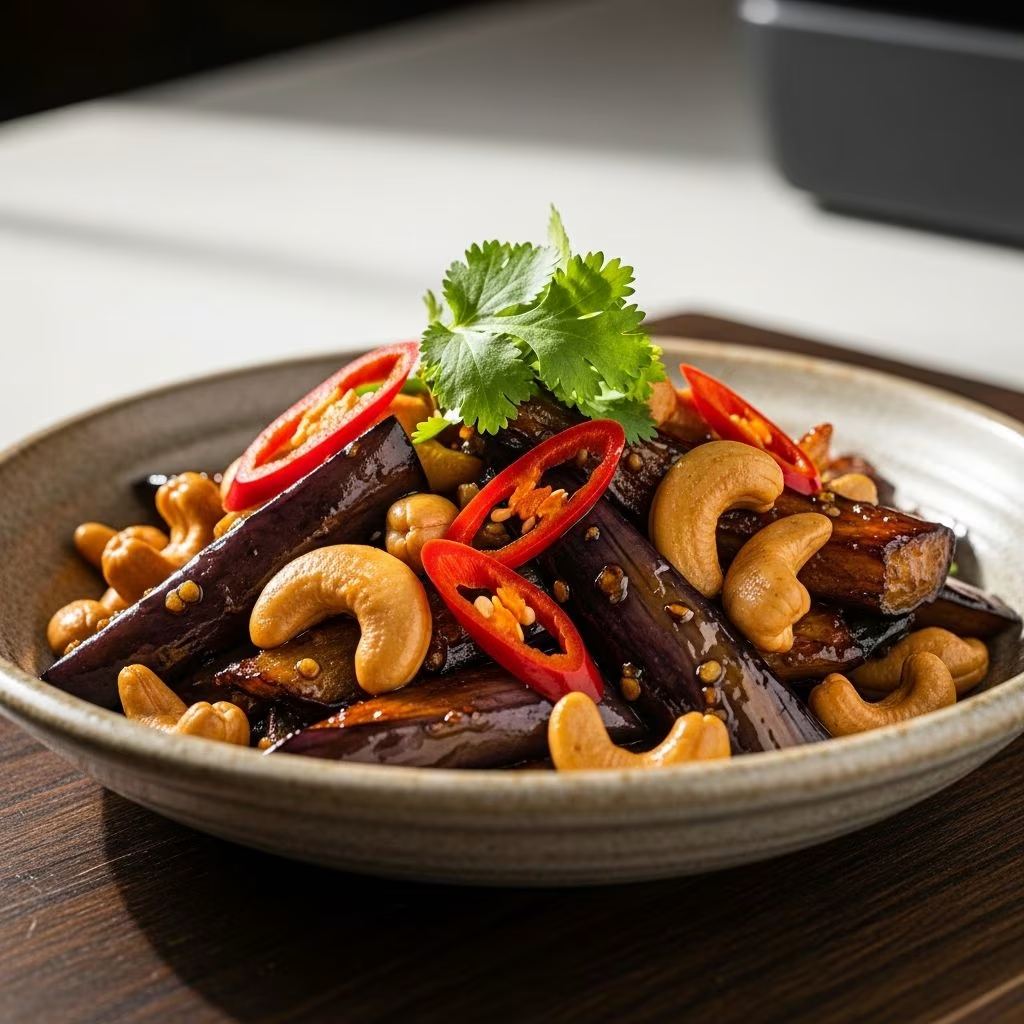
Japanese eggplant represents one of the most versatile ingredients in contemporary Asian cuisine. Unlike their larger Italian cousins, Japanese eggplants feature a more delicate skin, creamier texture, and subtle flavor profile that readily absorbs accompanying spices and sauces. When combined with the richness of roasted cashews and the heat of fresh chiles, this humble vegetable transforms into an elegant dish suitable for weeknight dinners or sophisticated entertaining.
Understanding Japanese Eggplant: Characteristics and Selection
Japanese eggplants, scientifically categorized as Solanum melongena, differ markedly from their globe eggplant counterparts in several important ways. These elongated varieties typically measure 6 to 8 inches in length and feature a thinner, more tender skin that requires minimal peeling. The flesh contains fewer seeds and possesses a naturally sweeter, less bitter quality that appeals to a broader range of palates.
When selecting Japanese eggplants at the market, look for specimens with glossy, unblemished skin that yields slightly to gentle pressure. The fruit should feel moderately heavy for its size, indicating adequate moisture content and maturity. Avoid eggplants with soft spots, wrinkled skin, or brown patches, as these suggest deterioration. Fresh Japanese eggplants typically keep for three to five days when stored in a cool, dark place or refrigerated in a perforated plastic bag.
The Flavor Science Behind Cashews, Chiles, and Eggplant
The combination of cashews and chiles with eggplant represents a carefully balanced flavor composition grounded in culinary principles. Cashews contribute a natural creaminess and subtle sweetness that rounds out sharper flavors in a dish. Their mild, buttery profile serves as an ideal counterpoint to the heat generated by fresh chiles.
Fresh chiles introduce both pungency and complexity. Red chiles, in particular, offer fruity undertones alongside their characteristic spiciness, creating depth that prevents the dish from becoming one-dimensionally hot. When combined with complementary aromatics like garlic and ginger, chiles develop into a sophisticated flavor foundation rather than a singular burning sensation.
Eggplant functions as the canvas upon which these flavors paint themselves. The vegetable’s neutral taste and absorbent texture readily capture the surrounding flavors while contributing its own subtle earthiness. This characteristic makes eggplant an ideal vehicle for showcasing the interplay between nutty cashews and peppery chiles.
Essential Ingredients and Their Roles
Building this dish requires attention to both primary and supporting ingredients. Each component serves a specific culinary function:
- Japanese eggplants (1 to 1.5 pounds) form the foundation, providing texture and substance
- Raw cashews (¼ cup, roughly chopped) deliver textural contrast and fat-soluble flavor compounds
- Fresh red chiles (½ to 1 medium chile, finely minced) introduce heat and fruity undertones
- Soy sauce (1 to 2 tablespoons, reduced-sodium) provides umami depth and saltiness
- Fresh ginger (1 to 2 teaspoons, minced) adds warming spice and aromatic complexity
- Garlic (2 to 3 cloves, minced) contributes pungent aromatics that build flavor layers
- Vegetable broth (2 to 3 tablespoons) carries flavors and promotes even cooking
- Rice vinegar or similar acidic element (optional, 1 teaspoon) brightens and balances flavors
- Sesame oil (½ teaspoon, dark variety) provides aromatic finishing touch
- Fresh herbs (cilantro, mint, scallions for garnish) add brightness and textural variety
Preparation Techniques and Cooking Methods
The Roasting Approach
The most straightforward method involves roasting eggplant rounds in a preheated 400°F oven. Begin by trimming the stem end and slicing eggplants crosswise into three-quarter-inch-thick rounds. Arrange these in a single layer on a parchment-lined baking sheet and roast for approximately 25 minutes, until the tops develop light browning and the flesh becomes tender throughout.
While eggplant roasts, prepare the flavor base by combining soy sauce, minced ginger, fresh chile, garlic, and vegetable broth in a small bowl. The proportions should be adjusted according to personal heat tolerance and flavor preferences. This mixture develops complexity as ingredients meld during the roasting process.
After the initial roasting period, distribute the sauce mixture evenly over the eggplant rounds and return them to the oven for an additional 5 to 8 minutes. During this phase, the eggplant develops a glossy appearance as it absorbs the surrounding sauce while excess moisture evaporates slightly.
The Stir-Fry Method
For those preferring a more interactive cooking experience, stir-frying offers superior control over texture and flavor intensity. This approach requires cutting eggplants into smaller, uniform pieces measuring approximately one inch, then pre-steaming them for about five minutes to soften their structure and reduce overall cooking time.
Heat a combination of vegetable and sesame oils in a wok or large skillet over medium-high heat. Add complementary vegetables such as bell peppers and onions, cooking until they achieve a tender-crisp texture. Introduce the pre-steamed eggplant and pour in the sauce mixture, bringing everything to a boil while stirring continuously. The liquid will gradually thicken as it cooks, coating the vegetables in a glossy, flavorful glaze.
In a separate small skillet, lightly toast the cashews in a small amount of oil until they develop a subtle golden hue and become fragrant. This toasting step intensifies their nutty character and creates textural crispness that contrasts beautifully with the soft, cooked vegetables. Add the toasted cashews to the main mixture just before serving to preserve their textural integrity.
Flavor Enhancement and Customization
Building Heat Levels
The spiciness of this dish can be calibrated to individual preferences. Those with lower heat tolerance might reduce the chile quantity to a quarter of a medium pepper or substitute a milder variety such as Anaheim peppers. Conversely, chile enthusiasts can increase the quantity, use hotter varieties like Thai birds-eye chiles, or incorporate additional heat sources such as chili-garlic sauce or sriracha.
Aromatic Variations
While the classic preparation relies on ginger and garlic, other aromatic ingredients can enhance the dish’s complexity. Lemongrass provides bright, citrusy notes, while star anise introduces subtle licorice undertones. White pepper can replace black pepper for a different heat presentation, and shallots offer a more delicate onion flavor than traditional yellow varieties.
Sauce Component Adjustments
Experimenting with the sauce composition allows for personalization without compromising the dish’s essential character. Reducing soy sauce and increasing vegetable broth creates a lighter preparation, while adding a touch of brown sugar or maple syrup introduces subtle sweetness that complements the chile heat. Fish sauce, despite its name, enhances vegetable-based dishes by providing deep umami complexity, making it valuable for vegetarian and vegan preparations.
Nutritional Profile and Health Considerations
Japanese eggplant dishes prepared with this method offer substantial nutritional benefits. Eggplants contain nasunin, a powerful antioxidant compound found in their deep purple skin that supports cellular health. A typical serving containing four roasted eggplant rounds with accompanying sauce provides approximately 90 calories, 3 grams of protein, 2.5 grams of fat, and 5 grams of dietary fiber.
Cashews contribute healthy monounsaturated fats and essential minerals including copper, magnesium, and zinc. These nutrients support immune function, bone health, and metabolic processes. The fresh chiles provide vitamin C and capsaicin, the compound responsible for their heat, which research suggests may support metabolism and provide anti-inflammatory benefits.
This preparation method minimizes added oils while maximizing nutrient retention through roasting and stir-frying at appropriate temperatures. The result is a nutrient-dense side dish that complements virtually any main course without overwhelming the palate or digestive system.
Serving Suggestions and Menu Integration
Japanese eggplant with cashews and chiles functions admirably in multiple culinary contexts. As a warm side dish, it complements grilled proteins such as tofu, tempeh, chicken, or fish. The vegetable’s absorption of surrounding sauces makes it particularly effective in Asian-themed meals featuring fragrant rice varieties like jasmine or basmati.
Served at room temperature, this dish transitions beautifully into a sophisticated salad when combined with additional fresh herbs, crisp lettuce varieties, and a light dressing. The cold preparation preserves the eggplant’s tender texture while flavors meld and intensify overnight in the refrigerator, making it ideal for meal preparation and entertaining.
The dish pairs particularly well with cuisines featuring complementary flavor profiles. Vietnamese, Thai, Chinese, and Japanese-inspired meals all benefit from its addition. Vegetarian and vegan diners appreciate its substantial texture and satisfying richness despite the absence of animal products.
Troubleshooting Common Preparation Issues
Preventing Soggy Eggplant
Eggplants naturally absorb moisture, which can result in a mushy texture if not managed carefully. Pre-roasting the eggplant before sauce application, as described in the roasting method, allows excess moisture to evaporate while developing a firmer structure. Alternatively, salting eggplant slices 30 minutes before cooking draws out additional moisture through osmosis, resulting in less waterlogged final dishes.
Achieving Crispy Cashews
Cashews tend to soften when exposed to moisture for extended periods. Adding them as a final garnish rather than cooking them throughout the dish preserves their crucial textural contrast. If incorporating cashews during cooking is necessary, toast them separately in dry heat before the final assembly to maintain their structural integrity.
Balancing Sauce Consistency
The sauce should coat the eggplant without creating a watery puddle or drying out completely. If too much liquid remains after cooking, increase heat slightly and simmer uncovered for an additional few minutes. If the sauce becomes too concentrated and sticky, add a tablespoon of vegetable broth at a time until achieving the desired consistency.
Storage and Make-Ahead Considerations
Prepared eggplant dishes store well for three to four days when refrigerated in airtight containers. Flavors typically intensify during storage as ingredients continue to meld and exchange compounds. When reheating, add a splash of vegetable broth to restore moisture lost through refrigeration and prevent the dish from becoming dry.
Individual components can be prepared separately and assembled just before serving for maximum freshness. Roasted eggplant keeps for two days, while sauce components can be prepared up to 24 hours in advance. Fresh herb garnishes should be added immediately before serving to preserve their vibrant color and delicate texture.
Frequently Asked Questions
Can I prepare this dish with globe eggplant instead of Japanese varieties?
Yes, though results differ slightly. Globe eggplants require longer cooking times and may need seeding to reduce excess moisture. Cut them into slightly thinner pieces to compensate for their denser structure. The finished dish will be equally delicious though slightly less delicate in texture.
Is this recipe suitable for vegan diets?
Absolutely. Using vegetable broth and reduced-sodium soy sauce creates a completely plant-based preparation. All components—eggplant, cashews, chiles, vegetables, herbs, and oils—are inherently vegan-friendly. This makes the dish accessible to varied dietary preferences.
How can I reduce the sodium content?
Choose reduced-sodium soy sauce and vegetable broth as specified in recipes. Additionally, minimize added salt during preparation, relying instead on the natural saltiness of these ingredients and the flavor contributions of aromatics and chiles.
What wine or beverage pairs well with this dish?
Light, slightly sweet white wines such as Riesling or Gewürztraminer complement the dish’s heat and richness beautifully. Alternatively, sparkling beverages cut through the richness while refreshing the palate between bites. Sake provides a traditional Asian pairing option.
References
- Vietnamese Eggplant with Cashews, Sesame, and Chile — Forks Over Knives. 2024. https://www.forksoverknives.com/recipes/vegan-baked-stuffed/vietnamese-eggplant-with-cashews-sesame-and-chile/
- Spicy Eggplant Stir-Fry with Cashews — Grab A Plate. https://www.azgrabaplate.com/spicy-eggplant-stir-fry-with-cashews/
- Eggplant Stir-Fry with Green Beans and Cashews Recipe — Vegetarian Times. https://www.vegetariantimes.com/recipes/eggplant-stir-fry-with-green-beans-and-cashews-recipe/