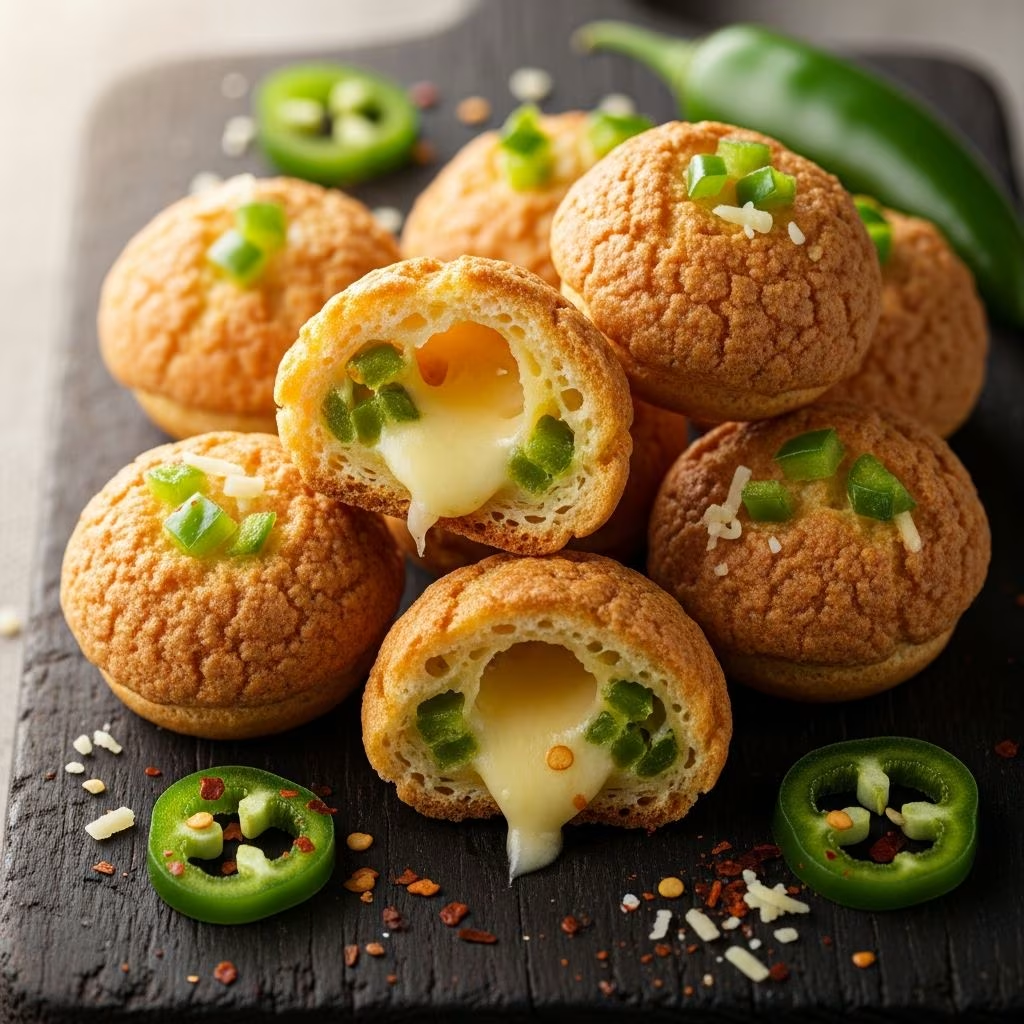
When it comes to impressing guests with minimal effort, few appetizers compare to a tray of golden, puffy cheese morsels. Gougères—those delightful French savory pastries—represent the perfect intersection of elegance and simplicity. Adding jalapeños and cheddar to this classic preparation creates a contemporary twist that brings warmth and excitement to any gathering. These bite-sized treasures prove that sophisticated entertaining doesn’t require hours in the kitchen or complicated techniques.
Understanding Choux Pastry: The Foundation of Gougères
At the heart of every successful gougère lies choux pastry, a unique batter that exists somewhere between a traditional dough and a liquid batter. This distinctive texture allows the mixture to hold its shape when piped, yet remain thin enough to create beautifully uniform portions without requiring a mold or cookie cutter. Choux, pronounced “shoo,” represents a fundamental French baking technique that transforms simple pantry staples into something extraordinary.
The magic of choux pastry stems from its “twice-cooked” nature. During the first phase, butter, water, and flour combine through heat and vigorous mixing to create a cohesive mass. The second phase involves incorporating eggs one at a time, which transforms the mixture into a pipeable consistency while introducing air that generates the characteristic puff during baking. This two-stage process, when executed correctly, consistently produces light, hollow interiors surrounded by crispy exteriors.
Essential Ingredients for Jalapeño-Cheddar Gougères
Creating memorable jalapeño cheddar gougères requires quality ingredients measured precisely. The foundation begins with unsalted butter—approximately four ounces—combined with water to create the moisture necessary for steam generation during baking. All-purpose flour, measured at one cup or roughly 4.5 ounces, provides structure while remaining tender enough to yield delicate results.
Eggs play a crucial role in choux pastry success. Four medium eggs add moisture, fat, and binding power while introducing the air bubbles that create the signature puff. Dijon mustard contributes both flavor complexity and mild seasoning that complements the cheese. The cheese component distinguishes gougères from standard cream puffs—a generous cup of finely grated cheddar cheese creates the savory depth these appetizers deserve, with an additional two tablespoons reserved for topping.
Cream cheese, added at approximately half a cup, enriches the mixture and contributes to a more tender crumb structure. Kosher salt seasons the entire mixture, while finely ground black pepper adds subtle heat that works alongside the jalapeños. Pickled jalapeño slices, either halved or quartered depending on preference, provide the signature spicy element that distinguishes these gougères from traditional recipes that rely solely on Gruyère or mild cheeses.
Preparation Strategy: Setting Up for Success
Professional bakers understand that mise en place—having everything measured and organized before beginning—transforms the cooking process from stressful to smooth. Gougères demand this preparation level because several steps must occur rapidly once the butter-water mixture reaches a boil. Delay during this critical window compromises the final texture.
Before turning on the oven, gather all equipment: two baking sheets lined with parchment paper, a medium saucepan, a wooden spoon for vigorous mixing, a bowl for combining the cooled dough with eggs, and either a mixer or whisk for beating. Preheating the oven to 425°F occurs only after ingredient preparation concludes—this timing ensures the oven reaches optimal temperature just as the piped portions require baking.
Measuring ingredients into separate containers streamlines the cooking process. Place butter, water, and salt in one container; flour in another; eggs in a third; and the mustards, cheeses, and pepper in a fourth. This organization eliminates fumbling through the cabinet while managing a hot stovetop, allowing complete focus on technique.
The Critical Cooking Process: From Water to Dough
The transformation begins over medium heat as butter melts into water with salt. Once the butter completely dissolves, increasing the heat becomes essential. The mixture must reach a full, rolling boil—not a gentle simmer, but vigorous bubbling across the entire surface. This full boil generates sufficient steam to activate the flour properly when it’s introduced.
Once boiling intensifies, immediately remove the pan from heat and dump the flour in all at once. Hesitation here disrupts the process; the flour must incorporate immediately into the hot liquid. Begin stirring vigorously with a wooden spoon, using firm, decisive motions to combine the flour throughout the mixture. Continue for approximately one minute until the dough forms a cohesive mass that rolls around the pan’s bottom. During this phase, a light crust begins forming on the pan’s base—an indicator that the starch properly hydrates.
Transfer this prepared dough to a clean bowl before proceeding. This cooling phase allows the mixture to reach a safe temperature for egg incorporation while remaining warm enough for proper emulsification.
Egg Integration: Patience and Precision
This stage separates adequate gougères from exceptional ones. Eggs must enter one at a time, with each egg thoroughly incorporated before the next addition. Using a wooden spoon and muscle power, or better yet, an electric mixer on low speed, beat each egg into the dough until it completely disappears and the mixture becomes smooth again. This process continues four times, creating four distinct beating intervals.
The final consistency should be smooth and slightly glossy, dropping from a spoon in a thick ribbon when lifted. Proper beating during this phase creates a dough that’s thick enough to pipe into defined shapes yet thin enough to allow expansion during baking. Underbeaten doughs produce dense, flat results, while overbeaten mixtures become too thin, spreading into puddles during baking.
Seasoning and Flavor Building
Once all eggs are incorporated, add the Dijon mustard, dry mustard, cheddar cheese (reserving the two tablespoons for topping), cream cheese, and black pepper. Thoroughly beat this combination into the dough until completely uniform and smooth. The dough should show no streaks of cheese or visible seasonings; everything must integrate evenly throughout the entire mixture.
Taste a small spoonful and adjust seasonings with additional salt and pepper as needed. Remember that the jalapeño topping will add saltiness, so account for this when seasoning the base dough. Some cooks prefer adding garlic powder, onion powder, or smoked paprika at this stage for additional flavor complexity, but the classic combination of cheddar, mustard, and cream cheese provides a strong foundation that complements rather than overwhelms the jalapeños.
Piping and Shaping Techniques
Transfer the prepared dough to a pastry bag fitted with a medium round tip. Using consistent pressure, pipe small mounds onto prepared baking sheets, spacing them approximately one inch apart to allow for expansion during baking. Uniform sizing ensures even cooking throughout the batch.
After piping all portions, any pointed tops benefit from smoothing. Dip your finger in olive oil to prevent sticking, then gently round off sharp peaks. This simple technique creates more uniform, professional-looking results and helps ensure even puffing during baking.
Before baking begins, crown each mound with a single pickled jalapeño slice and a small pinch of grated cheddar. This topping placement matters—it provides visual appeal while creating a protective layer that prevents excessive browning of the delicate pastry underneath.
Baking for Perfect Results
Slide the prepared sheets into the preheated 425°F oven and bake for approximately ten minutes. At this halfway point, rotate both baking sheets—moving the sheet from the top rack to the bottom and vice versa, plus rotating each sheet from front to back. This rotation ensures even exposure to heat sources and promotes uniform puffing and browning.
Return the sheets to the oven for an additional eight minutes, watching carefully as the gougères transform from pale cream-colored mounds to golden brown puffs. Total baking time typically ranges from eighteen to twenty minutes, depending on oven characteristics and precise sizing. The gougères are finished when they’ve puffed noticeably and achieved a deep golden-brown exterior.
Some experienced bakers recommend piercing each gougère with a small knife during the first ten minutes to allow steam to escape and promote drying, which can create even crispier exteriors. However, this step is entirely optional—many home bakers achieve excellent results without piercing.
Make-Ahead Strategies for Entertaining
One of gougères’ greatest advantages lies in their make-ahead friendliness. After piping the choux onto baking sheets, freeze the entire tray until the portions freeze solid. Transfer the frozen pieces to a large ziplock freezer bag for storage up to several weeks.
When ready to serve, bake directly from the frozen state, adding just one to two minutes to the standard baking time. This strategy allows entertaining hosts to bake fresh gougères mere minutes before guests arrive, ensuring warm, crispy pastries that impress without requiring last-minute kitchen time.
Serving and Storage Recommendations
Gougères taste best served warm or at room temperature within a few hours of baking. They pair beautifully with wine, cocktails, or sparkling beverages before dinner. The combination of creamy interior, crispy exterior, and the slight kick from jalapeños creates an addictive bite-sized experience.
Leftover gougères keep in an airtight container at room temperature for one day or frozen for up to two weeks. Reheat in a 350°F oven for three to five minutes to restore crispiness, though they’re also perfectly acceptable at room temperature.
Flavor Variations and Creative Adaptations
While the jalapeño-cheddar combination creates an ideal spicy-savory profile, gougères welcome experimentation. Consider substituting different cheeses—sharp cheddar provides more punch than mild varieties, while combinations of cheddar with gruyère or parmesan create sophisticated flavor layers. Some cooks incorporate fresh herbs like basil or Italian seasoning for Mediterranean-inspired versions, or add sun-dried tomatoes for sweet-savory complexity.
The pickled jalapeño can be replaced with fresh jalapeños that have been finely minced and lightly patted dry, though pickled varieties offer more consistent heat distribution and require no additional preparation.
Troubleshooting Common Challenges
Flat, Dense Results: These typically indicate insufficient heat during the initial butter-water stage. The liquid must reach a full boil before flour addition. Additionally, ensure vigorous beating during the flour incorporation phase, and beat eggs thoroughly before each addition.
Spreading During Baking: Overly thin dough spreads into puddles. If the final mixture drops from a spoon like thick batter rather than a glob, reduce egg incorporation slightly—use three eggs instead of four, or reserve part of the fourth egg for later addition if the consistency seems too thin.
Pale, Underbaked Appearance: Extend baking time by a few minutes, ensuring the oven reaches proper temperature before baking begins. Oven temperature variations significantly affect results, so consider using an oven thermometer to verify accuracy.
Hollow Interior Failure to Develop: This results from insufficient steam generation, usually caused by inadequate initial heat. Alternatively, opening the oven door before twenty minutes of baking can collapse developing structures.
Why Gougères Deserve a Place in Your Entertaining Arsenal
These spicy cheese puffs represent more than just appetizers—they embody the intersection of French culinary tradition and contemporary flavor preferences. Their impressive appearance belies the straightforward technique required to produce them. Whether hosting formal dinner parties, casual gatherings, or bringing them to social events like vineyard visits or brewery trips, jalapeño cheddar gougères consistently deliver exceptional results with minimal stress.
The combination of crispy exterior, tender hollow interior, melting cheese, and spicy jalapeño creates a textural and flavor experience that far exceeds the ingredient list’s simplicity. Once mastered, this fundamental choux technique opens doors to countless variations, from sweet cream puffs to savory applications beyond gougères.
Frequently Asked Questions
Can I make gougères without a pastry bag?
Yes, though results appear less uniform. Drop spoonfuls of dough directly onto prepared baking sheets, rounding the tops as much as possible. The texture and taste remain identical; only appearance differs.
How far in advance can I prepare these?
The dough keeps refrigerated for one day, though baking immediately after preparation yields best results. Alternatively, freeze piped, unbaked portions for several weeks and bake directly from frozen.
What causes gougères to deflate after baking?
Deflation usually results from opening the oven door during baking, which releases steam and collapses developing structures. Some deflation is normal—these pastries naturally reduce slightly as they cool and steam escapes.
Can I use fresh jalapeños instead of pickled?
Yes, but finely mince fresh jalapeños and pat them very dry to prevent excess moisture in the dough. Pickled varieties are more convenient as they require no preparation beyond cutting.
Why didn’t my gougères puff?
Insufficient initial heat, inadequate beating during flour incorporation, or underbeaten eggs commonly prevent proper puffing. Ensure the butter-water mixture reaches a full, rolling boil before adding flour, and beat vigorously at each stage.
References
- Choux Pastry Technique and Applications — Culinary Institute of America. 2024. https://www.ciachef.edu
- Understanding French Pastry: Gougères and Choux Pastry Mastery — Le Cordon Bleu. 2024. https://www.cordonbleu.edu
- Food Science of Steam-Leavened Baked Goods — International Journal of Gastronomy and Food Science. 2023. https://doi.org/10.1016/j.ijgfs.2023.100621
- Appetizer Preparation and Make-Ahead Strategies for Home Entertaining — America’s Test Kitchen. 2024. https://www.americastestkitchen.com
- Cheese Selection and Application in Savory Baking — Serious Eats. 2024. https://www.seriouseats.com