Italian long hot peppers represent one of the most beloved ingredients in Mediterranean cuisine, particularly within Philadelphia and other regions with strong Italian heritage. When combined with the rich, nutty flavors of tahini yogurt, these peppers transform into an elegant dish that bridges traditional cooking methods with contemporary culinary trends. This comprehensive guide explores everything you need to know about preparing and serving this distinctive recipe.
Understanding Italian Long Hot Peppers
Before diving into preparation methods, it is essential to understand the fundamental characteristics of Italian long hot peppers. These peppers are elongated vegetables measuring approximately 6 to 9 inches in length, featuring thick walls that contribute to their substantial texture when cooked. Unlike their appearance might suggest, Italian long hots are not uniformly spicy vegetables. The heat level varies considerably from pepper to pepper within the same batch, making each one somewhat unpredictable in terms of pungency.
The Scoville heat unit (SHU) measurements for Italian long hots typically range between a poblano pepper (1000 to 1500 SHU) and a jalapeno (2500 to 8000 SHU). This moderate heat profile makes them suitable for home cooks who want to add flavor and subtle warmth without overwhelming spice. Some peppers in a batch will be noticeably milder, while others may approach jalapeno-level intensity, so tasting as you cook provides valuable feedback.
Historical and Cultural Significance
The Italian long hot pepper holds a special place in Philadelphia’s culinary identity, where it has become a staple ingredient in local cuisine. Traditional applications include using these peppers as toppings on hoagies, roasting them to serve alongside fresh bread, and stuffing them for appetizer preparations. This deep cultural connection has made the pepper an iconic symbol of Italian-American food traditions, particularly in the Mid-Atlantic region.
The pairing with tahini yogurt represents a more contemporary evolution of this classic ingredient, blending Mediterranean traditions with Middle Eastern flavors to create something entirely new and exciting. This fusion approach respects the pepper’s culinary heritage while introducing it to modern palates seeking innovative flavor combinations.
Preparing Tahini Yogurt: Building the Foundation
Tahini yogurt serves as the essential base layer for this dish, providing a creamy, tangy counterpoint to the roasted peppers. This preparation begins with quality yogurt, preferably Greek yogurt for its thickness and richness, combined with tahini—a paste made from ground sesame seeds. The tahini contributes a distinctive earthy, nutty undertone that complements the natural sweetness of roasted peppers.
To create the tahini yogurt, whisk together plain yogurt with tahini, adjusting the proportions based on personal preference. A common ratio involves one part tahini to three parts yogurt, though individual taste preferences may call for adjustments. Add lemon juice to brighten the flavors, along with minced garlic for aromatic depth. Sea salt and freshly ground black pepper enhance the overall profile. Some variations incorporate a touch of honey to balance any bitterness from the sesame paste.
The consistency should be thick enough to hold its shape on a plate yet spreadable enough to coat the cooking vessel evenly. Prepare the tahini yogurt ahead of time, as the flavors develop and meld when given several hours or overnight to rest in the refrigerator.
Cooking Methods: Oven versus Stovetop
Italian long hots can be prepared using two primary cooking techniques, each offering distinct advantages depending on your kitchen equipment and preferred outcome.
Oven Roasting Approach
Oven roasting represents the most straightforward method for home cooks. This technique involves preheating your oven to 450 degrees Fahrenheit, then arranging washed and dried peppers on a baking sheet. Drizzle the peppers with extra-virgin olive oil and sprinkle generously with flaky sea salt. The peppers roast for approximately 15 to 20 minutes, until the skins begin to blister and the flesh softens considerably.
The oven method produces even heat distribution, allowing the peppers to cook uniformly without requiring constant attention. The high temperature creates a slight char on the exterior while maintaining the pepper’s structural integrity. This technique is particularly useful when preparing larger quantities, as a standard oven can accommodate several baking sheets simultaneously.
Stovetop Pan Method
The stovetop approach offers more direct control over the cooking process and can produce deeper caramelization. Begin by adding peppers, olive oil, and salt to a large sauté pan over medium-high heat. Allow the peppers to develop a light brown color on one side, then rotate them frequently—approximately every minute—to prevent burning and ensure even cooking.
Once the peppers have achieved some browning on their exterior, cover the pan and reduce the heat to medium or medium-low. This covered cooking allows the peppers to steam gently in their own moisture while the trapped heat continues softening the flesh. The total stovetop cooking time typically requires about 15 minutes or slightly longer, depending on pepper size and heat intensity.
The Complete Recipe Framework
Essential Ingredients
- 12 Italian long hot peppers, thoroughly washed and completely dried
- Extra-virgin olive oil for coating and cooking
- Flaky sea salt for seasoning
- Freshly ground black pepper to taste
- Greek yogurt or plain yogurt
- Tahini paste
- Fresh lemon juice
- Minced garlic
- Optional: honey or additional seasoning herbs
Step-by-Step Preparation Process
- Prepare the tahini yogurt by whisking together yogurt and tahini until well combined and smooth
- Add freshly squeezed lemon juice to the mixture, stirring thoroughly
- Incorporate minced garlic and season with sea salt and pepper
- Transfer the tahini yogurt to a serving platter, spreading it evenly across the surface
- Wash and completely dry the Italian long hot peppers
- Select your preferred cooking method: oven roasting or stovetop preparation
- Cook the peppers until they achieve the desired tenderness and browning
- Carefully transfer the hot peppers to the platter containing the tahini yogurt
- Pour any cooking juices from the pan over the peppers
- Finish with additional flaky sea salt and freshly ground black pepper
Presentation and Serving Suggestions
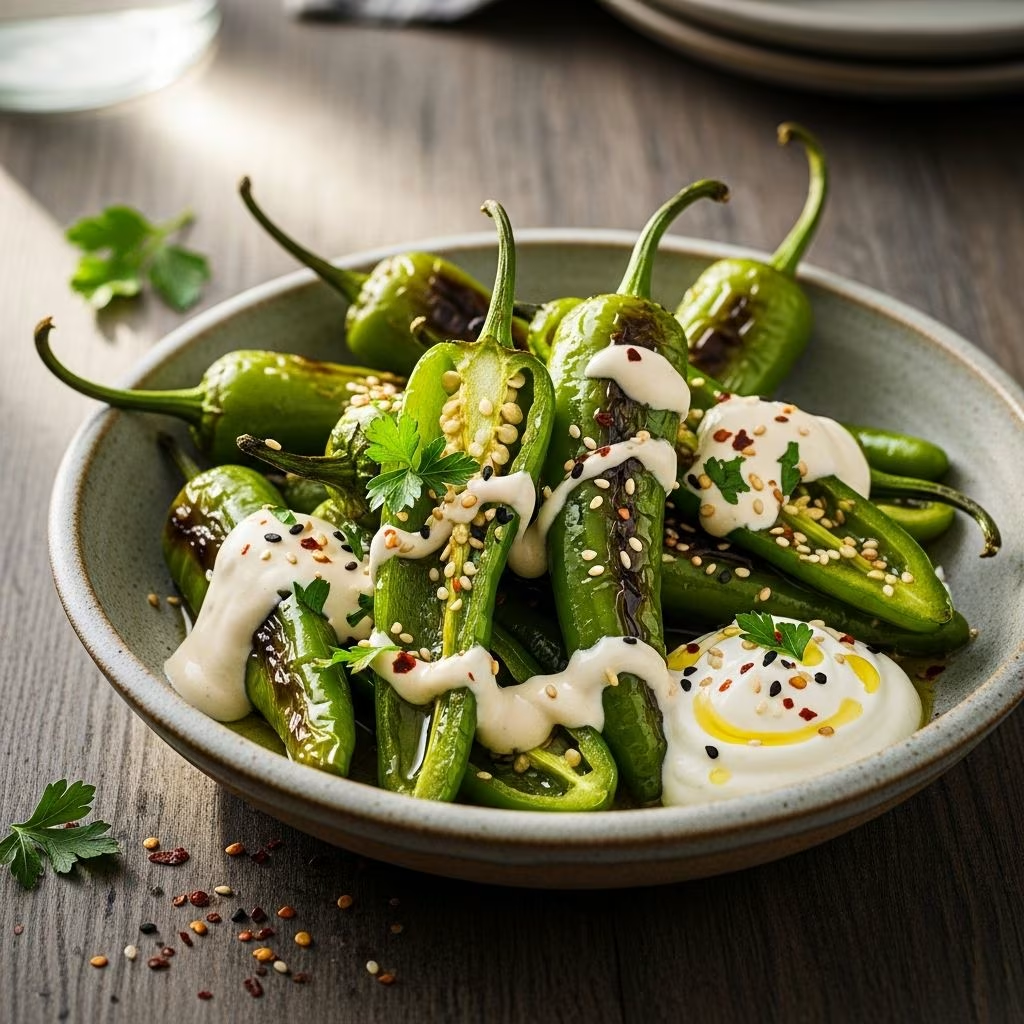
Visual presentation plays a crucial role in elevating this dish from simple preparation to restaurant-quality presentation. The spread of tahini yogurt provides an attractive pale backdrop that contrasts beautifully with the charred, glossy exterior of the roasted peppers. The cooking juices pooled over the peppers add moisture and visual interest to the composition.
Arrange the peppers directly on the tahini yogurt bed, allowing some of the creamy base to remain visible around the edges. This arrangement creates depth and dimension on the plate. Garnish with fresh herbs such as parsley, cilantro, or mint for added color and aromatic complexity. A final drizzle of high-quality olive oil and a sprinkle of flaky sea salt completes the visual presentation.
Serve this dish as an elegant appetizer, a sophisticated side dish accompanying grilled proteins, or as part of a Mediterranean mezze spread featuring complementary items like hummus, fresh vegetables, and artisanal breads.
Flavor Pairing and Complementary Elements
The combination of roasted Italian peppers and tahini yogurt creates a distinctive flavor profile that benefits from thoughtful accompaniments. The nutty, earthy qualities of tahini pair exceptionally well with the sweet, slightly charred notes of the roasted peppers. The yogurt’s tanginess provides brightness that prevents the dish from becoming heavy.
Consider serving this dish with warm flatbread, pita, or crusty sourdough for textural contrast and to provide vehicles for enjoying the tahini yogurt. Fresh citrus elements—a wedge of lemon or lime—can be offered tableside for guests who prefer additional acidity. Herb-infused oils drizzled over the finished dish introduce additional aromatic layers.
Wine pairing suggestions include crisp white wines such as Sauvignon Blanc or Pinot Grigio, which complement the pepper’s natural sweetness and the tahini’s richness. Light rosé wines also work beautifully, offering enough body to stand up to the dish without overwhelming its delicate flavors.
Ingredient Quality Considerations
Achieving exceptional results depends significantly on ingredient quality. Seek out peppers from farmers’ markets or specialty grocers whenever possible, as these sources often provide fresher, more flavorful specimens than conventional supermarket options. Select peppers that feel firm and unblemished, with glossy skin indicating freshness.
For the tahini component, choose brands that list only sesame seeds and minimal additives in the ingredient list. Raw or lightly roasted tahini options both work, though individual preference varies. Greek yogurt offers superior creaminess compared to standard yogurt, making it the preferred choice for this application. Extra-virgin olive oil should be selected based on personal taste preference, as different regional oils contribute distinct flavor characteristics.
Storage and Make-Ahead Strategies
The tahini yogurt can be prepared several days in advance, with flavors actually improving as the components meld together. Store it in an airtight container in the refrigerator for up to four days. The roasted peppers can also be cooked in advance and stored separately, though they maintain optimal flavor and texture best when prepared no more than one day ahead.
When serving guests, assemble the dish just before presenting to maintain optimal texture and temperature contrast between the warm roasted peppers and the cool tahini yogurt base.
Frequently Asked Questions
Can I use different types of peppers as substitutes?
While Italian long hots offer a specific flavor profile, other elongated pepper varieties such as Anaheim peppers or banana peppers can provide similar results, though with slightly different heat levels and sweetness characteristics.
Is this recipe suitable for vegetarians and vegans?
The traditional recipe using Greek yogurt serves vegetarians well. Vegan adaptations can substitute coconut yogurt or cashew cream for the yogurt component, maintaining similar creamy texture and tangy flavor profiles.
How should leftover roasted peppers be stored?
Refrigerate leftover peppers in an airtight container for up to three days. They can be reheated gently in the oven or served cold as part of salads or grain bowls.
Can tahini yogurt be made in advance?
Yes, tahini yogurt improves when made 24 hours ahead, allowing flavors to develop. Store in the refrigerator until ready to serve.
Culinary Techniques and Professional Tips
Professional chefs preparing this dish often employ several techniques to maximize flavor development. Allowing the roasted peppers to rest for a few minutes after cooking permits the juices to redistribute throughout the flesh, enhancing moisture and flavor intensity. When plating, pour the reserved pan juices slowly over the peppers to ensure they absorb fully into the tahini yogurt base.
Consider slightly under-roasting the peppers rather than over-cooking them, as they will continue cooking slightly as they rest on the warm tahini yogurt. This approach prevents the peppers from becoming mushy or losing their pleasant textural element.
References
- Italian Long Hots With Tahini Yogurt — Umami Recipes. Accessed April 2026. https://www.umami.recipes/da/recipe/MnTjZd8n31EEYRBVWTWt
- Italian Long Hot Peppers — Feeling Foodish. Accessed April 2026. https://feelingfoodish.com/italian-long-hots-mesilla-peppers/