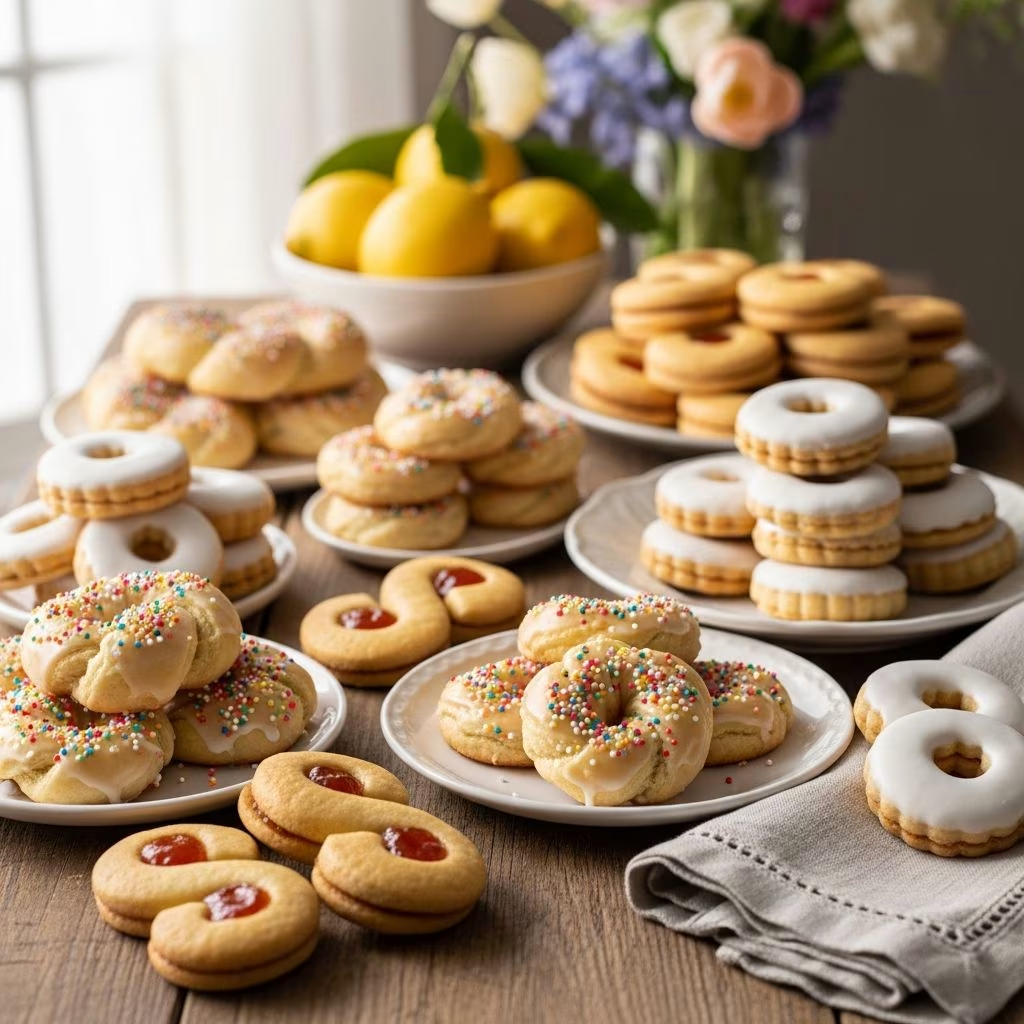
Italian Easter cookies, known as “uncinetti” or “pupi cu l’ova” in various dialects, represent a cherished tradition in Italian baking. These treats combine a tender, slightly crisp dough with vibrant citrus notes and colorful glazes, making them ideal for Easter festivities. Families across Italy prepare them to symbolize renewal and joy, often shaping them into knots, rings, or baskets adorned with eggs.
The Heritage of Easter Cookies in Italy
These cookies trace their roots to ancient Roman times, evolving through centuries of regional adaptations. In southern Italy, particularly Calabria and Sicily, bakers embed dyed eggs into the dough, creating symbolic nests of life. Northern variations lean toward anise or almond flavors, reflecting local ingredients. Baking them became a communal activity, passed down through generations, emphasizing fresh eggs as a nod to Easter’s themes of resurrection and fertility.
Today, these cookies bridge old-world customs with modern kitchens. Their versatility allows for personalization while preserving the essence of simplicity and wholesomeness. Whether enjoyed with morning coffee or as a post-dinner delight, they evoke nostalgia and warmth.
Essential Ingredients for Authentic Dough
Core components include all-purpose flour for structure, granulated sugar for subtle sweetness, and baking powder for lift. Eggs provide richness and moisture, while fats like butter, oil, or shortening ensure tenderness. Citrus zest from lemons or oranges infuses brightness, and milk or cream adds creaminess.
- Flour: 1.5 to 3.5 cups, sifted for lightness.
- Sugar: 0.75 to 1 cup, balancing sweetness without overpowering.
- Eggs: 1 to 3 large, room temperature for even mixing.
- Fats: Butter (softened), olive oil, or shortening (1/4 to 2 cups).
- Leaveners: 1-2 teaspoons baking powder; avoid soda for delicate rise.
- Flavorings: Lemon/orange zest, vanilla, almond extract, or anise.
- Liquids: Milk (2% or whole, 4 tbsp to 1 cup).
Variations exist: some recipes use self-raising flour for convenience, others prioritize organic eggs for superior flavor. High-quality extracts elevate the taste, mimicking Nonna’s kitchen.
Step-by-Step Dough Preparation
Begin by preheating the oven to 350°F (175-180°C) and lining sheets with parchment. In a large bowl, whisk dry ingredients: flour, sugar, baking powder, salt, and zest. Create a well and add wet components—eggs, melted/softened butter, milk, and extracts. Stir with a fork until shaggy, then knead gently on a floured surface for 2-5 minutes until smooth. Avoid overworking to prevent toughness.
- Combine dry ingredients thoroughly to distribute leavener evenly.
- Incorporate wet ingredients gradually, forming a soft, non-sticky dough.
- Rest dough 30 minutes to 1 hour in fridge for easier handling (optional).
Dough consistency should be pliable like playdough. If too dry, add milk; if sticky, sprinkle flour. This method yields 20-75 cookies depending on size.
Creative Shaping Techniques
Shaping defines these cookies’ charm. Roll dough into 5-6 inch thin ropes, then tie into knots or loops. For Calabrese style, form baskets around uncooked dyed eggs, brushing with milk before baking. Smaller pieces can link into circles or braids.
| Shape | Description | Bake Time |
|---|---|---|
| Knot (Uncinetti) | Thin rope tied loosely | 15-18 min |
| Ring | Joined ends into circle | 12-15 min |
| Basket (Pupi) | Woven around egg | 20-25 min |
| Stick | Straight or twisted log | 10-12 min |
Space shapes 2 inches apart on trays. Bake until pale golden, rotating midway for evenness. Cool completely before glazing to avoid sogginess.
Glaze and Decoration Mastery
A glossy glaze transforms plain cookies into festive stars. Basic recipe: 1-2.5 cups powdered sugar, 2-4 tbsp milk/cream, 1/2-1 tsp extract (lemon juice, vanilla, almond). Whisk until smooth, adjusting for pourable consistency. Divide and tint with food coloring for pastel hues.
- Lemon Glaze: Powdered sugar + lemon juice + milk; zesty tang.
- Almond Glaze: Sugar + milk + almond extract; nutty depth.
- Simple Dust: Powdered sugar sieve for rustic look.
Dip tops, sprinkle nonpareils or colored sugar immediately. Double-dip for intensity. Set on racks 1-2 hours. For egg-topped cookies, glaze post-baking around the cooked egg.
Regional Variations Across Italy
Southern Delights: Calabria and Sicily
In Calabria, cookies feature orange zest and raw eggs baked inside, yielding a crunchy exterior with soft interior. Shortening or oil replaces butter for authenticity. Sicilian versions add wine or fennel for bold twists.
Northern Influences: Anise and Almond
Lombardy and Veneto favor anise oil or almond extract, creating aromatic, softer cookies. Larger batches suit communal feasts, often iced thickly.
Central Twists: Olive Oil Bases
Tuscany uses extra virgin olive oil and lemon juice, resulting in lighter, fruitier profiles. These pair excellently with Vin Santo wine.
These differences highlight Italy’s culinary diversity, adapting to local harvests.
Troubleshooting Common Baking Issues
Flat cookies? Check baking powder freshness and avoid hot dough. Tough texture? Over-kneaded or insufficient fat. Pale bake? Increase time or temperature slightly. Glaze runny? Add more sugar incrementally.
- Storage: Airtight container up to 1 week; freeze unglazed 2 months.
- Scaling: Double ingredients proportionally; chill extra dough.
Pairing and Serving Suggestions
Serve with espresso, limoncello, or tea. Crumble into gelato or use in tiramisu riffs. For kids, add chocolate eggs. Adults appreciate anisette dips.
Frequently Asked Questions
Can I make these egg-free?
Substitute eggs with flax eggs (1 tbsp flax + 3 tbsp water per egg) or extra milk/yogurt. Texture softens slightly.
How do I dye eggs for baskets?
Boil with vinegar, food coloring; pat dry before embedding uncooked in dough.
Gluten-free version?
Use 1:1 gluten-free flour blend + xanthan gum. Test small batch.
Why organic eggs?
Fresher yolks yield richer color/flavor; symbolic for Easter.
Vegan adaptations?
Aquafaba for eggs, coconut oil for butter, plant milk. Almond extract shines.
Nutritional Snapshot
| Per Cookie (avg. 2-inch) | Amount |
|---|---|
| Calories | 100-150 |
| Carbs | 15-20g |
| Fat | 4-6g |
| Protein | 2g |
Values vary by recipe; moderation key for treats.
Embrace Italian Easter cookies to infuse holidays with tradition. Experiment with shapes and flavors for signature twists.
References
- Italian Easter Cookies / Uncinetti Recipe — An Italian in my Kitchen. 2023-01-15. https://anitalianinmykitchen.com/easter-cookies/
- Italian Easter Cookies — This Italian Kitchen. 2024-03-20. https://thisitaliankitchen.com/italian-easter-cookies/
- Calabrese Easter Cookies — Feasting on Italy. 2022-04-10. https://feastingonitaly.com/calabrese-easter-cookies/
- How to Make Italian Easter Cookies — Vincenzo’s Plate. 2023-04-05. https://www.vincenzosplate.com/italian-easter-cookies-recipe/
- Grandma Vivardo’s Italian Easter Cookies — Mary DiSomma. 2021-03-25. https://marydisomma.com/blogs/recipes/cookies-desserts-grandma-vivardos-italian-easter-cookies