The antipasto salad represents one of Italy’s most celebrated contributions to casual dining—a harmonious blend of cured meats, aged cheeses, brined vegetables, and crisp greens tossed in a simple yet elegant dressing. Unlike its plated predecessor, the antipasto salad transforms traditional charcuterie board elements into a fork-friendly main course that works equally well at summer picnics, casual weeknight dinners, or elegant entertaining occasions. This modern interpretation captures the rustic authenticity of Italian antipasto while delivering the freshness and ease that contemporary home cooks demand.
Understanding the Foundation: Selecting Your Salad Greens
The choice of greens provides the structural foundation for your antipasto salad and sets the tone for flavor and texture. While many traditional antipasto platters forgo greens entirely, incorporating lettuce adds essential crunch and dilutes the richness of the cured meats and cheeses, making the dish feel lighter and more balanced. Romaine lettuce stands as the classic choice, offering substantial structure and a mild flavor that complements rather than competes with the bold components. For additional complexity, consider combining romaine with spring greens, which introduce subtle peppery notes and varied textures.
When selecting greens, opt for the heart varieties rather than outer leaves, as these deliver superior crispness and cleaner flavor. Fresh butter lettuce or little gems provide alternative options for those seeking milder profiles. Regardless of your selection, ensure all greens are thoroughly washed and dried—excess moisture compromises dressing adhesion and creates a soggy final product. Many experienced cooks prepare their greens several hours in advance, storing them in paper towels within sealed containers to maintain optimal texture until assembly time.
The Protein Elements: Navigating Cured Meats and Cheese
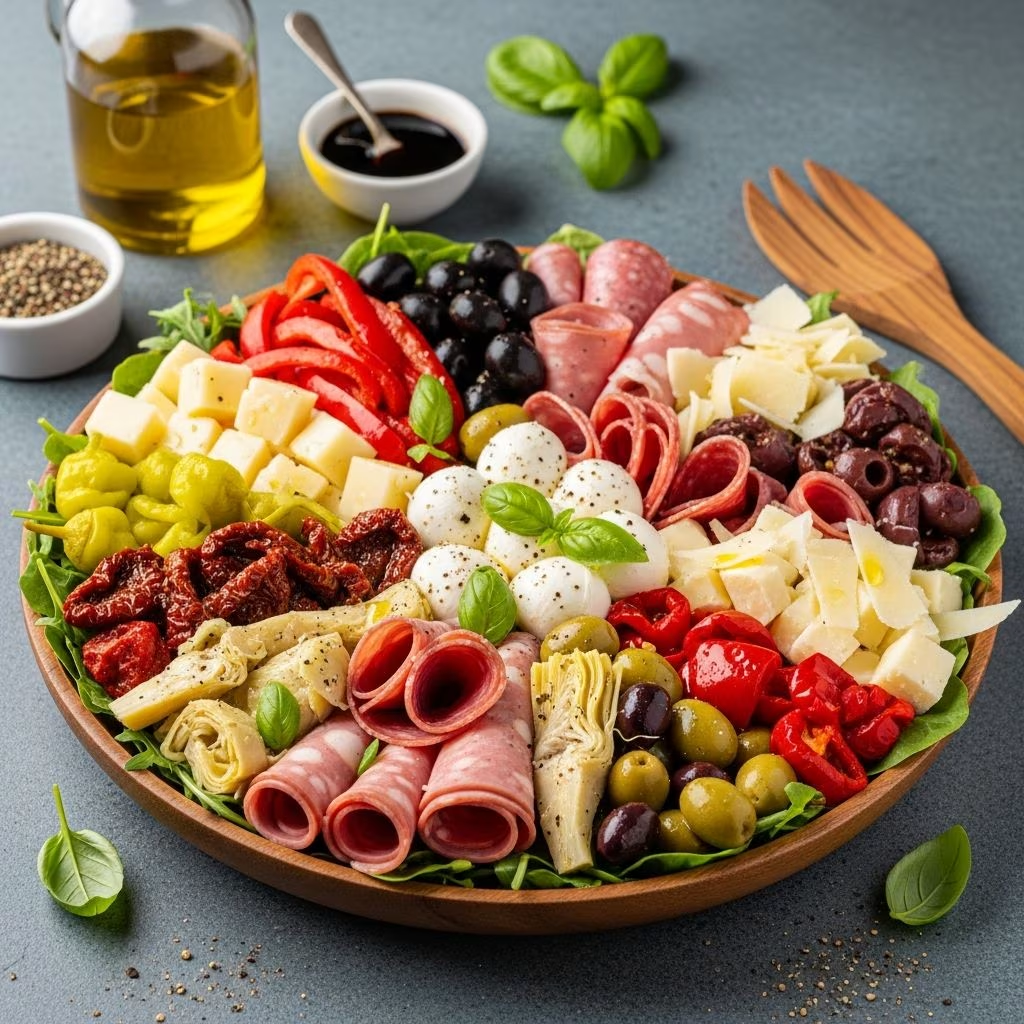
Cured meats form the flavorful backbone of antipasto salad, delivering the salty, umami-rich complexity that defines the dish. Genoa salami provides the most authentic choice, offering deep, complex flavors and firm texture that maintains its integrity when chopped. Mini pepperoni adds visual appeal and familiar comfort, while prosciutto introduces delicate, subtle salt notes that don’t overpower other components. The key consideration involves cutting techniques—while some recipes advocate for thin slices, bite-sized dice or quartered pieces ensure even distribution and prevent any single element from dominating.
Cheese selection demands equal consideration. Fresh mozzarella balls, also known as ciliegine or bocconcini, provide creamy contrast to the salty meats and acidic elements. These pearls maintain their shape throughout tossing and add visual sophistication to the finished salad. Provolone cheese, whether semi-hard or hard varieties, contributes sharpness and substance, particularly when cut into small cubes that distribute throughout the greens. For additional complexity, incorporate shredded Parmesan cheese as a finishing element, adding nutty depth and textural variation that engages the palate differently than the creamier components.
| Protein Component | Flavor Profile | Preparation Method | Quantity (per 8 servings) |
|---|---|---|---|
| Genoa Salami | Deep, complex, savory | Bite-sized cubes or thin slices | 8 ounces |
| Pepperoni | Spicy, tangy, familiar | Halved or quartered pieces | 2-4 ounces |
| Prosciutto | Delicate, subtle salt notes | Torn or loosely arranged | 3-4 ounces |
| Mozzarella Balls | Creamy, mild, fresh | Whole or halved | 8 ounces |
| Provolone Cheese | Sharp, substantial, bold | Small cubes | 6-8 ounces |
Vegetable Components: Building Texture and Color
The vegetable elements of antipasto salad provide textural contrast, natural sweetness, and visual vibrancy. Cherry tomatoes, whether halved or quartered, deliver subtle sweetness and fresh acidity that brightens the overall composition. Their juicy nature contributes moisture that helps distribute the dressing throughout the salad. Select firm, ripe specimens and avoid overly large varieties that become unwieldy when eaten with a fork.
Marinated artichoke hearts contribute distinctive earthiness and tender texture, while their preserving liquid imparts subtle flavoring influence throughout the salad. Drain these thoroughly before adding to prevent excess liquid from diluting your carefully balanced dressing. Roasted red peppers, whether homemade or quality jarred varieties, introduce sweet, smoky depth that adds sophistication and visual appeal. Olives provide briny intensity and textural variation—choose varieties based on your preference for intensity, as Castelvetrano olives offer milder profiles while Kalamata varieties deliver bolder presence.
Pepperoncini peppers deserve special attention as they offer both flavor and functional benefits within the salad structure. These small, pickled peppers provide vinegary tang and mild heat that prevents the overall composition from feeling one-dimensional. Their acidity actively works with the dressing components, amplifying flavor throughout the entire dish. For those seeking additional crunch, consider incorporating diced celery or cucumber, though these additions represent modern variations rather than traditional elements.
Dressing Approaches: From Classic to Contemporary
The dressing represents the unifying element that brings disparate components into harmonious balance. The lemon-olive oil approach offers simplicity and authenticity, allowing individual ingredients to retain their character while gaining subtle cohesion. This method combines quality extra virgin olive oil with fresh lemon juice in roughly a 3:1 ratio, adjusted according to personal preference and the natural acidity of your other components. Italian seasoning adds gentle herbaceous undertones without requiring fresh herb preparation.
For more assertive profiles, consider the Dijon vinaigrette approach, which begins with Champagne vinegar and Dijon mustard as the acidic and flavor base. This combination creates richer body and more pronounced presence that stands up to the bold elements in the salad. Minced shallots introduce subtle allium notes, while red pepper flakes add complexity and gentle heat. The vinaigrette approach works particularly well when you’ve included substantial quantities of rich cheeses and cured meats, as the increased body prevents these elements from overwhelming the palate.
Whichever dressing approach you select, prepare it separately and add gradually to your assembled salad, tossing between additions to achieve even distribution without oversaturation. Many cooks reserve a portion of dressing to dress the salad immediately before serving, ensuring optimal texture and flavor presentation. Red wine vinegar offers a middle ground between the brightness of lemon and the complexity of Champagne vinegar, making it an excellent choice for those uncertain which direction to pursue.
Advanced Customization: Making the Salad Your Own
The beauty of antipasto salad lies in its fundamental flexibility—this is a template rather than a rigid prescription. Kalamata olives may replace or join traditional black olives depending on your preferences and available ingredients. Pickled red onions, while not traditional, add brightness and visual interest that many modern renditions incorporate. Garbanzo beans introduce protein and textural variation, transforming the salad into a more substantial main course option. Fresh basil, added immediately before serving rather than during preparation, contributes aromatic freshness that elevates the entire composition.
For textural variation, consider incorporating roasted nuts or pine nuts, adding both crunch and subtle richness that prevents the salad from feeling monotonously soft. Croutons provide an alternative crunch element for those preferring bread-based additions. Some cooks introduce marinated mushrooms or capers, drawing inspiration from traditional Italian preserved vegetable traditions while expanding the flavor spectrum available within a single bowl.
Dietary considerations need not exclude you from antipasto salad enjoyment. The inherently low-carbohydrate nature of the core components makes this salad naturally keto-friendly and appropriate for those monitoring carbohydrate intake. Vegetarians can create compelling versions by omitting cured meats and emphasizing cheese varieties, preserved vegetables, and adding beans for protein substance. The fundamental formula remains adaptable to nearly any dietary preference without sacrificing the essential character that defines the dish.
Practical Preparation and Serving Strategies
Antipasto salad shines as an entertainer’s dish because it accommodates advance preparation remarkably well. Prepare individual components several hours ahead—chop vegetables, cube cheeses, and portion cured meats into separate containers. This advance work eliminates last-minute stress and allows you to focus on greeting guests rather than frantically chopping. The dressing can be prepared an entire day ahead, with flavors actually deepening during refrigeration as components meld. Assemble the complete salad no more than thirty minutes before serving to maintain optimal greens texture, though tossing with dressing can occur immediately before plating.
For meal-prep applications, the salad lends itself beautifully to jar storage, with dressing layered at the bottom protected by heartier vegetables before delicate greens occupy the top position. This presentation method maintains component separation, preventing soggy lettuce while creating visually striking individual portions. Store these assembled jars for up to four days, shaking vigorously immediately before consumption to distribute dressing and combine all elements.
Serving considerations depend on your event context. For casual gatherings, present the salad family-style in a large bowl, allowing guests to select portions. For more formal presentations, individual plating on chilled plates elevates the visual impact. Consider serving the salad at room temperature rather than chilled, as this approach allows flavor components to express themselves more fully—a practice common in traditional Italian cuisine where temperature manipulation provides deliberate flavor management.
Seasonal Variations and Occasion Suitability
Summer represents the obvious season for antipasto salad, when abundant produce options inspire creativity and outdoor entertaining dominates social calendars. Spring variations might emphasize lighter elements—fresh herbs, tender artichokes, and delicate cheeses—creating compositions that feel fresh and restorative as the weather warms. Winter applications benefit from fuller-flavored components and heartier quantities of cured meats and aged cheeses, creating satisfying compositions that provide warmth through richness despite their cold serving temperature.
The salad transitions fluidly between entertaining contexts—it performs equally admirably at casual backyard barbecues, elegant dinner parties, potluck gatherings, and midweek weeknight suppers. Its substantial protein and fat content means the salad satisfies as a complete main course rather than requiring supplementary components. This flexibility positions antipasto salad as a fundamental recipe to master for cooks of all experience levels seeking reliable entertaining solutions.
Frequently Asked Questions
Can I prepare antipasto salad in advance?
Yes, preparation flexibility represents one of the salad’s greatest strengths. Prepare components separately up to eight hours ahead, then assemble and dress no more than thirty minutes before serving. Store individual components in sealed containers for optimal freshness.
What dressing works best with antipasto salad?
Both lemon-olive oil and Dijon vinaigrette approaches work beautifully. Choose lemon-olive oil for lighter, more delicate presentations or Dijon vinaigrette when emphasizing bold, complex flavors. Prepare dressing separately and add gradually while tossing.
Are specific cheese types essential?
While fresh mozzarella and provolone represent traditional choices, any semi-hard or firm cheese complements antipasto salad nicely. Experiment with different varieties to develop personal preferences and adapt to available ingredients.
How can I make antipasto salad vegetarian?
Simply omit cured meats and emphasize cheese varieties, marinated vegetables, and beans for protein substance. The fundamental composition remains compelling without meat components.
Does this salad work for meal prep?
Absolutely. Layer dressing at the jar bottom, followed by sturdy vegetables, cheeses, and cured meats, with delicate greens occupying the top position. Shake vigorously before consumption. Store for up to four days.
What temperature should antipasto salad be served?
Room temperature or slightly chilled both work well. Room temperature presentations allow flavor components to express themselves more fully, following traditional Italian serving conventions.
Mastering the Italian Antipasto Salad
Creating exceptional antipasto salad requires understanding the interplay between component flavors rather than following rigid measurements—this approach transforms cooking from mechanical recipe execution into creative expression. The fundamental template of cured meats, cheeses, marinated vegetables, and crisp greens united by a balanced dressing remains constant, while infinite variations accommodate personal preferences, seasonal availability, and occasion requirements. Each addition represents thoughtful decision-making about flavor balance, textural contrast, and visual presentation that elevates the dish beyond simple ingredient assembly.
Whether you’re preparing a casual family dinner, impressing dinner guests, or establishing reliable meal-prep solutions for busy weeks ahead, antipasto salad delivers satisfaction through its inherent flexibility and satisfying flavor profile. The combination of traditional Italian ingredients prepared through contemporary applications ensures the dish remains relevant across changing culinary trends while honoring authentic roots. Master these fundamentals, then personalize the composition according to your palate preferences and available ingredients—this approach transforms antipasto salad from a recipe into a lifelong entertaining staple.
References
- Italian Antipasto Salad — Soup Addict. 2024. https://soupaddict.com/italian-antipasto-salad/
- Easy Antipasto Salad Recipe — The Recipe Critic. 2024. https://therecipecritic.com/antipasto-salad/
- Antipasto Salad — The Girl Who Ate Everything. 2024. https://www.the-girl-who-ate-everything.com/antipasto-salad/
- Antipasto Salad — The Mediterranean Dish. 2024. https://www.themediterraneandish.com/antipasto-salad/
- Antipasto Salad (Easy Recipe) — Wholesome Yum. 2024. https://www.wholesomeyum.com/antipasto-salad-recipe/
- Best Antipasto Salad Recipe — Delish. 2024. https://www.delish.com/cooking/recipe-ideas/a19885331/antipasto-salad-recipe/
- Antipasto Salad | Easy Italian-Inspired Salad Recipe — Paul S Show. 2024. https://www.youtube.com/watch?v=I9Ahh2k11dc
- Antipasto Salad — The Modern Proper. 2024. https://themodernproper.com/antipasto-salad
- Summer Antipasto Salad in a Jar | Easy Meal Prep Ideas — Spoon Abilities. 2024. https://spoonabilities.com/antipasto-salad/