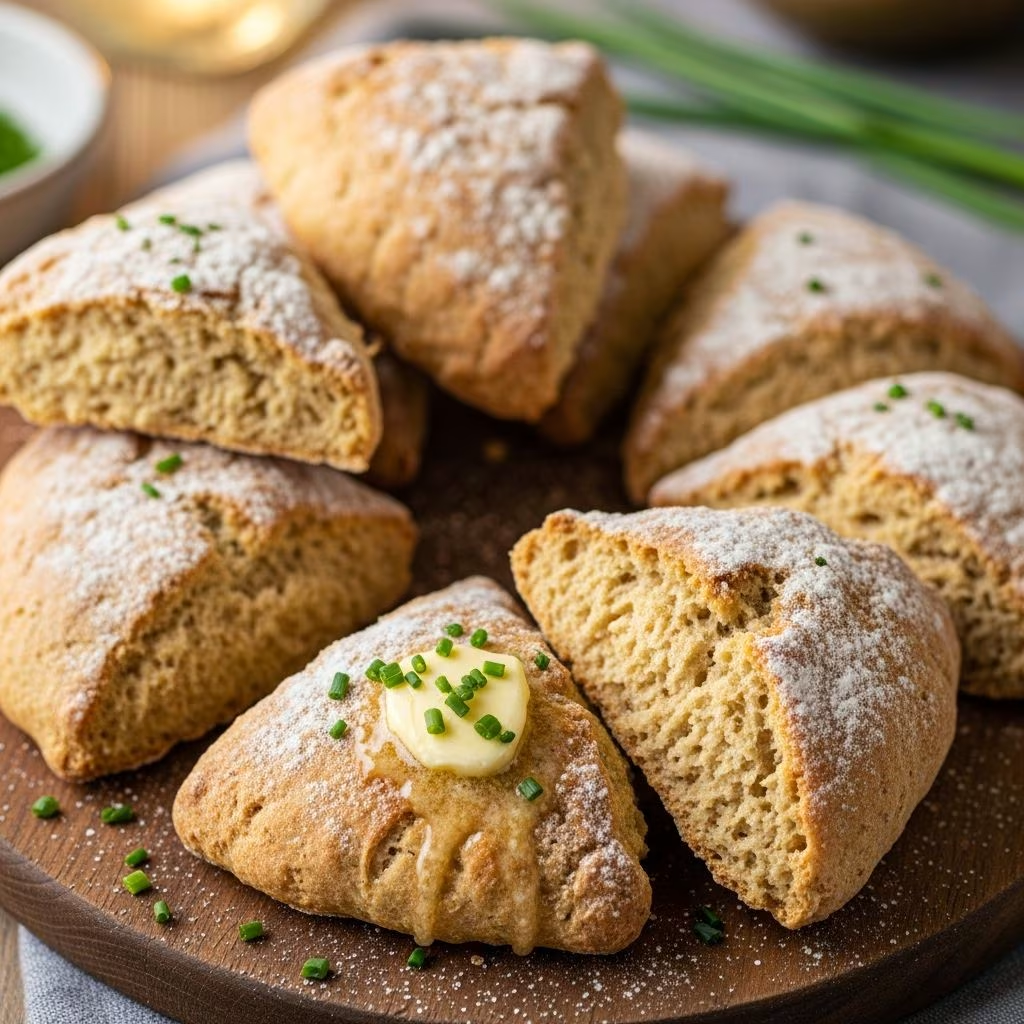
Irish soda farls represent a cornerstone of traditional Irish baking, offering a fast path to fresh bread without the need for yeast or long rising times. These triangular pieces, derived from a simple soda dough, cook directly on a griddle or skillet, yielding a crusty exterior and tender crumb ideal for slathering with butter or jam. Rooted in Ireland’s baking heritage, farls embody resourcefulness, relying on pantry staples like flour, buttermilk, baking soda, and salt.
Understanding the Essence of Soda Farls
The term “farl” originates from the Scottish word for “fourth,” reflecting how the dough is shaped into a round and divided into four wedges. Unlike oven-baked soda bread, farls are griddled, a method suited to hearth cooking in traditional Irish homes. This technique dates back to the 19th century when baking soda became widely available, revolutionizing bread-making in rural Ireland where ovens were scarce.
Buttermilk plays a pivotal role, providing acidity to activate the baking soda, creating carbon dioxide bubbles for lift. The result is a bread with a dense yet airy texture, subtly tangy from the buttermilk, and a golden crust from low, slow cooking. Perfect for breakfast alongside eggs in an Ulster Fry or as a teatime treat, soda farls highlight Ireland’s practical approach to baking.
Essential Ingredients for Perfect Farls
Crafting soda farls requires minimal components, but precision matters for optimal rise and flavor. Here’s a breakdown:
- All-purpose flour: Forms the base; about 2 cups (250g) provides structure without heaviness. Use plain flour for authenticity.
- Baking soda (bicarbonate of soda): The leavener; ¾ to 1 teaspoon reacts with buttermilk’s acid. Test freshness by adding vinegar—if it fizzes vigorously, it’s active.
- Salt: ½ to 1 teaspoon enhances flavor; sea salt adds a subtle minerality.
- Buttermilk: 1 cup (240-280ml) offers moisture and tang. If unavailable, substitute with milk soured by lemon juice or vinegar.
Optional add-ins like a touch of sugar or honey can sweeten for dessert versions, while cheese or herbs suit savory twists.
Step-by-Step Guide to Making Irish Soda Farls
Preparation takes under 30 minutes, with cooking adding another 20. Follow these steps for foolproof results.
Prepare dry ingredients: In a large bowl, whisk flour, baking soda, and salt to evenly distribute the leavener and prevent bitter pockets.
Add wet ingredient: Create a well in the center and pour in buttermilk. Stir gently with a spoon or hands until a shaggy, sticky dough forms—avoid overmixing to keep it tender.
Knead lightly: Turn onto a floured surface and knead 30-60 seconds, just enough to bring it together. Overworking develops gluten, making farls tough.
Shape the dough: Pat into a ½ to 1-inch thick round, about 8 inches diameter. Cut into four wedges using a floured knife.
Heat the pan: Warm a cast-iron skillet or heavy griddle over low-medium heat. Dust with flour to prevent sticking.
Cook the farls: Place wedges in the pan, cover if possible, and cook 6-10 minutes per side until golden and crisp. Check doneness with a skewer—it should emerge clean.
Rest and serve: Cool slightly on a wire rack, then split and enjoy warm.
Yield: 4 farls. Total time: 25-30 minutes.
Pro Tips for Griddle Success
- Use low heat to cook through without burning; high heat yields raw centers.
- Flour the pan lightly for non-stick results and extra crispness.
- Test baking soda potency annually for reliable rise.
- Don’t skip the buttermilk—its acidity is key; alternatives work but alter tang.
- For even cooking, ensure uniform thickness; flip edges if needed.
Delicious Serving Ideas and Pairings
Soda farls shine in versatility. Classic pairings include:
| Occasion | Suggested Toppings | Pairing Drink |
|---|---|---|
| Breakfast Ulster Fry | Irish butter, fried eggs, bacon | Black tea |
| Afternoon Tea | Raspberry jam, clotted cream | Earl Grey |
| Savory Soup Side | Cheddar cheese, mustard | Guinness |
| Sweet Treat | Honey, raisins (add to dough) | Irish coffee |
Incorporate into a full Irish breakfast or enjoy solo with salted butter for purity.
Creative Variations to Try
Elevate basic farls with these twists:
- Sweet farls: Mix in 1-2 tbsp sugar, vanilla, and raisins before shaping. Dust with powdered sugar post-cook.
- Cheesy savory: Fold in ½ cup grated cheddar and 1 tsp mustard powder.
- Herbed: Add chopped scallions or rosemary for aroma.
- Whole grain: Swap half the flour for whole wheat for nuttier flavor and fiber.
- Gluten-free: Use a 1:1 gluten-free blend with xanthan gum; adjust buttermilk as needed.
These adaptations maintain tradition while suiting modern diets.
Storing and Freezing for Freshness
Farls are best eaten same-day but store well:
- Room temp: Wrap in a tea towel up to 2 days; reheat in skillet.
- Fridge: Airtight container up to 5 days; toast to revive.
- Freezer: Cool fully, wrap individually, freeze up to 3 months. Thaw and skillet-warm.
Avoid microwaving to preserve crust texture.
Common Mistakes and How to Avoid Them
Pitfalls are few but fixable:
| Mistake | Why It Happens | Solution |
|---|---|---|
| Dense farls | Over-kneading or inactive soda | Knead minimally; test soda |
| Raw center | High heat or thick dough | Low heat, ½-inch thickness |
| Bitter taste | Uneven soda distribution | Sift and whisk thoroughly |
| Sticking | No flour dust | Lightly flour pan |
Frequently Asked Questions (FAQs)
Can I make soda farls without buttermilk?
Yes, mix 1 cup milk with 1 tbsp lemon juice or vinegar; let sit 10 minutes.
What’s the best pan for cooking farls?
Cast-iron skillet for even heat and crisp crust; any heavy-bottomed pan works.
How do I know when farls are done?
Golden brown outside, clean skewer test inside; tap for hollow sound.
Are soda farls vegan-friendly?
Swap buttermilk for plant-based version soured with acid.
Can I bake them instead of griddling?
Yes, at 400°F for 20-25 minutes, but they lose traditional texture.
Historical Context and Cultural Significance
Soda bread emerged in the 1830s with baking soda’s import to Ireland, replacing yeast for impoverished households. Farls suited peat-fired griddles, common before modern ovens. Today, they’re iconic in Northern Ireland’s Ulster Fry and evoke nostalgia worldwide. Chefs praise their simplicity, noting the dough’s stickiness signals perfect hydration.
Experiment with local flours or pairings to personalize this heritage recipe.
References
- Irish Soda Farls Recipe — Cooking With Ruthie. 2017-03-01. https://cookingwithruthie.com/2017/03/01/irish-soda-farls/
- Traditional Irish Soda Farls — The Irishman’s Wife. N/A. https://www.theirishmanswife.com/traditional-irish-soda-farls/
- Irish Soda Farls — The Last Food Blog. N/A. https://www.thelastfoodblog.com/soda-farls/
- Easy Home-made Soda Farls — Eating for Ireland. N/A. https://eatingforireland.com/recipe/easy-home-made-soda-farls/
- Irish Soda Farls — Tara’s Multicultural Table. N/A. https://tarasmulticulturaltable.com/src-leprechaun-bunnies-irish-soda-farls/