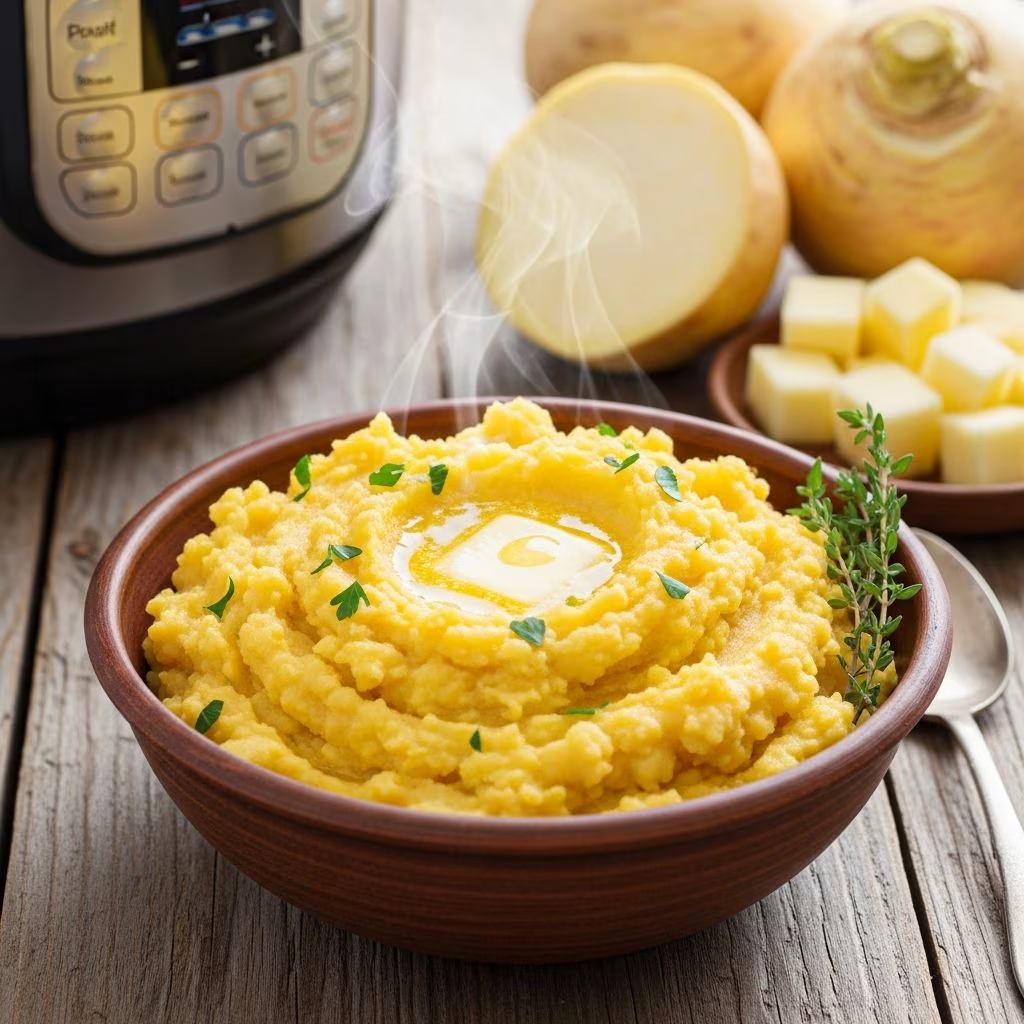
Rutabaga, often overlooked in favor of potatoes, offers a nutty flavor and creamy texture when mashed. Using an Instant Pot simplifies the process, cutting cooking time dramatically while preserving nutrients. This guide explores everything from basic preparation to creative variations, ensuring you can whip up this versatile dish effortlessly.
Why Choose Rutabaga Over Potatoes?
Rutabaga, a cross between turnips and cabbage, provides a lower carbohydrate profile than potatoes, making it ideal for keto, paleo, or low-glycemic diets. Its natural sweetness balances savory seasonings, creating a mash that’s indulgent yet wholesome. Pressure cooking in an Instant Pot steams rutabaga efficiently, yielding fork-tender results in minutes compared to 30-40 minutes on the stovetop.
- Nutritional Edge: Higher in vitamin C, fiber, and glucosinolates—compounds linked to anti-inflammatory benefits.
- Texture Advantage: Less watery than potatoes, resulting in a thicker, more stable mash.
- Flavor Profile: Mild earthiness that absorbs butter, herbs, and spices beautifully.
Essential Ingredients for Perfect Mash
Gather these staples for a batch serving 4-6 people. Scale up as needed for larger gatherings.
| Ingredient | Quantity | Purpose |
|---|---|---|
| Rutabaga | 2-3 lbs (about 3 medium) | Main base for mashing |
| Water or broth | 1-2 cups | Steaming liquid |
| Salt | 1 tbsp + ½ tsp | Flavor enhancement |
| Butter (or ghee) | ¼ cup, melted | Creaminess and richness |
| Black pepper | ¼ tsp | Balanced seasoning |
Optional add-ins like garlic, nutmeg, or cream elevate the dish without complicating prep.
Step-by-Step Instant Pot Instructions
Preparation takes under 10 minutes, with cooking following suit. Ensure your Instant Pot has a trivet or steamer basket.
- Prep the Rutabaga: Peel using a sturdy knife or peeler, removing the thick wax coating. Cut into 1-inch cubes to ensure even cooking. Rinse to remove starch.
- Load the Pot: Add 1-2 cups water (less for 3-6 qt pots) and 1 tbsp salt to the inner pot. Place trivet inside, then layer rutabaga cubes on top.
- Pressure Cook: Seal the lid, set valve to sealing. Cook on high pressure for 5-10 minutes (5 for smaller cubes, 10 for larger or firmer roots). Natural release for 10 minutes, then quick release.
- Test and Drain: Rutabaga should pierce easily with a fork. Drain excess liquid if any.
- Mash and Season: Transfer to a bowl. Add melted butter, remaining salt, pepper. Use a potato masher, immersion blender, or mixer for desired smoothness.
- Serve Hot: Garnish with chives or herbs. Pairs perfectly with roasted meats or greens.
Pro Tip: If undercooked, reseal and add 2-3 more minutes. Size and model variations affect timing.
Stovetop Alternative for Non-Pressure Cookers
No Instant Pot? No problem. This method mimics the results with minimal effort.
- Peel and cube rutabaga.
- Place in a pot, cover with water by 1 inch, add 1 tbsp salt.
- Boil, then simmer 25-35 minutes until tender.
- Drain, mash with butter and seasonings as above.
Expect slightly longer cook times but comparable creaminess.
Flavor Variations to Suit Any Palate
Customize your mash for holidays, weeknights, or dietary needs.
| Variation | Add-Ins | Best For |
|---|---|---|
| Garlicky | 1 head roasted garlic, 1 tbsp oil | Paleo, AIP diets |
| Creamy Bacon | ½ cup bacon crumbles, ¼ cup cream, caramelized onions | Hearty comfort food |
| Herbed | 1 tsp nutmeg, fresh chives, thyme | Simple vegan twist (use plant butter) |
| Spicy | ½ tsp smoked paprika, cayenne | Bold flavors |
For vegan versions, swap butter for coconut oil or olive oil. Bone broth in the pot adds umami depth.
Nutrition Breakdown and Health Benefits
One cup of mashed rutabaga (with butter) delivers approximately:
- Calories: 150-200
- Carbs: 15g (net 10g)
- Fiber: 4g
- Vitamin C: 50% DV
- Potassium: 10% DV
Its low glycemic index supports blood sugar stability. Glucosinolates may aid detoxification, per studies from agricultural extensions. Ideal for weight management or diabetic-friendly meals.
Storage, Reheating, and Make-Ahead Tips
This mash stores well, maintaining quality for days.
- Fridge: Up to 5 days in airtight container.
- Freezer: 3 months; portion into bags, thaw overnight.
- Reheat: Stovetop with splash of milk, or microwave stirring midway.
Make-ahead for holidays: Cook, mash, refrigerate, then reheat with extra butter for freshness.
Troubleshooting Common Issues
Encounter problems? Here’s how to fix them.
- Too Watery: Drain thoroughly; cook longer next time.
- Lumpy Texture: Use blender for silkiness.
- Bitter Taste: Ensure full peel removal; add more butter.
- Not Tender: Increase pressure time by 2 minutes.
Pairing Suggestions for Complete Meals
Elevate your mash with these combos:
- Roast chicken or pork tenderloin.
- Steamed greens like kale or broccoli.
- Grilled salmon for omega-3 balance.
- Thanksgiving turkey platter alternative.
Its mild flavor complements bold proteins without overpowering.
Frequently Asked Questions (FAQs)
Can I use frozen rutabaga?
No, fresh is best for mashing texture. Frozen may release excess water.
Is rutabaga keto-friendly?
Yes, with ~10g net carbs per cup, far lower than potatoes.
How do I peel rutabaga easily?
Microwave whole for 3-5 minutes to soften skin, then use a sharp peeler.
Can I double the recipe?
Yes, but don’t exceed pot’s max fill line; cook in batches if needed.
What’s the difference between rutabaga and turnip?
Rutabaga is larger, sweeter, with purple-tinged skin; turnips are smaller and sharper.
Expert Tips for Next-Level Results
From testing multiple recipes, these tweaks yield superior mash:
- Cut uniformly for even cooking.
- Melt butter separately for better incorporation.
- Season water like pasta for infused flavor.
- Rest 5 minutes post-mash to thicken.
Experiment with 6-8 qt pots for family-sized yields.
References
- USDA FoodData Central: Rutabagas, cooked, boiled, drained, without salt — United States Department of Agriculture. 2023-05-15. https://fdc.nal.usda.gov/fdc-app.html#/food-details/169335/nutrients
- National Center for Biotechnology Information: Glucosinolates in Brassica Vegetables — PubMed/NCBI. 2022-11-10. https://pubmed.ncbi.nlm.nih.gov/36421789/
- Harvard T.H. Chan School of Public Health: Glycemic Index of Root Vegetables — Harvard University. 2024-02-20. https://www.hsph.harvard.edu/nutritionsource/carbohydrates/carbohydrate-content-of-foods-2/