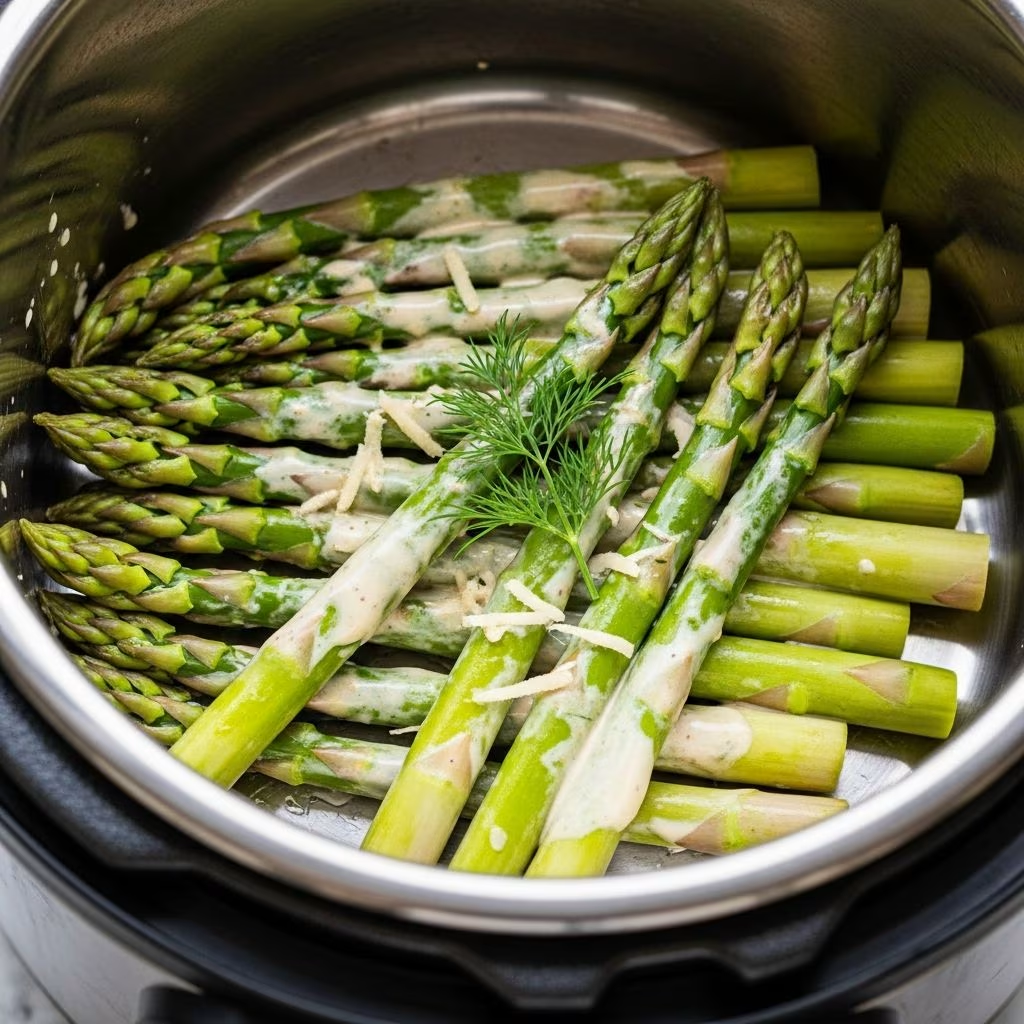
Pressure cooking has revolutionized the way home cooks prepare vegetables, and asparagus stands out as one of the most elegant candidates for this cooking method. The Instant Pot’s ability to infuse flavors while maintaining tender-crisp textures makes it ideal for creating restaurant-quality side dishes at home. This particular preparation combines the bold bite of horseradish with the delicate freshness of dill, creating a sophisticated accompaniment that elevates both simple weeknight dinners and special occasion meals.
The beauty of this recipe lies in its simplicity and the dramatic flavor profile it achieves in minimal time. Rather than relying on complicated techniques or obscure ingredients, this dish demonstrates how strategic flavor combinations and proper pressure cooking technique can transform basic asparagus into something truly memorable. Whether you’re looking to impress dinner guests or add excitement to your regular meal rotation, this horseradish-dill variation provides exactly that opportunity.
Understanding the Key Ingredients and Their Roles
Creating exceptional pressure-cooked asparagus requires understanding how each component contributes to the final result. The foundation starts with quality asparagus, which serves as the canvas for the bold flavors that will coat it. Fresh asparagus spears offer the best texture and nutritional profile, though frozen options work adequately when fresh isn’t available.
The Vegetable Foundation
Selecting appropriate asparagus sizes matters more than many home cooks realize. Thin spears cook through rapidly and work well when you prefer a delicate texture, while medium to thick spears maintain their structural integrity better during pressure cooking and provide a more substantial eating experience. The woody ends, which everyone should trim before cooking, contain little flavor and detract from the dining experience. Finding the natural breaking point by bending an asparagus spear toward its base helps identify exactly where the tender portion begins, allowing you to trim the batch consistently.
The Creamy Horseradish Element
Horseradish brings an unmistakable sharpness and pungency that distinguishes this recipe from standard asparagus preparations. When combined with mayonnaise and sour cream, prepared horseradish creates a tangy sauce that clings beautifully to the cooked spears. The condiment’s natural bite doesn’t diminish during cooking, making it an ideal flavor enhancer for pressure-cooked vegetables. This ingredient transforms what would otherwise be a simple side dish into something with genuine character and depth.
Fresh and Dried Dill Components
Dill’s feathery sweetness and slightly herbal character provide a counterbalance to horseradish’s assertiveness. Using both fresh and dried dill, when possible, creates a more complex flavor experience. Fresh dill stems can be placed directly in the cooking liquid, infusing the entire cooking environment with their aromatic qualities, while dried dill offers concentrated flavor for the creamy sauce that accompanies the finished spears. This layering of the same herb in different forms demonstrates professional cooking technique accessible to home cooks.
Supporting Flavor Agents
Parmesan cheese adds umami depth and a pleasant nuttiness that complements both horseradish and dill. Freshly grated Parmesan melts more seamlessly into the creamy sauce than pre-grated varieties and provides superior flavor. The combination of mayonnaise and sour cream creates a sauce base that’s rich yet bright, offering enough acidity to balance the horseradish’s intensity while maintaining the dish’s sophisticated character.
Essential Equipment and Preparation Steps
Before pressure cooking begins, proper preparation ensures success. An Instant Pot in any size works adequately, though having at least a six-quart capacity makes arranging longer asparagus spears more manageable. A steaming rack or trivet, which comes standard with most units, lifts the vegetables above the cooking liquid and prevents mushiness that results from direct contact with boiling water.
Pre-Cooking Preparations
Thoroughly washing asparagus removes any hidden dirt between the tightly clustered tips. Holding each spear under cool running water while gently rubbing the length removes debris effectively. After washing, lay the asparagus on a clean kitchen towel and pat dry to remove excess moisture. Moisture prevents seasonings and sauces from adhering properly, so this step deserves attention despite seeming unnecessary.
Arrangement and Layering Techniques
Proper arrangement within the Instant Pot ensures even cooking. Placing asparagus perpendicular to the steaming rack’s bars prevents spears from falling into cooking liquid or becoming compressed. When working with a full pound of asparagus, creating two layers with spears crossing at right angles promotes even heat distribution. This crisscross pattern allows steam to circulate completely around each spear, resulting in uniform texture throughout the batch.
The Pressure Cooking Process Explained
Understanding the mechanics of pressure cooking helps home cooks troubleshoot issues and achieve consistent results. The Instant Pot creates a sealed environment where steam pressure raises water’s boiling point, allowing vegetables to cook through quickly while retaining moisture and nutrients that traditional boiling leaches away.
Water and Liquid Ratios
The Instant Pot requires a minimum liquid amount to generate sufficient steam for proper pressure development. Most asparagus recipes call for one cup of water, which provides adequate steam without overwhelming the vegetables. This liquid never actually touches the asparagus when using a steaming rack, so it simply creates the pressurized environment necessary for cooking. Anything from plain water to vegetable or chicken broth works, with broth adding subtle background flavor that enhances the final dish.
Pressure Settings and Cook Times
Asparagus’s delicate nature requires minimal cook time. Many recipes use zero minutes of actual pressure cooking, relying instead on the time it takes the pot to reach pressure for cooking to occur. This approach, called “zero-minute cooking,” provides asparagus with precisely the gentle treatment it needs. The buildup phase, which typically requires five to seven minutes, cooks thin to medium asparagus perfectly. For thicker spears or when a more tender texture is preferred, one minute at high pressure suffices. Experimenting with your specific Instant Pot model and asparagus thickness helps determine your preference.
Pressure Release Methods and Their Effects
How you release pressure dramatically affects final texture. Quick manual release, where you immediately turn the pressure valve to vent, halts cooking instantly and preserves crisp texture. Natural pressure release, where you let pressure decrease gradually over several minutes, continues gentle cooking and produces softer asparagus. Most home cooks prefer quick release for this recipe, as it maintains asparagus’s appealing tender-crisp character.
Creating the Horseradish-Dill Sauce
The sauce transforms simple steamed asparagus into something genuinely special. This creamy preparation comes together in minutes and can be prepared either before or after cooking.
Sauce Component Ratios
| Ingredient | Quantity | Purpose |
|---|---|---|
| Mayonnaise | 1/4 cup | Rich base and emulsifier |
| Sour Cream | 1/4 cup | Tanginess and lighter texture |
| Parmesan Cheese | 4 tablespoons | Umami and savory depth |
| Prepared Horseradish | 1 tablespoon | Sharp, pungent flavor |
| Fresh Dill | 1 teaspoon | Bright, herbal sweetness |
| Lemon Juice | 1/2 teaspoon | Acidity and brightness |
| Salt and Pepper | To taste | Seasoning adjustment |
Preparation Method
Combine mayonnaise and sour cream in a bowl, whisking until completely smooth. This creates an emulsified base that holds other ingredients uniformly. Add freshly grated Parmesan and stir thoroughly, ensuring the cheese distributes evenly. The prepared horseradish goes in next—start with one tablespoon and taste before adding more, as its intensity varies between brands and personal preferences. Fresh dill, minced finely, incorporates next, followed by a squeeze of fresh lemon juice that brightens the entire mixture. Season with salt and pepper, tasting and adjusting until the flavor balance feels right to you.
This sauce achieves its best texture when ingredients are at room temperature before combining. Cold mayonnaise can become stiff and difficult to blend smoothly, while room temperature ingredients incorporate more readily. If the sauce seems too thick, whisk in additional sour cream by the teaspoon until reaching desired consistency.
Serving Suggestions and Flavor Pairings
This distinctive asparagus preparation complements numerous main courses. The horseradish-dill combination works particularly well with beef dishes, especially roasted or grilled preparations. Fish and shellfish, particularly salmon, benefit from the fresh dill and horseradish’s brightness. Even chicken dishes gain sophistication from this sauce’s bold flavors.
For vegetarian meals, serve this alongside grains like quinoa or farro, where the sauce can also dress the grain itself. The horseradish-dill combination even works as a topping for baked potatoes or roasted root vegetables, extending the recipe’s versatility beyond asparagus.
Temperature considerations matter when serving. Some prefer the asparagus warm with room-temperature sauce spooned over just before eating, while others enjoy the entire dish chilled as a salad component during warmer months.
Storage, Make-Ahead Strategies, and Scaling
This recipe’s make-ahead friendly nature adds to its practical appeal. The sauce keeps refrigerated for up to five days in an airtight container, allowing you to prepare it well in advance. Cooked asparagus, stored separately in a sealed container, maintains quality for three days. However, combining them before serving prevents the spears from becoming overly saturated and soggy.
When cooking for larger groups, the recipe scales easily. Double or triple the quantities, adjusting pressure cooking times minimally—zero to one minute of actual pressure typically remains appropriate regardless of quantity, as the pot reaches pressure based on its volume rather than ingredient amount. Simply arrange additional asparagus in organized layers, and the pressure cooker will cook them uniformly.
Troubleshooting Common Issues
Asparagus Texture Problems
Overcooked, mushy asparagus results from too much pressure cooking time or using natural pressure release with thick spears. Next time, use quick release immediately or reduce cook time. Undercooked asparagus that remains tough benefits from a few minutes of additional steaming if discovered immediately after cooking.
Sauce Consistency Issues
Sauce that’s too thick requires whisking in additional sour cream or even a touch of lemon juice to loosen it. Overly thin sauce benefits from additional Parmesan or even a small amount of cream cheese whisked in until the desired consistency returns.
Flavor Adjustments
If horseradish flavor seems absent, the prepared horseradish may have lost potency—common when jars sit open in the refrigerator. Freshly prepared horseradish, though more effort, provides dramatically superior flavor. If the sauce tastes too sharp, additional sour cream or even a small dollop of mayo mellows the intensity.
Nutritional Considerations
Asparagus provides excellent nutrition with minimal calories—roughly 25 calories per cup of cooked spears. The vegetable contains significant amounts of vitamins K and folate, supporting bone health and cellular function. Fiber content aids digestive health, while antioxidant compounds support overall wellness. The horseradish-dill sauce adds calories primarily through mayonnaise and sour cream, though the relatively small serving sizes keep portions reasonable. For calorie-conscious preparations, Greek yogurt can replace up to half the mayonnaise and sour cream, creating a lighter sauce with comparable flavor impact.
Frequently Asked Questions
Can I use frozen asparagus for this recipe?
Frozen asparagus works in a pinch, though the final texture won’t match fresh. Frozen spears often become quite soft during pressure cooking. If using frozen asparagus, reduce cooking time to zero minutes or use a very quick five-minute manual pressure cook time at most. Don’t thaw the asparagus before cooking, as this causes excessive moisture.
What if I can’t find prepared horseradish?
Fresh horseradish root, grated finely, provides superior flavor though it’s much more pungent than the prepared version. Start with half the quantity recommended and taste before adding more. Alternatively, horseradish powder, reconstituted with a little water, works acceptably though the flavor profile differs slightly.
Can this sauce be made ahead and frozen?
The creamy sauce doesn’t freeze particularly well, as the emulsion can break during thawing. However, storing it refrigerated in an airtight container for up to five days works perfectly fine. Make it fresh in the morning for serving that evening.
Does this work in a stovetop pressure cooker?
Absolutely. Follow the same proportions and techniques, bringing the stovetop pressure cooker to full pressure and maintaining it for one minute before quick release. Cooking time to reach pressure may vary slightly depending on your specific cooker model.
What size Instant Pot do I need?
A six-quart Instant Pot comfortably handles one pound of asparagus. Smaller three-quart models work but require trimming asparagus shorter or cooking in batches. Larger eight-quart models provide more flexibility for arranging full-length spears.
References
- Easy Instant Pot Asparagus — Kara Lydon. Retrieved April 2026. https://karalydon.com/recipes/instant-pot-asparagus/
- Instant Pot Creamy Asparagus Soup — InstaFresh Meals. Retrieved April 2026. https://tidbits-marci.com/instant-pot-creamy-asparagus-soup/
- Instant Pot Lemon-Dill Salmon & Asparagus — Traditional Cooking School. Retrieved April 2026. https://traditionalcookingschool.com/food-preparation/lemon-herb-salmon-instant-pot/
- Instant Pot Asparagus with Lemon — Monday is Meatloaf. Retrieved April 2026. https://mondayismeatloaf.com/instant-pot-asparagus-with-lemon/
- The BEST Instant Pot Asparagus — Fresh Coast Eats. Retrieved April 2026. https://freshcoasteats.com/instant-pot-asparagus/
- Instant Pot Asparagus (Zero Minute Cook Time) — Real Food Real Deals. Retrieved April 2026. https://realfoodrealdeals.com/instant-pot-asparagus/
- Instant Pot® Horseradish-Dill Asparagus — Freshy Recipes. Retrieved April 2026. https://cooking.freshy.com/recipe/909a79ae-a991-94e0-0214-8a85fcd3ca31