The elegance of French cuisine extends far beyond savory dishes, and Île Flottante stands as a testament to this culinary sophistication. Translating to “Floating Island,” this dessert captivates diners with its striking presentation and delicate balance of flavors and textures. Despite its restaurant-quality appearance, this classic French creation remains surprisingly accessible to home cooks willing to follow the essential techniques.
Understanding the Essence of This French Classic
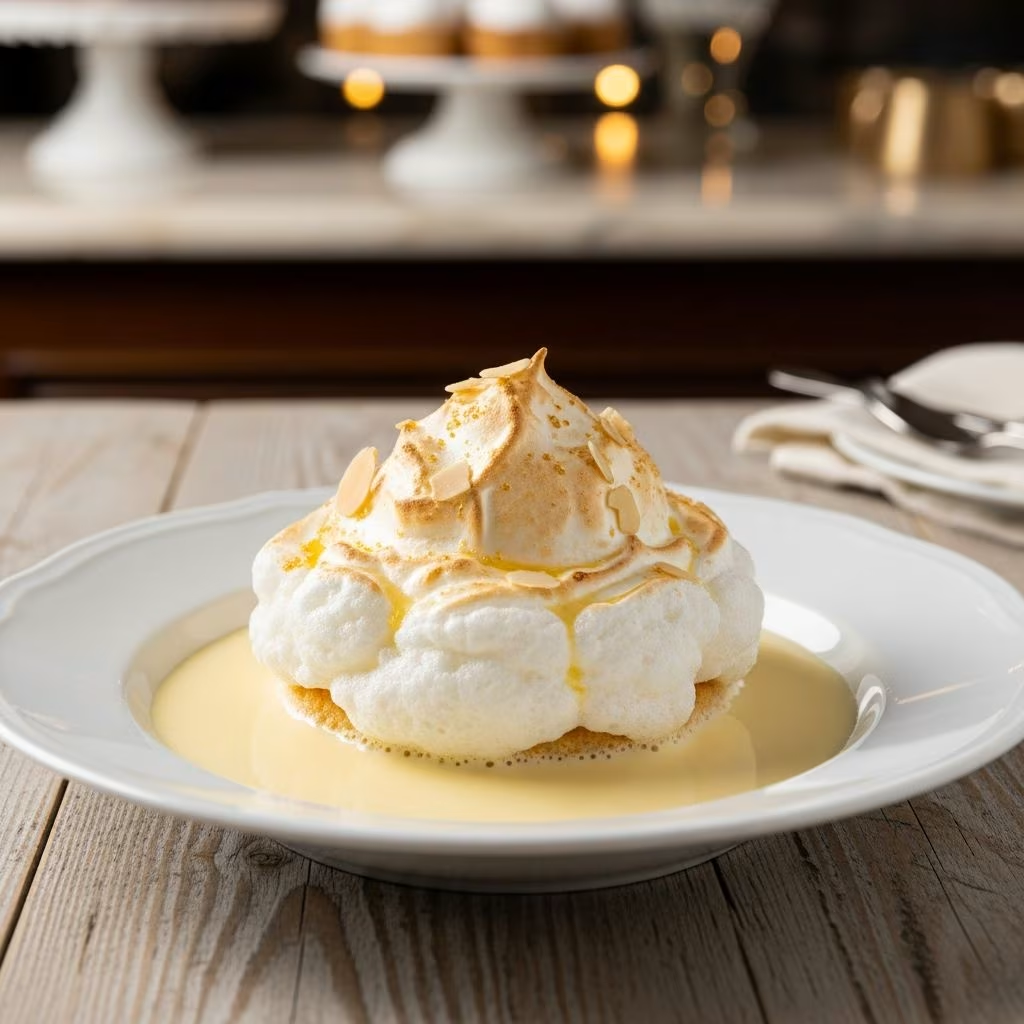
Île Flottante represents a masterclass in French dessert-making philosophy. The dish consists of three fundamental components working in harmonious balance: ethereal poached meringue islands resting atop a silky vanilla custard base, crowned with a thin coating of golden caramel. What makes this dessert particularly special is how these simple elements1ggs, sugar, milk, and vanillatransform into something that appears far more complex than the sum of its parts.
The beauty of this dessert lies not only in its visual presentation but in its perfect conclusion to a rich meal. The lightness of the meringue combined with the creamy custard creates a dessert that feels indulgent yet refreshingly delicate. This balance explains why Île Flottante has remained a beloved choice in French dining for generations.
The Foundation: Creating Silky Crème Anglaise
The crème anglaise serves as the essential foundation for this dessert, providing the smooth, creamy base upon which the meringue islands rest. This component requires careful attention to detail, as it forms the flavor profile and texture that distinguishes a mediocre Île Flottante from an exceptional one.
Essential Preparation Steps
- Begin by separating your eggs with meticulous care, ensuring not even a trace of yolk contaminates your egg whites, as this will prevent proper meringue formation later
- Whisk the egg yolks together with sugar, observing as the mixture gradually becomes paler and thicker, indicating proper incorporation of air and emulsification
- Warm milk gently in a separate saucepan until it reaches a steaming point without boiling, as excessive heat can create undesirable flavors
- Perform the tempering process slowly, adding warm milk to the yolk mixture in gradual increments while whisking continuously to prevent scrambling the eggs
- Return the combined mixture to the saucepan for the final cooking stage
The cooking process demands constant attention. Stir the custard consistently with a spatula over low to medium-low heat until it reaches the proper nappe consistency. The custard should coat the back of a spoon, and when you draw a line through the coating with your finger, that line should remain clear and distinct. This typically occurs around 180–183°F (82–84°C).
Once the custard reaches the correct temperature and texture, immediately transfer the saucepan to a bowl filled with ice water to halt the cooking process. Continue stirring for several minutes until the mixture has cooled slightly. Pour the custard through a fine-mesh sieve into a clean bowl or pitcher to remove any cooked egg particles that might create a grainy texture. Cover and refrigerate for a minimum of two hours, allowing the flavors to meld and the texture to set properly.
Building the Meringue: Creating Perfect Peaks
The meringue component requires precision and attention to the specific stages of whipping. Begin with a scrupulously clean mixing bowl, as any residual fat will prevent the egg whites from reaching their full volume potential.
Stages of Meringue Development
| Stage | Appearance | When to Use |
|---|---|---|
| Soft Peaks | Peaks curl slightly when beaters are lifted | Begin adding sugar |
| Medium Peaks | Peaks hold their shape but with slightly drooping tips | Continue adding sugar gradually |
| Stiff Peaks | Peaks stand upright and maintain sharp definition | Ready for poaching |
Add a small pinch of cream of tartar or lemon juice to the egg whites before beginning. This acidic ingredient helps stabilize the protein structure, resulting in a more stable meringue that holds its volume better during poaching.
Beat the egg whites on medium speed until soft peaks form, then increase the speed to medium-high. Add sugar gradually, one spoonful at a time, allowing each addition to fully incorporate before adding more. This measured approach produces a meringue that is both voluminous and stable, with a glossy appearance that indicates proper emulsification. The meringue should ultimately look shiny and hold its shape definitively.
The Poaching Process: Creating Floating Islands
Poaching the meringue requires careful temperature control and a gentle hand. The water should be hot but not simmering, maintained between 175–185°F (80–85°C). If the water is too hot, the exterior of the meringue will cook too quickly while the interior remains uncooked. If it is too cool, the meringue will absorb too much water and become heavy.
Poaching Technique
Use two large spoons to form the meringue into oval quenelle shapes or generous spoonfuls. Slide each quenelle gently into the hot water, allowing it to poach for approximately two minutes on the first side. Gently flip using a slotted spoon and poach for another two minutes on the opposite side. The meringue will slightly expand and develop a delicate, cooked exterior while maintaining a light, airy interior.
Remove the poached meringues carefully using a slotted spoon, transferring them to a clean kitchen towel or cooling rack to drain. Some cooks prefer an additional refinement: placing the drained meringues on a parchment-lined baking sheet and baking them at 300°F (150°C) for five to seven minutes. This step sets the exterior more firmly and makes the meringues easier to handle during assembly.
Crafting the Caramel Garnish
Caramel adds both visual appeal and a sophisticated bitter-sweet contrast to the creamy components of this dessert. The caramel process requires focus, as sugar can transition from golden to burnt rapidly once it reaches the proper temperature.
Combine sugar and water in a small heavy-bottomed saucepan, swirling gently to ensure all the sugar becomes moistened. Place over medium heat and allow the mixture to bubble undisturbed until it transforms into a deep golden amber color. While you may occasionally swirl the pan to encourage even cooking, resist the urge to stir, as this can cause crystallization.
Once the caramel reaches the desired amber hue, remove it from heat immediately. Allow it to cool slightly before carefully drizzling thin streams over the assembled islands. The caramel will harden into crispy strands, creating textural contrast against the soft meringue and smooth custard.
Assembly and Presentation
The final assembly should occur shortly before serving to ensure the crispness of both the meringue exterior and the caramel garnish. Pour the chilled crème anglaise into individual serving bowls or a large serving dish. Arrange one or two meringue islands atop each portion, positioning them to create an aesthetically pleasing presentation.
Drizzle the caramel over the islands in thin, deliberate streams. Some diners prefer to place the meringues bottom-side up to showcase the jagged, natural edges, creating a more organic “island-like” appearance. Others arrange them smooth-side up for a more refined presentation. Either approach is entirely valid and depends on your personal preference.
Timing and Make-Ahead Options
One of the advantages of this dessert is that its components can be prepared at different stages, allowing you to spread the work across the preparation period. The crème anglaise can be prepared up to two days in advance when properly stored in a covered container in the refrigerator. The poached meringues can rest in the refrigerator for several hours before serving. The caramel, however, should be prepared shortly before serving to maintain its crispy texture.
Common Questions About Île Flottante
Q: Can I use pasteurized eggs for food safety?
A: Yes, pasteurized eggs are a safe alternative for making this dessert, particularly if you have concerns about raw egg consumption or are serving immunocompromised guests.
Q: What if my custard breaks or becomes grainy?
A: Overheating causes this issue. Ensure you maintain low to medium-low heat and stir constantly. If this occurs, strain the custard through an extra-fine sieve and proceed with chilling.
Q: Can I flavor the crème anglaise differently?
A: Absolutely. Dark rum, liqueurs, or different extracts can replace or supplement vanilla, allowing you to customize the base flavor profile.
Q: How far in advance can I prepare this dessert?
A: The custard and meringues can be prepared separately a few hours ahead. Assemble and garnish with caramel immediately before serving for optimal texture.
Q: What equipment do I need?
A: Essential items include a thermometer to monitor custard temperature, a fine-mesh sieve, slotted spoon, and electric mixer for the meringue. A candy thermometer helps with caramel preparation.
Mastering the Technique for Consistent Results
Successfully creating Île Flottante repeatedly depends on understanding the “why” behind each step rather than simply following instructions. Temperature control represents the most critical element throughout all components. The custard’s silky texture results from maintaining proper heat levels that denature proteins evenly. The meringue’s stability comes from properly whipped egg whites at the right stage. The poaching success relies on water that is hot enough to set the exterior without cooking too aggressively.
Practice with these components individually before attempting the complete dessert. Make crème anglaise several times until you confidently recognize the nappe stage. Whip meringues until you can instantly identify when stiff peaks have formed. This methodical approach transforms what might seem intimidating into a manageable, repeatable process.
Île Flottante exemplifies how French culinary technique, when understood and executed properly, transforms humble ingredients into something extraordinary. The dessert rewards precision and patience, delivering an elegant finale that impresses both in appearance and in taste. Whether preparing this classic for a special dinner party or simply to satisfy your culinary curiosity, mastering this technique adds a valuable skill to your cooking repertoire.
References
- Classic Île Flottante Recipe with Silky Crème Anglaise and Caramel — Michel Dumas. 2026. https://www.micheldumas.com/en/classic-ile-flottante-recipe/
- Ile Flottante With Homemade Vanilla Sauce — Between2Kitchens. 2026. https://www.between2kitchens.com/ile-flottante-with-homemade-vanilla-sauce/