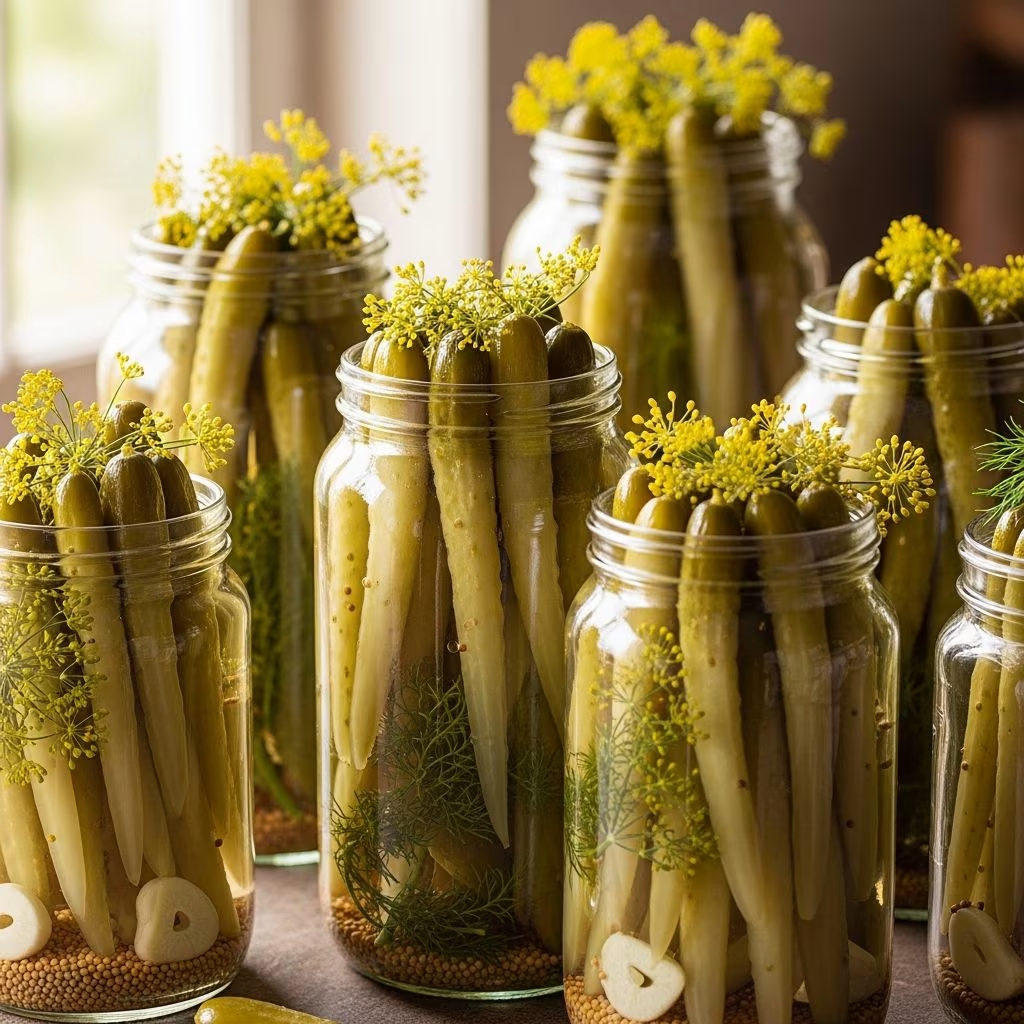
Icicle pickles represent a timeless tradition in home preserving, yielding slices that are not only incredibly crisp but also strikingly translucent, resembling delicate ice formations. These sweet pickles, often taking anywhere from 8 to 14 days to complete, transform ordinary cucumbers into a gourmet treat through a meticulous soaking, brining, and syruping process. Perfect for snacking, gifting, or adding to charcuterie boards, they offer a perfect balance of sweetness and tang.
Why Choose Icicle Pickles?
Unlike quick refrigerator pickles, icicle varieties develop their signature clarity and crunch over multiple days. The extended process draws out excess moisture from the cucumbers while infusing flavors deeply. Home canners prize them for their shelf stability and visual appeal—those glassy slices shine in jars, making them ideal for holiday baskets or pantry staples. Families pass down these recipes because the results far surpass store-bought versions in texture and taste.
Selecting the Best Cucumbers
Start with fresh, firm pickling cucumbers, typically 3-5 inches long. Avoid waxed grocery store varieties; opt for farmers’ market or homegrown ones with bumpy skins, which indicate fewer seeds and better crispness. Kirby or similar types work best. Yield: A 6-quart basket produces about 8-10 pint jars. Wash thoroughly and slice into 1/2 to 3/4-inch rounds or spears—thicker cuts prevent sogginess.
Essential Ingredients and Equipment
Gather these staples for a standard batch:
- 6 quarts pickling cucumbers, sliced
- 2 cups pickling salt (non-iodized)
- 1-2 gallons water
- 1-2 tbsp food-grade alum (for crispness)
- 10-12 cups cider or white vinegar (5% acidity)
- 14-16 cups granulated sugar
- 3 tbsp pickling spice (in a cheesecloth bag)
- Optional: Green food coloring for traditional hue
Equipment includes a large food-safe crock, bucket, or stockpot; cheesecloth for spices; sterilized pint jars, lids, and bands; canning tongs; and a large spoon for stirring. Alum, a natural mineral, helps maintain structure by firming pectin in the cucumbers.
The Multi-Day Pickling Process
This method spans 8-11 days, with minimal daily effort (15-30 minutes). Use a cool kitchen spot away from direct heat. Stir daily during early stages to ensure even treatment.
Days 1-4: Salt Brining for Dehydration
Layer sliced cucumbers in your crock. Dissolve 2 cups pickling salt in 1 gallon boiling water; pour over to cover, adding more water if needed. Weigh down with a plate to submerge. Let sit 4 days, stirring daily. This draws out water, preventing mushiness.
Day 5: Fresh Water Rinse
Drain brine. Cover with boiling water; let stand 24 hours. This removes excess salt.
Day 6: Alum Treatment
Drain water. Dissolve 1 tbsp alum in boiling water to cover; pour over cucumbers. Stand 24 hours. Rinse well afterward—alum crisps but shouldn’t linger.
Day 7: Initial Syrup Infusion
Combine 10-12 cups vinegar, 8 cups sugar, and pickling spices in a bag. Boil, then pour over drained cucumbers. Let stand 24 hours.
Days 8-10: Progressive Sweetening
Each day, drain syrup (reserve it), boil, add 2 cups sugar, and repour over pickles. Repeat 3 times. This builds sweetness gradually.
Day 11: Final Canning
Drain syrup, boil with remaining 2 cups sugar. Pack hot cucumbers into sterilized jars, strain hot syrup over to 1/2-inch headspace. Wipe rims, apply lids, and process in a boiling water bath for 10 minutes (adjust for altitude). Cool undisturbed 24 hours.
Variations and Customizations
Adapt for preferences:
| Variation | Adjustments | Result |
|---|---|---|
| Shorter Process | Combine alum and syrup steps | 8-day version, slightly less clear |
| Spicy Twist | Add chili flakes to spices | Heat-balanced sweet |
| Colored | Green dye on Day 8 | Vibrant traditional look |
| Spears | Quarter lengthwise | Better for burgers |
Some recipes extend to 14 days with extra rinses for ultra-crisp results.
Troubleshooting Common Issues
- Soft Pickles: Use fresh cukes, ensure full submersion, don’t skip alum.
- Cloudy Syrup: Strain spices thoroughly; use clear vinegar.
- Floating Slices: Remove seeds from larger cukes; pack jars tightly.
- Seal Failure: Check headspace, wipe rims clean, boil lids properly.
Storage and Shelf Life
Store in a cool, dark pantry. Properly canned jars last 1-2 years unopened. Refrigerate after opening; enjoy within weeks. Check seals before use—discard if bulging or off-odor.
Health and Safety Considerations
Follow USDA guidelines: Use 5% vinegar, process correctly to prevent botulism. Alum is safe in moderation but rinse well. These are high-sugar preserves, so portion accordingly.
Creative Serving Ideas
Beyond snacking, chop into potato salad, top burgers, or pair with cheeses. Gift jars with ribbon for holidays.
Frequently Asked Questions (FAQs)
What makes icicle pickles clear?
The multi-day syrup exchanges remove impurities, creating translucency.
Can I speed up the process?
Not recommended—rushing compromises crunch and clarity.
Is alum necessary?
Yes for crispness; substitutes like grape leaves are less reliable.
How much does one batch yield?
8-12 pints, depending on cucumber size.
Vegetarian/Vegan friendly?
Yes, all plant-based.
Mastering icicle pickles rewards patience with jars of pure delight. Experiment confidently with these steps for your signature batch.
References
- The Best Icicle Pickle Recipe — Kate Ellen. Accessed 2026. https://kateellen.ca/the-best-icicle-pickle-recipe/
- It is Icicle Pickle time — Simpler Living PEI (YouTube). Accessed 2026. https://www.youtube.com/watch?v=f31PX2vhFyM
- Homemade 14 Day Icicle Pickles — Happy Days Farm. Accessed 2026. https://thehappydaysfarm.com/homemade-14-day-icicle-pickles/
- Icicle Pickles — Gram’s Recipe Box. 2010-03-31. https://gramsrecipebox.com/2010/03/31/icicle-pickles/
- Sweet Icicle Fermented Pickles — Bernardin Home Canning. Accessed 2026. https://www.bernardin.ca/recipes/en/sweet-icicle-fermented-pickles.htm?Lang=EN-US