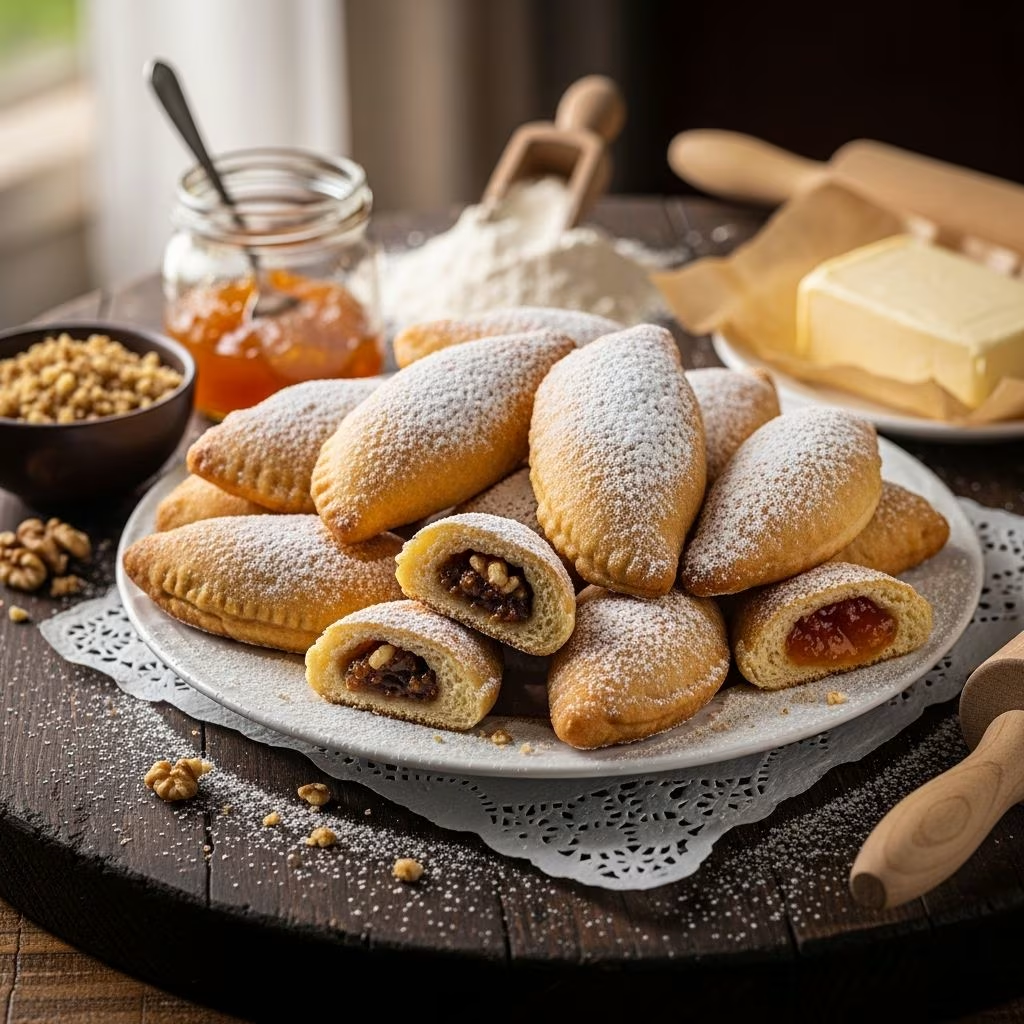
Hungarian kiffles, also known as kiflis, represent a cherished cornerstone of Eastern European baking heritage. These delicate, crescent-shaped pastries feature a tender cream cheese dough enveloping sweet fillings like fruit preserves, nuts, or seeds. Often prepared for holidays and special gatherings, kiffles evoke nostalgia and family bonding through their meticulous hand-shaping process.
The Allure of Hungarian Kiffles
Originating from Hungary, kiffles have transcended borders, becoming staples in communities worldwide, particularly among those with Central European roots. Their appeal lies in the contrast between the flaky, buttery exterior and the luscious interior fillings. Unlike denser cookies, kiffles achieve their signature lightness from a simple dough enriched with cream cheese, which ensures tenderness without excessive sweetness.
Bakers prize kiffles for their versatility. Traditional options include apricot jam for brightness, prune lekvar for depth, walnut paste for earthiness, and poppy seed for subtle nuttiness. This adaptability allows personalization while honoring time-tested methods passed down generations.
Essential Ingredients for Authentic Dough
The foundation of superior kiffles starts with high-quality components. Core dough elements typically include:
- All-purpose flour: Provides structure; about 2 to 4 cups depending on batch size.
- Cream cheese: 8 to 16 ounces, softened, for richness and pliability.
- Unsalted butter: Equal parts to cream cheese, contributing flakiness.
- Salt: A pinch enhances flavors without overpowering.
- Optional leavening: Baking powder or yeast in some variations for subtle lift.
For fillings, opt for thick preserves to prevent leakage during baking. Popular choices:
| Filling Type | Description | Preparation Tip |
|---|---|---|
| Apricot | Tart-sweet fruit jam | Use thick varieties; Solo brand recommended |
| Prune (Lekvar) | Rich, cooked prune puree | Simmer prunes with water, zest, and juice; blend smooth |
| Walnut | Ground nuts with sugar | Toast walnuts lightly for enhanced flavor |
| Poppy Seed | Seeds cooked in milk syrup | Premade or homemade with lemon zest |
Step-by-Step Dough Preparation
Begin by ensuring all dairy is at room temperature for seamless blending. In a stand mixer with paddle attachment, cream butter and cream cheese until light and fluffy, about 2-3 minutes. This aeration sets the dough’s tender crumb.
If using yeast, dissolve it in warm milk first, then incorporate gradually. Sift dry ingredients—flour, salt, and baking powder—separately. Add them incrementally to the wet mixture on low speed, stopping once a soft, non-sticky dough forms. Avoid overmixing to preserve tenderness.
Divide the dough into portions, flatten into discs, wrap in plastic, and chill for at least 1 hour. This resting period relaxes gluten, easing rolling and preventing shrinkage.
Mastering the Rolling and Cutting Technique
Work with one disc at a time on a floured surface or parchment envelope to minimize sticking. Roll into a thin square, approximately 1/8-inch thick, aiming for 12-18 inches per side. Precision here yields uniform pastries.
Mark 1.5 to 2-inch intervals along edges with a knife tip, then use a pastry wheel for clean cuts. This produces 36 perfect triangles per square. Generous flour dusting prevents tears, ensuring professional results.
Shaping Kiffles Like a Pro
Place a small teaspoon of filling at the wide end of each triangle. Roll upward tightly, tucking sides slightly to secure the filling. Curve ends into a crescent, placing seam-side down on parchment-lined sheets.
Space cookies 1-2 inches apart to allow spreading. For visual appeal, brush with egg wash before baking, though traditionalists skip this for a matte finish dusted with powdered sugar post-cooling.
Baking and Finishing Touches
Preheat oven to 350-375°F. Bake 8-12 minutes until edges turn golden, watching closely to avoid over-browning. Cool on sheets briefly, then transfer to racks. Generously sift confectioners’ sugar over cooled kiffles for that snowy, elegant look.
Store in airtight containers at room temperature up to a week or freeze unbaked for later. Yield varies: a standard recipe makes 8-12 dozen, ideal for gifting.
Homemade Filling Recipes
Prune Lekvar
Combine 2 cups pitted prunes and 1 cup water in a saucepan. Simmer until nearly dry, about 20 minutes. Puree with orange zest and 2 tablespoons juice. Yields thick, spreadable filling.
Walnut Paste
Grind 2 cups walnuts with 1/2 cup sugar and 1/4 cup milk. Add vanilla and cinnamon for warmth. Toast nuts briefly for deeper flavor.
Poppy Seed Filling
Grind 1 cup poppy seeds, simmer with 1/2 cup milk, 1/4 cup honey, and lemon zest until thickened. Cool before use.
Common Pitfalls and Pro Tips
- Dough too sticky? Chill longer and flour generously.
- Fillings leaking? Use minimal amounts and thick textures only.
- Not flaky enough? Ensure cold butter integration and minimal handling.
- Scale up safely: Double ingredients but bake in batches for consistency.
For variations, experiment with raspberry or cherry preserves, though purists stick to classics. These tweaks maintain authenticity while suiting modern palates.
Historical Roots and Cultural Significance
Kiffles trace to 19th-century Hungary, evolving from strudel-like pastries. Immigrants brought recipes to America, where they became holiday fixtures in Midwest communities. Family lore often credits grandmothers for perfecting the ultra-thin dough, a skill honed over decades.
Beyond taste, kiffles symbolize hospitality. Shared at Christmas, Easter, and weddings, they foster connections across generations.
Nutritional Snapshot
Per kiffle (approximate, apricot-filled): 80 calories, 5g fat, 8g carbs, 1g protein. Indulgences like these fit moderately into balanced diets, especially when portioned mindfully.
Frequently Asked Questions
Can I make kiffles gluten-free?
Substitute a 1:1 gluten-free flour blend, but expect slight texture changes. Test small batches first.
How far ahead can I prepare the dough?
Up to 2 days in fridge or 1 month frozen. Thaw overnight before rolling.
Why use cream cheese in the dough?
It tenderizes without eggs, yielding melt-in-mouth results unique to this pastry.
Vegetarian or vegan options?
Dairy-free cream cheese and vegan butter work; fillings are naturally plant-based.
Best storage for freshness?
Airtight tins; layer with parchment to prevent sticking. Freeze extras up to 3 months.
Embracing kiffles invites bakers into a world of precision and tradition. With practice, these pastries become not just treats, but heirlooms.
References
- Hungarian Kiffles Recipe — MyGourmetConnection. 2023-12-01. https://www.mygourmetconnection.com/hungarian-kiffles/
- Hungarian Kiffles – My Hungarian Family Recipe — Abra’s Kitchen. 2022-11-15. https://abraskitchen.com/hungarian-kiffles/
- Kiffles | Kiflis | Traditional Hungarian Pastries — My Cooking Journey. 2021-10-20. https://www.mycookingjourney.com/kiffles-kiflis-hungarian-kiffles/