Understanding the Heritage Behind This Island Favorite
The story of huli huli chicken traces back to 1955 in Honolulu, when a local businessman named Ernest Morgado created this distinctive dish by developing a teriyaki-inspired marinade based on his family’s traditional recipes. What began as a specialized preparation for local gatherings quickly gained momentum throughout the Hawaiian islands, becoming a staple at community fundraisers, school events, and cultural celebrations. The dish’s name derives from the Hawaiian word “huli,” which means “turn”—a reference to the traditional cooking method where chicken is continuously rotated on the grill or between rotating cooking surfaces to ensure even heat distribution and optimal flavor development.
Over the decades, huli huli chicken evolved from a regional specialty into an internationally recognized Hawaiian culinary icon. Its popularity grew as families discovered that the combination of sweet and savory flavors appealed to diverse palates, and the relatively straightforward preparation process made it accessible to home cooks. Today, this grilled chicken remains synonymous with Hawaiian cuisine and tropical entertaining, evoking images of island gatherings and outdoor celebrations.
The Flavor Profile: Balancing Sweet, Savory, and Smoke
The distinctive taste of huli huli chicken comes from its carefully balanced marinade that combines multiple flavor dimensions. The base typically includes ketchup for tanginess and body, soy sauce for deep umami richness, and brown sugar for caramelization and sweetness. Many authentic variations incorporate pineapple juice, which adds tropical notes and natural enzymes that help tenderize the protein. Fresh ginger and minced garlic provide warm, pungent undertones that round out the flavor complexity.
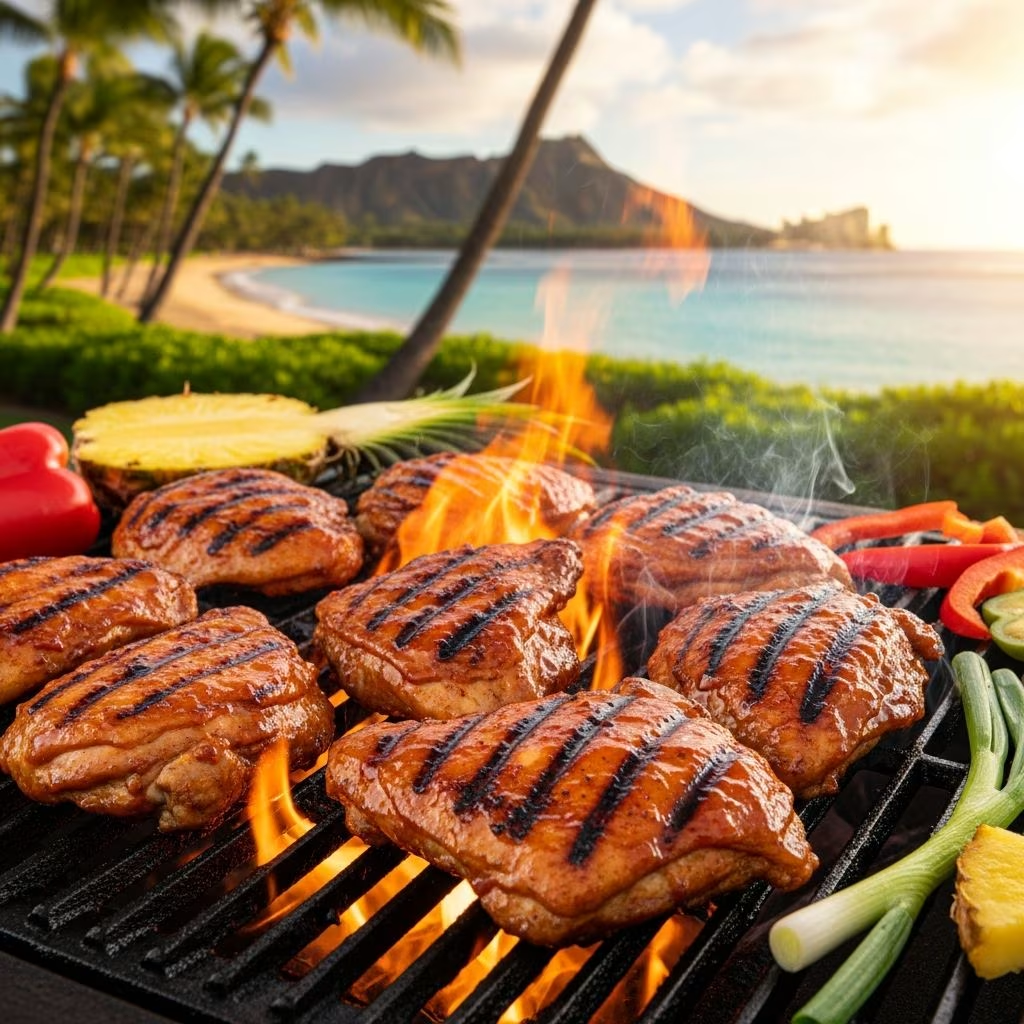
When grilled, the marinade caramelizes on the chicken’s surface, creating a glossy, flavorful glaze with slightly charred edges. This combination of grilling heat, regular turning, and continuous basting produces a chicken that is simultaneously juicy inside with a richly flavored, slightly sticky exterior. The interplay between the sweet marinade and the smoky char from the grill creates the signature taste that makes this dish memorable and distinctive from other grilled chicken preparations.
Essential Ingredients for Authentic Preparation
Creating authentic huli huli chicken requires understanding the role each ingredient plays in the final result. Here are the key components:
- Ketchup: Provides tomato base, natural tang, and helps achieve the signature glaze color and texture
- Soy sauce: Delivers essential saltiness and umami depth that balances the sweetness
- Brown sugar: Contributes sweetness and enables proper caramelization during grilling
- Rice vinegar or vinegar: Adds brightness and acidity to cut through rich flavors
- Fresh ginger: Offers warm spice and signature Hawaiian aromatic complexity
- Garlic: Provides savory depth and balance against sweetness
- Pineapple juice: Optional but recommended for authentic tropical character and natural tenderizing properties
- Chicken thighs: The traditional protein choice offering better flavor and moisture than white meat
Some variations incorporate additional ingredients such as sesame oil for added complexity, paprika for subtle smokiness, or Sriracha for heat. The beauty of huli huli chicken lies in its foundational simplicity—with just the core ingredients, anyone can create an authentic version, yet the recipe remains flexible enough to accommodate personal preferences and ingredient availability.
Step-by-Step Preparation Guide
Creating the Marinade Base
Begin by combining your dry ingredients and liquids in a large bowl or saucepan. Mix together ketchup, soy sauce, packed brown sugar, rice vinegar, and salt and pepper. In a separate vessel, mince or grate your fresh ginger and garlic, ensuring they’re finely processed so they distribute evenly throughout the marinade. Some cooks prefer heating the marinade gently in a saucepan, adding the ginger and garlic to sesame oil first to bloom their flavors before incorporating the other ingredients. This approach intensifies the aromatic qualities of these components.
If using pineapple juice, add it at this stage, combining it with the other liquid ingredients. Some recipes recommend thickening the marinade by creating a slurry with cornstarch and water, then whisking it in and simmering until the sauce coats the back of a spoon. This optional step creates a thicker glaze that adheres better to the chicken during grilling.
Preparing the Chicken for Marinating
Select boneless chicken thighs for faster cooking or bone-in thighs for enhanced flavor and juiciness. Trim excess fat from the chicken pieces, but leave some marbling to maintain moisture during grilling. Separate approximately one-half to one cup of the prepared marinade into a separate container—this reserved portion will be used for basting during cooking and won’t come into contact with raw chicken.
Place the remaining marinade into a large resealable plastic bag or non-reactive bowl. Add the chicken pieces, ensuring they’re fully covered by the marinade liquid. Seal the container and refrigerate for a minimum of one hour. Many recipes recommend marinating overnight or for up to eight hours to achieve maximum flavor development, though marinating longer than eight hours can result in overly salty chicken as the salt in the soy sauce continues to penetrate the meat.
Grilling Technique and Temperature Management
Preheat your grill to medium-high heat, approximately 375-425°F. Oil the grill grates well to prevent sticking. Remove the chicken from the marinade, allowing excess liquid to drip off, but don’t pat it completely dry as the remaining marinade contributes to glaze formation.
Place the chicken on the hot grill and cook for approximately 5-7 minutes per side, depending on thickness and grill temperature. The traditional huli huli method involves turning the chicken frequently—typically every few minutes—to ensure even cooking and prevent burning while building up the caramelized glaze. During the final few minutes of cooking, baste the chicken with your reserved marinade, rotating it to coat all sides with the glaze.
Chicken is fully cooked when the internal temperature reaches 165°F when measured with a meat thermometer inserted into the thickest part without touching bone. The exterior should display golden-brown to dark caramelized areas, but shouldn’t be entirely blackened or charred.
Complementary Side Dishes and Serving Suggestions
Huli huli chicken pairs beautifully with various accompaniments that enhance the tropical theme or provide textural contrast:
- Pineapple fried rice or coconut-infused rice pilaf
- Macaroni salad with creamy dressing
- Grilled or fresh pineapple chunks and rings
- Asian slaw with sesame-ginger dressing
- Grilled vegetables such as zucchini, bell peppers, and onions
- Light green salad with tropical fruit elements
- Steamed jasmine rice with a touch of sesame oil
- Roasted sweet potato wedges
Garnish the finished chicken with sliced green onions and sesame seeds for added visual appeal and subtle flavor enhancement. The presentation matters when serving this island-inspired dish, as it evokes a vacation atmosphere that heightens the dining experience.
Make-Ahead Strategies and Storage
One of huli huli chicken’s greatest advantages is its make-ahead friendliness. The marinating process naturally extends preparation time, allowing you to assemble the marinade and chicken the morning of your event or even the day before. This flexibility makes it ideal for busy weeknight dinners or weekend entertaining when advance planning reduces last-minute stress.
Store marinating chicken in the refrigerator on a lower shelf to prevent any drips onto other foods. If you prepare the reserved basting marinade in advance, keep it separate and refrigerated until grilling time. Cooked huli huli chicken keeps well in an airtight container in the refrigerator for three to four days and reheats nicely on the grill or in a low oven, though it’s best enjoyed fresh.
Customization Ideas and Flavor Variations
While the traditional recipe provides an excellent foundation, creative cooks can adapt huli huli chicken to suit specific tastes and dietary preferences:
| Variation | Key Modifications | Flavor Impact |
|---|---|---|
| Spicy Version | Add Sriracha, jalapeños, or chili-garlic sauce to the marinade | Adds heat and complexity to complement the sweetness |
| Lighter Option | Reduce sugar by one-third and use low-sodium soy sauce | Preserves flavor while reducing sweetness and sodium |
| Asian-Inspired | Substitute sherry or mirin for vinegar; add sesame oil | Deepens umami notes and adds toasted nutty character |
| Tropical Enhancement | Add passion fruit juice, mango juice, or coconut aminos | Amplifies tropical notes and adds exotic fruit elements |
| Smoke-Forward | Add liquid smoke or use charcoal grilling exclusively | Emphasizes smoky depth for more pronounced BBQ character |
When experimenting with variations, adjust one element at a time to understand how it affects the overall flavor profile. This approach helps you refine the recipe to your exact preferences while maintaining the essential character that makes huli huli chicken distinctive.
Addressing Common Preparation Questions
Can I use bone-in chicken breasts instead of thighs?
While possible, chicken thighs are the traditional and recommended choice because they contain more fat and connective tissue that keeps them moist during the extended grilling and turning process. Chicken breasts tend to dry out more easily with this cooking method, though boneless breasts will cook faster if that’s your only option.
What if I don’t have a grill—can I use an oven or stovetop?
Yes, huli huli chicken can be prepared using alternative cooking methods. For oven preparation, marinate as directed, then bake on a foil-lined baking sheet at 400°F for approximately 25-30 minutes, basting with reserved marinade halfway through. For stovetop preparation, use a large skillet over medium-high heat, cooking approximately 6-8 minutes per side while basting with the reserved marinade to develop the glaze.
Should I save the marinade that touched raw chicken?
Never use marinade that has contacted raw chicken for basting or serving, as this presents a food safety risk. Always reserve a portion of fresh marinade before adding the chicken. This is why the recipe specifically instructs you to set aside basting marinade at the beginning of preparation.
How long can I marinate the chicken?
Marinate for at least one hour for basic flavor development, but up to eight hours for optimal taste. Marinating longer than eight hours is not recommended because the salty components continue to cure the chicken, potentially making it excessively salty and altering the texture undesirably.
Conclusion: Bringing Island Flavors to Your Table
Huli huli chicken represents more than just a recipe—it’s a connection to Hawaiian culinary tradition and a celebration of balanced, complex flavors achieved through simple ingredients and thoughtful technique. Whether you’re planning a casual weeknight dinner or an impressive gathering, this island-inspired dish delivers consistent results that delight across diverse palates. The combination of make-ahead convenience, straightforward preparation, and restaurant-quality results makes huli huli chicken an invaluable addition to any home cook’s repertoire. By understanding the history, honoring the traditional methods, and feeling comfortable adapting the recipe to your preferences, you can master this Hawaiian classic and create memorable meals that transport your family and guests to island shores.
References
- Huli Huli Chicken Recipe — The Modern Proper. Accessed April 2026. https://themodernproper.com/huli-huli-chicken
- Huli Huli Chicken Recipe — Jessica Gavin. Accessed April 2026. https://www.jessicagavin.com/huli-huli-chicken/
- Huli Huli Chicken Recipe — Lil’ Luna. Accessed April 2026. https://lilluna.com/huli-huli-chicken/
- Huli Huli Chicken — Aloha Dreams. Accessed April 2026. https://alohadreams.com/huli-huli-chicken/
- Grilled Hawaiian Huli Huli Chicken — Hey Grill Hey. Accessed April 2026. https://www.youtube.com/watch?v=xRKW_J6psnU
- Huli Huli Chicken (Hawaiian Tropical Chicken) — RecipeTin Eats. Accessed April 2026. https://www.recipetineats.com/huli-huli-chicken-hawaiian/
- Hawaiian Huli Huli Chicken — Cooking For My Soul. Accessed April 2026. https://cookingformysoul.com/huli-huli-chicken/