Have you ever wondered why the chicken in your favorite Chinese restaurant has such an incredibly tender and succulent texture? The secret lies in a traditional cooking technique called velveting, a method that transforms ordinary chicken breast into silky, melt-in-your-mouth pieces that resist overcooking and maintain their juiciness throughout the cooking process. This article explores the science behind velveting, the various techniques you can employ, and how to incorporate this professional method into your home cooking.
Understanding the Velveting Process
Velveting is an ancient Chinese culinary technique designed to protect chicken from the harsh heat of high-temperature cooking while maintaining moisture and tenderness. The process works by creating a protective coating around the protein molecules, preventing them from tightening and squeezing out their natural juices during cooking. Unlike traditional marinades that primarily add flavor, velveting fundamentally alters the texture of the meat itself, making it nearly impossible to overcook even when exposed to intense heat.
The technique has been used in professional kitchens for centuries and remains a cornerstone of authentic Chinese cuisine. By understanding and mastering this method, home cooks can replicate the quality and texture found in high-end restaurants, elevating their weeknight meals from ordinary to extraordinary.
The Baking Soda Method: Quick and Effective
One of the most accessible velveting techniques involves using baking soda, a common pantry staple that acts as an alkaline agent to break down protein structures and tenderize the meat rapidly. This method is particularly popular among home cooks because it requires minimal ingredients and takes less than 30 minutes from start to finish.
Step-by-Step Baking Soda Technique
- Slice chicken breasts into uniform pieces, approximately ¼-inch thick, cutting across the grain for maximum tenderness
- Place the sliced chicken in a bowl and distribute baking soda evenly across all surfaces
- Use your fingers to toss and coat each piece thoroughly, ensuring complete coverage
- Allow the chicken to rest in the refrigerator for 15 to 20 minutes, during which the baking soda works to transform the protein structure
- Rinse the chicken thoroughly under cool running water to remove all traces of baking soda
- Pat the rinsed chicken completely dry with paper towels, removing excess moisture
- Proceed with your chosen recipe, cooking the velveted chicken according to your preferred method
Measurement Guidelines
For optimal results, maintain proper proportions: approximately ¾ teaspoon of baking soda for every 8 ounces of chicken breast. This ratio ensures thorough tenderization without affecting the taste or leaving any chemical residue. Accurate measurements are crucial—too little baking soda may not achieve adequate tenderization, while excessive amounts can result in an unpleasant taste.
The Traditional Marinade Method
Beyond the baking soda technique, traditional Chinese velveting employs a marinade-based approach that combines water, soy sauce, cornstarch, and vegetable oil. This method requires more time but offers the advantage of simultaneously tenderizing and flavoring the chicken.
Components of a Velveting Marinade
| Component | Purpose | Typical Amount (per 12-16 oz chicken) |
|---|---|---|
| Water | Provides liquid medium for protein absorption | 2-3 tablespoons |
| Soy Sauce or Oyster Sauce | Adds umami flavor and aids protein breakdown | 2 teaspoons |
| Cornstarch | Creates protective coating and aids browning | 2 teaspoons |
| Vegetable Oil | Facilitates even coating and heat distribution | 2 teaspoons |
Traditional Velveting Instructions
- Cut chicken breasts into uniform pieces approximately ¼-inch thick and 1½ to 2 inches in length
- Always slice across the grain to break down muscle fibers and enhance tenderness
- Combine water and soy sauce in a medium bowl, then add the sliced chicken
- Mix thoroughly until each piece becomes well-coated with the liquid mixture
- Set aside for 5 to 10 minutes, allowing the chicken to absorb the liquid
- Add cornstarch and vegetable oil to the bowl and stir until uniformly coated
- Refrigerate for 15 to 20 minutes to allow the marinade to penetrate the meat
- Cook immediately or store in the refrigerator until ready to use
Cutting and Preparation Fundamentals
Proper cutting technique significantly impacts the success of the velveting process. The ideal thickness for velveted chicken is approximately ¼-inch, which provides adequate surface area for the tenderizing agent to work effectively while allowing the chicken to cook through quickly and evenly.
When slicing chicken breasts, always cut across the grain rather than parallel to it. This technique breaks the muscle fibers at a perpendicular angle, creating shorter fibers that result in more tender meat. Many home cooks find it helpful to partially freeze the chicken breast for 30 minutes to an hour before slicing, as this firmness makes creating uniform, thin pieces significantly easier.
Bite-sized pieces work best for stir-fries and soups, while slightly larger pieces work well for broth-based dishes. Avoid using whole chicken breasts, as the velveting agents cannot penetrate to the center of thick, intact pieces.
Cooking Methods for Velveted Chicken
Once the velveting process is complete, velveted chicken can be prepared using various cooking methods, each offering distinct advantages and applications.
Stir-Frying Over High Heat
Stir-frying represents the most popular cooking method for velveted chicken. Heat a wok or large skillet over high heat until it begins to smoke lightly. Add a thin layer of oil to coat the surface, then arrange the velveted chicken in a single layer. Allow the pieces to sear undisturbed for approximately 20 seconds to develop a light golden exterior. Once the edges turn opaque, begin stirring and tossing the chicken continuously until it reaches an opaque appearance throughout, typically requiring only 2 to 3 minutes total. Remove the chicken from the wok immediately to prevent overcooking, then set aside while preparing vegetables and sauce.
Gentle Cooking in Broth
For soups and broth-based dishes, velveted chicken requires minimal cooking time. Simply drop the raw velveted chicken pieces into simmering broth and allow them to cook for approximately 2 minutes, stirring occasionally. The chicken will transform from translucent to fully opaque, indicating completion. This gentle method preserves the chicken’s moisture and creates an ideal texture for lighter, brothier dishes.
Deep Frying
Deep frying velveted chicken creates a crispy exterior while maintaining a tender, juicy interior. Heat oil to 350°F, then carefully add the velveted chicken pieces and fry until golden brown, approximately 2 to 3 minutes. Remove with a slotted spoon and drain on paper towels before incorporating into your final dish.
Creating Complementary Sauces
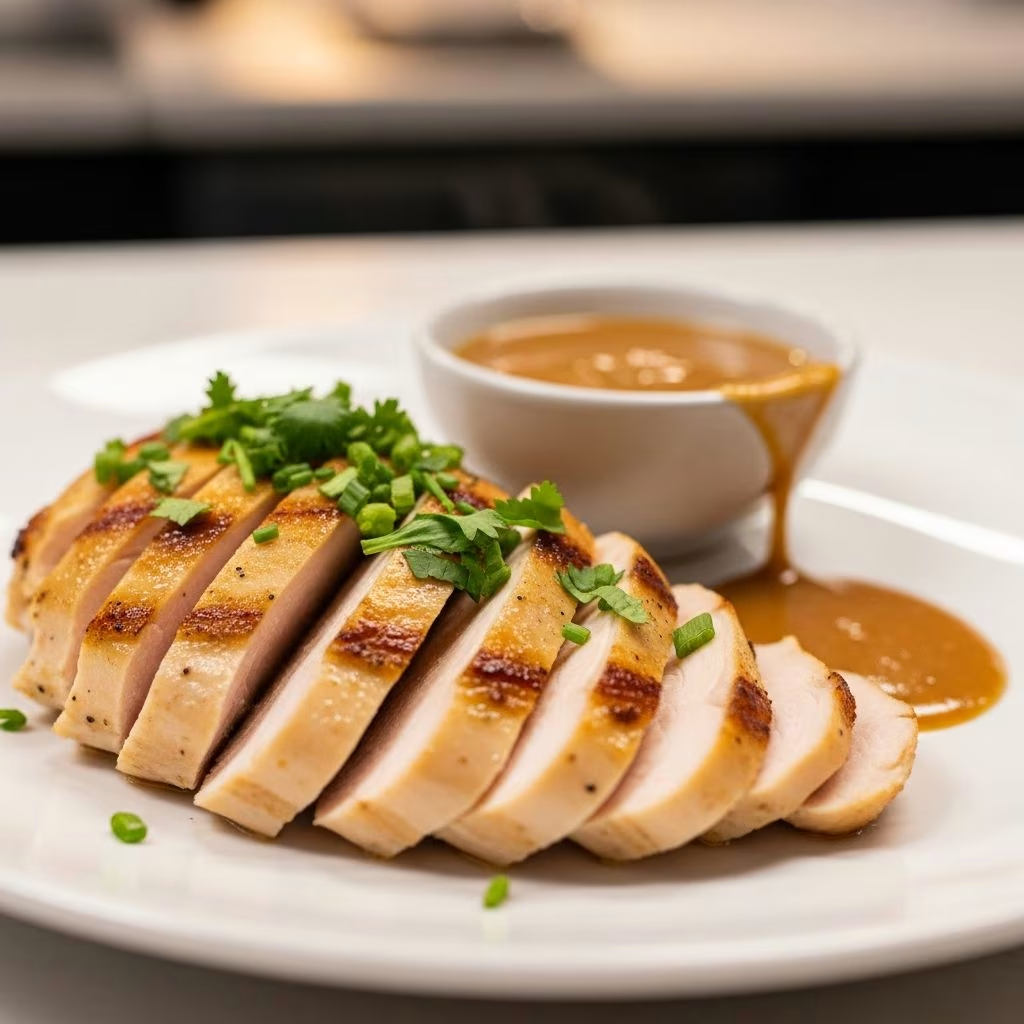
Velveted chicken pairs beautifully with various sauces that enhance rather than mask its tender texture. A traditional Chinese brown sauce combines oyster sauce, soy sauce, garlic, chicken broth, cornstarch, mirin, and toasted sesame oil. Mix all ingredients together before cooking, allowing the cornstarch to create a silky, coating consistency that clings to each piece of chicken.
For lighter preparations, a simple mixture of soy sauce, rice vinegar, and a touch of sesame oil provides brightness without overwhelming the delicate texture. The key is maintaining balance—the sauce should complement rather than dominate the tender chicken.
Frequently Asked Questions
Can I velvet chicken thighs instead of breasts?
Yes, velveting works well with chicken thighs. However, thighs are already naturally more tender and forgiving than breasts, so the technique becomes less critical. Dark meat thighs benefit from shorter velveting times—approximately 10 to 15 minutes with baking soda or 10 minutes with traditional marinade.
How long does velveted chicken keep in the refrigerator?
Raw velveted chicken (after rinsing) keeps for up to 24 hours in the refrigerator. Once cooked, velveted chicken maintains quality for 3 to 4 days when stored in an airtight container. Velveted chicken can be frozen before cooking for up to 3 months.
What if I don’t have time for the full 20-minute resting period?
While 15 to 20 minutes produces optimal results, the velveting process begins working immediately. In a time crunch, allow minimum 10 minutes for baking soda method or 5 minutes for marinade method. Results improve with longer resting times, but even shorter durations produce noticeably more tender chicken than untreated pieces.
Can I marinate velveted chicken further for additional flavor?
Absolutely. After completing the velveting process, velveted chicken can be subjected to additional marinades using your preferred flavor profiles. Add another 30 minutes to your prep time, keeping the additional marinade to under ½ cup liquid to prevent excessive moisture.
Does velveting change the nutritional profile of chicken?
When using the baking soda method, the chicken is rinsed thoroughly, removing all residual baking soda. The traditional marinade method adds minimal calories from cornstarch and oil. Overall, velveting does not significantly alter the nutritional composition of chicken breast.
Troubleshooting Common Issues
If your velveted chicken turns out rubbery or tough, the most likely cause is overcooking. Velveted chicken requires significantly less cooking time than standard chicken—reduce heat slightly and monitor cooking time carefully. Additionally, ensure you’re rinsing away all baking soda, as residual baking soda can affect texture if not properly removed.
If the chicken doesn’t seem tender despite velveting, confirm you’re using the correct baking soda-to-chicken ratio and allowing adequate resting time. Using whole pieces instead of thin slices prevents the velveting agent from penetrating to the center.
For marinade-based velveting, ensure the cornstarch is fully incorporated and the chicken rests for at least 10 minutes. Insufficient resting time prevents proper marinade absorption.
Elevating Your Home Cooking
Mastering the velveting technique opens possibilities for creating restaurant-quality Asian dishes at home. Whether preparing a quick weeknight stir-fry, a comforting chicken and corn soup, or an impressive dinner party centerpiece, velveted chicken ensures consistently tender, juicy results that rival your favorite takeout establishments.
The beauty of velveting lies in its simplicity and accessibility. Using ingredients already present in most kitchens, you can transform basic chicken breasts into something extraordinary. Start with basic stir-fries to build confidence, then experiment with different vegetables, sauces, and cooking methods as your comfort level increases.
By incorporating velveting into your regular cooking routine, you’ll discover that restaurant-quality results are entirely achievable at home, requiring only technique, practice, and a willingness to embrace traditional culinary methods that have proven effective for centuries.
References
- Velveting Chicken: The Chinese Restaurant Secret to Tenderising Chicken — RecipeTin Eats. Accessed April 2026. https://www.recipetineats.com/velveting-chicken-chinese-restaurant-tenderise-chicken/
- How to Velvet Chicken for Stir-Fry — The Woks of Life. Accessed April 2026. https://thewoksoflife.com/how-to-velvet-chicken-stir-fry/
- Velvet Chicken & Vegetables Stir Fry (Chinese Takeout) — Crafty Cookbook. Accessed April 2026. https://www.craftycookbook.com/healthy-takeout-style-velvet-chicken/