Having a freezer stocked with premium steaks offers convenience and flexibility for meal planning, but thawing frozen meat requires careful attention to both safety and quality. The method you choose can significantly impact the final tenderness, flavor, and food safety of your steak. Understanding the various thawing techniques available empowers home cooks to prepare restaurant-quality meals regardless of how far in advance they froze their protein.
Many people make critical mistakes when thawing meat, inadvertently compromising either the steak’s quality or the safety of their meal. Some rush the process using improper techniques, while others fail to plan ahead sufficiently. This comprehensive guide explores multiple approaches to thawing frozen steaks, each suited to different time constraints and circumstances.
The Science Behind Safe Meat Thawing
Before diving into specific methods, understanding why proper thawing matters is essential. When frozen steak is exposed to temperatures in the danger zone—typically between 40°F and 140°F—bacteria can multiply rapidly. This is why thawing technique matters as much as the final cooking temperature. Different thawing methods control the rate at which frozen meat reaches safe temperatures while minimizing bacterial proliferation.
The vacuum-sealing process commonly used in commercial steak preparation removes air from packaging, which affects how quickly heat transfers during thawing. This property becomes especially important when choosing between thawing methods, as it influences both speed and safety outcomes.
Refrigerator-Based Thawing: The Gold Standard Approach
The most recommended method for thawing frozen steak remains refrigerator thawing, prized by food safety experts and culinary professionals alike. This approach requires minimal effort but demands advance planning, typically necessitating 24 hours or more of preparation time.
Step-by-Step Refrigerator Thawing Process
- Transfer your vacuum-sealed steaks directly from the freezer to a refrigerator shelf
- Ensure the packaging remains intact throughout the thawing period
- Position steaks on a plate to catch any potential drips and maintain cleanliness
- Allow steaks to thaw undisturbed for 24 hours
- Once thawed, cook immediately or store in the refrigerator for up to two days
Timing Guidelines for Different Steak Sizes
The time required for complete thawing varies based on steak thickness and individual refrigerator temperature settings. Maintaining your refrigerator between 36°F and 40°F ensures optimal food safety during the thawing process.
| Steak Type | Approximate Thawing Time |
|---|---|
| Thin-cut steaks (under 1 inch) | 8-12 hours |
| Standard steaks (1 inch thick) | 12-24 hours |
| Thick-cut steaks (1.5+ inches) | 24-36 hours |
| Steak bundles or multiple cuts | Add 6-12 hours per additional steak |
Advantages of Refrigerator Thawing
- Maintains consistent, safe temperatures throughout the process
- Minimizes bacterial growth risk significantly
- Preserves steak quality, tenderness, and moisture content
- Allows for cooking flexibility once thawed
- Requires no active monitoring or intervention
Cold Water Immersion: The Quick-Thaw Alternative
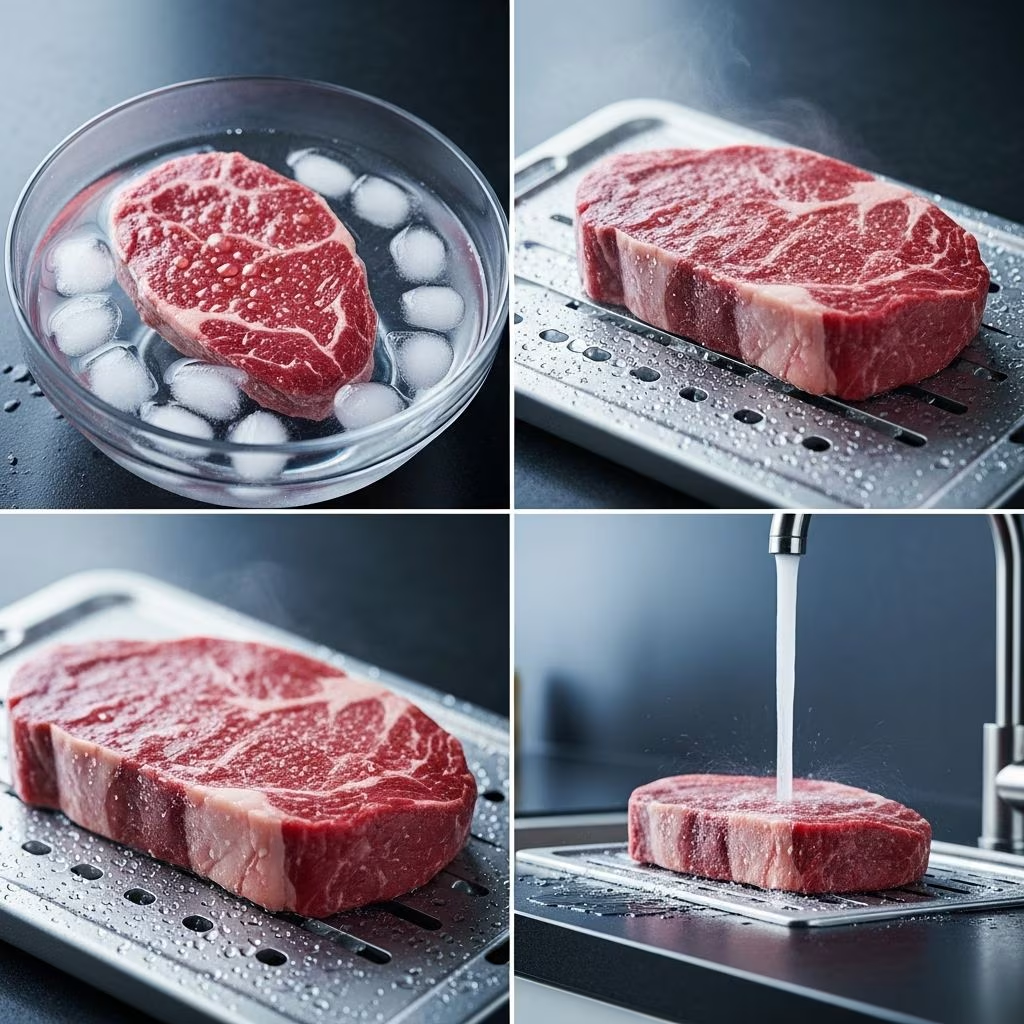
When time is limited and you need steaks ready for cooking within hours rather than a full day, cold water thawing offers a viable solution. This method typically completes the thawing process in 15 to 40 minutes, depending on steak thickness. The rapid heat transfer through water makes this approach significantly faster than refrigerator thawing.
Executing the Cold Water Method Properly
- Fill a large bowl or the sink basin with cold tap water
- Verify that your steaks remain in intact vacuum-sealed packaging
- Fully submerge the sealed package in the cold water
- Keep steaks completely underwater throughout the thawing period
- Monitor progress and check for complete thawing after 20-30 minutes
Critical Safety Considerations
Using cold water rather than warm or hot water is absolutely essential when employing this method. While hot water might seem to speed the process further, it rapidly pushes meat surface temperatures into the bacterial danger zone. Cold water provides the necessary temperature differential to facilitate heat transfer without compromising food safety.
Another critical factor involves maintaining package integrity. Any punctures, tears, or compromises in the vacuum-sealed packaging during cold water thawing could allow water infiltration, potentially introducing pathogens. Inspect packaging carefully before beginning and ensure it remains undamaged throughout the process.
Thawing Timeline for Cold Water Method
| Steak Thickness | Estimated Thawing Time |
|---|---|
| Thin steaks (½ inch) | 15-20 minutes |
| Medium steaks (¾–1 inch) | 25-35 minutes |
| Thick steaks (1.5+ inches) | 35-45 minutes |
Methods to Avoid: Unsafe Thawing Practices
Certain thawing approaches may seem convenient but carry serious food safety risks. Understanding why these methods are problematic helps reinforce safer practices.
Room Temperature Thawing
Leaving frozen steak on a kitchen counter appears convenient but creates ideal conditions for bacterial multiplication. As the steak’s exterior warms, it enters the temperature danger zone while the interior remains frozen. This temperature gradient can persist for hours, allowing pathogens to proliferate to unsafe levels. Food safety guidelines consistently advise against this approach.
Microwave Thawing
Microwave defrosting often results in uneven thawing, with some areas warming much faster than others. This inconsistency can cook portions of the steak while leaving other sections frozen, compromising both texture and safety. Professional cooks and food scientists generally discourage microwave thawing for premium steaks.
Practical Considerations for Steak Arrangement During Thawing
How you position steaks during thawing affects both speed and safety. Stacking multiple steaks directly on top of each other significantly extends thawing time, as the internal steaks receive heat transfer only from their thawed neighbors above and below. This arrangement can double or triple the required thawing period.
Spacing steaks apart or arranging them in a single layer maximizes exposure to the thawing environment, whether refrigerator air or cold water. This positioning principle applies to both thawing methods and should be considered when preparing multiple steaks simultaneously.
Post-Thawing Preparation and Cooking Readiness
Once your steak reaches full thawing, several preparation steps optimize the final cooking results. Pat the steak dry using paper towels to remove surface moisture, which interferes with browning and crust development. Remove steaks from refrigeration approximately 15 to 30 minutes before cooking to allow internal temperature to rise closer to room temperature, ensuring more even cooking throughout the meat.
Season your steak generously just before cooking rather than immediately after thawing. This timing prevents salt from drawing moisture out of the meat during the waiting period before cooking begins.
Frequently Asked Questions About Steak Thawing
Can I thaw steaks in hot water to speed up the process?
No. Hot water rapidly elevates surface temperature into the bacterial danger zone while the interior remains frozen. This uneven thawing creates unsafe conditions and compromises meat quality. Always use cold water exclusively for quick thawing.
How long can thawed steak remain in the refrigerator before cooking?
Properly thawed steak stored on a plate in the refrigerator can safely remain for up to two days at 36–40°F. Beyond this window, quality and safety begin to decline noticeably.
Is it safe to refreeze thawed steak?
Yes, thawed steak can be refrozen if handled correctly. However, refreezing after thawing does impact texture and quality, as ice crystal formation during re-freezing can compromise meat structure. If you must refreeze, do so as quickly as possible after thawing.
Can vacuum-sealed steaks thaw without opening the package?
Absolutely. Vacuum-sealed packaging protects the meat and should remain closed during both refrigerator and cold water thawing. The air-free packaging design actually facilitates efficient heat transfer, making sealed package thawing both safe and effective.
What if my steak package appears partially thawed but ice crystals remain?
Continue the thawing process using your chosen method. Incomplete thawing means the meat’s interior still contains frozen sections. Cooking partially thawed steak results in uneven doneness and potentially unsafe center temperatures.
Planning Your Steak Meals Around Thawing Requirements
Strategic meal planning accommodates thawing timelines effectively. If you enjoy spontaneous steak dinners, maintain a supply of steaks in your freezer and use the refrigerator thawing method, transferring steaks to the fridge each evening for the following night’s meal. For weeknight dinners requiring minimal advance notice, cold water thawing provides acceptable results within an hour.
Communicating with household members about dinner plans hours in advance enables proper preparation without rushing unsafe thawing methods. This approach maintains both convenience and food safety standards.
References
- Safe Food Handling: Thawing Meat Safely — U.S. Department of Agriculture, Food Safety and Inspection Service. 2024. https://www.fsis.usda.gov/food-safety/safe-food-handling-and-preparation/meat/safely-thaw-meat
- What’s the Best Way to Thaw Steaks? — Omaha Steaks. https://www.omahasteaks.com/blog/whats-the-best-way-to-thaw-steaks/