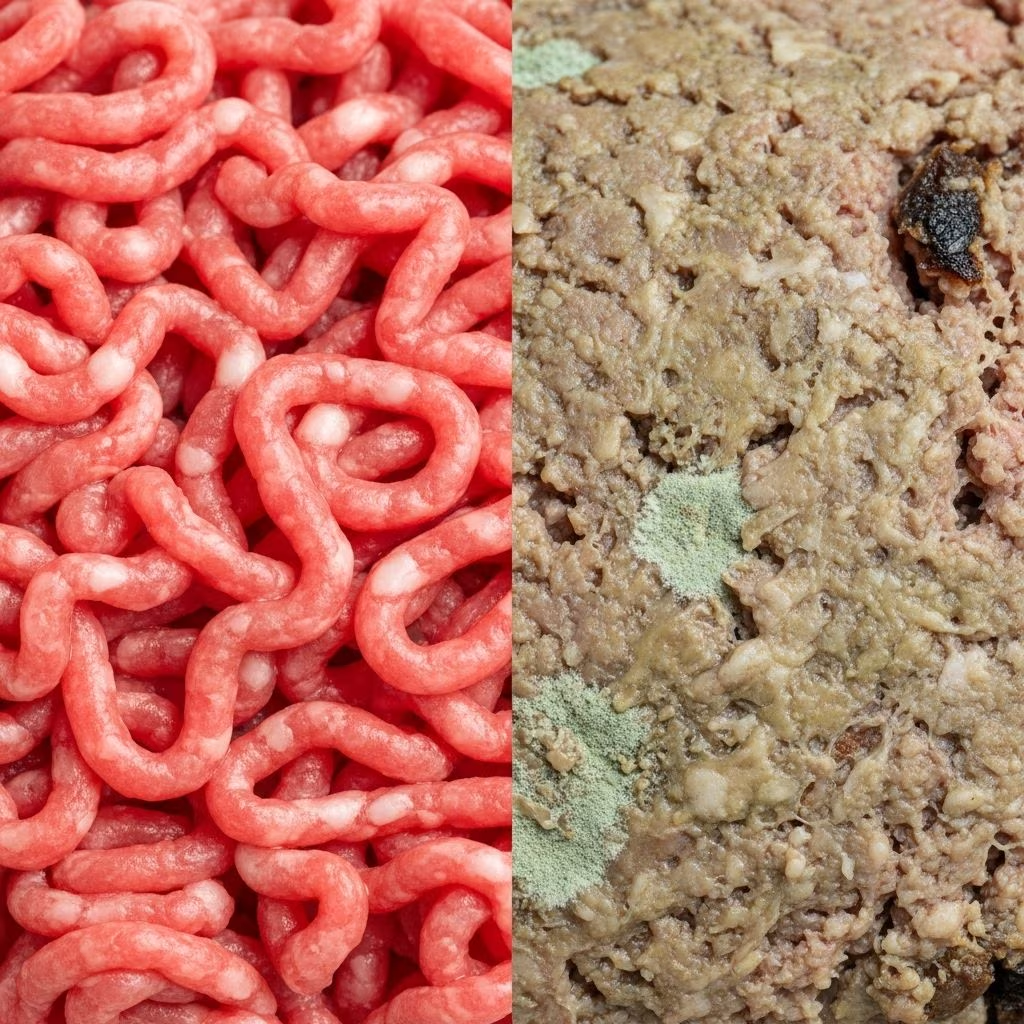
Ground beef serves as a versatile ingredient in countless dishes, from hearty stews to quick weeknight tacos. However, its high perishability demands vigilance to prevent waste and health risks. Understanding the signs of spoilage empowers home cooks to make informed decisions, ensuring meals remain safe and flavorful. This guide explores sensory indicators, storage best practices, and expert-backed strategies for handling ground beef effectively.
Visual Clues: Decoding Color Changes in Ground Beef
The appearance of ground beef offers the first line of defense against spoilage. Fresh meat typically displays a vibrant red hue due to myoglobin exposure to oxygen. As time passes or bacteria multiply, oxidation occurs, leading to noticeable shifts.
- Bright red to dull brown: Surface browning is common in older but still safe meat, caused by metmyoglobin formation. However, if the entire mass turns uniformly brown or gray, spoilage is likely underway.
- Gray or green patches: These indicate advanced bacterial growth or even mold, rendering the meat unsafe. Green tints may stem from hydrogen sulfide production by certain microbes.
- Freezer effects: Thawed frozen beef might show grayish freezer burn—dry, leathery spots from moisture loss. While not toxic, it compromises taste and texture; discard if accompanied by other issues.
Always inspect under good lighting. If in doubt, combine visual checks with other tests for confirmation.
Texture Test: Feeling for Sliminess and Stickiness
Touch provides a direct gauge of ground beef quality. Fresh product feels moist yet firm, crumbling easily under gentle pressure without residue.
| Texture Type | Description | Action |
|---|---|---|
| Firm and moist | Springs back, no slime | Safe to use |
| Sticky or tacky | Leaves residue on fingers | Discard immediately |
| Slimy film | Slippery layer, raw or cooked | Unsafe; bacteria present |
| Mushy/soft | Excessively yielding | Throw out |
A slimy or sticky surface signals bacterial proliferation, often from Pseudomonas or Lactobacillus species. These spoilage organisms produce polysaccharides that create the telltale film. Wash hands thoroughly after handling to prevent cross-contamination. Cooked leftovers develop similar issues if not refrigerated promptly.
The Smell Check: Sniffing Out Trouble
Olfactory senses detect spoilage earlier than other methods. Fresh ground beef emits a faint, neutral meaty aroma or none at all.
- Sour or tangy notes: Early spoilage yields a yogurt-like acidity from lactic acid bacteria.
- Putrid or ammonia scent: Advanced decay produces volatile compounds like cadaverine or putrescine, unmistakable red flags.
- Metallic or rancid: Common in thawed or oxidized fat, especially after freezer storage.
Unwrap and sniff directly. If questionable, air it out briefly—strong odors intensify with exposure. Note that pathogenic bacteria like E. coli or Salmonella don’t always produce smells, so rely on multiple checks.
Date Labels: Navigating Sell-By and Use-By Meanings
Packaging dates guide but don’t guarantee safety. Retailers use sell-by dates to indicate display limits; consumers can refrigerate ground beef 1-2 days beyond. Use-by or best-by marks the peak quality point, after which sensory checks become crucial.
Fridge lifespan: Raw ground beef lasts 1-2 days at 40°F (4°C) or below. Cooked versions hold 3-4 days. Freezing extends usability to 4 months without quality loss.
Ignore dates alone if sensory signs scream spoilage—prioritize your senses.
Storage Strategies for Maximum Freshness
Proper handling from purchase to plate minimizes risks. Keep ground beef in its original packaging until use, placing it on the lowest fridge shelf to avoid drips.
- Purchase smart: Buy cold packs at the end of shopping; choose vacuum-sealed for longer shelf life.
- Fridge rules: Store at 40°F or lower; portion into meal-sized amounts before freezing.
- Freezing tips: Use airtight freezer bags, squeeze out air, label with dates. Thaw in fridge, not counter, to stay out of the 40-140°F danger zone.
- Thawing safely: Refrigerator method (24 hours per pound), cold water (change every 30 minutes), or microwave (cook immediately).
Avoid room temperature storage beyond 2 hours—or 1 hour above 90°F—to halt bacterial growth.
Cooking Ground Beef to Kill Pathogens
Even fresh meat harbors risks; thorough cooking is non-negotiable. Aim for 160°F (71°C) internal temperature, verified by a food thermometer. This destroys E. coli, Salmonella, and other threats.
- Brown thoroughly, no pink centers.
- Drain fat to reduce calories and bacteria harbors.
- Refrigerate leftovers within 2 hours.
Color alone doesn’t confirm doneness—use tools for accuracy.
Health Risks of Consuming Spoiled Meat
Eating bad ground beef invites foodborne illness from pathogens thriving alongside spoilage bacteria. Symptoms emerge 1-3 days post-exposure: nausea, vomiting, cramps, diarrhea (possibly bloody), fever.
Severe cases lead to hemolytic uremic syndrome from E. coli O157:H7, affecting kidneys. Vulnerable groups—children, elderly, immunocompromised—face higher dangers. Most recover in a week, but prevention trumps treatment.
Per USDA guidelines, discard any suspect meat; cooking won’t neutralize toxins from certain bacteria like Staphylococcus.
Frequently Asked Questions
Can brown ground beef still be good?
Surface browning from oxidation is often safe if texture, smell, and date pass muster. Deep or widespread discoloration warrants disposal.
Is it okay to cook smelly ground beef?
No—strong off-odors indicate spoilage bacteria and potential pathogens. Discard to avoid illness.
How long does frozen ground beef last?
Up to 4 months for best quality; safe indefinitely below 0°F but flavor fades. Thaw and check thoroughly.
What if my cooked ground beef is slimy?
Toss it. Leftover slime means bacterial regrowth, even if reheated.
Does vacuum-sealed beef last longer?
Yes, reducing oxygen slows bacteria. Still, inspect before use.
Practical Tips for Everyday Use
Incorporate checks into routines: unpack immediately, plan meals around dates, invest in a thermometer. Batch-freeze portions for convenience. These habits cut waste and safeguard health.
When in doubt, throw it out—better safe than sorry. With practice, spotting issues becomes second nature, letting you enjoy ground beef confidently.
References
- How to Tell If Ground Beef Is Bad: 4 Simple Ways to Check — Healthline. 2023-10-12. https://www.healthline.com/nutrition/ways-to-tell-if-ground-beef-is-bad
- How to Tell If Ground Beef Is Bad: Signs, Smell, and Color Explained — Schweid & Sons. 2024-05-15. https://schweidandsons.com/blog/how-to-store-ground-beef-and-tell-if-its-gone-bad/
- How Long Can Ground Beef Stay in the Fridge? — Grass Roots Farmers’ Cooperative. 2024-02-20. https://grassrootscoop.com/blogs/recipes/how-long-can-ground-beef-stay-in-the-fridge
- Is It Okay To Cook Ground Beef That Smells A Little? — Tasting Table. 2024-11-08. https://www.tastingtable.com/2076176/ground-beef-smell-safety/