Bacon is a beloved staple in many kitchens, prized for its rich flavor and versatility in dishes from breakfast plates to gourmet recipes. However, like all meats, it can spoil if not handled properly, leading to potential health hazards. Recognizing the indicators of spoilage is crucial for preventing foodborne illnesses such as those caused by bacteria like Salmonella or E. coli. This guide provides a comprehensive overview of how to assess bacon freshness, covering raw and cooked varieties, storage best practices, and what to do if contamination occurs.
Understanding Bacon Freshness Basics
Fresh bacon typically features a vibrant pinkish-red color marbled with creamy white fat, a subtle smoky aroma from curing, and a firm yet supple texture. These characteristics stem from the curing process, which involves salt, nitrates, and sometimes smoke to preserve the meat and enhance taste. Once packaged, bacon is designed for refrigeration, but exposure to air, temperature fluctuations, or time can accelerate bacterial growth.
Bacteria thrive in moist, protein-rich environments like pork belly, multiplying rapidly between 40°F and 140°F (the ‘danger zone’ for food safety). Even vacuum-sealed packs aren’t foolproof if the seal breaks or storage conditions falter. Always start evaluations with the simplest checks before deeper inspections.
Key Indicators of Fresh vs. Spoiled Bacon
To determine if your bacon remains safe, perform a multi-sensory inspection. Combine visual, olfactory, and tactile assessments for accuracy, as one sign alone might not confirm spoilage but multiple signals demand immediate disposal.
1. Packaging and Date Checks
The exterior of the package offers the first line of defense. Examine the ‘use by,’ ‘sell by,’ or ‘best by’ date printed on the label. These dates indicate peak quality rather than strict safety limits, but passing them warrants caution. Some packages use Julian dates—a five-digit code where the first two digits represent the year and the latter three the day of the year (e.g., 25-100 for April 10, 2025).
A intact vacuum seal keeps oxygen out, preserving freshness. Loose, puffed, or separated packaging suggests air ingress, promoting oxidation and bacterial proliferation even before the date expires. Discard any such packs without opening.
2. Aroma Analysis
Good bacon emits a mild, smoky scent or nearly none at all. Spoiled bacon releases a pungent, sour, or sulfur-like odor from bacterial byproducts. This smell arises as microbes like yeast, fungi, and bacteria metabolize the meat, producing volatile compounds.
The curing smoke can sometimes mask early off-odors, so pair smell tests with other checks. Sniff directly from the opened package in a well-ventilated area to avoid contaminating your kitchen.
3. Texture Evaluation
Healthy bacon feels soft, moist, and slightly pliable, with possible minor liquid pooling from natural juices. Sliminess, however, signals trouble—it’s not excess moisture but bacterial excretions breaking down proteins into a sticky film.
Run clean fingers over a strip; if it sticks or coats your skin unpleasantly, bacteria have taken hold. This slime indicates active spoilage, making the product unsafe regardless of other appearances.
4. Color Examination
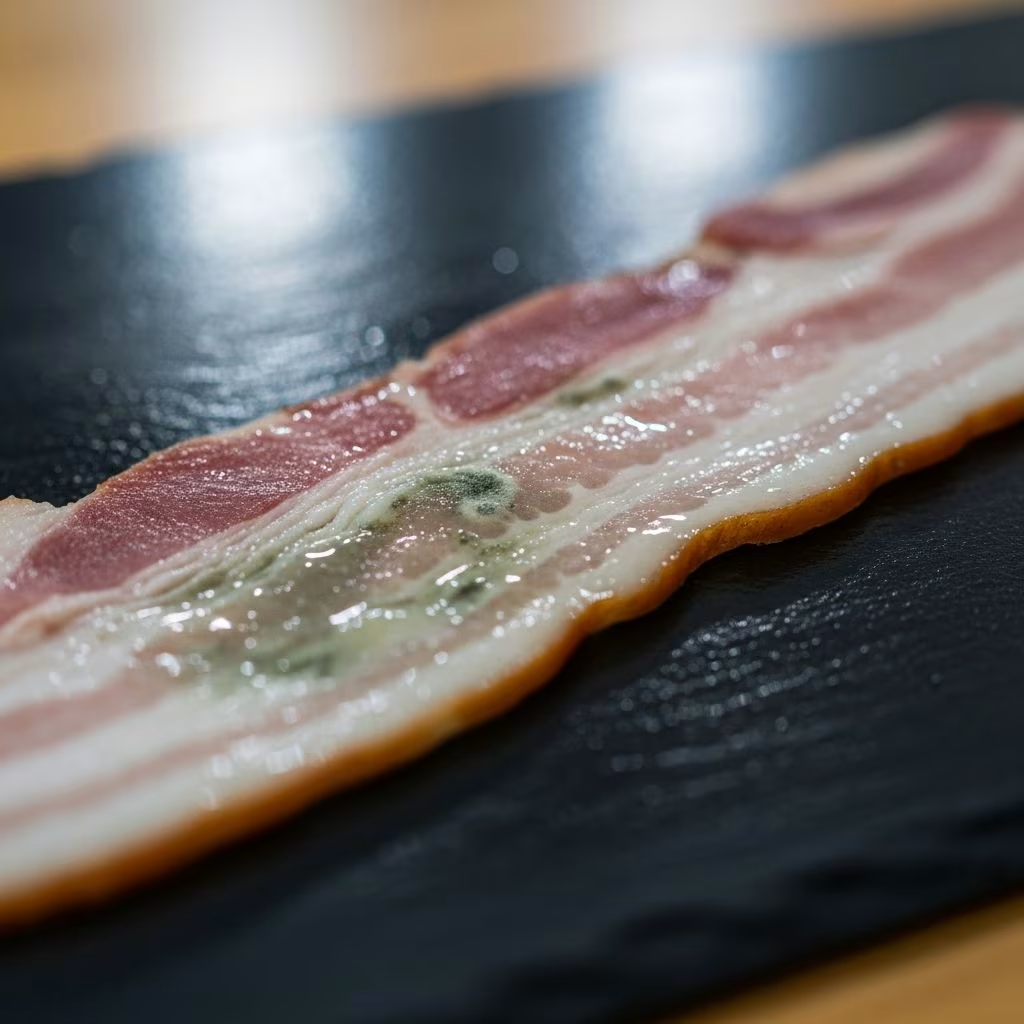
Prime bacon displays uniform pink-to-red hues veined with white fat. Spoilage introduces dull grays, greens, browns, or oranges from oxidation and microbial pigments. These shifts occur as bacteria alter the meat’s myoglobin, the protein responsible for its natural color.
Inspect under bright light, separating slices if needed. Any irregular patches mean toss it—discoloration penetrates deeper than visible.
5. Visible Mold Presence
Mold appears as fuzzy or powdery growths, often white, green, or black. Though less common in refrigerated bacon, it signals advanced contamination from cross-exposure or prolonged storage.
Never trim moldy sections; invisible hyphae (root-like structures) infiltrate the entire piece, spreading toxins and bacteria. Immediate disposal is essential.
Quick Reference Table: Fresh vs. Spoiled Bacon Traits
| Attribute | Fresh Bacon | Spoiled Bacon |
|---|---|---|
| Packaging | Tight vacuum seal, date intact | Loose, bloated, past date |
| Smell | Mild smoky or neutral | Sour, sulfuric, rancid |
| Texture | Soft, moist, firm | Slimy, sticky |
| Color | Pink-red with white fat | Gray, green, brown, orange |
| Mold | Absent | Visible growths |
Assessing Cooked Bacon Safety
Cooked bacon presents unique challenges since heat alters texture and aroma. Consume within 5-7 days of cooking for safety, storing in airtight containers in the fridge. Reheat to 165°F internally to kill surface bacteria, but pre-existing toxins from spoilage may persist.
Check for persistent sliminess (beyond natural fat renderings), off smells post-reheating, or color fading to grayish tones. If any doubt exists, discard to err on caution—cooked bacon’s crispiness can hide subtle spoilage cues.
Optimal Storage Strategies for Bacon Longevity
Proper handling extends usability. Refrigerate unopened packs at 40°F or below, using within a week of purchase. Opened bacon lasts 5-7 days in the fridge; freeze portions in airtight bags for up to 1 month, thawing overnight in the fridge.
Avoid door storage due to temperature swings. For bulk buys, portion into meal-sized freezer bags, squeezing out air. Label with dates for easy tracking. These practices minimize exposure to oxygen and contaminants.
Health Risks of Consuming Spoiled Bacon
Ingesting bad bacon introduces pathogens like Salmonella, E. coli, and Staphylococcus, which produce heat-stable toxins. Cooking kills some bacteria but not all endotoxins, leading to food poisoning symptoms: nausea, vomiting, diarrhea, fever, and cramps within hours to days.
Severe cases risk dehydration, kidney issues, or neurological effects, especially in vulnerable groups like children, elderly, or immunocompromised. Prevention through vigilant checks far outweighs treatment burdens.
FAQs on Bacon Spoilage
Q: Can I eat bacon slightly past its use-by date?
A: Possibly, if it passes smell, texture, color, and mold checks. When in doubt, throw it out to avoid risks.
Q: Is slimy bacon always bad?
A: Yes—slime indicates bacterial breakdown, not just moisture.
Q: How do I freeze bacon safely?
A: Portion into bags, remove air, freeze at 0°F, and use within a month for best quality.
Q: Does cooking spoiled raw bacon make it safe?
A: No, toxins may survive heat; discard spoiled raw meat.
Q: What’s the shelf life of opened bacon?
A: 5-7 days in the fridge; monitor for spoilage signs daily.
Preventive Tips for Bacon Enthusiasts
- Buy from reputable sources with fresh packaging.
- Check fridge temperature regularly with a thermometer.
- Rotate stock: use oldest packs first.
- Avoid cross-contamination by using separate cutting boards.
- Consider uncured varieties for fewer preservatives, but store diligently.
Mastering these detection and storage methods ensures bacon remains a safe, delicious addition to your diet. By staying observant, you protect health and reduce waste.
References
- How to tell if Bacon is Bad — A Table Full of Joy. 2023. https://www.atablefullofjoy.com/how-to-tell-if-bacon-is-bad/
- How to Tell if Bacon Has Gone Bad: 4 Easy Signs — Coleman Natural Foods. 2023. https://colemannatural.com/blog/how-to-tell-if-bacon-has-gone-bad-4-easy-signs/
- How Long Can Bacon Stay in the Fridge? — Pederson’s Natural Farms. 2023. https://pedersonsfarms.com/blogs/blog/how-long-can-bacon-stay-in-the-fridge