Potatoes are a kitchen staple valued for their versatility and nutrition, but improper storage leads to sprouting, greening, or spoilage. Understanding the science of potato storage ensures they remain fresh for months, reducing waste and saving money. This guide explores ideal conditions, common mistakes, and long-term preservation strategies based on established agricultural recommendations.
Understanding Potato Physiology for Better Storage
Potatoes are living organs that continue respiring after harvest, consuming oxygen and releasing carbon dioxide and moisture. They thrive in environments mimicking their natural underground growth: cool temperatures between 42-55°F (6-13°C), high humidity around 90-95%, complete darkness, and good airflow to prevent moisture buildup. Exposure to light triggers chlorophyll production, causing green skins with solanine, a bitter toxin that can cause digestive issues if consumed in large amounts.
Starch conversion to sugar accelerates in cold below 40°F, altering taste and cooking properties—fried potatoes darken unappealingly, while baked or mashed ones taste overly sweet. Warmth above 60°F speeds sprouting, as tubers sense conditions for new growth. Selecting firm, unblemished potatoes free of cuts or sprouts at purchase sets the foundation for success.
Selecting the Perfect Storage Spot at Home
Most homes lack ideal root cellars, but suitable alternatives exist. Basements, garages, or insulated closets work if temperatures stay consistently 45-50°F without freezing risks. Pantries qualify only if naturally cool and ventilated; avoid kitchens where heat and light prevail.
- Darkness: Use opaque bins or boxes to block light completely.
- Ventilation: Choose spots with air circulation to dissipate ethylene gas and moisture.
- Humidity: Aim for 90%+; add damp cloths if too dry, but prevent sogginess.
- Temperature stability: Avoid fluctuations from heaters or appliances.
Avoid refrigerators entirely, as confirmed by produce experts—cold-induced sugar formation ruins texture and flavor. Garages risk freezing in winter; monitor with a thermometer.
Container Choices and Preparation Techniques
Original mesh bags allow airflow if stored cool, but transfer to better options for longer life. Perforated paper or cloth sacks, open-weave baskets, or cardboard boxes layered with newspaper or dry soil excel by absorbing excess moisture and blocking light.
| Container Type | Pros | Cons | Best For |
|---|---|---|---|
| Cardboard Box | Dark, stackable, absorbent with paper layers | May attract pests if not monitored | Long-term bulk storage |
| Perforated Plastic Bag | Airflow, easy to seal loosely | Light transmission if clear | Pantry or closet |
| Open Basket | Excellent ventilation | Requires dark location | Short-term, humid areas |
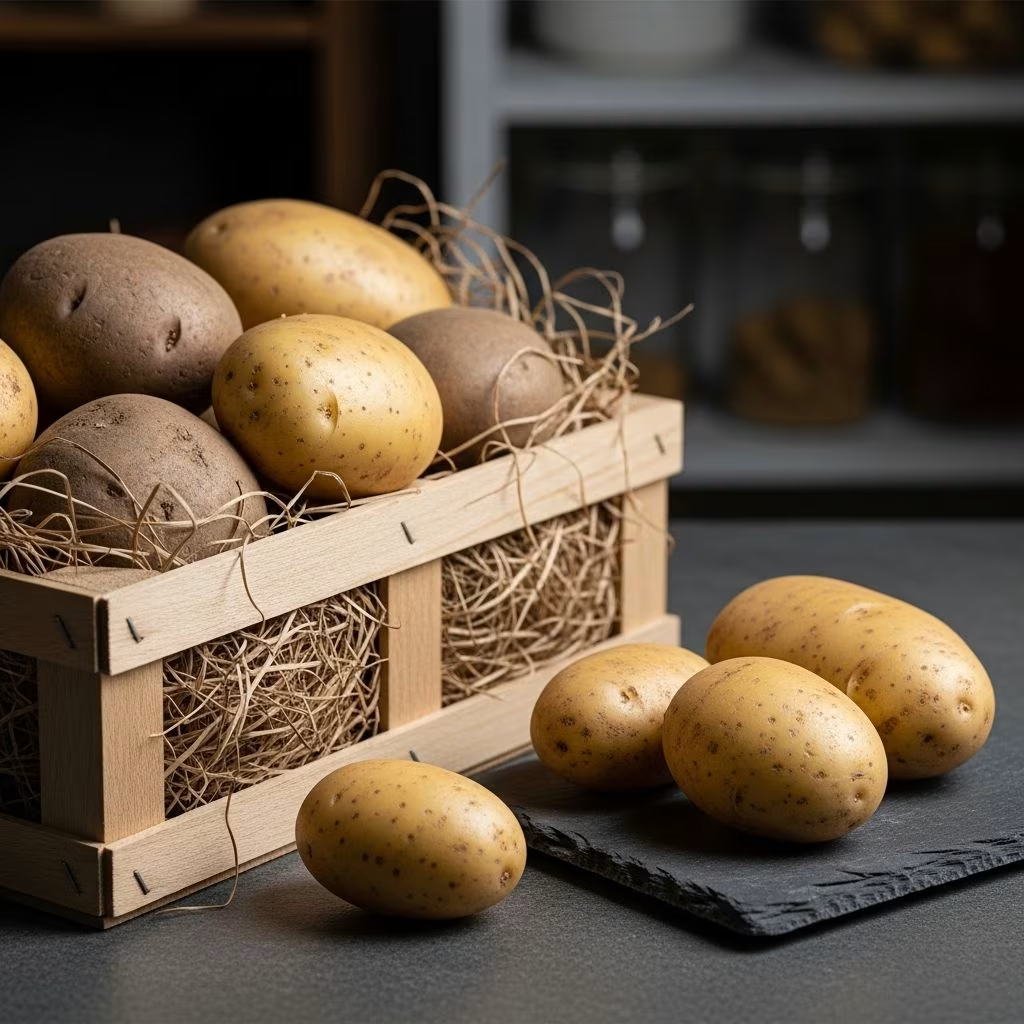
| Wooden Crate | Natural humidity control | Heavy, pest-prone | Basement storage |
Preparation: Inspect potatoes, discarding soft or sprouted ones immediately. Cure briefly at room temperature for cut skins to heal. Layer in containers: potatoes, then absorbent material like newspaper, dry dirt, or craft paper, repeating until full. Close loosely to maintain darkness without trapping gases.
Monitoring and Maintenance for Longevity
Weekly checks prevent small issues from spreading. Remove sprouts by twisting off, as they draw energy from the tuber. Cull any with soft spots, mold, or wrinkles to protect the batch. Rotate stock using oldest first. In humid conditions, dust with cornstarch to absorb moisture; in dry areas, mist lightly.
Expect 2-6 months storage for most varieties under optimal conditions, longer for high-starch types like Russets. Smaller or thin-skinned potatoes like reds store shorter.
Beyond Basic Storage: Preservation Methods
When fresh storage falters, especially in spring, turn to preservation. These extend usability without a root cellar.
Freezing for Convenience
Freeze blanched raw or cooked potatoes in portions. For raw: Peel, cut into cubes/wedges, blanch 3-5 minutes in boiling water, ice bath, dry, flash-freeze on trays, then bag. Cooked leftovers freeze well but may soften upon thaw—ideal for hashes or soups. Use within 8-12 months; larger bags minimize frost.
Dehydrating for Shelf Stability
Slice thinly, blanch, dry at 125°F in a dehydrator until brittle. Store in airtight jars; rehydrate in water before use. Lasts years, perfect for backpacking or emergencies.
Freeze-Drying Innovation
Home freeze-dryers preserve texture and nutrition for 25+ years. Rehydrate simply; suitable for whole or diced potatoes.
Pressure Canning for Pantry Staples
Raw chunks pack into jars with hot water, processed in a pressure canner per National Center for Home Food Preservation guidelines (e.g., pints 35 min at 10 psi). Rinse starch for clarity; yields versatile ingredient lasting years. Avoid water bath due to botulism risk.
Variety-Specific Storage Tips
- Russet/Idaho: Best long-term; thick skins resist disease.
- Red/New: Shorter storage; refrigerate briefly if needed but use soon.
- Sweet Potatoes: Warmer 55-60°F, separate from regulars to avoid off-flavors.
Common Storage Pitfalls and Fixes
Light exposure greens potatoes—store covered. Sealed plastic traps moisture, causing rot—use breathable. Neighboring onions emit ethylene, hastening sprouting—keep separate. Countertops warm too much; basements ideal if not freezing.
FAQs
Can I store potatoes in the fridge?
No, it converts starch to sugar, darkening fries and sweetening taste.
How long do potatoes last in ideal storage?
2-8 months depending on variety and conditions.
Are paper bags okay?
Yes, perforated ones provide airflow; layer with newspaper.
What if potatoes sprout?
Twist off sprouts; use soon if many.
Can I store with onions?
No, gases interact badly.
Conclusion
Proper potato storage combines cool, dark, ventilated spaces with vigilant maintenance, extending usability dramatically. For abundance, preservation methods like canning ensure year-round access. Implement these for fresher spuds and less waste.
References
- Where Should I Store Potatoes At Home If I Buy A Big Bag Of Idaho Russets — Idaho Potato Commission. Accessed 2026. https://idahopotato.com/dr-potato/where-should-i-store-potatoes-at-home-if-i-buy-a-big-bag-of-idaho-russets
- Best Ways to Preserve Potatoes — My Boreal Homestead Life. Accessed 2026. https://myborealhomesteadlife.com/canning/blog/preserving-potatoes-best-ways-to-preserve-potatoes
- What is the best way to store potatoes, onions and garlic? — Fruits & Veggies. Accessed 2026. https://fruitsandveggies.org/blog/what-is-the-best-way-to-store-potatoes-onions-and-garlic/
- How to Store Potatoes for Months – Cheaply and Easily! — Joyfully Thriving (YouTube). Accessed 2026. https://www.youtube.com/watch?v=YKVPuDw9IKw
- How to Keep Potatoes Fresh for a Year! — Survival HT (YouTube). Accessed 2026. https://www.youtube.com/watch?v=Hjb_SRYf_3I