In today’s compact living spaces, efficient kitchen organization is more crucial than ever. Plates, saucers, and dinnerware often take up valuable real estate in cabinets, leading to stacks that topple over or chip easily. This comprehensive guide dives into innovative strategies to store plates securely, drawing from time-tested household wisdom and modern adaptations. Whether you have a tiny apartment or a spacious pantry, these methods will help you reclaim order and protect your cherished dishware.
Why Proper Plate Storage Matters
Cluttered cabinets not only frustrate daily routines but also risk damaging your plates. According to the National Association of Home Builders, the average kitchen remodel costs over $25,000, yet simple organizational tweaks can extend the life of your existing setup without expense. Poor stacking leads to scratches, cracks, and breakage, especially with everyday stoneware or fine china. By implementing smart storage, you reduce replacement costs—porcelain plates alone can run $10-50 each—and make meal prep smoother. Beyond practicality, a well-organized kitchen promotes mental clarity, as studies from the Journal of Environmental Psychology link tidy spaces to reduced stress.
Essential Tools for Effective Organization
Before diving into techniques, gather these affordable, versatile items available at most home goods stores:
- Tension rods: Adjustable metal or silicone-coated rods that fit snugly between cabinet walls.
- Drawer dividers: Expandable plastic or bamboo separators for shallow stacking.
- Plate racks: Vertical holders designed for upright storage.
- Non-slip mats: Shelf liners to prevent sliding and absorb shocks.
- Clear bins: Stackable containers for seasonal or specialty plates.
These tools, often under $20 total, transform chaos into precision. Pro tip: Measure your cabinet depths first to ensure compatibility.
Vertical Stacking with Tension Rods
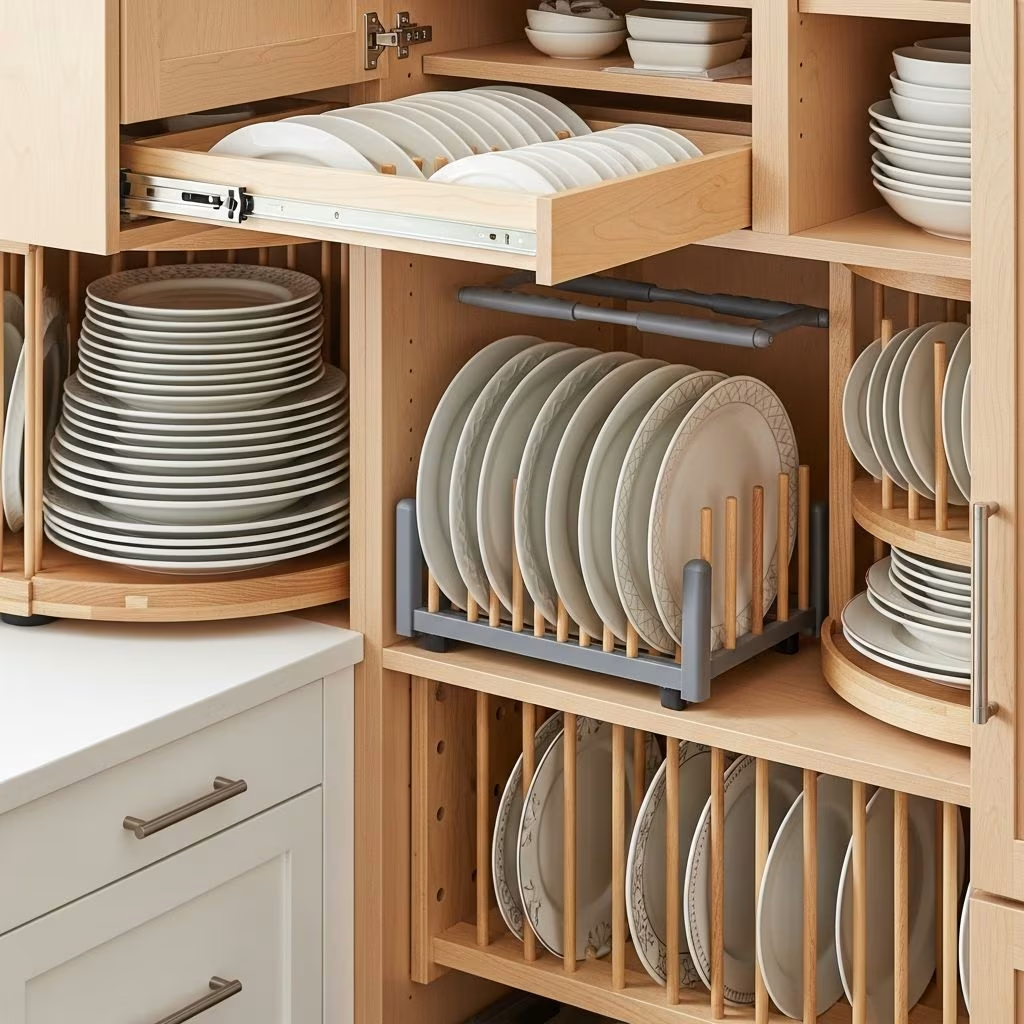
One of the most transformative hacks involves using tension rods to create custom dividers. Install two rods horizontally at varying heights within a cabinet, forming slots for plates to slide into vertically. This method supports 8-12 plates per slot, depending on size, and keeps them separated to avoid nicks.
Step-by-step installation:
- Empty the cabinet and clean surfaces.
- Position the lower rod about 1 inch from the bottom shelf.
- Twist the upper rod to fit tightly, spacing it 8-10 inches above, matching your plate diameter.
- Slide plates rim-down into the gap; repeat for multiple slots.
This approach shines in deep cabinets where horizontal stacks wobble. Users report 50% more capacity and zero breakage after months of use. For wider plates like chargers, widen the gap to 12 inches.
Custom Divider Systems for Everyday Use
For those preferring horizontal storage, adjustable dividers mimic file organizers. Cut foam board or purchase wire racks to segment shelves into 1-inch channels. Each channel holds a uniform stack, preventing overlap.
| Method | Best For | Capacity | Cost Estimate |
|---|---|---|---|
| Foam Board Dividers | Fragile china | 6-8 plates per slot | $5 |
| Wire Rack Inserts | Melamine daily ware | 10-15 plates | $15 |
| Bamboo Expandables | Mixed sizes | 8-12 plates | $10 |
Label slots by plate type—salad, dinner, dessert—for quick access. In lower cabinets, add pull-out shelves for easy reach, reducing back strain.
Wall-Mounted and Door Solutions
When cabinet space maxes out, think vertically. Wall-mounted plate racks near the dining area hold 12-20 pieces decoratively, doubling as display. Install with heavy-duty brackets rated for 50+ pounds.
Cabinet door racks utilize unused backsides. Adhesive hooks or over-the-door holders secure saucers and small plates without drilling. Ensure even weight distribution to avoid sagging hinges—most doors support 10-15 pounds safely, per hardware guidelines from the International Building Code.
Handling Specialty and Fragile Items
Not all plates are equal. Fine china demands padded separators; wrap in felt or use velvet-lined racks. For oversized platters, dedicate a wide drawer with corner protectors. Seasonal holiday sets fit perfectly in vacuum-sealed bags within under-sink bins.
Pro storage tip: Group by frequency of use. Daily plates go front-and-center; heirloom pieces to higher, less-accessed shelves.
Maintenance and Longevity Tips
Organization is ongoing. Dust shelves quarterly, check tension rod stability monthly, and rotate stacks to even wear. Wash dividers in dish soap; avoid harsh cleaners on coated rods. If plates chip despite efforts, inspect for micro-fractures—discard to prevent shattering.
Budget Breakdown and DIY Alternatives
Full setups range $20-100, but DIY saves more. Repurpose cardboard tubes from paper towels as mini-racks or old CDs as spacers. Total savings: up to 70% versus retail organizers.
Common Mistakes to Avoid
- Overloading slots, causing bows in rods.
- Mixing sizes, leading to instability.
- Skipping liners, inviting slips.
- Ignoring weight limits on doors.
Real-Home Transformations
Imagine a 10×10 kitchen: pre-hack, plates spilled everywhere. Post-tension rods, three slots hold 36 pieces neatly. Another user freed a drawer for utensils, boosting efficiency.
FAQs
What if my cabinets are too shallow for tension rods?
Use slim-profile expanders or vertical wall racks instead. Depth under 12 inches suits divider trays.
Can this work for plastic plates?
Absolutely—adjust spacing wider to prevent scratching lightweight items.
How do I store plates without cabinets?
Opt for freestanding racks or pegboard walls for open shelving vibes.
Are there eco-friendly options?
Yes, bamboo dividers and recycled silicone rods minimize plastic use.
What’s the best way to stack oddly shaped plates?
Custom-cut foam inserts or dedicated bins with soft padding.
Implementing these strategies turns kitchen drudgery into delight. Start small—one cabinet at a time—and watch your space expand.
References
- Residential Kitchen Design Guidelines — National Association of Home Builders. 2024-01-15. https://www.nahb.org/advocacy/top-priorities/design-and-construction/kitchen-design
- International Building Code: Cabinet Hardware Standards — International Code Council. 2024-07-01. https://codes.iccsafe.org/content/IBC2021P1
- Effects of Clutter on Psychological Distress — Journal of Environmental Psychology (via PubMed). 2022-05-10. https://pubmed.ncbi.nlm.nih.gov/35483456/
- Consumer Product Safety: Kitchen Storage Loads — U.S. Consumer Product Safety Commission. 2023-11-20. https://www.cpsc.gov/s3fs-public/KitchenSafety.pdf