Eggplant, with its glossy skin and versatile flavor, is a staple in many kitchens, but improper storage can lead to bitterness, soft spots, and rapid spoilage. Understanding the right conditions for this warm-season crop ensures it stays tender and delicious from harvest to plate. This guide explores optimal techniques drawn from agricultural expertise to help you maximize shelf life without compromising quality.
Why Eggplant Demands Special Care
Eggplant belongs to the nightshade family, thriving in warm climates and sensitive to cold. Unlike hardy root vegetables, it suffers from chilling injuries below 50°F, resulting in pitted skin, bronzing, and discolored flesh. High sensitivity to ethylene gas—produced by fruits like bananas and tomatoes—accelerates ripening and decay. Proper handling starts at selection and harvest, focusing on firmness, uniform color, and fresh stems to prevent early breakdown.
Selecting the Best Eggplants for Longevity
Choose eggplants that feel heavy for their size, with taut, shiny skins free of blemishes, cuts, or wrinkles. Smaller varieties often taste less bitter due to fewer seeds. Look for vibrant green stems and caps, indicating freshness. Avoid oversized fruits, as they tend to develop tough skins and large, bitter seeds. At markets or from gardens, prioritize those harvested at peak ripeness—typically 60-70 days after transplanting, depending on the variety.
- Firmness test: Gently press; it should spring back without leaving dents.
- Color check: Deep, even purple or variety-specific hues without dull patches.
- Stem inspection: Green and flexible, not brown or shriveled.
Harvesting Eggplant at Peak Perfection
For home growers, timing is crucial. Harvest when fruits are glossy, 6-8 inches long for most types, and seeds haven’t hardened. Use gloves and shears to cut stems, leaving a short calyx to avoid skin tears. Overripe eggplants turn bitter with spongy interiors, so check plants every few days during peak season. Immediate post-harvest care prevents moisture loss and ethylene buildup.
| Variety | Days to Harvest | Fruit Shape | Best Uses |
|---|---|---|---|
| Dusky | 60 | Oval | Grilling, roasting |
| Ichiban | 70 | Elongated | Stir-fries, tempura |
| Little Fingers | 68 | Slender clusters | Pickling, salads |
| Black Bell | 68 | Round-oval | Stuffing, baking |
This table highlights popular varieties and their characteristics, aiding in selection for storage planning.
Ideal Room Temperature Storage Methods
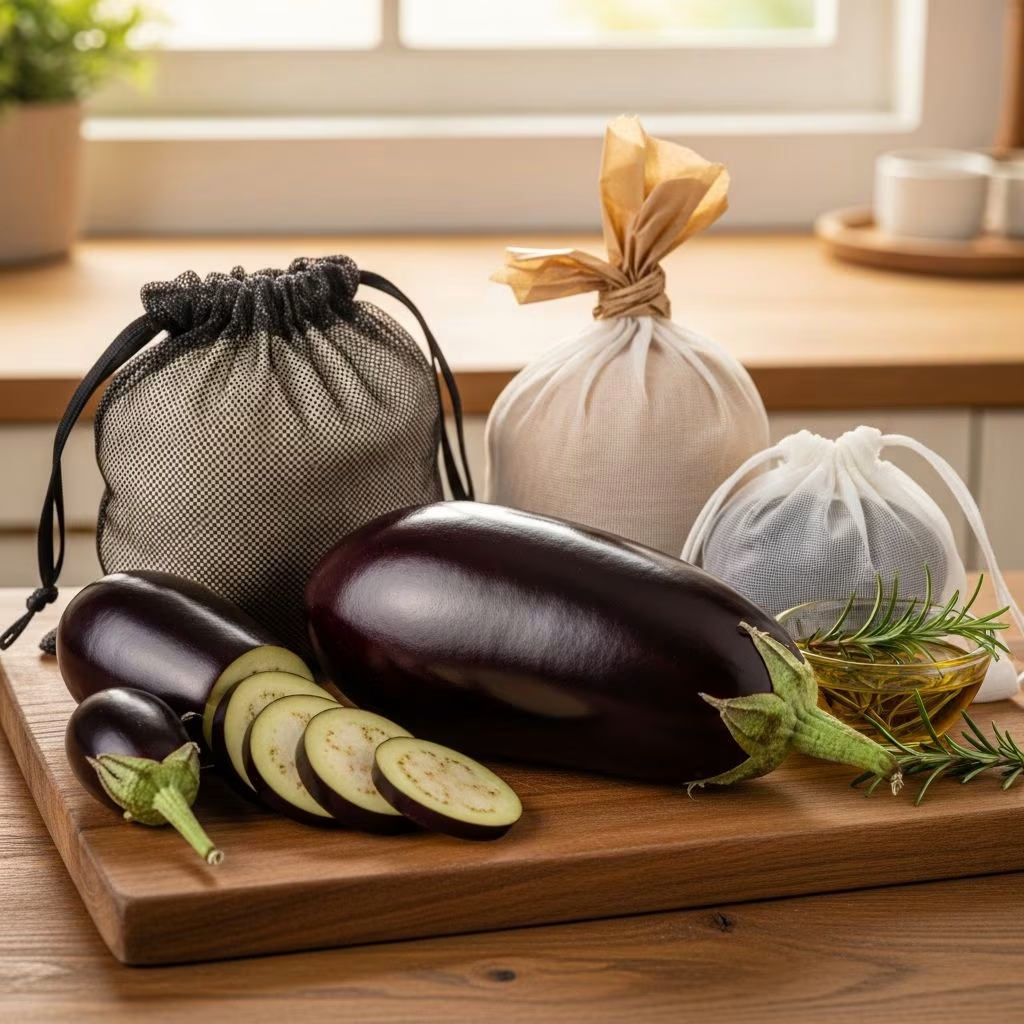
The gold standard for eggplant storage is a cool, dark spot at 50-60°F, away from direct sunlight and heat sources. A countertop or pantry shelf works well, where it can last up to a week or more. Place in a breathable basket or vented bowl to allow air circulation, preventing trapped moisture that fosters mold. Never seal in plastic bags, as this traps ethylene and hastens spoilage.
Key practices include:
- Keeping away from high-ethylene producers like apples, melons, and tomatoes.
- Using within days for peak flavor, as natural sugars convert to bitterness over time.
- Storing whole and unwashed to maintain natural protective wax.
Refrigeration: Use with Caution
While room temperature is preferable, refrigeration becomes necessary for longer storage. Limit to 1-3 days at 41-50°F in the crisper drawer, wrapped loosely in perforated plastic to balance humidity and airflow. Monitor for chilling symptoms like surface pitting or internal browning, especially below 41°F. Remove promptly before cooking to restore flavor, and avoid proximity to raw meats to prevent cross-contamination.
Signs of Chilling Damage
- Pitted or bronzed skin.
- Brown seeds and pulp.
- Soft, water-soaked textures.
If damage appears, salvage by peeling affected areas and cooking immediately.
Freezing Eggplant for Extended Preservation
For surplus harvests, freezing preserves nutrition and texture better than canning, which is not recommended due to quality loss. Harvest young, firm fruits before seeds mature. Wash, peel if desired, and slice into ⅓-inch pieces. Blanch in boiling water with lemon juice (½ cup per gallon) for 4 minutes to deactivate enzymes, then ice-bath cool. Drain, pack in freezer bags with ½-inch headspace, and freeze up to 8-12 months. Thaw in the fridge and use in cooked dishes like stews or purees, as texture softens.
- Prepare slices uniformly for even blanching.
- Label bags with date for rotation.
- Avoid refreezing thawed portions to prevent mushiness.
Creative Ways to Extend Eggplant Life
Beyond basics, consider these innovations:
- Paper bag storage: Line with newspaper for absorption of excess moisture.
- Whole roasting prep: Pierce and roast before freezing halves for easy future use.
- Pickling trials: Quick brine small varieties for tangy snacks, though not long-term.
Experiment with vacuum-sealing blanched pieces for minimal ice crystal formation, extending usability.
Common Storage Pitfalls and Fixes
Many discard eggplant prematurely due to avoidable errors. Storing near heat or in sealed bags invites rot; chilling too long causes defects. Bitterness from overmaturity signals harvest issues. Counter by daily inspections, prompt use, and variety selection. Track storage times in a kitchen log to refine techniques.
| Mistake | Consequence | Solution |
|---|---|---|
| Fridge over 3 days | Chilling injury | Room temp or freeze |
| Plastic bag seal | Mold growth | Vented bowl |
| Near bananas | Fast spoilage | Isolate produce |
| Washing early | Premature decay | Wash before use |
Nutritional Benefits of Properly Stored Eggplant
Freshly stored eggplant delivers fiber, antioxidants like nasunin, vitamins C and K, and potassium. Storage mishaps degrade these, turning vibrant purple flesh mealy. Optimal methods retain up to 90% nutrients, supporting heart health and digestion. Incorporate into diets via grilling, which enhances bioavailability without sogginess.
Seasonal Tips for Eggplant Enthusiasts
Summer peaks demand vigilant storage; fall transitions allow brief fridge use. Pair with companion crops like peppers, sharing warm needs. Community shares via markets extend access—buy small batches frequently. Sustainable practices include composting overripe fruits to close the loop.
Frequently Asked Questions (FAQs)
Can you store eggplant on the counter?
Yes, ideally in a cool, shaded spot for up to a week, outperforming refrigeration for texture.
How long does cut eggplant last?
Use immediately; otherwise, cover and refrigerate for 1-2 days max to avoid oxidation.
Is freezing eggplant worth it?
Absolutely for cooked applications; blanching ensures quality up to a year.
Why does my eggplant turn brown inside?
Chilling injury or age—store warmer and use promptly.
Best container for eggplant?
Breathable basket or bowl; avoid airtight plastic.
References
- Eggplant Harvest and Storage — Stutzmans Greenhouse & Garden Center. Accessed 2026. https://stutzmans.com/eggplant-harvest-storage/
- Using, Storing and Preserving Eggplant (E3194) — Michigan State University Extension. 2023. https://www.canr.msu.edu/uploads/resources/pdfs/Eggplant_(E3194).pdf
- Picking, Preparing, and Storing Eggplant — University of Illinois Extension (YouTube). Accessed 2026. https://www.youtube.com/watch?v=Y8qDytSOGVQ