Bread, a kitchen staple across cultures, begins to lose its appeal quickly after baking or purchase due to moisture loss, starch recrystallization, and microbial growth. Understanding the science behind these processes allows anyone to implement simple habits that significantly prolong freshness. This guide explores practical approaches tailored to different scenarios, drawing from time-tested practices to help you enjoy bakery-quality texture and flavor well beyond the first day.
Understanding Why Bread Spoils
Fresh bread’s demise stems primarily from two factors: staling and mold. Staling occurs when amylopectin molecules in the starch realign, causing the crumb to firm up—a process accelerated by low temperatures but slowed by proper moisture balance. Mold thrives in humid environments, particularly on sliced surfaces exposed to air. Commercial breads often include preservatives to combat this, but artisanal or homemade varieties demand careful handling from the outset.
Temperature plays a pivotal role. Room conditions around 68-72°F (20-22°C) with moderate humidity suit most loaves initially, but prolonged exposure leads to drying. Refrigeration, counterintuitively, hastens staling through retrogradation, where cold prompts starch molecules to form crystalline structures, resulting in a tough texture. Freezing, however, halts this by immobilizing water molecules, preserving quality for extended periods.
Daily Storage: Countertop Best Practices
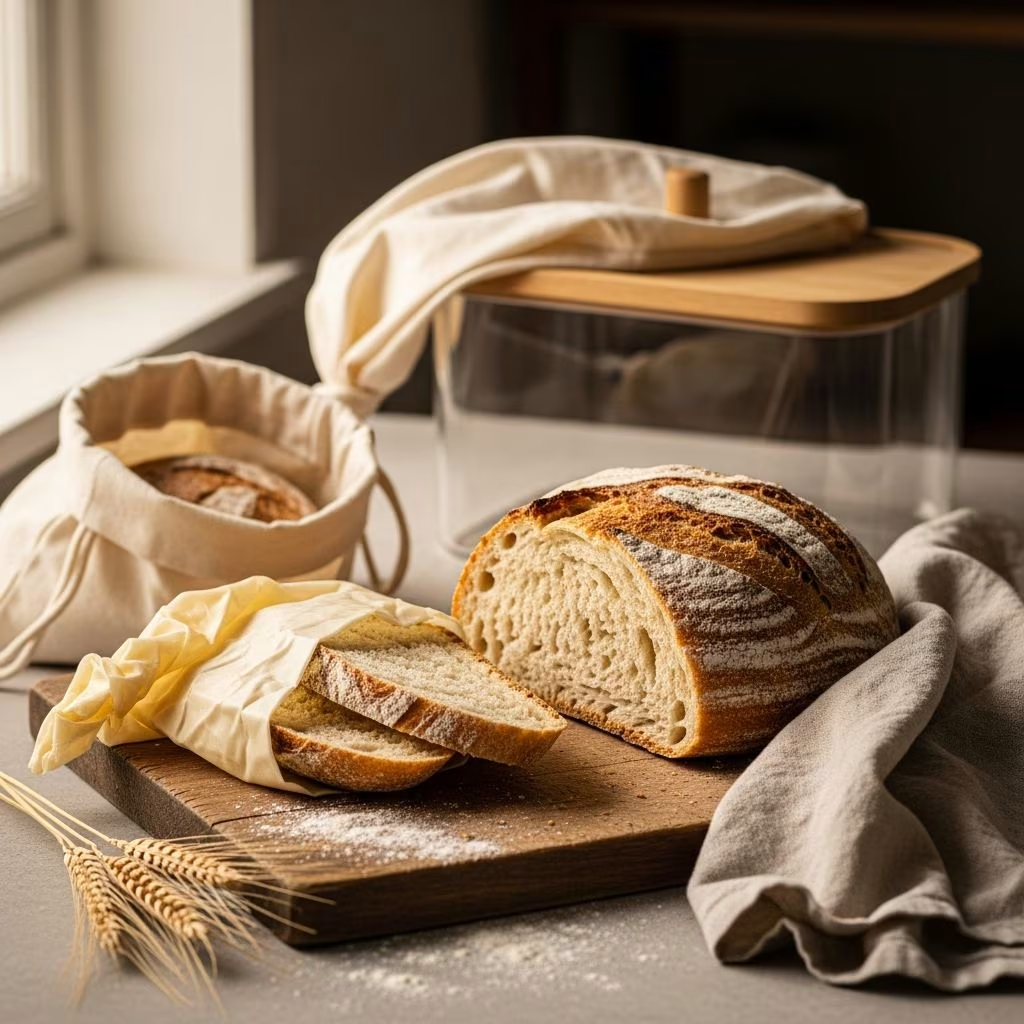
For bread consumed within 2-4 days, the countertop remains ideal. Key is balancing air circulation to prevent moisture buildup while retaining enough humidity to avoid drying.
- Choose breathable wrappers: Opt for cotton cloths, linen towels, or paper bags over plastic, which traps condensation and fosters mold.
- Position cut-side down: Place the loaf on a wooden board to wick away excess moisture from the exposed end.
- Avoid heat sources: Keep away from ovens, sunlight, or fruits like bananas, which emit ethylene gas accelerating spoilage.
A dedicated bread box enhances this setup by providing a dark, ventilated enclosure that maintains 60-70% humidity. Vintage wooden designs with slatted sides outperform modern plastic ones, as they regulate airflow without over-drying. Tests show bread in such environments stays soft inside with a crisp crust for up to five days.
| Method | Duration | Pros | Cons |
|---|---|---|---|
| Cotton towel on board | 2-3 days | Simple, inexpensive | Limited airflow control |
| Bread box | 3-5 days | Optimal humidity | Requires space |
| Paper bag | 2-4 days | Breathable | Can dry out quickly |
Extending Freshness: The Wax Paper and Bag Technique
For mid-term storage up to two weeks, a hybrid method excels: wrap the cooled loaf tightly in wax or beeswax paper, then seal in a zip-top plastic bag with air expelled. Refrigerate this package to create a controlled microclimate. The paper insulates against condensation, while plastic blocks external air, and cold temperatures inhibit mold without rapid staling.
Critical steps include full cooling post-bake—hot bread releases steam that leads to sogginess—and storing whole loaves over slices, as intact crusts better retain internal moisture. This approach outperforms plain refrigeration, keeping texture pliable and flavor intact.
Long-Term Preservation: Freezing Mastery
Freezing stands as the gold standard for bread lasting beyond a week, capable of maintaining quality for 2-3 months or more. Act promptly; freeze on day one or two rather than waiting for staleness to set in.
- Cool completely to room temperature.
- Wrap tightly: Use plastic wrap followed by foil or a freezer bag, pressing out air to prevent burn.
- Portion if needed: Slice and separate with parchment for grab-and-go convenience.
- Label with date for rotation.
Thawing requires patience—overnight in the fridge or several hours at room temp inside wrappings preserves moisture. Revive by warming at 300°F (150°C) for 10-20 minutes, crust-side up, to recrisp without drying the interior. Sourdough, enriched with natural acids and fats, freezes particularly well, retaining its tangy profile.
Bread Type Considerations
Not all breads respond identically to storage. Dense rye or sourdoughs, lower in simple sugars, resist mold longer at room temp—up to a week. Enriched varieties like brioche, with butter or eggs, benefit from quicker freezing due to faster rancidity. Gluten-free loaves, often drier, stale rapidly and demand airtight sealing from purchase.
- Artisanal sourdough: Counter or bread box for 3-7 days; freeze excess.
- White sandwich: Freeze slices immediately for best results.
- Baguettes: Consume same day; wrap ends in cloth if storing overnight.
Reviving Day-Old Bread
When staleness creeps in, restoration techniques can salvage loaves. For mild cases, spritz with water and oven-heat at 350°F (175°C) for 5-10 minutes. This redistributes moisture, softening the crumb.
Transform unsalvageable pieces into assets: Cube for croutons by drying at 300°F (150°C) for 15 minutes, then seasoning. Or grind into breadcrumbs after toasting. These repurposes minimize waste while adding value to meals.
Common Mistakes to Avoid
Many pitfalls shorten bread life unnecessarily:
- Storing warm: Steam condenses, promoting mold.
- Plastic-only wrapping at room temp: Traps humidity.
- Fridge without protection: Accelerates staling.
- Slicing ahead: Increases surface area for drying.
Invest in quality tools like beeswax wraps for eco-friendly alternatives to plastic, which offer similar insulation.
FAQs
Can you store bread in the fridge?
Plain refrigeration stales bread faster, but the wax paper-plastic combo in the fridge works for up to two weeks by mitigating condensation.
How long does homemade bread last?
Without preservatives, 2-3 days at room temp, longer if frozen properly—up to three months.
Is a bread box worth it?
Yes, for mid-term storage; it balances moisture better than open air or plastic.
Does freezing affect taste?
No, if done airtight and thawed correctly; reheating restores freshness.
What’s best for sliced bread?
Freeze in single layers separated by parchment; room temp only for same-day use.
Advanced Tips for Bakers
Home bakers can enhance shelf life during production. Incorporate 1-2% fat (butter, oil) to tenderize crumb and slow staling. Longer fermentation builds natural preservatives in sourdoughs. Post-bake, cool on a rack with oven door cracked to evaporate excess moisture, preserving crust integrity.
Experiment with humidity-controlled environments: A terracotta pot inverted over a loaf mimics traditional methods, drawing moisture as needed. Track results in a journal to refine for your climate and bread formulas.
References
- How Does Bread Stay Fresh Longer? | Freezing Tips — The Brot Box. 2023. https://thebrotbox.com/blogs/news/how-does-bread-stay-fresh-longer
- Best way to store bread – up to 2 weeks fresh! — Cooking with the Coias (YouTube). 2022. https://www.youtube.com/watch?v=R3uTWaC-eoU
- How to keep bread fresh: tips for storing bread — KitchenAid. 2024. https://www.kitchenaid.com/countertop-appliances/pinch-of-help/how-to-keep-bread-fresh
- How To Store Fresh Sourdough Bread — The Clever Carrot. 2021-09-01. https://www.theclevercarrot.com/2021/09/how-to-store-fresh-bread/
- Best Way To Store Bread?: 4 Methods Tested — Prepper Potpourri (YouTube). 2023. https://www.youtube.com/watch?v=7jokBRd6sDg