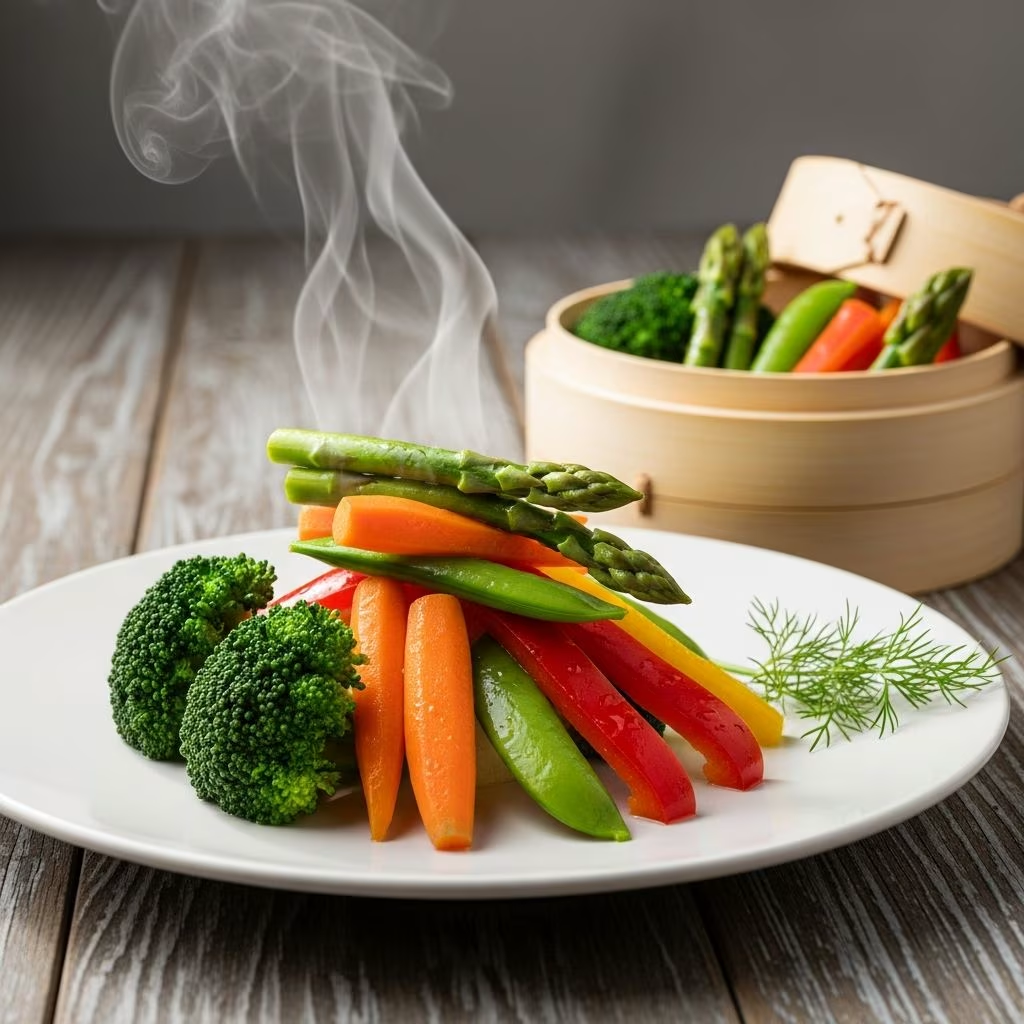
Steaming vegetables stands out as one of the healthiest cooking methods, preserving essential vitamins, minerals, and vibrant colors while enhancing natural sweetness and texture. Unlike boiling, which can leach nutrients into water, steaming uses gentle heat from rising vapor to cook produce evenly without sogginess. This approach minimizes nutrient loss—studies show up to 90% retention of water-soluble vitamins like C and B compared to other methods. Whether you’re aiming for quick weeknight sides or impressive dinner accompaniments, mastering steaming transforms humble veggies into stars of the plate.
Why Choose Steaming for Your Vegetables?
Steaming excels in health benefits and simplicity. It requires no added fats, making it ideal for low-calorie diets, and cooks vegetables in their own moisture, concentrating flavors. Fresh produce like broccoli, carrots, and zucchini emerge tender-crisp, with a satisfying bite that boiling often destroys. Environmentally, it’s efficient, using less water and energy. Regular consumption of steamed veggies supports digestion, immunity, and heart health due to high fiber and antioxidant content.
- Nutrient Preservation: Retains heat-sensitive compounds better than frying or roasting.
- Flavor Enhancement: Brings out inherent sugars in roots like sweet potatoes.
- Versatility: Pairs with proteins, grains, or stands alone as a light meal.
Essential Equipment for Perfect Steaming
You don’t need fancy gadgets—a basic setup suffices for home cooks. Start with a pot and steamer basket, or invest in a bamboo stacker for multi-level cooking. Electric steamers offer set-it-and-forget-it convenience, while microwave-safe bowls work for singles.
| Equipment Type | Pros | Cons | Best For |
|---|---|---|---|
| Metal Steamer Basket | Affordable, fits any pot | May tip if not wide-based | Beginners |
| Bamboo Steamer | Even steam distribution, aesthetic | Requires wok, needs drying | Asian-inspired dishes |
| Electric Steamer | Timer, multi-tier | Space-hungry, pricier | Batch cooking |
| Microwave Steamer | Ultra-fast, compact | Small capacity | Quick solo servings |
Always ensure water doesn’t touch the basket bottom—aim for 1-2 inches depth. Bring to a rolling boil before adding veggies to minimize cooking time.
Selecting and Preparing Vegetables for Steaming
Opt for seasonal, firm produce for peak flavor and nutrition. Cut into uniform sizes: 1/2-inch chunks for dense roots, florets for brassicas. Softer veggies like zucchini need smaller pieces to avoid mushiness. Rinse thoroughly but pat dry to prevent excess water droplets diluting steam.
- Roots: Carrots, sweet potatoes—slice thinly for even cooking.
- Cruciferous: Broccoli, cauliflower—break into bite-sized florets.
- Green Beans & Pods: Trim ends, halve if long.
- Delicate: Asparagus, cherry tomatoes—steam briefly to retain snap.
Pro tip: Arrange denser items first, adding quicker-cooking ones later to synchronize doneness.
Step-by-Step Steaming Techniques
Begin by boiling water in your chosen pot. Place prepped veggies in the basket without overcrowding—steam needs space to circulate. Cover tightly and set a timer based on type. Test doneness with a fork: tender but not soft.
- Fill pot with 1-2 inches water; boil over high heat.
- Add steamer insert with hardy veggies (e.g., carrots).
- Cover; reduce to medium-high. Steam 4-5 minutes.
- Layer softer ones (e.g., broccoli); continue 3-5 minutes.
- Check and serve immediately to halt cooking.
For multi-tier setups, place longest-cooking on bottom. Total time rarely exceeds 15 minutes for a full medley.
Timing Chart for Common Vegetables
| Vegetable | Cut Size | Steaming Time (minutes) |
|---|---|---|
| Carrots | 1/4-inch slices | 5-7 |
| Broccoli florets | 1-inch pieces | 3-5 |
| Cauliflower | Florets | 4-6 |
| Green beans | Whole or halved | 4-6 |
| Asparagus | Trimmed spears | 3-5 |
| Sweet potatoes | 1/4-inch slices | 5-7 |
| Zucchini | 1/2-inch chunks | 2-4 |
| Cherry tomatoes | Whole | 1-2 |
Adjust for altitude or freshness—fresher veggies cook faster. Over-steaming leads to dull colors and loss of crunch.
Elevating Flavor: Seasonings and Sauces
Steamed veggies shine plain with sea salt, but simple additions amplify taste. Drizzle olive oil post-steam for gloss and richness. Ghee or herb butter melts luxuriously over warm produce.
- Basic: Flaky salt + cracked pepper.
- Herbed: Butter with parsley, garlic, or white pepper.
- Asian Twist: Sesame oil, ponzu, or ginger-soy dip.
- Fresh: Lemon zest, chopped herbs like dill or chives.
For vegan options, tahini-lemon sauce or nutritional yeast adds umami without dairy.
Recipe: Vibrant Spring Vegetable Medley
Serves 4 | Prep: 10 min | Cook: 12 min
Ingredients
- 1 cup carrot slices
- 2 cups broccoli and cauliflower florets
- 1 cup asparagus, trimmed
- 1 cup green beans, halved
- 2 tbsp salted butter or ghee
- 1/4 tsp white pepper
- 1 tbsp fresh parsley, chopped
Instructions
- Boil 2 inches water in steamer pot.
- Steam carrots 5 minutes, add brassicas for 5 more.
- Top with asparagus and beans; steam 4 minutes.
- Mix butter and pepper; toss with hot veggies.
- Garnish with parsley. Serve warm.
Calories per serving: ~120 | A rainbow of nutrients in every bite.
Recipe: Quick Japanese-Style Sweet Steam
Inspired by donabe traditions, this highlights root sweetness. Serves 2 | Total time: 10 min.
Ingredients
- 1 sweet potato, 1/4-inch slices
- 1 cup cauliflower florets
- Handful broccolini, sliced
- 4 cherry tomatoes
- Sea salt + olive oil for dipping
Instructions
- Steam sweet potato 4-5 minutes.
- Add cauliflower and carrots 2-3 minutes.
- Finish with broccolini and tomatoes, 2 minutes.
- Dip in salt-olive oil mix.
Advanced Tips and Variations
Experiment with infusions: Add garlic or herbs to steaming water for subtle aroma. For meal prep, shock in ice water post-steam to stop cooking and store up to 4 days. Pair with proteins—salmon over broccoli or tofu with zucchini. In vegan herbed butter, blend olive oil, garlic, and thyme for a dairy-free drizzle.
Avoid common pitfalls: Don’t overfill baskets, and use high-quality, seasonal produce. The steaming water doubles as stock for soups, reducing waste.
Frequently Asked Questions (FAQs)
Can I steam vegetables in the microwave?
Yes—place in a microwave-safe dish with 2 tbsp water, cover, and cook 3-5 minutes on high. Stir halfway.
Is steaming healthier than roasting?
Steaming preserves more water-soluble nutrients; roasting adds flavor via oils but can reduce vitamin C.
How do I steam frozen vegetables?
No thawing needed—steam 1-2 minutes longer than fresh equivalents.
What’s the best way to season for kids?
Mild butter, cheese sprinkle, or fruit-infused dips encourage picky eaters.
Can steaming work for potatoes?
Absolutely—cut small, steam 10-15 minutes for fluffy results without boiling water.
References
- USDA Nutrient Retention Factors — United States Department of Agriculture. 2023-05-15. https://www.ars.usda.gov/northeast-area/beltsville-md-bhnrc/beltsville-human-nutrition-research-center/methods-and-application-of-food-composition-laboratory/mafcl-site-pages/cooking-retention/
- Harvard T.H. Chan School of Public Health: Cooking Methods and Nutrient Retention — Harvard University. 2024-02-10. https://www.hsph.harvard.edu/nutritionsource/food-features/vegetables-and-fruits/
- Steaming Vegetables — 101 Cookbooks. 2022-08-20. https://www.101cookbooks.com/steaming-vegetables/
- Steamed Vegetable Medley — Nicky’s Kitchen Sanctuary. 2023-11-12. https://www.kitchensanctuary.com/steamed-vegetable-medley/
- Simply Steamed Veggie Recipe — Svastha Ayurveda. 2024-01-05. https://svasthaayurveda.com/simply-steamed-veggie-recipe/