Starting a home garden brings fresh, nutritious produce right to your doorstep, cutting grocery costs and connecting you with nature. No matter your living situation—be it a spacious yard or a compact balcony—you can cultivate rewarding crops with basic knowledge and minimal investment.
Why Cultivate Your Own Harvest
Producing your own food offers multiple benefits beyond nutrition. It reduces reliance on store-bought items, often lower in quality due to travel time, and provides mental health boosts through outdoor activity. Studies from gardening advocates highlight how tending plants lowers stress and fosters a sense of accomplishment as you witness growth from seed to table. Environmentally, home growing minimizes packaging waste and carbon footprints from transportation. Financially, a small plot can yield hundreds in savings annually, especially with high-value items like herbs and greens.
Assessing Your Growing Space
Before planting, evaluate your available area. Ideal spots receive at least six hours of direct sunlight daily, particularly for fruiting plants like tomatoes. Test drainage by watering the ground; water should infiltrate within hours, not pool. Urban dwellers can utilize rooftops, patios, or windowsills effectively. Measure your zone’s sunlight patterns throughout the day to match with crop needs—leafy greens tolerate partial shade, while peppers demand full sun.
- Full sun areas (6+ hours): Tomatoes, peppers, cucumbers, beans.
- Partial shade (4-6 hours): Lettuce, spinach, kale, herbs.
- Indoor options: Herbs on south-facing windows with 8-10 hours light.
Selecting Beginner-Friendly Crops
Choose plants suited to novices for quick success and motivation. Focus on ‘unders and overs’—root crops like radishes and carrots that thrive underground, and above-ground varieties such as lettuce, spinach, and scallions. These mature fast, often in 30-60 days, forgiving minor errors. Herbs like parsley, oregano, and basil add flavor with low effort. In temperate climates, prioritize kale and peas, which resist common pests.
| Crop Type | Maturity Time | Space Needed | Yield Potential |
|---|---|---|---|
| Radishes | 25-30 days | Small | High |
| Lettuce | 45-60 days | Medium | Continuous |
| Tomatoes | 60-80 days | Large container | Abundant |
| Herbs (basil) | 30-45 days | Small pot | Ongoing |
Match selections to your diet preferences and local season. Check USDA hardiness zones via official extension services for timing—start tomatoes indoors 6-8 weeks pre-frost.
Choosing Your Garden Style
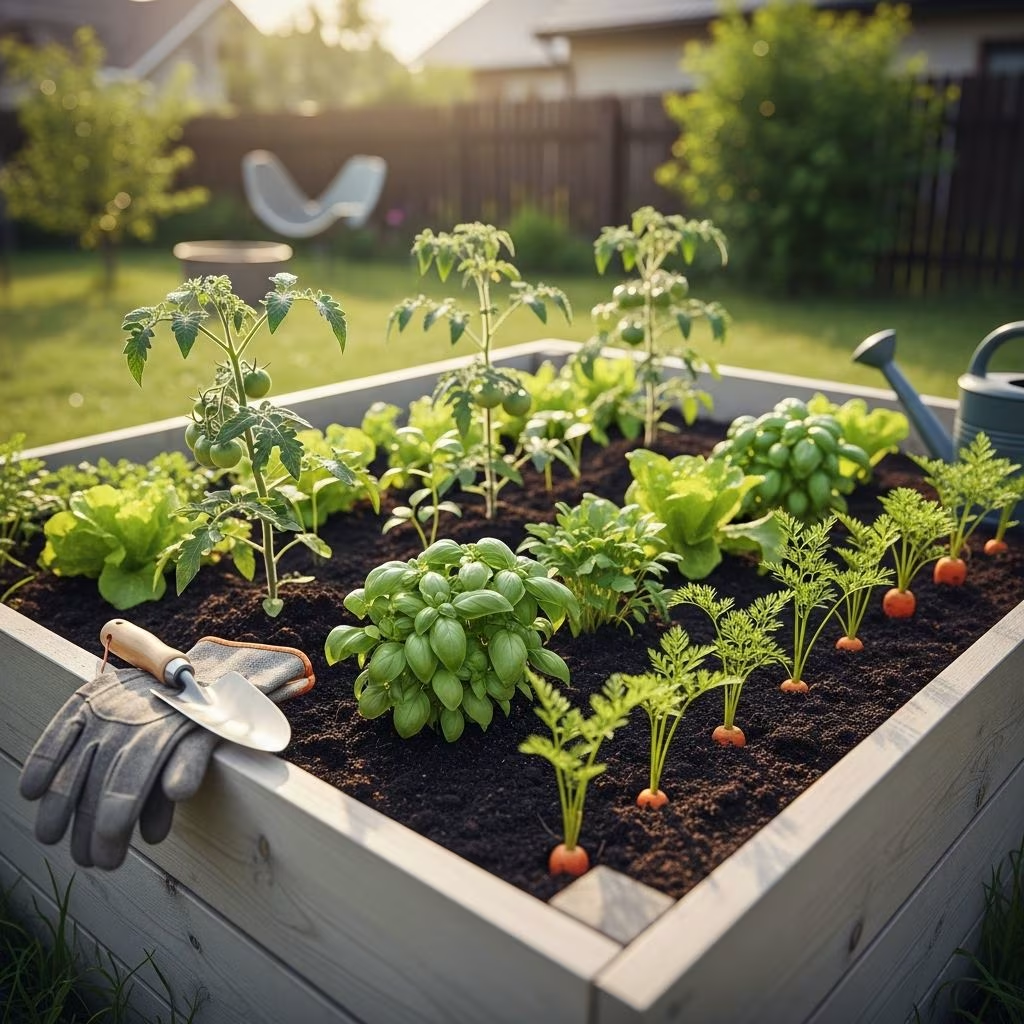
Gardens come in various forms to fit lifestyles. In-ground beds suit yards; aim for 4×4 feet initially to reach all areas without compacting soil. Containers offer flexibility for renters—select 5-gallon pots for greens, 20+ gallons for vining plants like squash. Raised beds, 6-12 inches high, improve drainage on poor soil. Vertical gardening maximizes balconies with trellises for beans or cucumbers. Reuse household items: grocery bags for potatoes (cut bottom for harvest) or buckets for herbs.
Preparing the Soil Foundation
Healthy soil is crucial for vigorous plants. For in-ground, remove sod with a shovel, then mound soil 6-12 inches high for better aeration. Amend with compost or bagged potting mix, avoiding peat for sustainability. Containers require potting soil blended 50/50 with garden dirt to retain moisture without compaction. Test pH ideally at 6.0-7.0 using affordable kits from extension offices; adjust with lime for acidity or sulfur for alkalinity.
Planting Your First Seeds and Starts
Begin with seeds for cost savings or seedlings for faster results. Dig holes per packet instructions—space seeds 2-4 inches apart, cover lightly, and firm soil. For transplants, bury stems deep for stability. Incorporate slow-release organic fertilizer at planting; these provide nitrogen, phosphorus, and potassium over months via microbial breakdown. Water gently post-planting to settle soil without washing seeds away.
Seasonal Planting Calendar
- Cool season (spring/fall): Peas, carrots, spinach—direct sow when soil hits 45°F.
- Warm season (summer): Tomatoes, beans—post-frost, soil 60°F+.
- Year-round (containers): Herbs, microgreens indoors.
Daily Care and Maintenance
Consistent watering—1 inch weekly, deeply at roots—prevents stress. Morning applications reduce evaporation and fungal risks. Mulch with straw or leaves to conserve moisture and suppress weeds. Fertilize midway with balanced organic options. Monitor for pests; hand-pick or use neem oil sprays. Thin seedlings to avoid crowding, promoting stronger growth.
Overcoming Common Hurdles
New gardeners face issues like wilting (underwatering) or yellow leaves (nutient lack). Bolting in heat affects greens—provide shade cloth. Pests like aphids yield to insecticidal soap. Poor yields often trace to insufficient sun; relocate pots if needed. Track progress in a journal for yearly improvements.
Harvesting and Enjoying Rewards
Pick at peak ripeness: snip lettuce outer leaves for ongoing yield, pull radishes when tops show. Regular harvesting encourages production. Preserve extras via freezing or drying herbs. Share surpluses to build community.
Expanding for Abundance
Once basics master, add perennials like asparagus or berries for long-term yields. Companion planting—marigolds deter nematodes—enhances health. Rotate crops yearly to prevent soil depletion. Aim for self-sufficiency by scaling calorie-dense crops like potatoes and beans.
Frequently Asked Questions
Can I garden without a yard?
Yes, containers and vertical systems thrive on balconies or indoors with grow lights.
What if my soil is poor?
Use raised beds or pots with fresh mix; build soil gradually with compost.
How much does it cost to start?
Under $50 for seeds, soil, and a few pots yields first season’s harvest.
What’s the easiest first crop?
Radishes or lettuce—quick, forgiving, and delicious.
When should I start seeds indoors?
6-8 weeks before last frost; consult local extension for dates.
References
- How to start growing your own food with a vegetable garden — Psyche. 2023. https://psyche.co/guides/how-to-start-growing-your-own-food-with-a-vegetable-garden
- Want to grow your own food? 9 tips to help you get started — TED Ideas. 2020. https://ideas.ted.com/want-to-grow-your-own-food-9-tips-to-help-you-get-started/
- Beginner’s guide to growing your own food — World Animal Protection. 2023. https://www.worldanimalprotection.ca/blogs/beginners-guide-to-growing-food/
- How to Grow Your Own Food and Start a Garden — Popular Mechanics. 2020. https://www.popularmechanics.com/home/lawn-garden/a32057105/how-to-grow-food/
- How to Grow Your Own Food — Food Empowerment Project. 2023. https://foodispower.org/how-to-grow-your-own-food/