Butter is a cornerstone ingredient in countless recipes, from fluffy cakes to tender pastries. Yet, achieving the ideal soft consistency can be a challenge when time is short. Traditional methods like leaving it on the counter for 30-60 minutes work well but often fall short during rushed prep sessions. This guide explores reliable, rapid approaches to soften butter evenly without risking meltdown, drawing from practical kitchen wisdom.
Why Butter Texture Matters in Baking
Softened butter, ideally at room temperature around 65-68°F, creams seamlessly with sugar, trapping air for light, airy baked goods. Too hard, and it lumps; too soft or melted, and the structure collapses, leading to dense or greasy results. Quick softening preserves these properties, ensuring professional outcomes at home.
Top Methods to Soften Butter in Under 15 Minutes
Here are the most effective techniques, prioritized by speed and ease. Each method avoids direct heat on the butter to prevent uneven melting.
1. Radiant Heat from Hot Water in the Microwave
This popular hack uses trapped steam for gentle warming. Fill a microwave-safe glass with 2 cups of water and heat on high for 2-3 minutes until steaming hot. Carefully remove the container, place your butter (in wrapper or sliced) inside the microwave, and close the door immediately. The residual heat softens 1-2 sticks in 8-12 minutes without touching the butter directly.
- Pros: Hands-off, softens multiple sticks evenly.
- Cons: Requires microwave access.
- Tip: Slice butter into pats for faster results; spread them out on a plate.
2. Inverted Warm Glass or Bowl Method
Heat a microwave-safe glass bowl or jar with 2 cups water for 3 minutes. Pour out the water (face away from steam), dry quickly, and invert over the butter stick on the counter. The trapped warmth softens it in 10 minutes. Stand the butter upright in a jar for efficiency.
- Best for: Single sticks; no microwave needed post-heating.
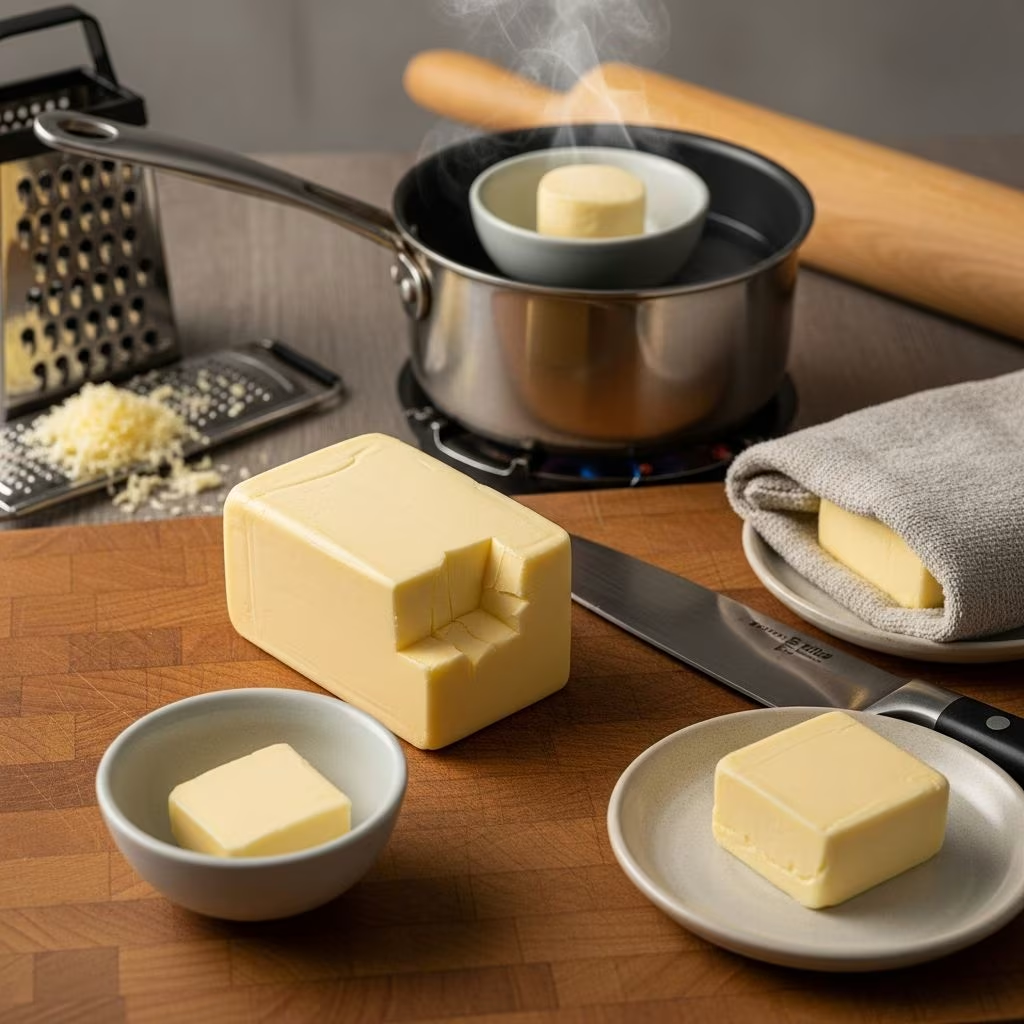
- Variation: Use a saucepan of boiling water to warm the bowl on the stove.
3. Grating Cold Butter for Instant Softness
Grate chilled or frozen butter using the large holes of a box grater directly into your mixing bowl. The thin shreds expose maximum surface area, softening in 2-5 minutes at room temp. Ideal for pie dough, biscuits, or scones where texture integrates well.
Pro Tip: Hold the wrapped end as a handle to keep hands clean.
4. Cubing and Spreading Technique
Dice butter into 1/2-inch cubes or smaller and arrange in a single layer on a plate. Increased surface area softens it in 10-15 minutes. Pound flats between parchment with a rolling pin for even quicker results (3-5 minutes).
5. Controlled Microwave Bursts
For dire emergencies, unwrap butter onto a plate and microwave at 20-30% power in 5-7 second bursts, rotating each time. Stop at soft-poke stage (20-30 seconds total). This risks melting, so vigilance is key.
Comparing Softening Methods
| Method | Time | Tools Needed | Risk of Melting | Best For |
|---|---|---|---|---|
| Microwave Radiant Heat | 8-12 min | Microwave, glass | Low | Multiple sticks |
| Inverted Bowl | 10 min | Microwave/stove, bowl | Low | Single stick |
| Grating | 2-5 min | Grater | None | Dough recipes |
| Cubing/Pounding | 5-15 min | Knife, plate | None | General use |
| Microwave Direct | 20-30 sec | Microwave | High | Absolute emergencies |
Advanced Tips for Perfect Results
- Room Temperature Baseline: Aim for 68°F kitchen; warmer speeds all methods.
- Quantity Scaling: For 4 sticks, use larger containers to cover fully without stacking.
- Frozen Butter: Grate first, then apply heat methods.
- Storage Hack: Keep butter in 8-oz portions for faster thawing.
- Avoid Common Pitfalls: Never use full microwave power or hot water baths directly on butter—they cause separation or melting.
Scientific Insight: How Heat Transfers in Butter Softening
Butter is an emulsion of fat, water, and milk solids. Softening relies on conduction (direct contact) or radiation (trapped air/steam). Methods like inverted bowls use convection from warm air, raising butter temp gradually without exceeding 75°F, preserving emulsion integrity. Direct microwaving agitates water molecules unevenly, risking phase separation.
Recipe Applications and Troubleshooting
Cakes/Cookies: Creaming needs uniform softness—use radiant heat.
Pastries: Grated works best for flaky layers.
Troubleshooting: If partially melted, chill 5 minutes and re-soften. Uneven? Cube next time.
Frequently Asked Questions (FAQs)
How long does butter take to soften naturally?
30-60 minutes at room temp, longer if cool.
Can I soften butter in warm water?
No—direct submersion melts it; use indirect methods only.
Is softened butter safe overnight on counter?
Yes, in moderate climates; discard if rancid smell develops.
What if my butter is unsalted vs. salted?
Methods apply equally; unsalted preferred for baking.
Does butter brand affect softening time?
European styles (higher fat) soften slower; cube them.
Conclusion: Elevate Your Baking Efficiency
Mastering these techniques eliminates wait times, transforming chaotic bakes into smooth processes. Experiment to find your favorite—consistency yields the best treats.
References
- Soften Butter Quickly with this Trick — Sally’s Baking Addiction. 2023-05-15. https://sallysbakingaddiction.com/soften-butter-quickly-trick/
- How to Soften Butter Quickly — Preppy Kitchen. 2024-02-10. https://preppykitchen.com/how-to-soften-butter/
- How to Soften Butter — Minerva Dairy. 2023-11-20. https://minervadairy.com/blog/how-to-soften-butter/
- How to Soften Butter Fast — Instructables. 2022-08-05. https://www.instructables.com/how-to-soften-butter-fast/