Ahi tuna represents one of the finest options for home cooks seeking to prepare elegant seafood dishes with minimal complexity. The beauty of this preparation lies in its simplicity—transforming premium tuna into an impressive main course requires only a hot pan, quality fish, and proper technique. Whether you’re planning an intimate dinner or impressing guests with your culinary skills, mastering the art of searing ahi tuna opens doors to sophisticated meals that feel restaurant-caliber yet achievable in your own kitchen.
Understanding Ahi Tuna and Its Characteristics
Ahi tuna, scientifically known as yellowfin tuna, belongs to the category of oily fish species prized for their culinary versatility and nutritional benefits. This particular variety contains substantial amounts of protein, omega-3 fatty acids, and vitamin B12, making it as nutritious as it is delicious. The meat itself features a silky, delicate texture that distinguishes it from many other fish varieties, with a surprisingly neutral flavor profile that doesn’t carry the overpowering “fishy” taste that deters some diners from seafood.
When selecting ahi tuna for searing, you’ll encounter it in various forms. Sushi-grade saku blocks represent the premium option, offering consistent thickness and quality assurance. Fresh ahi tuna steaks, typically weighing between six to eight ounces and measuring one to one-and-a-quarter inches thick, provide individual portions ideal for single servings or intimate dinners. The seafood section of most grocery stores stocks fresh ahi during peak seasons, though frozen options remain available year-round. Common tuna varieties suitable for this preparation include yellowfin, bigeye, bluefin, and bluefish, each offering slightly different flavor nuances while maintaining compatibility with searing techniques.
Essential Preparation Steps Before Cooking
Proper preparation distinguishes successful seared tuna from mediocre results. The initial step involves thawing your tuna if frozen, preferably overnight in the refrigerator or more quickly in a bowl of cold water with plastic covering. Patience during thawing preserves the fish’s cellular structure and maintains optimal texture.
Once thawed, the most critical preparation step involves thoroughly patting the tuna dry with paper towels on all surfaces. This seemingly minor detail profoundly impacts your final outcome. Surface moisture creates steam when the fish enters a hot pan, preventing the development of a proper crust and resulting in stewed rather than seared tuna. By removing excess moisture, you enable the Maillard reaction—the chemical process that creates those desirable browned, flavorful exteriors. Taking the extra minute to ensure complete dryness consistently produces superior results.
Marinade and Flavoring Strategies
While seared ahi can succeed without marinades, strategic flavor preparation elevates the dish considerably. The traditional approach incorporates a shoyu-based (soy sauce) marinade that infuses the fish with umami depth. A straightforward marinade combines soy sauce with minced ginger, minced garlic, sesame oil, and sliced green onion—ingredients that complement rather than overpower the delicate tuna.
The timing of marination warrants careful attention. Marinating for approximately ten minutes at room temperature allows flavor penetration while preventing the transformation into poke-style preparations. This brief window provides adequate time for seasoning without compromising the fish’s structural integrity or creating excessive salt penetration that could affect texture.
For those preferring marinade flexibility, a honey-sesame combination offers excellent results. Combining soy sauce with toasted sesame oil, honey, salt, and pepper creates a balanced marinade suitable for marinating periods ranging from ten minutes to overnight in the refrigerator. The advantage of this approach lies in its flexibility—marinating remains optional, allowing spontaneous preparation when time constraints exist.
Building Flavor Through Crust Application
The crust represents the textural and flavor highlight of seared ahi tuna. Sesame seeds form the foundation of most crust preparations, providing nutty undertones and pleasant crunch. Both white and black sesame varieties work effectively, with combinations offering visual interest and slightly different flavor profiles.
Expanding beyond plain sesame seeds creates more complex flavor dimensions. Complementary crust additions include:
- Granulated garlic or onion powder for savory depth
- Dried herbs such as thyme, oregano, or Italian seasoning blends
- Freshly cracked black pepper for subtle heat and complexity
- Dried ginger flakes or fresh grated ginger for warmth
- Chili flakes or cayenne pepper for those preferring spicy notes
- Lime zest for bright, citrusy undertones
- Light brown sugar for subtle sweetness that balances savory elements
- Onion flakes for additional aromatic quality
To apply the crust effectively, first coat the tuna with soy sauce on all sides—this adhesive layer ensures the dry ingredients bind properly to the fish. Place your mixed crust ingredients on a separate plate, then press the soy-coated tuna firmly into this mixture, rotating to ensure complete coverage on all surfaces. The gentle pressing technique embeds the crust into the fish’s flesh rather than creating a loose exterior that falls away during cooking.
Selecting and Preparing Your Cooking Surface
The pan choice significantly impacts searing success. High-heat cooking demands oil with an appropriately high smoke point to prevent breakdown and burnt flavors. Suitable options include peanut oil, avocado oil, and specialized wok oil. Avoid olive oil, which breaks down at the necessary cooking temperatures and imparts inappropriate flavors for this preparation.
Pre-heating the pan constitutes a non-negotiable step. The cooking surface must reach temperatures that create immediate, vigorous searing upon contact with the fish. Allow your chosen pan to heat over high heat for several minutes until it reaches near-smoking temperature. A helpful indicator involves adding a small drop of water to the pan—proper temperature causes immediate evaporation in an explosive burst of steam.
Add oil to your preheated pan immediately before introducing the tuna, as this prevents premature burning. The oil itself should shimmer and move fluidly across the pan surface when sufficiently hot. Some preparations infuse additional flavor by browning garlic slices in the oil before searing tuna, creating aromatic undertones. If pursuing this technique, carefully remove the browned garlic with a slotted spoon before introducing the fish to prevent burnt pieces from clinging to the exterior.
The Searing Process and Timing
The actual searing process moves remarkably quickly, requiring attention and readiness. Carefully place the prepared tuna steaks into the screaming hot pan using tongs or a spatula. Avoid moving the fish once it contacts the pan—let it undisturbed for the first fifteen to twenty seconds per side to develop a proper crust. The temptation to flip prematurely or manipulate the fish during cooking disrupts crust formation and should be resisted.
Cooking duration depends on your thickness and desired doneness. Standard recommendations suggest one to two minutes per side for medium-rare results in steaks of typical thickness. The total cooking duration, including brief marinating time, typically completes within six minutes from start to finish. This rapid timeline transforms ahi searing into a weeknight-friendly preparation that doesn’t demand extensive cooking time.
For those preferring rarer interiors characteristic of sashimi-style presentations, reduce cooking time to approximately fifteen to twenty seconds per side, producing a crust with an almost entirely raw center. Conversely, those uncomfortable with rare fish should extend cooking slightly, though extended heat risks overcooking this delicate protein. The challenge lies in achieving your preferred interior doneness while maintaining exterior crust development—practice refines this balance with repetition.
Flavor Pairing and Dressing Options
Dressing selections dramatically influence the final dining experience. An Asian-inspired approach combines soy sauce, ginger, fresh garlic slices, and lemon juice whisked into a cohesive dressing. This preparation complements the seared exterior while highlighting the tuna’s delicate interior. Drizzling this dressing over sliced tuna creates flavor integration that elevates every bite.
Alternative dressing approaches incorporate peanut butter-based sauces combining peanut butter, honey, soy sauce, rice vinegar, ginger, and sesame oil—creating rich, complex flavor profiles suited to those preferring more substantial accompaniments. Others prefer simpler approaches using reserved marinade as a finishing drizzle, intensifying the flavors already introduced to the fish.
Composition and Serving Suggestions
Seared ahi tuna pairs successfully with numerous accompaniments and side dishes. Traditional pairings include steamed jasmine rice and blanched green beans, creating balanced plates with complementary flavors and textures. Asian-inspired salad bases featuring mixed greens dressed with sesame-ginger vinaigrette provide lighter options emphasizing the fish’s delicate qualities.
For cucumber-forward preparations, thinly sliced English cucumbers, radishes, and snap peas create refreshing vegetable components. Seasoned rice vinegar, sugar, salt, toasted sesame oil, and scallions combine into quick pickled cucumber preparations that cleanse the palate between bites while adding brightness to the plate. These vegetable-centric sides balance the richness of seared tuna beautifully.
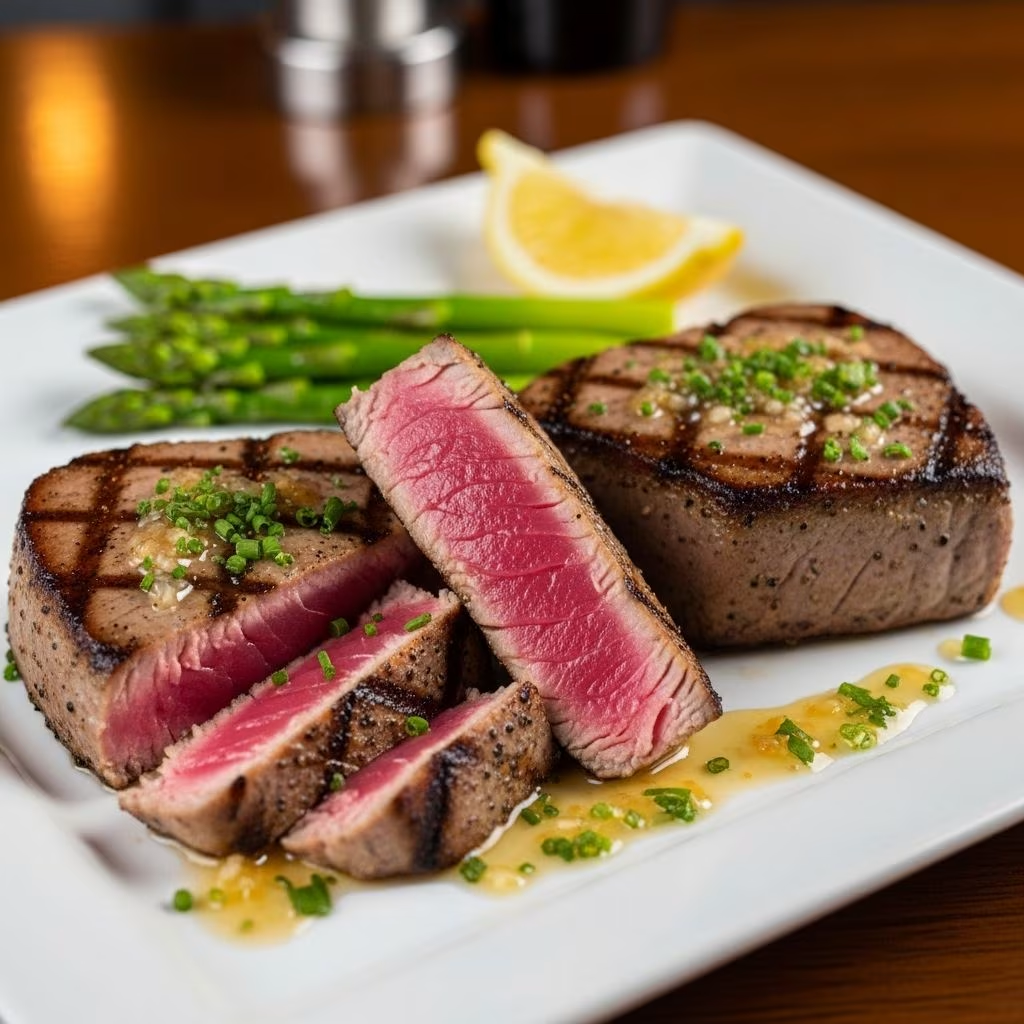
Presentation elevates the dining experience—slicing the tuna into quarter-inch pieces and fanning these across the plate showcases the beautiful crust-to-center contrast that characterizes properly executed searing. Garnishing with fresh cilantro, additional scallions, thinly sliced chili peppers, and a final olive oil drizzle completes the composition.
Frequently Asked Questions
What thickness should ahi tuna steaks be for optimal searing?
One to one-and-a-quarter inches represents the ideal thickness for standard searing techniques. This dimension allows adequate time for crust development while maintaining rare-to-medium-rare center temperatures. Thinner steaks cook entirely through before crusting develops, while thicker pieces struggle to cook through without overcooking exteriors.
Can I marinate ahi tuna overnight?
Yes, overnight marination remains optional but acceptable. Extended marination periods intensify flavor penetration without negatively impacting texture when refrigerated. However, brief ten-minute marinations at room temperature provide sufficient flavor enhancement for those preferring expedited preparation.
How do I know when seared tuna reaches my preferred doneness?
Visual inspection provides reliable guidance—examine the exterior for golden-brown crust development while observing the internal color by making a small cut. Rare centers appear deep red, medium-rare centers display lighter pink tones, and medium centers show predominantly tan coloring. Cooking time adjustments based on initial attempts refine your personal technique.
What oil works best for high-heat searing?
Peanut oil, avocado oil, and specialized wok oils withstand high temperatures without smoking or breaking down. These neutral-flavored options prevent flavor interference with the tuna’s delicate profile. Avoid olive oil, which breaks down at necessary cooking temperatures and imparts inappropriate flavors.
Can frozen tuna be seared immediately after purchase?
Proper thawing precedes optimal searing results. Frozen tuna should thaw overnight in the refrigerator or more quickly in cold water before cooking. Thawing preserves cellular structure and ensures even cooking throughout.
Nutritional Considerations and Health Benefits
Beyond culinary appeal, seared ahi tuna delivers substantial nutritional benefits. As an oily fish, tuna provides high-quality protein essential for muscle maintenance and repair. Omega-3 fatty acids—particularly EPA and DHA—support cardiovascular health and cognitive function. Additionally, tuna offers significant vitamin B12 content, crucial for neurological function and energy metabolism. The cooking method preserves these nutritional compounds better than extended cooking times, making searing an excellent preparation choice for health-conscious diners.
Troubleshooting Common Issues
Achieving consistent results requires understanding common mistakes. Insufficient pan temperature produces steamed rather than seared results—ensure your cooking surface reaches proper heat before introducing fish. Moving tuna excessively during cooking disrupts crust formation; resist the urge to manipulate the fish prematurely. Wet fish surfaces prevent proper browning; thorough patting with paper towels before searing addresses this issue. Overcooking stems from extended cooking times—remember that tuna continues cooking briefly after removal from heat due to residual thermal energy.
References
- A Perfectly Seared Ahi Tuna Recipe — Ono Hawaiian Recipes. 2024. https://onohawaiianrecipes.com/recipes/seared-ahi-tuna/
- Seared Ahi Tuna Tataki — Kitchen Confidante. 2024. https://kitchenconfidante.com/seared-ahi-tuna-tataki-recipe
- Fast & Easy Seared Tuna (Ahi or Yellowfin Tuna) — Feasting at Home. 2024. https://www.feastingathome.com/seared-tuna/
- 12 Easy Ahi Tuna Recipes For A No-Stress Dinner — Kaimana Jerky. 2024. https://kaimanajerky.com/blogs/recipes/12-easy-ahi-tuna-recipes-for-a-no-stress-dinner
- Seared Ahi Tuna: Essential Ahi Tuna Recipe — Two Purple Figs. 2024. https://www.twopurplefigs.com/seared-ahi-tuna/
- Six-Minute Seared Ahi Tuna Steaks — Bowl of Delicious. 2024. https://www.bowlofdelicious.com/six-minute-seared-ahi-tuna-steaks/
- Sesame Seared Ahi Tuna Steaks with Korean Dipping Sauce — The Subversive Table. 2024. https://thesubversivetable.com/sesame-seared-tuna-steaks-with-korean-dipping-sauce/
- Seared Ahi Tuna with Cucumber Salad — The Modern Proper. 2024. https://themodernproper.com/seared-ahi-tuna-with-cucumber-salad