When holiday preparations get underway, one of the first decisions homeowners face is how to thaw a frozen turkey. With limited time before guests arrive, understanding the safest and most efficient defrosting techniques becomes essential. The difference between a properly thawed bird and an improperly handled one extends beyond convenience—it directly impacts food safety and the quality of your final meal.
Understanding Why Proper Thawing Matters
A frozen turkey remains safe indefinitely while in its frozen state. However, the moment thawing begins, dormant bacteria that may have been present before freezing become active and begin multiplying rapidly. This bacterial growth poses a significant foodborne illness risk if the thawing process occurs at improper temperatures or takes too long. The USDA emphasizes that bacteria growth accelerates dramatically when poultry sits in the temperature danger zone between 40°F and 140°F. Recognizing this biological reality underscores why random or improvised thawing methods pose serious health risks to your family and guests.
The Gold Standard: Refrigerator Thawing
Refrigerator thawing stands as the USDA’s recommended approach for defrosting turkey because it maintains a consistently safe temperature throughout the entire process. When a turkey thaws in a refrigerator set at 41°F or below, bacteria growth remains minimal and controlled.
For this method, simply place your frozen turkey on a tray (to catch any dripping liquid) and position it on a lower shelf of your refrigerator, leaving it in its original wrapper. The timing requirement is straightforward: allow approximately one day of thawing for every 4 to 5 pounds of turkey weight. A typical 16-pound bird requires about four days to fully thaw using this approach.
One significant advantage of refrigerator thawing is the extended window for cooking flexibility. Once completely thawed, the turkey remains safe in the refrigerator for an additional two days. This timeline means you can begin thawing on the Friday before Thanksgiving and have until Sunday evening to roast your bird, providing substantial scheduling flexibility. For those who plan ahead, this method eliminates last-minute stress and accommodates busy holiday schedules.
The Rapid Alternative: Cold Water Submersion
When time constraints make refrigerator thawing impossible, the cold water method offers a faster alternative. This technique requires more active participation but produces results in a fraction of the time needed for refrigerator thawing.
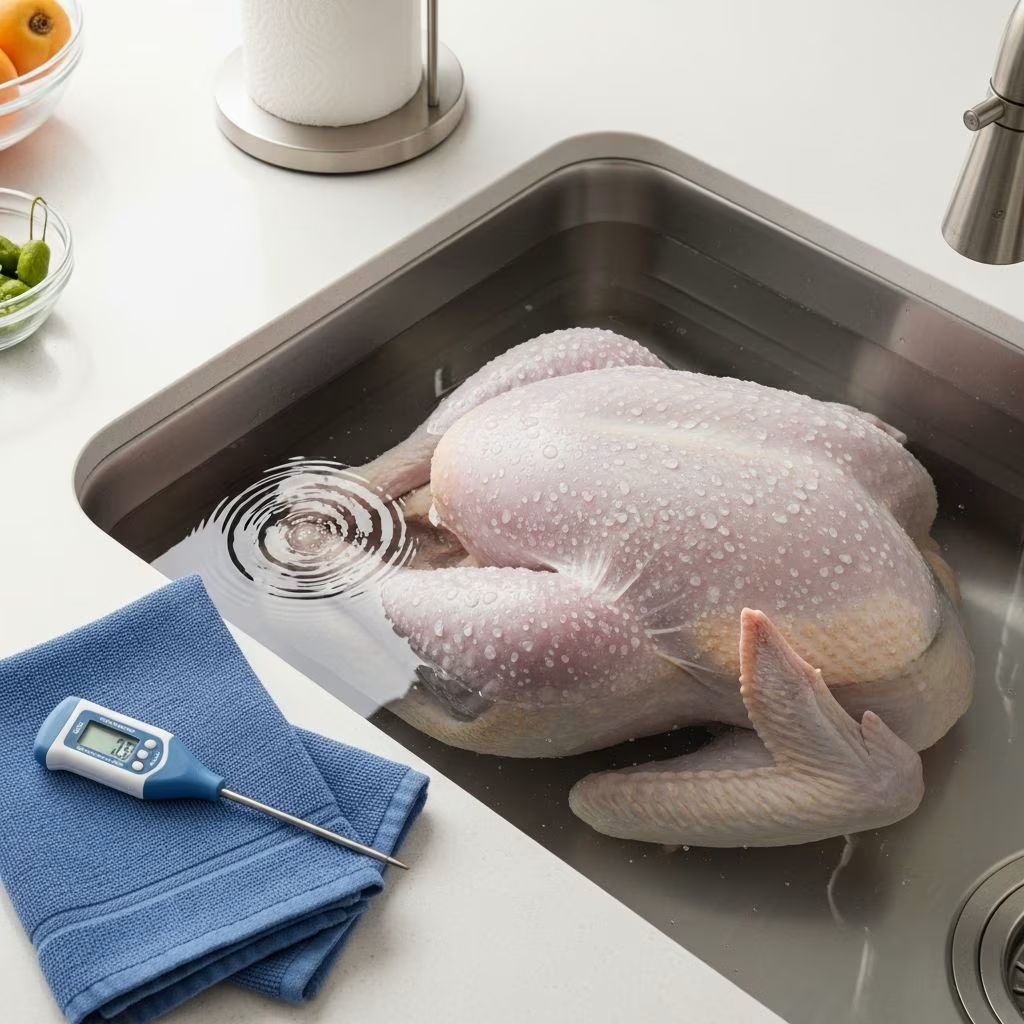
To execute cold water thawing correctly, keep the turkey in its original wrapping and submerge it completely in a sink or large container filled with cold tap water. The water temperature must remain cold—approximately 40°F or below—to prevent bacterial multiplication. This requirement necessitates changing the water every 30 minutes throughout the thawing process. While this sounds labor-intensive, the time investment remains relatively brief compared to the overall holiday preparation timeline.
The defrosting timeline for cold water thawing is 30 minutes per pound. A 16-pound turkey therefore requires approximately 8 hours of thawing time. This calculation means that a homeowner wanting an afternoon Thanksgiving dinner would need to begin thawing around 4 a.m. Immediately after the turkey thaws completely, cooking must begin—there is no storage window like refrigerator thawing provides. This method works best for those who have already decided on their cooking time and can dedicate their morning to the thawing process.
The Fastest Option: Microwave Defrosting
For true emergencies or last-minute holiday decisions, microwave thawing offers the quickest path to a thawed turkey. However, this method requires careful attention and comes with specific technical requirements.
Before attempting microwave thawing, consult your microwave’s owner’s manual to verify that your specific model can accommodate your turkey size and to identify the recommended power level and defrosting time per pound. Generally, microwave thawing requires approximately 6 minutes per pound, meaning a 16-pound turkey needs roughly 96 minutes or about 1 hour and 36 minutes.
Proper execution involves removing all external packaging and placing the turkey on a microwave-safe dish to collect leaking juices. Use your microwave’s defrost function based on the bird’s weight. Throughout the thawing process, rotate and flip the turkey multiple times to ensure even defrosting. If any portions begin cooking rather than merely thawing, pause the process and allow the turkey to rest for approximately 5 minutes before resuming. Some cooks shield wing tips and drumstick ends with small pieces of aluminum foil midway through thawing to prevent these protruding parts from cooking prematurely.
Like cold water thawing, microwave thawing requires immediate cooking once the turkey is completely thawed. This method’s primary drawback is its attention-intensive nature and the potential for uneven thawing if not monitored carefully.
Comparison Chart: Thawing Methods Side-by-Side
| Thawing Method | Time for 16 lb Turkey | Temperature Requirements | Active Monitoring Needed | Flexibility After Thawing |
|---|---|---|---|---|
| Refrigerator | 4 days | 41°F or below | Minimal | Safe for 2 additional days |
| Cold Water | 8 hours | 40°F or below (water change every 30 min) | High | Cook immediately |
| Microwave | 1.5-2 hours | Varies by model | Very High | Cook immediately |
Methods to Avoid at All Costs
Several common thawing approaches may seem convenient but pose serious food safety risks. Never thaw a turkey on the kitchen counter, garage floor, back porch, or any room-temperature environment. The exterior of the bird will warm into the bacterial danger zone long before the interior thaws, creating ideal conditions for pathogenic growth.
Similarly, avoid placing a frozen turkey in a brown paper grocery bag or plastic garbage bag, as these materials restrict air circulation and trap moisture, accelerating bacterial proliferation. Using a dishwasher to thaw turkey—whether with or without water—represents another unsafe shortcut. Any thawing method not explicitly approved by food safety authorities introduces unnecessary health risks to your household.
The Emergency Option: Cooking from Frozen
Despite best intentions, situations arise where a turkey remains partially or completely frozen on cooking day. Fortunately, this predicament does not require panic. The USDA confirms that cooking a turkey from its frozen state is perfectly safe, though it requires extended cooking time.
A completely frozen turkey requires at least 50 percent longer cooking time than a fully thawed bird. A partially frozen turkey falls somewhere between these two timeframes. The essential safeguard involves using a food thermometer to verify that the innermost thigh, innermost wing, and thickest breast section all reach 165°F—the temperature at which harmful bacteria are eliminated. As long as these temperature benchmarks are met, the turkey is safe to consume regardless of its initial frozen state.
Safety Considerations for Different Cooking Methods
While oven roasting accommodates either frozen or thawed turkey (with appropriate time adjustments), deep frying presents a critical exception. If you plan to deep fry your turkey, it must be completely thawed beforehand. Never submerge a frozen or partially frozen turkey in hot oil, as the rapid expansion of interior ice and moisture can cause dangerous splattering or even explosions that pose serious burn risks.
Post-Thawing Food Safety Practices
Once your turkey is thawed and cooking is complete, proper food safety continues. Leftover turkey should be refrigerated within two hours of cooking and consumed within three to four days. When reheating leftovers, warm them to 165°F to eliminate any bacteria that may have developed during storage.
Additionally, thoroughly clean and sanitize any surfaces, utensils, or containers that contacted raw turkey or its drippings to prevent cross-contamination with other foods. This simple precaution prevents foodborne pathogens from spreading to vegetables, ready-to-eat foods, or other ingredients.
Planning Your Thawing Timeline
Strategic planning transforms thawing from a source of holiday stress into a manageable task. For refrigerator thawing—the safest option—work backward from your intended cooking time. A 20-pound turkey requires five days of thawing, so purchasing your bird the previous Sunday ensures it’s ready for Thursday cooking. This advance planning eliminates morning-of scrambling and accommodates busy holiday schedules.
For those using cold water thawing, identify your target dinner time and count back the required hours. If you want a 4 p.m. dinner with a 16-pound turkey, set your alarm for early morning to begin the 8-hour thawing process.
Microwave thawing works best for those who haven’t pre-planned or are working with smaller turkey portions. While it’s the fastest method, its intensive monitoring requirements make it less ideal for cooks juggling multiple holiday tasks.
Frequently Asked Questions
Can I thaw my turkey partially in the refrigerator and then finish with cold water? Yes, you can combine methods. For example, thaw for two days in the refrigerator, then finish with cold water for 4 hours. This hybrid approach accelerates the process while maintaining safety.
What if my refrigerator doesn’t have space for a large turkey? A cooler filled with ice can serve as a makeshift refrigerator-temperature environment for thawing, as long as you maintain the 40°F temperature threshold.
How do I know if my turkey is fully thawed? The bird is fully thawed when the innermost thigh reaches 40°F and no ice crystals remain in the body cavity.
Is it safe to thaw turkey outdoors in winter? This is risky because outdoor temperatures fluctuate unpredictably. Stick to controlled environments like refrigerators.
Conclusion: Making the Right Choice for Your Kitchen
Successful turkey preparation begins with the thawing process. By understanding the three USDA-approved methods and their respective timelines, you can select an approach matching your schedule and circumstances. Refrigerator thawing offers maximum safety and flexibility for organized planners. Cold water submersion provides a middle ground for those with moderate time constraints. Microwave thawing serves as the last resort for true emergencies.
Regardless of which method you choose, remember that proper thawing protects your family’s health while ensuring your turkey cooks evenly and delivers optimal flavor and texture. By respecting these food safety principles, you transform holiday cooking from a potential health hazard into a controlled, enjoyable process.
References
- How to Safely Thaw a Turkey — U.S. Department of Agriculture (USDA). https://www.usda.gov/about-usda/news/blog/how-safely-thaw-turkey
- 3 Safe Ways to Thaw a Frozen Turkey — McLean County Health Department, Illinois. https://health.mcleancountyil.gov/CivicAlerts.asp?AID=445