Roasting vegetables in the oven transforms simple produce into a delicious, caramelized side dish that complements virtually any main course. Whether you’re preparing a weeknight dinner or hosting a holiday gathering, roasted vegetables offer an easy yet impressive way to incorporate more produce into your meals. This comprehensive guide will walk you through everything you need to know to achieve perfectly roasted vegetables with crispy edges and tender interiors every single time.
Understanding the Fundamentals of Vegetable Roasting
Roasting is a dry-heat cooking method that uses high oven temperatures to bring out the natural sugars in vegetables while creating a caramelized exterior. This process develops complex flavors and creates textural contrast that makes roasted vegetables far more appealing than their steamed or boiled counterparts. The key to successful roasting lies in understanding how heat affects different vegetables and adjusting your approach accordingly.
The roasting process works through a chemical reaction called the Maillard reaction, which occurs when vegetables are exposed to temperatures above 300°F. This reaction creates hundreds of new flavor compounds and gives roasted vegetables their distinctive savory depth and golden-brown color. The combination of high heat, proper spacing, and occasional stirring ensures that your vegetables develop this desirable browning while remaining tender inside.
Selecting and Preparing Your Vegetables
The foundation of excellent roasted vegetables begins with quality produce and thoughtful preparation. Choose vegetables that are firm and unblemished, as these will roast more evenly and develop better texture. A successful medley combines vegetables with varying densities and cooking times, which requires strategic cutting and arrangement.
The Art of Uniform Cutting
One of the most critical aspects of roasting is cutting your vegetables into appropriately sized pieces. Root vegetables like carrots, beets, and potatoes should be cut smaller than softer vegetables like zucchini, summer squash, and peppers. This size differential accounts for their different cooking rates, allowing all vegetables in your medley to reach the ideal tender-crisp texture simultaneously.
For dense root vegetables, aim for pieces approximately ¼ to ½ inch thick when sliced, or cut them into small chunks about ½ inch across. Softer vegetables can be cut into slightly larger pieces, ranging from ¾ inch to 1 inch. Garlic cloves can be left whole or sliced thinly depending on your preference—whole cloves become mild and sweet when roasted, while thin slices create a more pungent flavor.
Managing Moisture-Rich Vegetables
Vegetables with high water content, such as mushrooms and tomatoes, require special handling. When including these ingredients in your roasted medley, keep their total proportion to under 20% of your total vegetables to prevent excess moisture from interfering with the crisping process. If using mushrooms, quarter them or slice them to approximately ½ inch thickness. Cherry tomatoes should be halved, as whole ones release too much liquid during roasting.
Temperature and Timing Essentials
Success in vegetable roasting depends significantly on oven temperature and cooking duration. Most roasted vegetable preparations work best at temperatures between 375°F and 425°F, with 400°F being the optimal middle ground for most medleys.
| Oven Temperature | Best For | Cooking Time | Notes |
|---|---|---|---|
| 375°F (190°C) | Delicate vegetables, mixed medleys | 40-45 minutes | More forgiving; prevents over-browning |
| 400°F (204°C) | Standard roasting | 25-35 minutes | Ideal for most vegetable combinations |
| 425°F (218°C) | Quick roasting, dense vegetables | 20-30 minutes | Creates darker caramelization quickly |
If your oven has a convection setting, activate it for faster and more even cooking. Convection ovens circulate hot air around food, reducing cooking time by approximately 10-15 minutes compared to standard ovens. Monitor your vegetables closely when using convection heat, as they may brown faster than expected.
Preparation and Assembly Techniques
Creating the Perfect Vegetable Coating
Before placing vegetables on your baking sheet, they must be evenly coated with oil and seasoning. Use a large mixing bowl to combine your prepped vegetables with oil—approximately 2 to 3 tablespoons per 5 cups of vegetables typically provides adequate coverage. Extra-virgin olive oil and avocado oil both work well, offering distinct flavor profiles. Avocado oil has a higher smoke point, making it slightly more suitable for high-heat roasting.
Add your seasonings to the bowl as well. Essential seasonings include salt and freshly ground black pepper. From there, you can incorporate dried herbs like rosemary, thyme, oregano, or Italian seasoning. Crushed red pepper flakes add gentle heat, while garlic powder and onion powder contribute savory depth. Fresh herbs like thyme can also be added before roasting, scattering whole sprigs or leaves across the baking sheet.
Arranging for Optimal Results
Arrange your prepared vegetables in a single layer on a rimmed baking sheet lined with parchment paper or a silicone mat. This arrangement is crucial—vegetables must have space between them to allow hot air to circulate properly. Crowded vegetables steam rather than roast, resulting in soft, pale vegetables instead of caramelized, golden ones. Leave at least a small gap between each piece for air circulation.
The Roasting Process and Monitoring
Once your vegetables are arranged on the sheet, place the baking sheet on the center oven rack. This position ensures relatively even heat distribution from above and below. Halfway through the cooking time, stir the vegetables or use a spatula to turn them. This rotation promotes even browning and prevents any vegetables from sticking to the sheet.
Cooking time varies depending on vegetable type, size, and your specific oven, but generally expect 25 to 60 minutes. Dense vegetables like carrots and beets need the full cooking time, while delicate vegetables may be done sooner. Begin checking vegetables around the 20-minute mark, looking for tender interiors and golden-brown edges. The vegetables are done when they’re tender when pierced with a fork and show light browning on their edges and flat surfaces.
If you notice that some vegetables are browning too quickly while others remain firm, you can remove the faster-cooking items temporarily and return them to the sheet for the final few minutes of cooking. This technique is particularly useful with broccoli and cauliflower, which can brown excessively if roasted for the full duration.
Flavor Development and Seasoning Strategies
Beyond basic salt and pepper, numerous seasoning approaches elevate your roasted vegetable medley. Mediterranean-inspired preparations benefit from rosemary, thyme, oregano, and a splash of lemon juice added after roasting. For an Asian-influenced profile, incorporate sesame oil, ginger, garlic, and a drizzle of soy sauce. Smoky paprika brings depth and warmth, while balsamic vinegar adds richness and complexity when drizzled over finished vegetables.
Consider creating seasoning blends tailored to your meal’s main course. Prepare seafood? Combine dried dill, lemon zest, and white pepper. Serving with poultry? Mix sage, thyme, and a hint of nutmeg. For beef, incorporate bold flavors like smoked paprika, garlic, and black pepper. Experimenting with different herb and spice combinations prevents your roasted vegetable routine from becoming monotonous.
Vegetable Selection and Pairing Ideas
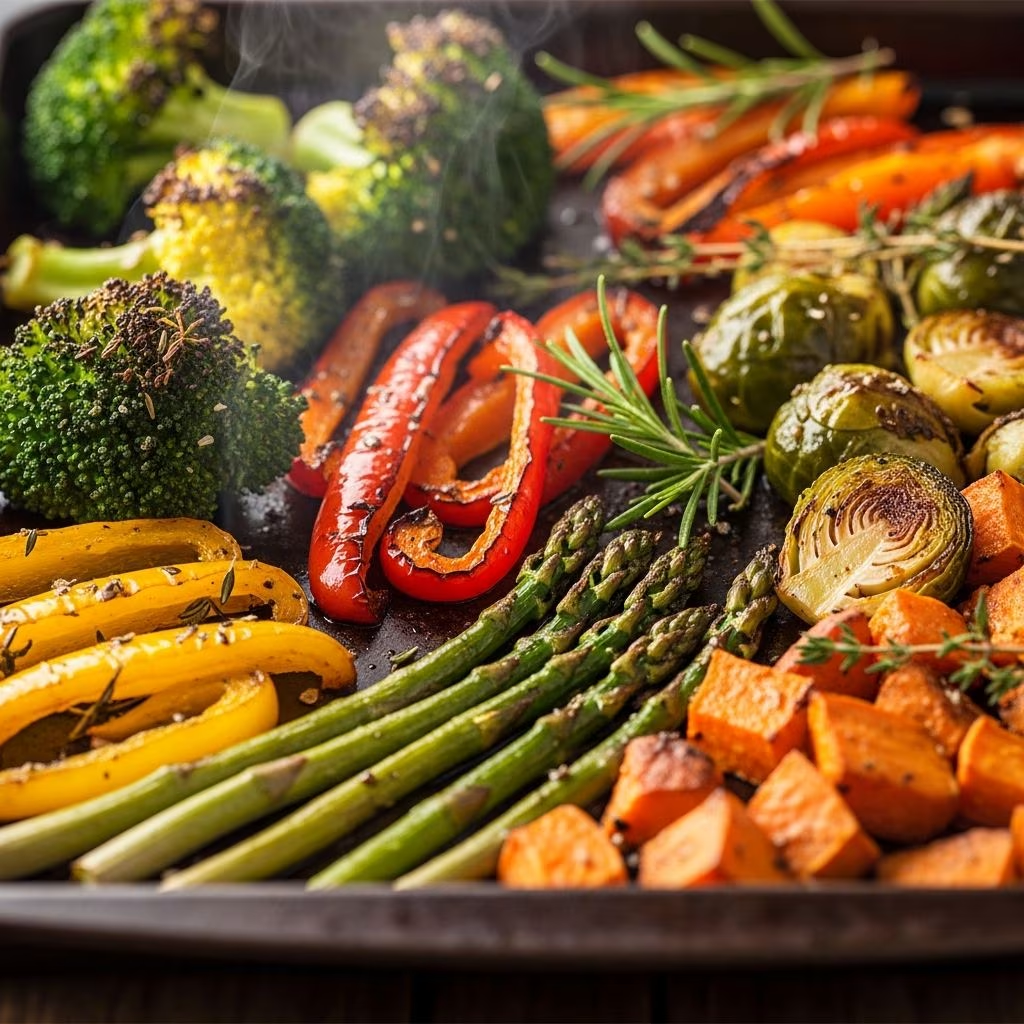
The beauty of roasted vegetable medleys lies in their versatility. Common choices include broccoli, cauliflower, carrots, zucchini, summer squash, bell peppers, onions, Brussels sprouts, and radishes. More adventurous options include butternut squash, beets, and purple cauliflower.
Seasonal Combinations
- Spring medley: Asparagus, baby carrots, green beans, and red onion
- Summer medley: Zucchini, yellow squash, bell peppers, and red onion
- Fall medley: Butternut squash, Brussels sprouts, carrots, and garlic
- Winter medley: Root vegetables including beets, parsnips, carrots, and onion
Serving and Storage Considerations
Roasted vegetables are best served immediately after cooking, while they’re still warm and the exteriors retain their crispness. Transfer them to a serving bowl or platter and consider garnishing with fresh herbs, a squeeze of citrus juice, or a sprinkle of finishing salt. They pair beautifully with grilled proteins, can be incorporated into grain bowls, or serve as a standalone vegetarian main course when combined with a protein source like legumes or nuts.
Leftovers can be refrigerated in an airtight container for up to four days. Reheat in a 350°F oven for 10-15 minutes to restore some of the original texture, though they’ll be slightly softer than freshly roasted. Cold roasted vegetables also work wonderfully in salads or as additions to grain bowls and wraps.
Frequently Asked Questions
Why aren’t my vegetables getting crispy?
Ensure your vegetables aren’t crowded on the baking sheet, allowing adequate air circulation. Verify your oven temperature with a separate thermometer, as oven inaccuracies are common. Also confirm that you’re not adding too much oil or moisture-heavy vegetables that inhibit browning.
Can I prep vegetables in advance?
You can cut vegetables several hours ahead, though storing them in the refrigerator may cause moisture to accumulate. Toss them with oil and seasonings just before roasting for best results. Avoid prepping more than 4-6 hours in advance, as cut vegetables begin deteriorating in quality.
What’s the best sheet pan to use?
Use rimmed baking sheets (also called sheet pans) that allow heat to circulate underneath the vegetables. Avoid insulated baking sheets, which can cause vegetables to brown unevenly. Line your pan with parchment paper or silicone mats for easy cleanup and to prevent sticking.
Should I use fresh or dried herbs?
Both work well, though they require different amounts. Use one-third the quantity of dried herbs compared to fresh, since drying concentrates flavors. Dried herbs can be added before roasting, while delicate fresh herbs like basil are better added after cooking to preserve their flavor.
Expert Tips for Restaurant-Quality Results
Invest in a reliable oven thermometer to verify your oven’s actual temperature, as many home ovens run hotter or cooler than their settings indicate. Pat vegetables dry before tossing with oil—excess surface moisture inhibits browning. Don’t stir vegetables too frequently; allow them to sit undisturbed for at least 15 minutes before the first stir to encourage caramelization. Consider roasting vegetables at slightly higher temperatures (425°F) for shorter durations to maximize browning while maintaining tenderness inside.
References
- The Maillard Reaction in Food Chemistry — Journal of Agricultural and Food Chemistry, American Chemical Society. 2023. https://pubs.acs.org/journal/jafcau
- Food Safety Guidelines for Produce Preparation — U.S. Food and Drug Administration. 2025. https://www.fda.gov/food/produce-safety
- Cooking Methods and Nutrient Retention in Vegetables — Journal of the Science of Food and Agriculture, Wiley. 2024. https://onlinelibrary.wiley.com/journal/10974503
- Smoke Points and Cooking Properties of Common Oils — International Journal of Nutrition, Health & Food Sciences. 2024. https://www.ijfs.org