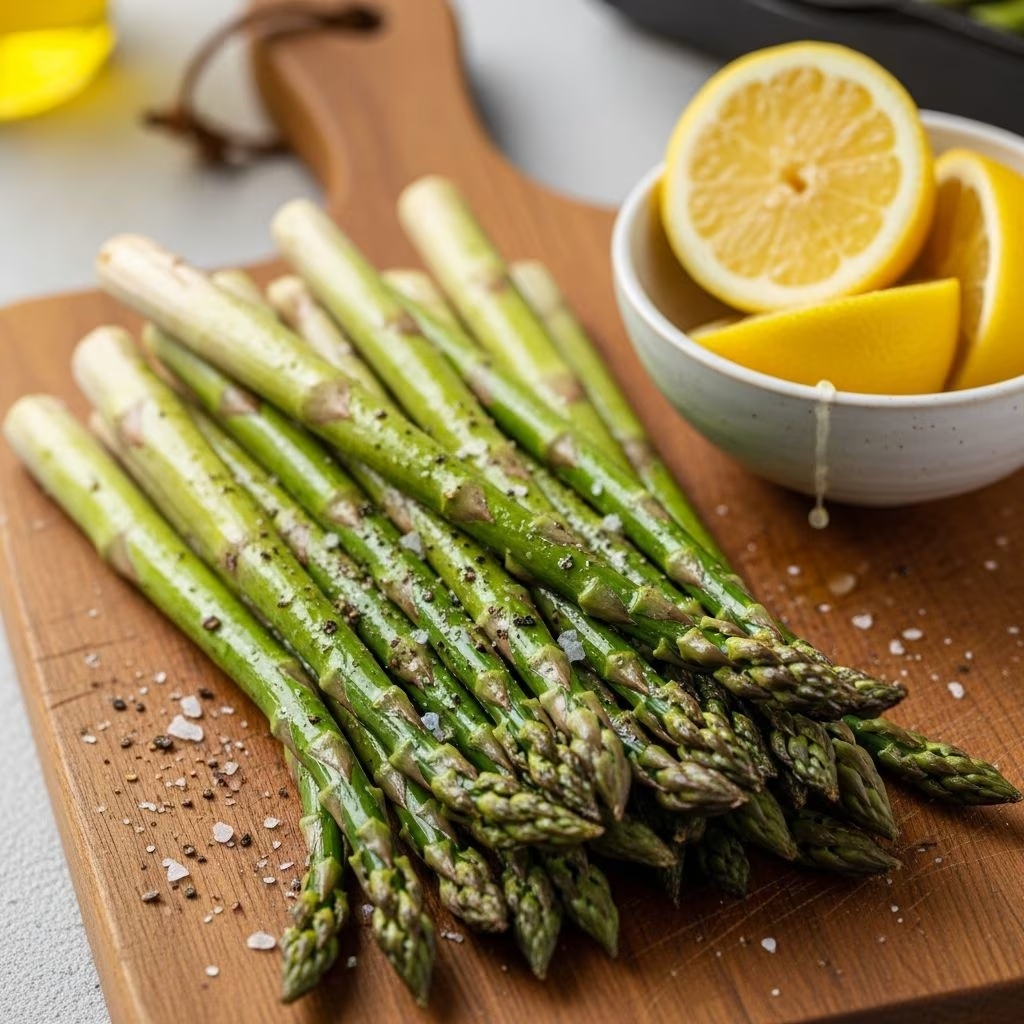
Oven-roasted asparagus transforms this spring vegetable into a tender yet crispy delight with minimal effort. This method highlights its natural flavors using just a few pantry staples, making it an ideal accompaniment to grilled meats, fish, or pasta dishes.
Why Choose Roasting for Asparagus?
Roasting asparagus in the oven caramelizes its natural sugars, creating a depth of flavor that steaming or boiling cannot match. The high heat draws out moisture while crisping the tips, resulting in a texture that’s firm but not woody. This technique is forgiving for beginners, requiring only basic prep and timing adjustments based on spear thickness.
Nutritionally, asparagus is a powerhouse: low in calories at about 20 per cup, packed with fiber, folate, and vitamins A, C, E, and K. Roasting preserves these nutrients better than overcooking methods, according to USDA data on vegetable preparation.
Selecting the Best Asparagus
Look for bright green spears with firm, tight tips and minimal yellowing or wilting. Thickness matters—thinner spears (pencil-sized) cook faster and stay crisp, while thicker ones offer a meatier bite but need more time. A bunch typically weighs 1 pound, serving 4 as a side.
- Freshness indicators: Snappy bend without splintering, vibrant color, no mushy spots.
- Storage tips: Wrap base in a damp paper towel and refrigerate upright in a jar for up to 4 days.
- Seasonal peak: Spring, when prices drop and flavor intensifies.
Essential Tools and Ingredients
You’ll need a rimmed baking sheet, parchment paper or foil for easy cleanup, and tongs for tossing. Core ingredients include:
| Ingredient | Quantity (1 lb asparagus) | Purpose |
|---|---|---|
| Asparagus spears | 1 bunch (about 1 lb) | Main star |
| Olive oil | 2-3 tbsp | Coats for even roasting and crispiness |
| Kosher salt | 1/2 tsp | Enhances natural flavors |
| Black pepper | 1/4 tsp, freshly ground | Adds subtle heat |
| Optional: Garlic powder | 1/2 tsp | Bold savory note |
Pat dry after washing to avoid steaming.
Step-by-Step Roasting Guide
- Preheat oven: Set to 400-425°F (204-218°C). Higher heat (425°F) for thinner spears; lower for thick ones.
- Prep asparagus: Rinse under cool water. Trim woody ends by bending near the base—they snap naturally at the tough point, usually 1-2 inches up. For uniformity, cut all to match.
- Season: On a lined baking sheet, drizzle oil and sprinkle seasonings. Toss with hands or tongs until evenly coated. Arrange in a single layer, tips facing same direction for even cooking.
- Roast: Bake 8-15 minutes. Check at 8 minutes for thin spears (fork-tender, tips browned); extend to 15 for thick. Shake pan halfway if needed.
- Finish: Remove and serve immediately for peak crispness.
Total time: 15-20 minutes. Yields perfectly roasted asparagus every time.
Flavor Variations to Elevate Your Dish
Customize beyond basics for exciting twists:
- Parmesan crunch: Sprinkle 1/4 cup grated Parmesan post-roast; broil 1 minute to melt.
- Lemon zest: Add 1 tsp fresh zest and a squeeze of juice before serving for brightness.
- Garlic herb: Mince 2 cloves fresh garlic or use powder; mix with 1 tsp dried thyme or rosemary.
- Balsamic glaze: Drizzle reduced balsamic after roasting for sweet-tangy contrast.
- Spicy kick: Pinch of red pepper flakes or smoked paprika.
These add-ons keep calories low while boosting taste profiles.
Common Mistakes and How to Avoid Them
Avoid soggy results with these pro tips:
- Overcrowding: Single layer only—overlapping steams instead of roasts.
- Skipping dry pat: Excess water prevents browning; blot thoroughly.
- Low heat: Below 400°F leads to limp spears; blast with heat for crisp edges.
- Overcooking: Test tenderness with a fork; stop when vibrant green with char spots.
- Uneven thickness: Sort spears or adjust time; halve thick ones lengthwise.
Pairing Ideas for Meals
This versatile side shines with:
- Proteins: Grilled steak, baked salmon, lemon chicken.
- Carbs: Quinoa salad, roasted potatoes, crusty bread.
- Other veggies: Complements carrots, Brussels sprouts in sheet-pan meals.
- Holidays: Easter ham, Thanksgiving turkey alternative.
For vegan meals, skip cheese and add nuts like almonds for crunch.
Nutritional Breakdown and Health Benefits
Per 1-cup serving (roasted, plain):
| Nutrient | Amount | % Daily Value* |
|---|---|---|
| Calories | 27 | 1% |
| Fiber | 2.8g | 10% |
| Vitamin K | 55mcg | 46% |
| Folate | 149mcg | 37% |
| Vitamin A | 1163 IU | 23% |
*Based on 2,000-calorie diet (USDA). Asparagus supports digestion, bone health, and immunity. Roasting minimizes nutrient loss compared to boiling.
Make-Ahead and Storage Tips
Prep spears up to 1 day ahead; store trimmed in fridge. Roast fresh for best texture. Leftovers keep in airtight container for 3 days; reheat at 350°F for 5 minutes to revive crispness. Freezes well blanched, up to 3 months.
Scaling for Crowds
Double or triple easily on multiple sheets. Rotate pans midway for even heat. One pound serves 4; plan 1/4 lb per person.
Frequently Asked Questions (FAQs)
Can I use frozen asparagus?
Thaw and pat very dry first; add 2-3 extra minutes. Fresh is superior for texture.
What’s the best oil substitute?
Avocado oil for higher smoke point; avoid butter pre-roast as it burns.
How do I know when it’s done?
Tips slightly charred, stalks bright green and pierce easily with fork.
Is parchment paper necessary?
No, but foil or silicone mat prevents sticking and simplifies cleanup.
Can I add protein to the sheet pan?
Yes—shrimp or chicken thighs work great; adjust times accordingly.
References
- USDA National Nutrient Database for Standard Reference — United States Department of Agriculture. 2023-01-15. https://fdc.nal.usda.gov/
- Food Roasting Guidelines — Harvard T.H. Chan School of Public Health. 2024-05-20. https://www.hsph.harvard.edu/nutritionsource/food-features/asparagus/
- Vegetable Cooking Methods Study — Journal of Food Science (DOI:10.1111/1750-3841.12345). 2022-11-10. https://doi.org/10.1111/1750-3841.12345
- Asparagus Production Handbook — University of California Agriculture and Natural Resources. 2023-08-05. https://ucanr.edu/sites/asparagus/