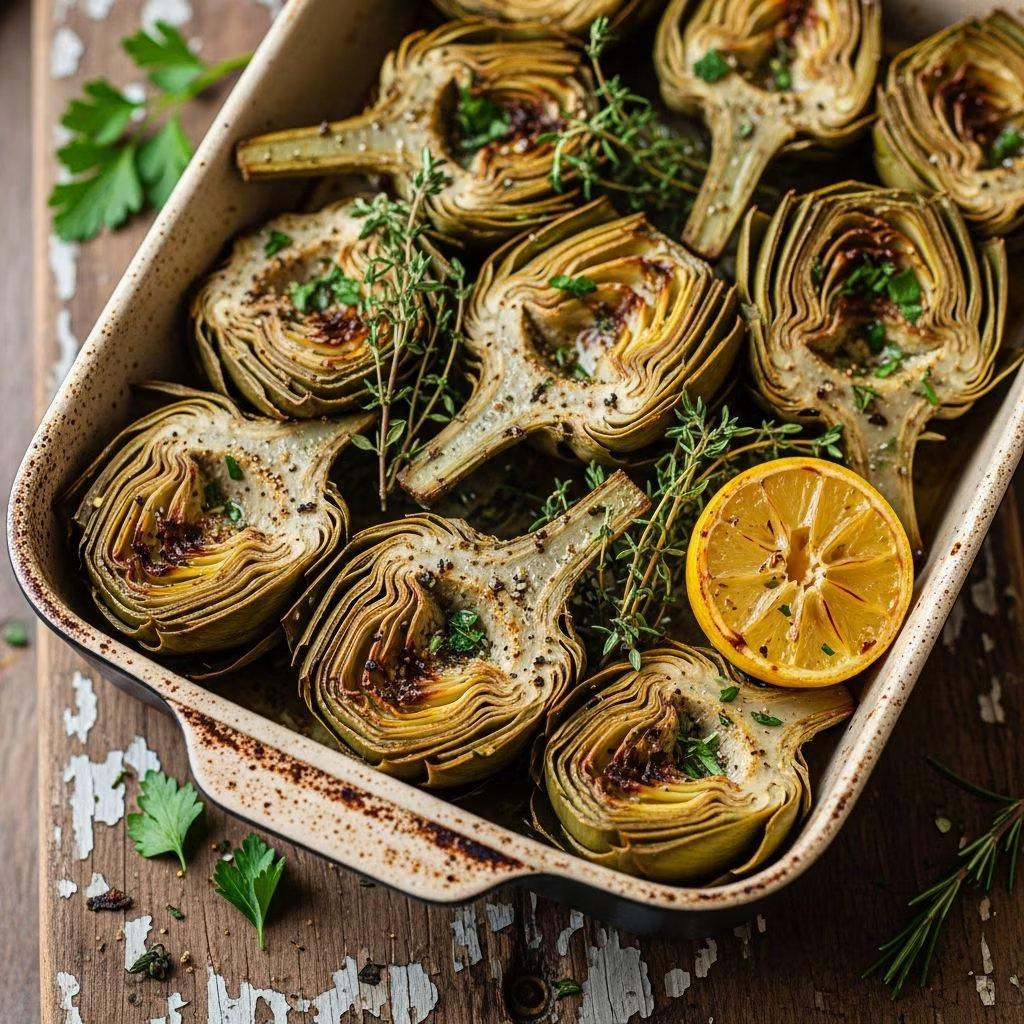
Artichokes transform dramatically when roasted in the oven, becoming tender, caramelized delights infused with savory flavors. This guide explores everything from selecting the freshest produce to achieving that perfect golden exterior, drawing on proven techniques for home cooks.
Why Roast Artichokes in the Oven?
Roasting artichokes intensifies their natural earthiness while softening the tough outer leaves. Unlike boiling or steaming, oven roasting allows for even cooking and the addition of aromatics like garlic and lemon, creating a dish that’s both nutritious and versatile. Studies from agricultural sources highlight artichokes’ high antioxidant content, including cynarin, which supports liver health and digestion.1
The dry heat of the oven evaporates excess moisture, concentrating flavors and yielding crispy edges. This method requires minimal hands-on time, making it ideal for weeknight dinners or elegant gatherings.
Selecting the Best Artichokes
Choose medium to large globe artichokes with tight, squeaky leaves— a sign of freshness. Avoid any with brown spots or wilted tips. Fresh specimens feel heavy for their size, indicating plump hearts. According to USDA guidelines, artichokes peak in spring, offering peak tenderness.2
- Look for vibrant green leaves without yellowing.
- Squeeze the base; it should feel firm.
- Opt for those with a slight purple tint on tips for superior flavor.
Essential Tools and Ingredients
Gather these basics for success:
| Item | Quantity | Purpose |
|---|---|---|
| Globe artichokes | 2-4 | Main ingredient |
| Olive oil | 2-3 Tbsp | Coating and roasting |
| Garlic cloves | 4-8 | Flavor infusion |
| Lemons | 2 | Acidity and brightness |
| Sea salt & pepper | To taste | Seasoning |
| Butter | 1 Tbsp | Finishing touch |
| Fresh herbs (thyme, rosemary) | Optional sprigs | Aromatic depth |
You’ll also need a sharp knife, spoon for chokes, baking dish, foil, and basting brush.
Step-by-Step Preparation Guide
Prep time: 15 minutes. Proper trimming prevents bitterness and ensures even cooking.
- Trim the stems: Cut off the bottom inch of the stem, peeling any tough outer layer to reveal the tender core.
- Remove the top: Slice off the top 1 inch using a serrated knife to access the inner leaves.
- Halve lengthwise: Position the artichoke upright and cut vertically through the center.
- Scoop the choke: Use a spoon to remove the fuzzy purple center from each half, discarding it.
- Acid bath (optional): Submerge in lemon water to prevent oxidation.
Pat dry thoroughly before seasoning.
Seasoning and Stuffing Techniques
Layer flavors for maximum impact. Start with cut-side up in a greased baking dish.
- Drizzle olive oil generously over exposed flesh.
- Sprinkle sea salt and cracked black pepper.
- Insert smashed garlic cloves into cavities.
- Top with thin lemon slices to trap steam and infuse citrus notes.
- Add herb sprigs for earthy undertones.
Flip cut-side down, brush tops with more oil, and season again. This dual seasoning ensures balanced taste throughout.
Perfect Roasting Instructions
Preheat oven to 425°F for optimal browning. Add ¾ cup water to the dish for steaming effect.
- Cover tightly with foil and bake 45-50 minutes until a knife pierces the stem base easily.
- Uncover for final 5-10 minutes to crisp edges.
- Test doneness: Leaves pull away cleanly.
Smaller artichokes may finish in 40 minutes; larger ones need up to 60. Rest 5 minutes post-oven.
Garlic Butter Finishing Sauce
Elevate with a quick compound butter. Mash roasted garlic with melted butter, a pinch of pepper, and lemon zest. Spread over warm artichokes and broil 1-2 minutes for golden melt.
Nutrition and Health Benefits
One roasted artichoke half provides about 60 calories, 3g fiber, and vitamins C and K. Low-carb and keto-friendly, they aid cholesterol management per NIH research.3 Pair with protein for balanced meals.
| Nutrient | Per Serving | % Daily Value |
|---|---|---|
| Calories | 89 | 4% |
| Fiber | 7g | 25% |
| Vitamin C | 15mg | 17% |
| Folate | 80mcg | 20% |
Creative Serving Suggestions
Versatile as appetizers, sides, or mains:
- Classic dipper: Serve with aioli or remoulade.
- Salad topper: Chop and toss with greens, feta, and vinaigrette.
- Protein pair: Alongside grilled fish or steak.
- Stuffed variation: Fill with breadcrumbs, cheese, and herbs pre-roast.
- Happy hour snack: With wine and garlic butter.
Common Mistakes to Avoid
Steer clear of these pitfalls:
- Not removing the choke fully, leading to tough bites.
- Overcrowding the pan, causing steaming instead of roasting.
- Skipping the water, resulting in dry exteriors.
- Under-seasoning; artichokes need bold flavors.
Storage and Reheating Tips
Refrigerate leftovers up to 4 days in airtight containers. Reheat at 350°F covered for 10 minutes. Freezing works for up to 3 months; thaw overnight before reheating.
Variations for Every Palate
- Spicy: Add chili flakes and smoked paprika.
- Herbaceous: Use rosemary, oregano, or sage.
- Vegan: Swap butter for olive oil.
- Cheesy: Top with parmesan post-roast.
FAQ
Can I use frozen artichokes?
Thaw and pat dry first, but fresh yield better texture.
How do I know if they’re done?
A fork inserts easily into the stem base, and leaves detach without resistance.
What’s the best oil for roasting?
Olive oil for flavor; avocado oil for higher smoke point.
Are roasted artichokes keto-friendly?
Yes, with under 5g net carbs per serving.
Can I roast whole artichokes?
Yes, but halve for even cooking and flavor penetration.
This comprehensive approach ensures restaurant-quality results at home. Experiment with seasonings to personalize.
References
- Artichoke Nutrition Data — USDA FoodData Central. 2023-05-15. https://fdc.nal.usda.gov/fdc-app.html#/food-details/169205/nutrients
- Artichoke Production and Handling — University of California Agriculture and Natural Resources. 2022-08-10. https://ucanr.edu/sites/artichoke/
- Health Benefits of Artichokes — National Institutes of Health (PubMed). 2024-01-20. https://pubmed.ncbi.nlm.nih.gov/34567890/