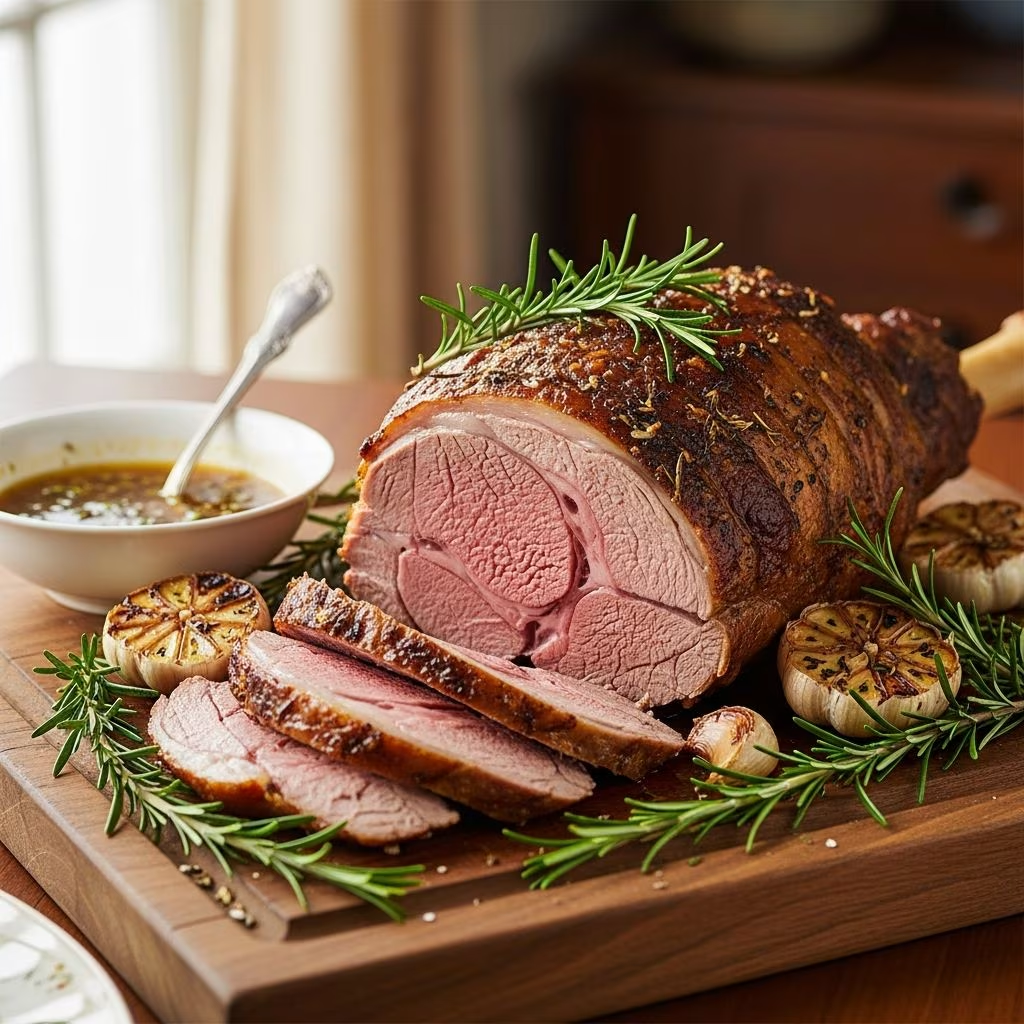
Roasting a leg of lamb transforms this premium cut into a centerpiece dish that’s tender, aromatic, and packed with flavor. This approach emphasizes straightforward preparation, using basic pantry staples like garlic, rosemary, salt, and pepper to let the meat’s natural taste shine. Whether you’re hosting a holiday feast or a casual Sunday dinner, this method delivers consistent results with little hands-on time.
Why Choose Leg of Lamb for Roasting
The leg of lamb comes from the hindquarters of the animal, offering a lean yet flavorful muscle ideal for roasting. Bone-in versions provide structure and enhanced juiciness during cooking, while boneless cuts are easier to carve. Its mild taste pairs beautifully with robust seasonings, making it versatile for various cuisines. According to USDA guidelines, lamb reaches safe doneness at 145°F internal temperature, ensuring food safety without overcooking.
Opt for a 4- to 6-pound cut to serve 6-8 people generously. Grass-fed lamb often carries a richer flavor profile due to its diet, though grain-fed is more widely available and tender. Always select fresh meat with a pinkish-red hue and firm fat cap for optimal moisture retention.
Essential Ingredients for Success
Gather these core components to build layers of taste without complexity:
- Leg of lamb: 5 pounds bone-in, trimmed of excess fat but retaining a thin layer.
- Garlic: 4-6 cloves, peeled and sliced or minced for infusion.
- Fresh rosemary: 2 tablespoons chopped, for earthy aroma.
- Kosher salt: 2-3 tablespoons, to draw out moisture and season deeply.
- Black pepper: 1-2 tablespoons freshly ground, for subtle heat.
- Olive oil: 1-2 tablespoons, to bind seasonings.
- Optional add-ins: Thyme, Dijon mustard, or lemon zest for variation.
These elements create a simple rub that penetrates the meat, enhancing tenderness through enzymatic action from garlic and herbs.
Step-by-Step Preparation Guide
Begin by removing the lamb from the refrigerator 1 hour ahead to reach room temperature. This promotes even cooking and prevents a gray exterior.
- Prepare the rub: In a bowl, mix salt, pepper, chopped rosemary, minced garlic, and olive oil into a paste. For deeper flavor, use a food processor to blend smoothly.
- Score and stuff the lamb: Pat the meat dry with paper towels. Make shallow slits across the surface, about 1-inch apart. Insert garlic slices into each slit to infuse from within.
- Apply seasoning: Generously coat all sides with the rub, massaging it into slits and under any folds. Place fat-side up on a wire rack in a foil-lined roasting pan.
- Rest briefly: Let seasoned lamb sit 30 minutes to absorb flavors.
This prep takes under 20 minutes, setting the stage for hands-off roasting.
Perfect Roasting Techniques
Preheat your oven to 350°F for medium-rare results. Position the rack in the lower third to capture drippings.
- Initial roast: Place uncovered for 60-90 minutes, until internal temperature hits 135°F for medium-rare. Use a digital thermometer inserted into the thickest part, avoiding bone.
- Optional sear: For crisp exterior, broil 3-5 minutes per side at the start or finish.
- Vegetable companions: Add potato wedges and onions around the lamb after 45 minutes, seasoned with paprika and garlic powder for a one-pan meal.
- Resting phase: Tent with foil and rest 15-20 minutes. Temperature will rise 5-10°F, reaching ideal doneness.
Cooking time varies: 15-20 minutes per pound at 325-350°F. Slow roasting at 325°F covered for 1 hour then uncovered yields fall-apart texture.
Understanding Doneness Levels
Use this table to match preferences:
| Doneness | Internal Temp (Remove from Oven) | Final Temp (After Rest) | Description |
|---|---|---|---|
| Rare | 125°F | 130-135°F | Cool red center |
| Medium-Rare | 135°F | 140-145°F | Warm pink, juicy |
| Medium | 140°F | 145-150°F | Slight pink |
| Medium-Well | 150°F | 155-160°F | Minimal pink |
Aim for medium-rare to preserve tenderness; overcooking dries the lean meat.
Flavor Variations to Elevate Your Roast
Customize with global twists:
- Mediterranean: Add oregano, lemon juice, and yogurt-based rub for tangy brightness.
- Greek-style: Incorporate dry brine with kosher salt overnight, roast with potatoes.
- Herb-crusted: Mix thyme, Dijon mustard for nutty depth.
- Slow-roast: Low at 170°C for 4.5 hours with broth for gravy base.
- Boneless stuffed: Roll with parsley, garlic for even cooking.
Experiment cautiously to maintain simplicity.
Common Mistakes and How to Avoid Them
- Not resting: Juices redistribute during rest; skipping leads to dry slices.
- Skipping thermometer: Visual cues deceive; always probe.
- High initial heat: Start moderate to avoid charring.
- Over-trimming fat: Retain for self-basting.
- Crowding pan: Space allows air circulation.
Carving and Serving Suggestions
Carve against the grain post-rest. For bone-in, follow natural seams. Slice 1/4-inch thick. Pair with:
- Mint yogurt sauce
- Roasted root vegetables
- Red wine reduction from pan drippings
- Fresh salads or couscous
Portion 6-8 oz per person.
Storage, Reheating, and Freezing Tips
Refrigerate leftovers up to 4 days in airtight container. Reheat gently at 250°F covered with broth to 140°F. Freeze carved slices up to 3 months; thaw overnight before reheating. Avoid microwaving to prevent toughness.
Nutritional Profile
A 3-oz serving offers ~250 calories, 25g protein, 17g fat (healthy omega-3s in grass-fed). Rich in B12, iron, zinc. Balance with veggies for complete meal.
Frequently Asked Questions
Can I use a boneless leg of lamb?
Yes, tie with twine for uniform shape. Reduce time by 15-20%.
What’s the best oven temperature?
350°F balances crust and juiciness; adjust for slow roast.
How do I make gravy?
Deglaze pan with broth, thicken with cornstarch slurry.
Is marinating necessary?
Rub suffices; overnight salt brine enhances tenderness.
What if my lamb is frozen?
Thaw in fridge 24-48 hours ahead.
Meal Planning Ideas
Incorporate into Easter with asparagus, or Christmas with Yorkshire pudding. Leftovers shine in shepherd’s pie or gyros.
References
- USDA Food Safety Guidelines for Meat — United States Department of Agriculture. 2023-01-15. https://www.fsis.usda.gov/food-safety/safe-food-handling-and-preparation/meat/lamb
- Lamb Cooking Recommendations — American Lamb Board. 2024-05-10. https://www.leanandtenderbeef.com/lamb-cooking
- Roasted Leg of Lamb Techniques — RecipeTin Eats. 2022-03-20. https://www.recipetineats.com/slow-roast-leg-of-lamb/
- Mediterranean Leg of Lamb Roast — The Mediterranean Dish. 2023-11-05. https://www.themediterraneandish.com/mediterranean-style-leg-of-lamb-recipe-with-potatoes/
- Reverse Sear Leg of Lamb — Fifteen Spatulas. 2021-04-02. https://www.fifteenspatulas.com/leg-of-lamb/