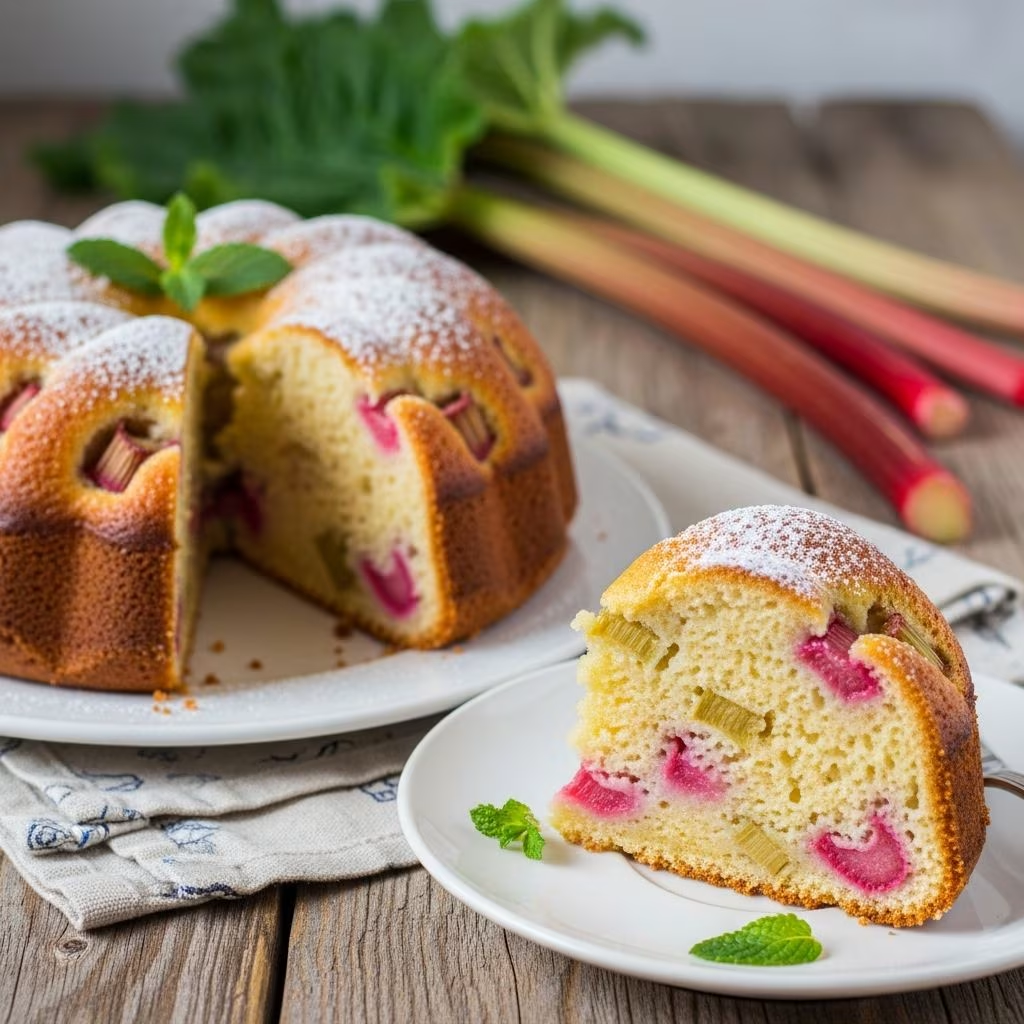
Rhubarb’s vibrant tartness elevates cakes, but its high water content—over 90%—often leads to dense, wet textures. Key solutions include pre-treating stalks, using sturdy batters, and strategic placement to ensure light, tender results.
Understanding Rhubarb’s Moisture Challenge
Rhubarb stalks, botanically a vegetable, release vast amounts of water when heated, breaking down cell walls and flooding batters. This creates gummy pockets instead of the desired fluffy crumb. Unlike fruits in pies where thickeners like cornstarch absorb juices, cake batters lack structure to handle this deluge without becoming waterlogged.
Bakers frequently overlook this, mixing raw pieces directly in, which traps steam and prevents evaporation. Underbaking exacerbates the issue, as the center stays soft and unable to set firmly.
Prep Techniques: Draw Out Water Before Baking
Effective pretreatment removes excess liquid, preserving rhubarb’s texture and flavor intensity.
- Maceration: Toss chopped rhubarb with sugar and let sit 10-15 minutes. Sugar triggers osmosis, pulling water through cell walls. Drain via sieve over a bowl; pat dry. This yields jammy pieces and bonus syrup for glazes or drinks.
- Roasting: Spread pieces on a sheet and roast briefly at high heat to evaporate moisture while concentrating tartness. Blot afterward for optimal incorporation.
- Small Cuts: Dice into tiny pieces to minimize localized water release, reducing stringiness and aiding even distribution.
These steps ensure rhubarb contributes flavor without overwhelming the batter.
Optimizing Your Cake Batter for Stability
A thick, dense batter supports rhubarb weight, preventing sinking and promoting moisture escape.
| Batter Type | Pros for Rhubarb | Cons | Example Recipe Adjustment |
|---|---|---|---|
| Thick Coffee Cake | Holds toppings; allows evaporation | Denser crumb | Reduce liquid by 10-20%; add extra flour |
| Light Sponge | Fluffy texture | Sinking risk; sogginess | Avoid or boost thickeners |
| Dump Cake | Embraces moisture for gooeyness | Not for tender cakes | Not ideal for crisp results |
Increase flour or cornstarch slightly (1-2 tbsp per cup rhubarb) to absorb residual juices. Use room-temperature ingredients for even mixing and structure.
Layering Strategies: Top vs. Mix-In
Placing rhubarb atop batter is transformative. Moisture steams off freely, leaving soft, jammy chunks. Benefits include:
- Pink tint infusion into the surface.
- No overmixing, which toughens gluten.
- Crunchy caramelized sugar crust from maceration coating.
Avoid stirring in unless batter is fortified; top-layering suits most recipes for superior texture.
Baking and Cooling Mastery
Precision in oven time prevents underbaking woes.
- Extend Bake Time: Add 5-10 minutes; test center with toothpick.
- Cooling: Allow full set on rack; cutting warm traps juices, soggifying crumb (especially pies).
- Post-Bake Fixes: Slice and toast soggy cake for firmness or layer into parfaits.
Monitor closely—rhubarb’s water shifts evaporation dynamics.
Recipe Blueprint: Flawless Rhubarb Coffee Cake
Combine techniques for success.
- Macerate 2 cups diced rhubarb with 1/2 cup sugar, 15 mins; drain, pat dry.
- Prepare thick batter: 2 cups flour, 1 tsp baking powder, 1/2 tsp soda, 1/2 cup butter, 1 cup sugar, 2 eggs, 1 cup sour cream.
- Spread batter in pan; scatter rhubarb atop. Sprinkle coarse sugar for crunch.
- Bake 350°F, 40-50 mins. Cool fully.
Yields tart-sweet balance with tender crumb.
Advanced Variations and Pairings
Experiment confidently:
- Streusel Top: Add nuts/oats over rhubarb for texture contrast.
- Gluten-Free: Use thick almond flour base; macerate extra.
- Fruit Combos: Pair with strawberries, but pretreat both.
Enhance with lemon zest or ginger for brightness.
Common Pitfalls and Quick Fixes
| Pitfall | Cause | Fix |
|---|---|---|
| Sinking Chunks | Thin batter | Thicken with flour/yogurt |
| Gummy Center | Underbaking/raw rhubarb | Prep + longer bake |
| Stringy Bites | Large pieces | Fine dice + macerate |
| Dull Flavor | Excess moisture dilutes | Roast for intensity |
FAQs
Why does rhubarb make cakes soggy?
Over 90-95% water content releases during baking, waterlogging batter without escape.
Can I skip macerating?
Not recommended for cakes; use thickeners sparingly, but prep ensures best texture.
How much rhubarb per cake?
Limit to 1-2 cups per 9×9 pan; more demands extra adjustments.
Best oven temp for rhubarb cake?
325-350°F; lower/slower aids moisture evaporation without drying edges.
Storage tips?
Room temp 2 days; fridge up to 5; freeze slices individually.
Seasonal Sourcing and Safety
Harvest spring stalks (April-June); select crisp, vibrant ones. Discard leaves due to toxic oxalic acid. Organic reduces pesticide concerns.
Incorporate into muffins, crisps, or compotes using same principles for versatile baking wins.
References
- The Absolute Best Way To Ensure Rhubarb Cake Doesn’t Get Soggy — Tasting Table. 2024 (approx.). https://www.tastingtable.com/1760107/absolute-best-way-prevent-soggy-rhubarb-cake/
- Rhubarb Cake Always Soggy? Here’s The Mistake You’re Probably Making — Chowhound. 2024 (approx.). https://www.chowhound.com/2041915/why-is-rhubarb-cake-soggy/
- 12 Tips For Baking With Rhubarb This Summer — Tasting Table. 2024 (approx.). https://www.tastingtable.com/1879524/tips-baking-with-rhubarb/