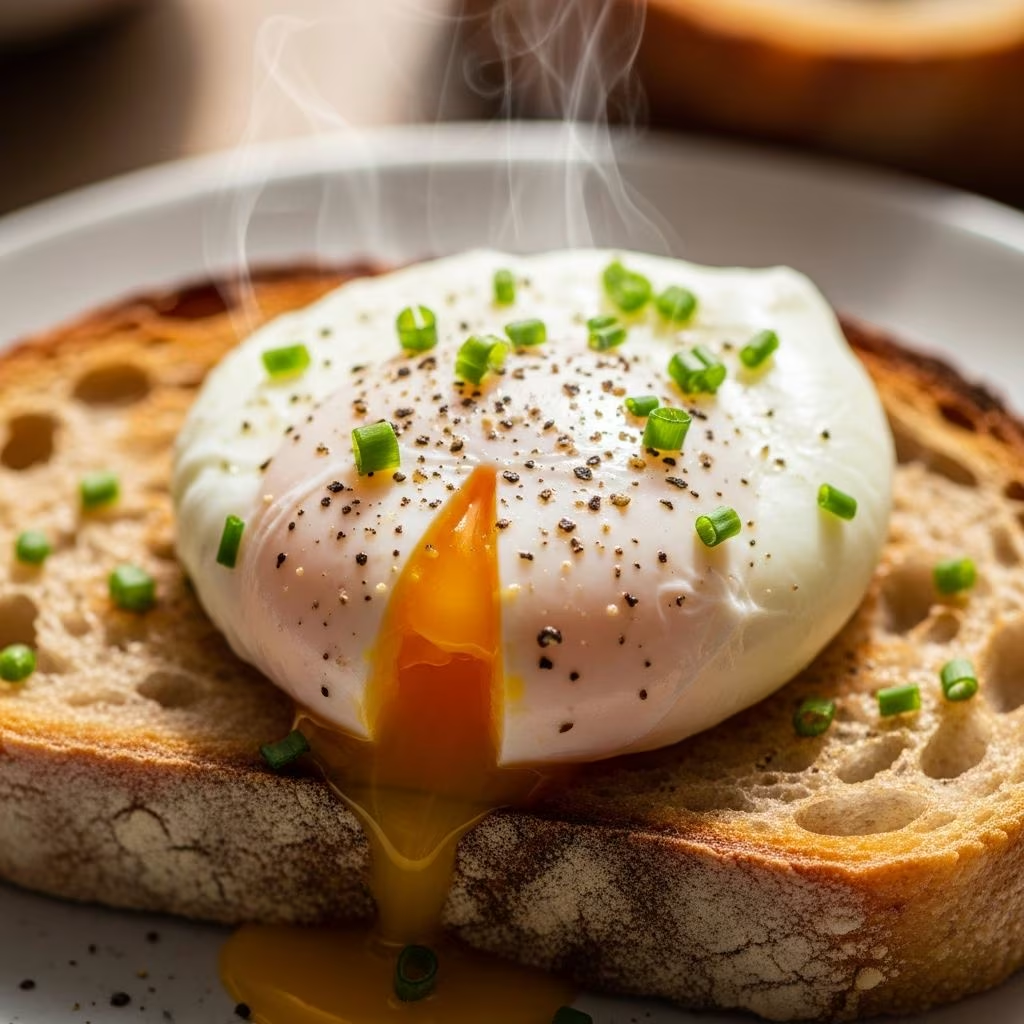
Poached eggs offer a delicate texture with firm whites enveloping a creamy, runny yolk, elevating simple dishes like toast, salads, or benedicts. This guide provides original, tested approaches drawn from reliable cooking practices to help you achieve consistent results using basic kitchen items.
Why Poach Eggs?
Poaching preserves the egg’s nutrients better than frying, as it avoids added fats, resulting in a lighter option packed with protein and vitamins. The method highlights the egg’s natural flavors without oils or butter, making it versatile for health-conscious meals.
Essential Ingredients and Tools
You need just fresh eggs, water, and optional vinegar. Key tools include a shallow saucepan, slotted spoon, small bowl, and paper towels.
- Fresh eggs: Look for firm whites that hold shape; older eggs spread too much.
- Vinegar: 1 teaspoon white or wine vinegar helps coagulate whites quickly.
- Water: About 2-3 inches deep in a wide pan for even cooking.
Core Principles of Successful Poaching
The key is gentle simmering—not boiling—to prevent whites from shredding. Water at 180-190°F (small bubbles rising) cooks evenly without agitation. Freshness ensures compact whites, while controlled entry minimizes dispersal.
Step-by-Step Stovetop Method
Prepare water: Fill a wide saucepan with 2-3 inches of water. Heat to a simmer where small bubbles form on the bottom but the surface remains calm.
Add acid: Stir in 1 tsp vinegar. This lowers pH, speeding white coagulation without strong taste.
Create vortex (optional): Swirl water gently with a spoon for 2-3 seconds to form a whirlpool, guiding whites around the yolk.
Crack egg: Gently crack into a small bowl or ramekin to check integrity and ease entry.
Slide in egg: Hold bowl inches above water; slip egg into center. Swirl once more lightly.
Cook: Simmer 3-4 minutes for runny yolk. Whites firm first; yolk jiggles softly when ready.
Remove: Lift with slotted spoon, drain on paper towel. Trim loose whites if needed.
Timing Guide for Yolk Preference
| Yolk Style | Cook Time | Texture Description |
|---|---|---|
| Very Runny | 2:45-3 min | Liquid center, ideal for dipping |
| Soft Runny | 3:30-4 min | Creamy flow, holds shape |
| Semi-Firm | 4-5 min | Jammy middle, less drip |
Adjust based on egg size and altitude; test by gentle finger press.
Troubleshooting Common Problems
- Spidery whites: Use fresher eggs or strain through sieve to remove loose albumen.
- Overcooked yolk: Time precisely; remove early and rest in cool water.
- Sticking or breaking: Ensure low simmer; avoid vigorous boils.
- Multiple eggs: Poach one at a time or space apart; don’t overcrowd.
Advanced Techniques and Variations
Microwave Poaching
For speed, use a microwave-safe mug: add ½ cup water, ½ tsp vinegar, crack egg in. Cover loosely, microwave 45-60 seconds on medium power. Results vary by wattage.
Oven Poaching
Fill muffin tin with 1 tsp water per cup, crack egg in. Bake at 350°F for 12-15 min. Great for batches.
No-Vinegar Method
Strain egg through fine mesh first, then poach in plain simmering water. Whites hold with practice.
Storage and Reheating Tips
Prepare ahead: Poach, cool in ice bath, store in water up to 2 days in fridge. Reheat in hot (not boiling) water 30-60 seconds. Avoid microwaving to prevent rubberiness.
Delicious Serving Ideas
- Classic eggs benedict with hollandaise.
- Over avocado toast with chili flakes.
- In ramen or grain bowls for richness.
- With smoked salmon and greens.
Season lightly with salt, pepper, or herbs post-poaching to enhance flavor.
Frequently Asked Questions (FAQs)
Do I need vinegar for poached eggs?
Not essential, but it helps whites set faster and tighter. Use sparingly for no taste impact.
Can I poach eggs ahead of time?
Yes, shock in ice water after cooking, store covered in fridge water up to 24-48 hours, reheat gently.
Why do my poached eggs fall apart?
Usually due to stale eggs, boiling water, or rough handling. Use fresh eggs and simmer.
How many eggs can I poach at once?
1-2 in a standard pan; more spreads heat unevenly. Use wider pans for batches.
Is poaching healthier than other methods?
Yes, no added fat, retains nutrients like choline and protein.
Nutrition Snapshot (Per Large Egg)
| Nutrient | Amount |
|---|---|
| Calories | 70 |
| Protein | 6g |
| Fat | 5g |
| Cholesterol | 185mg |
Poaching minimizes calorie addition compared to frying.
Practice these steps, and poached eggs become a reliable staple. Experiment with timings for your taste.
References
- How to Cook Poached Eggs on the Stove — Joyful Healthy Eats. 2023. https://www.joyfulhealthyeats.com/how-to-poach-an-egg/
- Poached Eggs Recipe — Love and Lemons. 2024. https://www.loveandlemons.com/poached-eggs/
- How to poach an egg — Egg Info (British Lion Eggs). 2023. https://www.egginfo.co.uk/recipes/perfectly-poached-eggs
- Poached Eggs — Appeasing a Food Geek. 2022. https://www.appeasingafoodgeek.com/poached-eggs/
- How to Poach an Egg: Steps & Tips — American Egg Board (Incredible Egg). 2024. https://www.incredibleegg.org/recipes/cooking-school/how-to-poach-an-egg/
- How to Poach an Egg — Preppy Kitchen (YouTube Transcript). 2023. https://www.youtube.com/watch?v=n5uB0PvQLlo