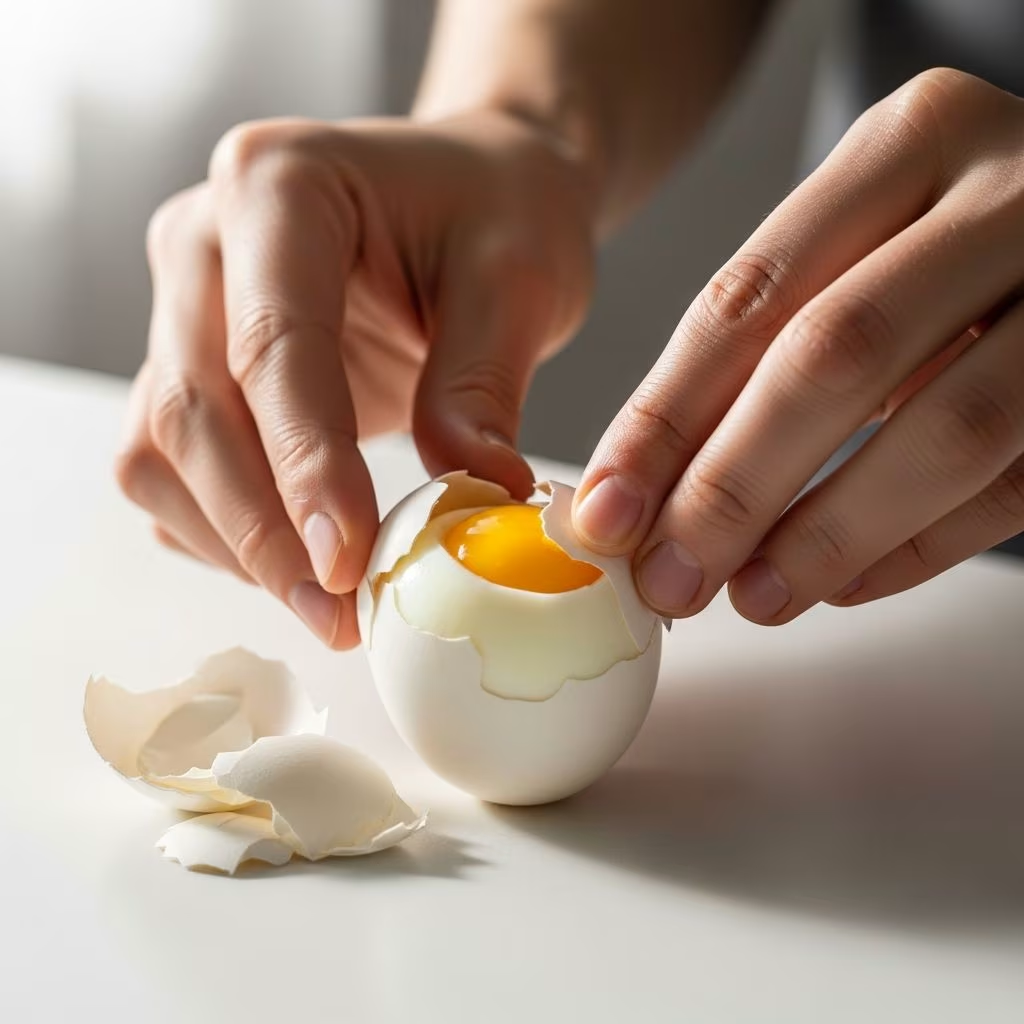
Peeling hard-boiled eggs is a task that has frustrated home cooks for generations. What should be a simple process often turns into a tedious ordeal, with shells clinging stubbornly to the egg white and fragments breaking off as you struggle to remove them. The good news is that several science-backed methods can transform this frustrating chore into a smooth, efficient process. Whether you’re preparing eggs for meal prep, making deviled eggs, or simply want a quick protein snack, understanding the right techniques will save you time and deliver consistently perfect results.
Why Hard-Boiled Eggs Are Difficult to Peel
Before diving into solutions, it’s important to understand why peeling hard-boiled eggs can be so challenging. The difficulty stems from the relationship between the egg white and the shell membrane. When eggs are freshly laid, their layers are remarkably tight and firm, creating a strong bond between the shell and the white underneath. This adhesion is particularly pronounced in newer eggs, which haven’t undergone the natural aging process that gradually weakens this connection.
As eggs age in your refrigerator, they lose moisture through microscopic pores in their shells. This moisture loss causes the egg inside to shrink slightly, and more importantly, it pulls the inner membrane away from the shell wall. Additionally, the chemical composition of the egg changes over time—the pH level shifts, which further facilitates separation between the shell and the white. Understanding this science explains why certain peeling methods work more effectively than others.
The Alkaline Enhancement Method
One of the most effective and scientifically sound approaches involves modifying the water in which you boil your eggs. By adding baking soda to your boiling water, you increase the alkalinity of the cooking environment. This simple addition works by altering the pH of the egg’s outer layers, causing the egg whites to gradually loosen their grip on the shell membrane.
To implement this method, add approximately one teaspoon of baking soda per quart of water before bringing it to a rolling boil. Once the water reaches the appropriate temperature, gently place your eggs into the pot and proceed with your normal boiling process. The beauty of this technique is its simplicity—there are no additional steps required, and the baking soda will not impart any flavor to your finished eggs. The chemical reaction happens entirely during the cooking phase, making this a seamless addition to your routine.
The alkaline environment created by baking soda essentially weakens the bond between the shell and the white in real-time. Rather than waiting for eggs to age or relying on post-cooking techniques, this method addresses the adhesion problem at its source. This makes it particularly valuable for situations where you need to prepare hard-boiled eggs quickly using freshly purchased eggs.
The Thermal Shock Approach
Immediately after cooking, subjecting your eggs to a dramatic temperature change is one of the most reliable peeling techniques available. This thermal shock method exploits the principle that different materials contract and expand at different rates when exposed to temperature changes.
The proper execution of this method requires careful preparation. As soon as your eggs finish cooking, transfer them directly from the hot water to a large bowl filled with ice and cold water. A critical tip here is to use significantly more ice than you might initially think necessary—the hot eggs will melt a substantial amount of ice very quickly. Allow the eggs to remain submerged in this ice bath for several minutes, giving them adequate time to cool thoroughly.
The cold water causes the egg white to contract away from the shell wall more rapidly than the shell itself contracts. This differential contraction creates a gap between the layers, which is exactly what you need for effortless peeling. Additionally, this cooling process stops the cooking action, preventing that undesirable gray-green ring from forming around the yolk. The thermal shock method serves dual purposes—it improves peelability while simultaneously enhancing the quality of your finished eggs.
The Vibrational Separation Technique
A technique that gained widespread attention through social media involves creating initial stress fractures in the shell before cooking, then using mechanical vibration to facilitate separation. While it may seem unconventional, this method is grounded in sound physical principles about stress distribution and material separation.
Begin by gently tapping each egg on your counter or inside a small bowl to create a fine fracture line around the shell. The key word here is “gently”—you want to create a visible crack pattern without compromising the structural integrity of the shell so severely that egg white leaks out during cooking. Once you’ve created these initial fracture points, proceed with your normal boiling process.
After cooking and cooling your eggs, place them individually into a lidded container that’s been filled halfway with cold water. Secure the lid tightly, or use your hand to cover the opening if the container is small. Now comes the unconventional part: shake the container vigorously. The combination of the water, the pre-existing fracture lines, and the mechanical agitation works together to systematically separate the shell from the membrane. When executed properly, you can simply pour out the water and remove the shell in large, easy-to-manage pieces rather than picking at small fragments.
The Maturation Strategy
While not every cooking situation allows for advance planning, whenever possible, use eggs that have been in your refrigerator for at least one to two weeks rather than eggs from a newly purchased carton. This timing allows for the natural aging process to work in your favor.
As eggs age, they undergo gradual physical and chemical changes that directly improve peelability. The moisture loss through the porous shell causes the egg contents to shrink, pulling the interior membrane away from the shell wall. The pH changes that occur naturally over time also weaken the bond between layers. These changes accumulate gradually, creating a situation where week-old eggs peel substantially more easily than day-old eggs.
This strategy requires no special equipment, no chemical additives, and no additional steps during cooking. It’s simply a matter of strategic planning and using eggs that have already undergone the necessary biochemical transformations. For those who regularly prepare hard-boiled eggs, maintaining a rotation where you always use slightly older eggs ensures consistently superior peeling experiences.
Combining Methods for Optimal Results
While each method works independently, combining multiple approaches can yield even better results. Consider using week-old eggs, adding baking soda to your cooking water, and then subjecting them to a thorough ice bath immediately after cooking. This multi-pronged approach addresses the peeling challenge from several different angles simultaneously.
You might also combine the vibrational technique with the thermal shock method—cool your eggs thoroughly in an ice bath first, then perform the vigorous shaking in cold water. The pre-cooled eggs will respond even more readily to the mechanical agitation. Experimenting with different combinations helps you discover which approach yields the most consistent and satisfying results for your particular cooking style and preferences.
Practical Implementation Tips
- Prepare adequate cooling capacity: Have your ice bath ready before your eggs finish cooking. Don’t wait until the eggs are done to start preparing the cold water bath.
- Use appropriate containers: For the vibrational method, select a container with a tight-fitting lid that can withstand vigorous shaking without leaking.
- Maintain water temperature: Keep your ice bath genuinely cold throughout the cooling process. Add more ice if necessary to maintain proper temperature.
- Plan ahead when possible: If you know you’ll need hard-boiled eggs, purchase them in advance so they have time to age properly.
- Handle eggs gently during tapping: Create visible cracks without applying so much force that the shell breaks catastrophically.
Frequently Asked Questions
Can I use these methods with any egg size?
Yes, all these techniques work with small, medium, large, or extra-large eggs. You may need to adjust boiling times slightly based on size, but the peeling methods remain consistent regardless of egg dimensions.
Does baking soda affect the nutritional content of eggs?
No. Baking soda is used only during the cooking process and does not alter the nutritional profile of your finished eggs. It simply adjusts the cooking environment temporarily.
How long can I store hard-boiled eggs after peeling?
Properly refrigerated hard-boiled eggs remain safe and edible for approximately three to four days after cooking. Store them in an airtight container on a shelf rather than in the door where temperature fluctuations are more pronounced.
What if I accidentally create too large a crack when tapping?
If egg white leaks out slightly, the eggs are still usable—they’ll simply have an irregular shape. They’re perfectly safe to eat and will still peel easier than untapped eggs.
Can I use warm water instead of ice water?
No. The thermal shock specifically requires a dramatic temperature difference. Warm water won’t create the necessary contraction differential and will not improve peelability.
Conclusion
Peeling hard-boiled eggs doesn’t need to be the frustrating ordeal it once was. By understanding the science behind shell adhesion and implementing proven techniques, you can achieve consistently excellent results. Whether you prefer the simplicity of the baking soda method, the reliability of the thermal shock approach, the novelty of the vibrational technique, or the natural advantages of using aged eggs, solutions exist for every cooking situation and preference. Start with whichever method appeals to you most, then experiment with combinations to discover your personal optimal approach. Your future self will appreciate the time and aggravation saved during meal preparation.
References
- Easy Peel Hard Boiled Eggs — Happy Egg Co. 2024. https://happyegg.com/eggs/how-to-peel-hard-boiled-eggs
- Egg Chemistry and Cooking Properties — The American Egg Board (American Egg Board – Educational Resources). 2023. https://www.aeb.org
- Food Safety Guidelines for Refrigerated Foods — U.S. Department of Agriculture Food Safety and Inspection Service. 2024. https://www.fsis.usda.gov