Pomegranates have captivated culinary enthusiasts for centuries, prized for their jewel-like seeds and tart-sweet flavor profile. Yet many home cooks approach this magnificent fruit with hesitation, uncertain about the best techniques for opening and enjoying it without creating a chaotic mess. Understanding the proper methods transforms pomegranate preparation from a potentially frustrating experience into a straightforward and satisfying culinary task. This comprehensive guide explores multiple approaches to selecting, cutting, extracting seeds, and consuming this remarkable fruit.
Selecting the Perfect Pomegranate for Your Kitchen
The foundation of successful pomegranate preparation begins with selecting a quality specimen at the market. A ripe pomegranate exhibits particular visual and tactile characteristics that distinguish it from underripe or overripe alternatives. The skin should feel firm and smooth to the touch, though minor cosmetic variations are completely normal and do not affect interior quality.
When evaluating pomegranates, weight becomes an important indicator of seed abundance and juice content. A fruit that feels substantial for its size typically contains more developed arils—the technical term for pomegranate seeds—and greater juice concentration. Unlike many fruits that should be perfectly round and symmetrical, pomegranates naturally develop flattened areas where they rested during growth. These slight imperfections are signs of authentic ripeness rather than defects.
Color provides another assessment tool, though the range of acceptable hues extends wider than many people realize. Pomegranates may display light red, deep crimson, or nearly burgundy exteriors, all indicating proper ripeness. The crown end of the fruit—the area opposite the stem—should appear slightly open rather than tightly sealed, suggesting the seeds inside have fully matured and developed.
Essential Equipment and Workspace Preparation
Successful pomegranate preparation requires specific tools and thoughtful workspace organization. A serrated knife works more effectively than smooth blades for cutting through the toughened skin and internal membranes without crushing the delicate seeds. The serrated edge grips the pomegranate’s surface, reducing slipping and providing more controlled cuts.
Beyond the knife, a sturdy spoon becomes essential for the extraction phase. Metal spoons withstand repeated striking against the pomegranate exterior without bending or breaking. Some practitioners prefer wooden spoons for environmental considerations, though these require more careful handling to avoid splitting. A large mixing bowl, preferably deep and ceramic or metal, provides the collection vessel for seeds during the extraction process.
Water plays a surprisingly important role in pomegranate preparation. Filling a bowl with cool water creates an environment where arils naturally sink while lighter membrane pieces and skin fragments float to the surface, facilitating easy separation. A slotted spoon or fine mesh strainer allows removal of floating debris while retaining the precious seeds.
Location matters considerably when preparing pomegranates. Working over a sink or in a designated food preparation area prevents staining and makes cleanup straightforward. The vibrant red juice and pigments in pomegranate seeds can permanently stain clothing and countertops, so using an apron and protecting surrounding surfaces demonstrates wisdom.
The Crown-Cut Method: Professional Sectioning Approach
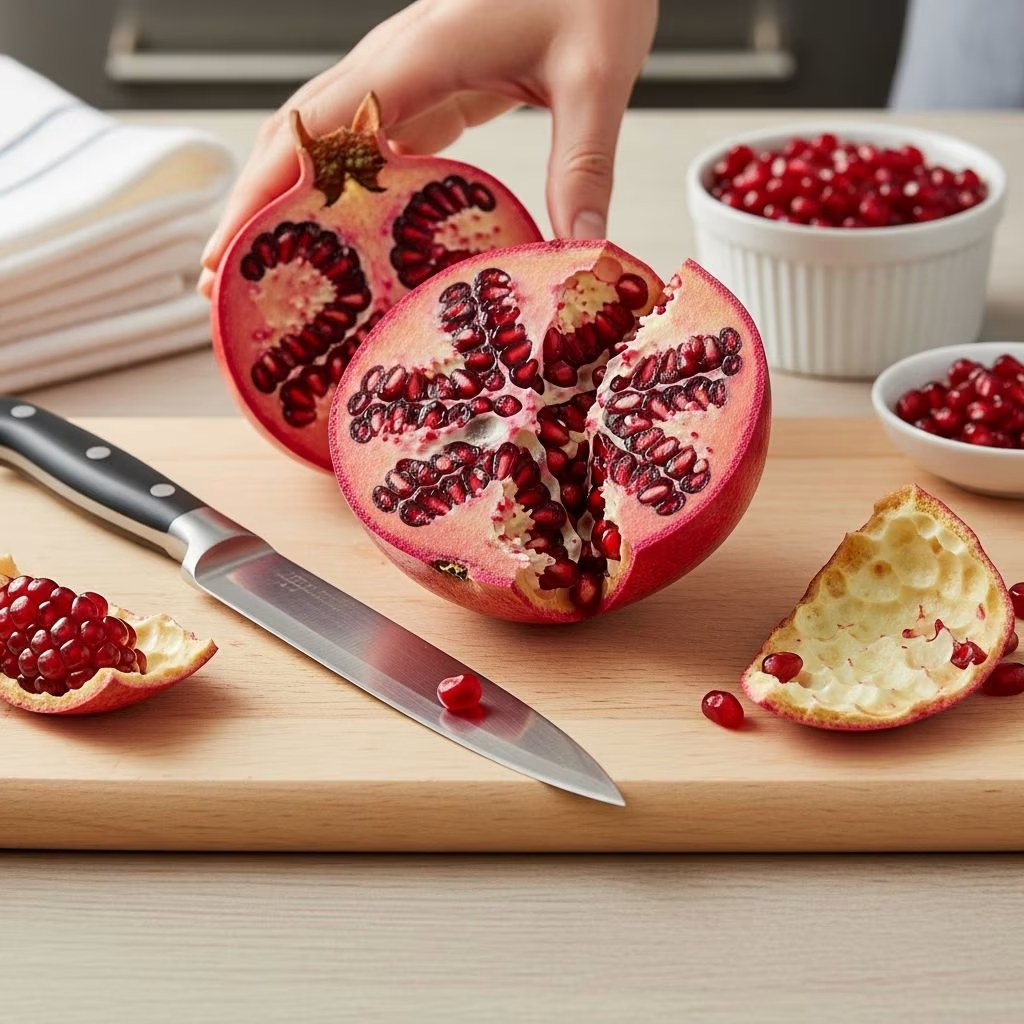
Contemporary culinary professionals increasingly favor the crown-cut method over traditional halving techniques. This approach begins by placing the pomegranate on a cutting board with the stem end pointing upward. Using a sharp serrated knife, carefully remove approximately half an inch from the crown, creating a flat surface that exposes the natural seed chambers within.
Once the crown is removed, observable lines appear on the pomegranate’s exterior, revealing the natural divisions between seed chambers. These ridges represent the internal structure and provide precise guides for further cutting. Using the knife tip, score along each ridge line, penetrating only through the skin and white pith without cutting into the seed-bearing chambers. Typically, six distinct sections appear, though some pomegranates display four or five divisions.
With scoring complete, hold the pomegranate over a bowl of water and gently use thumbs to pry sections apart. The fruit naturally separates along the scored lines, breaking open with minimal force required. This method produces an elegant appearance—resembling a pomegranate beehive—while keeping seeds intact and undamaged.
The crown-cut approach offers distinct advantages over halving. The resulting sections remain portable, allowing diners to hold individual segments and extract seeds with minimal mess. This technique proves particularly useful for serving pomegranates at gatherings or storing partially consumed fruits for later use.
The Water-Extraction Method: Maximum Cleanliness Approach
For those prioritizing absolute mess prevention, the water-extraction method provides comprehensive seed separation. This technique begins similarly to the crown-cut method—removing the crown and scoring along natural ridges. However, instead of breaking the sections open by hand, place the entire pomegranate directly into a large bowl filled with cool water.
Submerged in water, the pomegranate can be gently broken apart with hands or fingers. The aquatic environment dramatically reduces seed scattering and prevents juice from splashing onto surrounding surfaces. As seeds are released, they sink to the bottom due to their density, while lighter membrane fragments and skin pieces float on the water’s surface.
The contrast between sinking seeds and floating debris simplifies the cleanup process tremendously. Using a slotted spoon, simply scoop away any floating material from the water’s surface, leaving intact seeds at the bottom. Drain the water through a fine mesh colander, collecting the clean, separated seeds ready for immediate consumption or storage.
The Impact Method: Rapid Seed Extraction
An alternative rapid-extraction technique involves holding a halved pomegranate cut-side down over a bowl and striking the exterior skin repeatedly with a sturdy spoon. This method relies on the impact force to dislodge seeds from their internal chambers, allowing them to fall freely into the collection bowl below.
Position the pomegranate several inches above the bowl surface, ensuring adequate space for seeds to drop without bouncing out. Beginning at the stem end and working systematically around the fruit’s circumference, strike firmly and repeatedly with the spoon’s back surface. The wooden or metal of the spoon should make solid contact with the pomegranate skin, transferring sufficient force to vibrate seeds loose.
This approach produces results within five minutes, making it the fastest method for those seeking rapid seed extraction. However, the technique requires somewhat more forceful action and consequently may result in minor juice spillage. For this reason, positioning the equipment over a sink or within a contained workspace remains advisable.
Separating Seeds from Internal Membranes
Regardless of the extraction method employed, some white pith and membrane material inevitably ends up in the seed collection bowl. These bitter, astringent components detract from eating quality and should be removed before consumption or storage. After extraction, fill the collection bowl with fresh cool water and gently agitate with your hand, allowing the lighter membrane pieces to float to the surface.
Using a slotted spoon, skim away the floating white material, repeating this process until no significant debris remains. The final drain through a colander or fine mesh strainer removes excess water while retaining perfectly clean arils ready for eating.
Storage and Shelf Life Considerations
Extracted pomegranate seeds maintain quality for varying durations depending on storage conditions. In the refrigerator, properly stored arils remain fresh and flavorful for approximately five to seven days when kept in an airtight container. The seeds gradually lose moisture and begin to shrivel if exposed to air for extended periods.
For extended preservation, freezing pomegranate seeds proves remarkably effective. Arrange freshly extracted and cleaned seeds on a baking sheet in a single layer, freezing until solid—typically four to six hours. Transfer the frozen seeds to a labeled freezer bag or airtight container for storage up to three months. Frozen seeds work excellently in smoothies, beverages, and cooked applications, though their texture becomes softer once thawed and they perform best in applications where structural integrity matters less than flavor contribution.
Consumption Methods and Culinary Applications
The versatility of pomegranate seeds extends far beyond simple consumption straight from the fruit. Fresh arils add nutritional value and visual appeal to breakfast oatmeal, yogurt parfaits, and grain-based salads. The tart-sweet flavor profile complements both savory and sweet applications, making pomegranate seeds adaptable across diverse culinary scenarios.
Pomegranate juice extracted from arils creates antioxidant-rich beverages when pressed and strained. The vibrant deep red color and complex flavor have elevated pomegranate juice to superfood status in nutritional conversations. Beyond drinking straight, pomegranate juice reduces beautifully into glazes and sauces for meats and vegetables, offering sophisticated flavor development.
Whole seeds function as elegant garnishes for finished dishes, providing textural contrast and visual drama. Their jewel-like appearance and crisp texture offer sensory appeal while the bright acid note cuts through rich dishes, providing palatal refreshment.
Frequently Asked Questions
What causes the bitter taste sometimes found in pomegranate seeds?
The white pith surrounding seed chambers contains compounds that taste intensely bitter and astringent. This membrane material should be removed during the cleaning process for optimal eating experience. If bitterness persists, seeds may have been selected from an underripe pomegranate, as ripeness significantly influences flavor balance.
How can I prevent pomegranate staining on my hands and clothing?
Wearing an apron protects clothing from the deeply pigmented juice. Rubber gloves prevent hand staining during seed extraction. After handling pomegranates, washing hands promptly with soap and warm water removes most residual staining before pigments dry completely onto skin.
Are there health benefits associated with pomegranate consumption?
Pomegranates contain substantial antioxidant compounds and vitamins, contributing to their designation as nutrient-dense foods. Regular consumption contributes to overall nutritional adequacy as part of a balanced diet emphasizing varied plant-based foods.
Can pomegranate seeds be eaten with the white membrane attached?
Technically, yes—the membrane is edible and not toxic. However, the bitter astringent flavor makes removal preferable for most palates. The effort to separate seeds from membranes produces noticeably superior eating experience.
What distinguishes ripe from unripe pomegranates visually?
Ripe pomegranates feel heavy for their size, display rich color, and show slight opening at the crown. Unripe specimens feel light, appear pale or green-tinged, and have tightly closed crowns. Underripe seeds taste sharper and more astringent than ideally ripe versions.
References
- How to Eat a Pomegranate — Sweet Peas and Saffron. Accessed April 2026. https://sweetpeasandsaffron.com/how-to-eat-a-pomegranate/
- The Best Way to Cut Open a Pomegranate — Food & Wine. https://www.youtube.com/watch?v=K1IN5jose4c
- The BEST Way To Open & Eat A Pomegranate — Mama Natural. https://www.youtube.com/watch?v=5BExPRwPdAs
- How to Open a Pomegranate — POM Wonderful. https://www.pomwonderful.com/how-to-open