English muffins have become a breakfast staple in households across North America, prized for their unique texture and versatility. However, many people have been opening these delightful breakfast items incorrectly for years, inadvertently compromising the very features that make them special. The distinctive nooks and crannies that trap butter, jam, and other toppings are what elevate English muffins above regular bread, yet conventional cutting methods destroy these essential characteristics. Understanding the proper technique for opening an English muffin transforms the entire eating experience and ensures you get the most out of this humble breakfast favorite.
Why Knife Slicing Falls Short
The most common mistake people make when preparing English muffins involves reaching for a sharp knife and slicing through the middle. While this method seems logical and straightforward, it causes significant damage to the product’s integrity. When you cut with a knife, you apply downward pressure that compresses and flattens the delicate air pockets throughout the muffin’s structure. This compression destroys the characteristic texture that makes English muffins desirable in the first place.
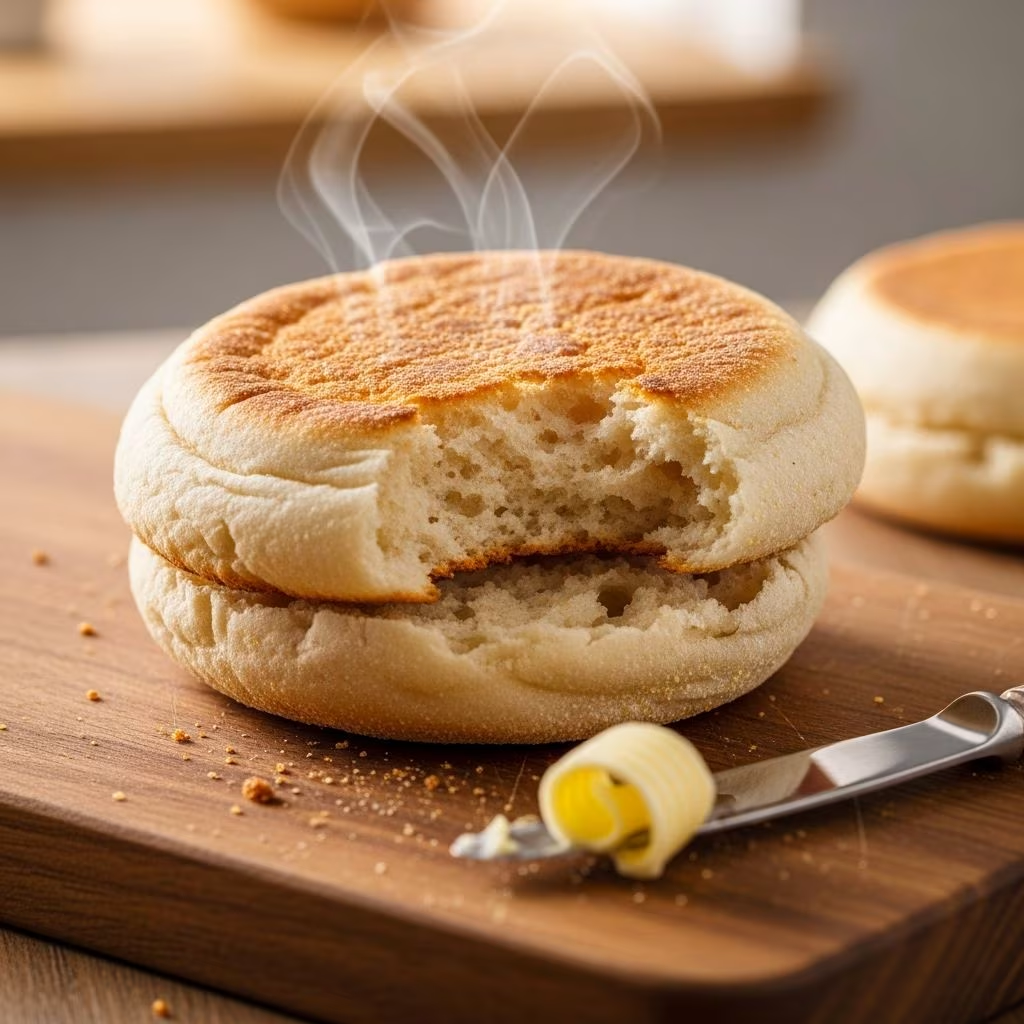
The resulting flat, smooth surfaces created by knife slicing eliminate the textural contrast that makes these muffins special. The nooks and crannies—those wonderful small holes and crevices—collapse under the blade’s pressure, leaving you with something that more closely resembles regular sandwich bread than a proper English muffin. Additionally, knife slicing often produces uneven halves, with one side potentially being thicker than the other. This uneven split can result in one half toasting faster than the other, creating an inconsistent eating experience.
Understanding the Muffin’s Natural Structure
English muffins possess an engineered design that is often overlooked by consumers. Manufacturers intentionally create a weakness in the muffin’s structure—a seam that runs around the middle circumference of the product. This pre-existing line of weakness represents the manufacturer’s intended opening point. The packaging on many English muffin packages even provides guidance, often suggesting that the product should be split rather than sliced. This distinction is not merely semantic; it reflects the fundamental difference between respecting the product’s design and fighting against it.
The interior of an English muffin consists of a porous, airy crumb structure riddled with air pockets of various sizes. These pockets form naturally during the baking and cooking process and create the characteristic texture. The exterior features a slightly denser structure that helps maintain the muffin’s shape. The seam around the middle exists where these two structural components meet, creating a natural fault line. Understanding this architectural reality helps explain why certain opening methods work better than others.
The Recommended Hand Technique
The most effective method for opening an English muffin requires nothing more than your hands and about thirty seconds of gentle manipulation. Start by holding the muffin in a neutral position, with the seam oriented horizontally. Place your hands on opposite sides of the muffin with your fingers wrapping around the edges. Apply gentle pressure—not so forceful that you crush the muffin, but enough that you can feel it beginning to respond to your touch.
Begin rotating the muffin in a circular motion while maintaining consistent, steady pressure. This rolling motion, combined with gentle squeezing, activates the weakness in the muffin’s structure. As you continue this combined motion, you will feel the muffin beginning to separate along its natural seam. The splitting action should feel organic and almost effortless if done correctly. Within seconds, the two halves will pop apart cleanly, revealing the intact nooks and crannies on both surfaces.
The key to success lies in patience and consistency. Rushing the process by applying too much pressure too quickly will result in tearing rather than splitting. The motion should be meditative and controlled, more similar to gently working with clay than forcefully breaking something in half. Many people are surprised by how quickly the muffin separates once they understand the technique, often describing the experience as almost magical.
Alternative Splitting Methods Worth Considering
While the hand technique represents the gold standard for opening English muffins, several alternative methods can prove effective when executed properly. Each method respects the product’s structure and attempts to leverage the natural seam rather than working against it.
The Fork Technique
Some manufacturers recommend using a fork to split English muffins, and this method can be effective when performed correctly. Insert a fork into the muffin horizontally along the seam line, positioning the tines to follow the natural weak point. Rather than cutting downward, use gentle pressure to pry the two halves apart. This technique requires a certain finesse and understanding of where exactly the seam runs through the muffin. The advantage is that forks are readily available in any kitchen, but the technique requires more practice than the hand method to master consistently.
Specialized Muffin Splitters
Kitchen retailers market specialized English muffin splitters designed specifically for this task. These devices feature a horizontal slot into which the muffin is inserted, with a cutting mechanism that follows the seam line. While these tools work effectively, they represent an additional kitchen utensil that requires storage space and cleaning. For most home cooks, the hand technique eliminates the need for such specialized equipment.
Common Mistakes to Avoid
Several predictable errors derail people’s attempts to open English muffins properly. Recognizing these mistakes beforehand helps you sidestep frustration and achieve success on your first or second attempt.
- Applying excessive pressure: Crushing the muffin in your hands prevents a clean split and damages the interior structure
- Ignoring the natural seam: Attempting to split at random points rather than following the pre-existing weak line makes the task significantly more difficult
- Rushing the process: Moving too quickly prevents you from feeling the muffin’s responses to your manipulations
- Using wet hands: Moisture makes the muffin slippery and difficult to control; dry hands provide better grip and control
- Holding the muffin vertically: Positioning the seam horizontally makes manipulation easier and more intuitive
- Incomplete rotations: Failing to rotate fully around the circumference leaves weak points that resist separation
Why This Technique Matters for Your Breakfast Experience
The importance of preserving the nooks and crannies extends beyond mere aesthetics or texture preferences. These small pockets and crevices serve a functional purpose in the eating experience. They trap and hold butter, jam, cream cheese, and other spreads more effectively than a smooth surface can manage. When you bite into an English muffin with intact nooks and crannies, the spreads and toppings integrate throughout the bite rather than sitting primarily on the surface.
The preserved texture also affects how the muffin toasts. Nooks and crannies allow heat to penetrate more deeply and unevenly, creating areas of varying crispness and tenderness that add complexity to the eating experience. A flattened muffin toasts uniformly, resulting in a more monotonous texture. Additionally, the intact crumb structure helps the muffin maintain moisture better than a compressed alternative, preventing the muffin from becoming dry and chalky.
Practice and Refinement
Like any kitchen skill, opening English muffins properly improves with practice. Your first few attempts may feel awkward or uncertain, but muscle memory develops quickly. After opening four or five muffins using the hand technique, most people achieve sufficient proficiency to perform the action without conscious thought. The technique becomes automatic, requiring no deliberate focus or effort.
As you practice, pay attention to the feedback your hands receive from the muffin. You will develop an intuitive sense for how much pressure to apply and when the muffin is ready to separate. This sensory feedback is impossible to describe adequately with words but becomes obvious once you experience it firsthand.
Frequently Asked Questions
Can I use a knife if I’m very careful?
While extreme care with a knife can minimize damage, the hand technique remains superior because it actively preserves the nooks and crannies rather than merely attempting to limit damage. The hand technique works with the muffin’s structure rather than against it.
What if my muffin tears instead of splitting cleanly?
Tearing typically indicates either too much pressure applied too quickly or an inconsistency in the muffin’s structure. Try again with another muffin, using lighter pressure and slower rotations. Most people achieve clean splits after just a few attempts.
Do all English muffin brands split the same way?
Yes, the hand technique works effectively with all English muffin brands because they all share the same fundamental design with a natural seam running around the middle. Brand differences in taste and quality remain irrelevant to the opening technique.
Is there a best time to open an English muffin?
English muffins can be opened at any time, though many people prefer to open them immediately before toasting. Opening them shortly before use prevents the exposed interior from drying out.
Can children learn this technique?
Yes, the hand technique is safe and simple enough for children to learn under supervision. It actually makes an excellent teaching opportunity, as it demonstrates how understanding structure and design can solve practical problems.
The Broader Lesson
The English muffin opening technique represents a broader principle applicable throughout cooking and food preparation. Taking time to understand a product’s design and intended use often reveals better approaches than applying standard methods reflexively. Reading packaging guidance, considering manufacturer recommendations, and thinking critically about structure and materials frequently improve outcomes across countless kitchen tasks.
References
- The Genius English Muffin Hack We Wish We’d Known About Sooner — Parade Magazine. 2024. https://parade.com/food/best-way-to-open-english-muffin
- Quick tip to opening an english muffin — Ask Aunt Laura (YouTube). 2020. https://www.youtube.com/watch?v=ZUlmRdULPcU
- The Simple Hack To Split English Muffins Easier — The Takeout. 2023. https://www.thetakeout.com/1872044/hack-split-english-muffins/
- You’ve Been Splitting English Muffins Wrong Your Entire Life — Mashed (YouTube). 2021. https://www.youtube.com/watch?v=dWG6lr1dl6I