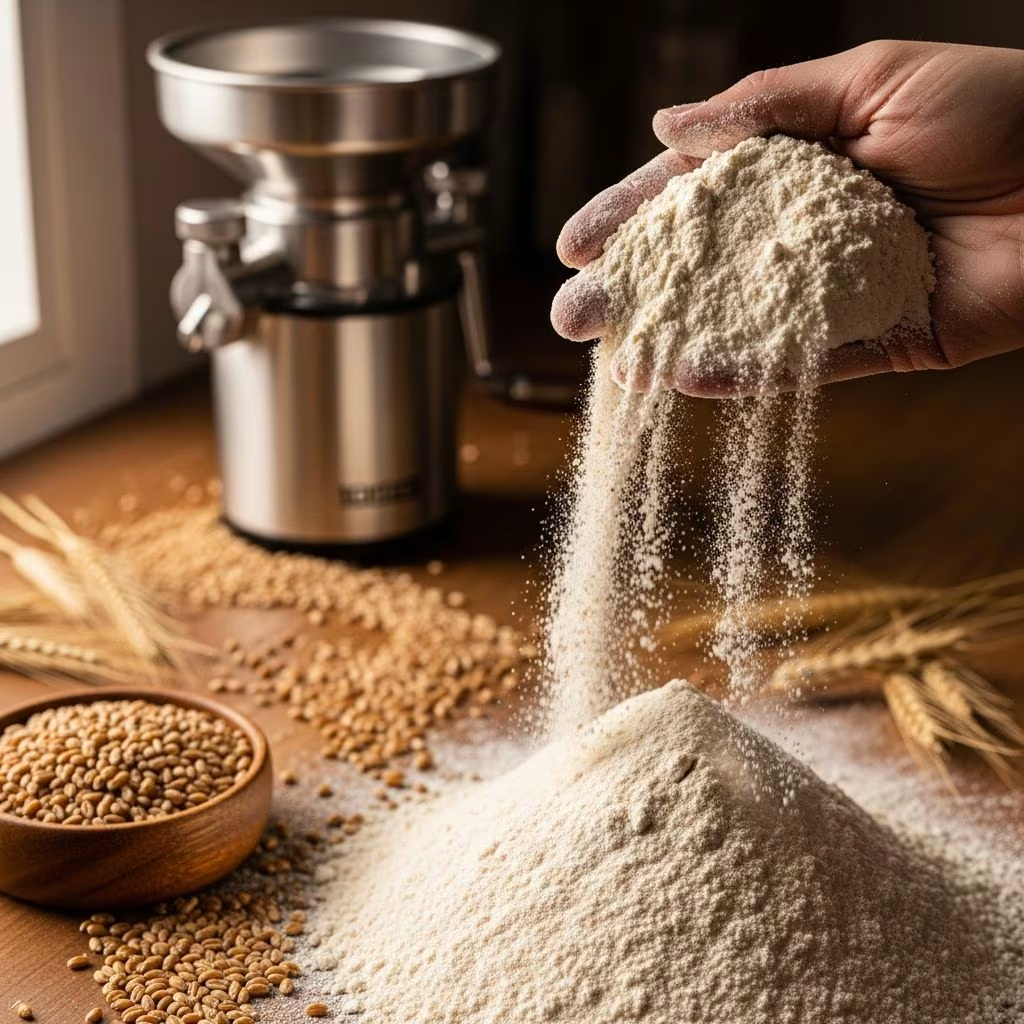
Producing your own flour from whole grains revolutionizes home baking by delivering unmatched freshness, flavor, and nutritional value. Unlike store-bought options that lose potency during processing and storage, freshly milled flour retains vital oils, vitamins, and enzymes essential for superior dough development and taste.
Why Mill Flour at Home?
Fresh milling transforms ordinary grains into vibrant flour bursting with natural goodness. The bran, germ, and endosperm remain intact until the moment of grinding, preserving antioxidants, fiber, and minerals that degrade quickly in commercial flours. Bakers report breads with deeper flavors, lighter textures, and extended shelf life when using home-milled varieties.
Cost savings add another layer of appeal. Purchasing whole grains in bulk costs a fraction of pre-ground flour, often pennies per pound. This practice also empowers customization—adjust grind fineness for specific recipes, blend grains for unique profiles, or experiment with heirloom varieties unavailable in supermarkets.
- Nutritional Boost: Retains 100% of grain’s nutrients, including vitamin E and B-complex lost in industrial milling.
- Flavor Enhancement: Aromatic oils release during grinding, elevating pastries and loaves.
- Versatility: Grind for bread flour, cake flour, or even coarse meals.
- Sustainability: Reduces packaging waste and supports local grain farmers.
Understanding Grains for Milling
Selecting the right grains is foundational to successful milling. Wheat berries, the whole kernel minus hull, serve as the primary choice for most bakers. They come in red or white varieties, with hardness levels dictating flour type: hard for chewy breads, soft for tender cakes.
Explore beyond wheat: rye yields hearty loaves, spelt offers nutty undertones, einkorn provides ancient nutrition, and corn grinds into polenta or masa. Harder grains like durum may require multiple passes through the mill for optimal fineness.
| Grain Type | Best Uses | Hardness Level | Flavor Profile |
|---|---|---|---|
| Hard Red Wheat | Bread, pizza dough | High | Robust, earthy |
| Soft White Wheat | Pastries, cookies | Low | Mild, sweet |
| Rye | Rye bread, crackers | Medium | Tangy, spicy |
| Spelt | Artisan loaves | Medium | Nutty, sweet |
| Corn | Polenta, tortillas | High | Sweet, corny |
Store grains in airtight containers in cool, dark places to prevent rancidity. Whole berries last years, far outpacing flour’s short shelf life.
Types of Home Grain Mills
Grain mills fall into two main categories: stone (burr) and impact. Stone mills use corundium or natural stones to gently crush grains, minimizing heat buildup that destroys nutrients. Ideal for fine pastry flours and frequent use.
Impact mills employ stainless steel blades spinning at high speeds to shatter grains into powder. They excel at quick, large-volume grinding but generate more heat, best for occasional bread flour production.
Manual options suit off-grid scenarios or portability, while electric models prioritize convenience. Consider hopper capacity, adjustment range, and motor power for your needs.
Stone Burr Mills
These mimic traditional methods, producing cool, consistent grinds. Popular models include those from Mockmill and KoMo, praised for durability and precision adjustment via levers or dials. They handle wheat, rye, and even small seeds without clogging.
Impact Mills
High-speed stainless steel designs like NutriMill Classic or WonderMill process pounds per minute. Self-cleaning features and fine-to-coarse settings make them versatile, though avoid oily grains to prevent gumming.
Manual Mills
Hand-crank wonders from GrainMaker or Victorio mount to counters for reliable operation. Perfect for emergencies or small batches, they build upper-body strength as a bonus.
Selecting Your Ideal Grain Mill
Match the mill to your baking frequency and volume. Daily bakers favor quiet, adjustable stone mills; occasional users opt for affordable impact models. Budget ranges from $100 for basics to $500+ for professional-grade.
- Daily Use: Electric stone mill with large hopper.
- Budget-Friendly: Manual hand mill.
- High Volume: Impact mill with 20+ lbs/hour capacity.
- Portable: Compact manual or USB-powered options.
Key features: variable grind settings (at least 8 levels), lifetime warranties on burrs, and ease of cleaning. Test coarseness by listening for burr touch—back off slightly to avoid damage.
Mastering the Milling Process
Preparation ensures flawless results. Inspect berries on a tray to remove debris or stones that could harm burrs. Weigh exact amounts for recipes to maintain consistency.
- Secure mill on stable surface; for electrics, plug in and power on empty.
- Set to coarsest for initial test, then finest desired—hear burrs kiss, then coarsen one notch.
- Load hopper gradually; use a bowl to catch output.
- For ultra-fine flour, re-mill once on finest setting, especially hard grains.
- Sift if whiter flour needed: shake through fine screen to remove bran.
Allow fresh flour to rest 30 minutes post-milling; enzymes activate for better hydration. Mill just before baking to maximize freshness.
Storage and Handling Tips
Fresh flour’s oils oxidize rapidly—use within days or refrigerate/freeze in airtight bags. Label with grain type and mill date. Whole berries store indefinitely in 5-gallon buckets with oxygen absorbers.
Avoid milling oily items like nuts or flax, reserving impact mills for such if needed, followed by thorough cleaning.
Baking with Freshly Milled Flour
Adapt recipes: fresh flour absorbs more liquid initially due to bran thirstiness. Increase hydration 10-20%, mix gently to develop gluten. Whole grain doughs benefit from autolyse—rest flour-water 30-60 minutes before yeast addition.
Expect denser loaves initially; blend 50/50 with white flour for transition. Sourdough thrives, as natural enzymes enhance fermentation.
- Bread: 100% hard wheat for hearty artisan.
- Pastries: Soft wheat, sifted fine.
- Pancakes: Mix with buttermilk for fluffiness.
Advanced Techniques and Troubleshooting
Crack grains coarsely for porridges or toppings—sift fines if uniform size needed. Double-mill durum for silky pasta flour. Overheating? Mill in batches, pause electrics.
Common issues: clogs from debris (pre-sort always); uneven grind (adjust burrs evenly); flour too warm (cool grains first).
FAQs
Can I mill popcorn for cornmeal?
Yes, most mills handle popcorn on coarse settings, yielding fresh cornmeal superior to store-bought.
How long does milled flour last?
Room temp: 1-2 weeks; fridge: 1 month; freezer: 6+ months.
Is a manual mill sufficient for a family?
For small batches, yes; upgrade to electric for daily bread baking.
What if my flour tastes bitter?
Rancid oils from old grains—store berries properly and mill fresh.
Can I grind gluten-free grains?
Absolutely; rice, quinoa, and sorghum work well in dedicated mills to avoid cross-contamination.
References
- How to Freshly Mill Flour at Home for Baking — The Perfect Loaf. 2023-05-15. https://www.theperfectloaf.com/how-to-freshly-mill-flour-at-home-for-baking/
- Milling Flour at Home: A Beginner’s Guide — Aberle Home. 2022-08-10. https://aberlehome.com/milling-flour-at-home/
- How to Use a Grain Mill to Make Your Own Flour from Wheat Berries — The Prairie Homestead. 2020-06-01. https://www.theprairiehomestead.com/2020/06/make-own-flour.html
- How to Choose the Best Grain Mill & Grind Flour at Home — Melissa K Norris. 2021-03-20. https://melissaknorris.com/how-to-choose-a-flour-mill-grind-your-own-whole-wheat-flour/
- Mill Your Own Flour — King Arthur Baking. 2017-04-24. https://www.kingarthurbaking.com/blog/2017/04/24/mill-your-own-flour