As the growing season awakens and fresh produce becomes abundant in local markets, many home cooks seek methods to capture the essence of spring while extending the usability of delicate seasonal vegetables. Marinating represents one of the most effective and flavorful approaches to preserving tender spring vegetables while simultaneously infusing them with complex tastes that develop over time. This technique transforms simple raw or lightly cooked vegetables into sophisticated ingredients that can be served as standalone dishes, salad components, or accompaniments to proteins and grains.
Understanding Spring Vegetables and Their Culinary Potential
Spring vegetables represent nature’s transition from dormancy to abundance, offering unique textures and mild, delicate flavors that define seasonal cuisine. Among the most prized spring vegetables are asparagus and fava beans, both of which possess characteristics that make them ideal candidates for marinating preparation. Asparagus, with its tender spears and slightly grassy flavor profile, responds beautifully to acid-based marinades that brighten its natural taste. Fava beans, which require shelling from their protective pods, offer a creamy texture and nutty undertone that develops depth when combined with various marinade components.
Other spring vegetables that benefit from marinating techniques include fresh peas, tender artichoke hearts, delicate spring onions, and young leafy greens. Understanding the individual characteristics of each vegetable helps determine appropriate cooking times and marinade compositions that will enhance rather than overwhelm their subtle flavors.
Preparing Vegetables for the Marinating Process
Proper preparation is fundamental to achieving optimal results when marinating spring vegetables. The process begins with careful cleaning and trimming to remove any tough or woody portions. For asparagus, this means snapping off the lower stems at their natural breaking point, typically located one-third to one-half of the way up the spear. Tender asparagus requires minimal trimming, while thicker varieties benefit from light peeling of the lower portions.
Fava beans demand a more involved preparation process. First, the beans must be removed from their large protective pods by splitting the seams and extracting the individual beans. Many recipes recommend a secondary blanching and cooling step that allows the outer skin of each bean to be removed, revealing the bright green interior. This double-shelling process, while time-consuming, creates a refined final product with superior texture.
Before marinating, most spring vegetables benefit from brief blanching in salted boiling water. This preliminary cooking step serves multiple purposes: it partially cooks the vegetable to the desired tenderness level, sets the vibrant green color by deactivating enzymes responsible for browning, and removes any dirt or debris from crevices. The blanching duration varies significantly depending on vegetable type and thickness. Asparagus typically requires two to three minutes of blanching until it bends slightly but still maintains a slight snap, indicating a tender-crisp texture. Fava beans require only one minute of blanching before being transferred to ice water.
Ice Bath Cooling and Texture Preservation
Immediately following blanching, vegetables must be transferred to a bowl containing ice water. This rapid cooling process stops the cooking action completely, preventing the mushy texture that results from over-blanching. The cold temperature also preserves the bright green color that chlorophyll produces, as opposed to the dull olive-green that develops when vegetables continue cooking in residual heat. Proper ice bath technique requires preparing the ice water before blanching begins, ensuring it is sufficiently cold to halt the cooking process quickly.
The vegetables should remain in the ice water only long enough to cool completely, typically two to three minutes. Leaving vegetables in ice water for extended periods can cause waterlogging and loss of flavor compounds. Once cooled, the vegetables should be drained thoroughly and patted dry with clean kitchen towels or paper towels to remove excess moisture that could dilute the marinade.
Crafting Balanced Marinade Compositions
A well-constructed marinade functions as the foundation for flavorful marinated vegetables. The most effective marinades combine acidic components that preserve vegetables and brighten flavors, oils that create richness and help distribute fat-soluble flavor compounds, and aromatics that build complexity and depth. The proportions and specific ingredients chosen determine the final flavor profile and storage longevity.
Acidic Components: Red wine vinegar, white wine vinegar, balsamic vinegar, and fresh lemon or lime juice all serve as effective acid bases for marinades. These ingredients lower the pH of the marinade, creating an environment hostile to pathogenic bacteria while simultaneously enhancing the natural flavors of vegetables. Red wine vinegar provides a fuller, more complex flavor, while white wine vinegar offers a cleaner, lighter taste. Fresh citrus juice introduces brightness and acts as a natural preservative.
Oil Selection: Extra virgin olive oil is the traditional choice for spring vegetable marinades, contributing its own flavor notes while facilitating the dispersion of aromatic compounds. The type of olive oil selected influences the final taste profile significantly. Delicate, fruity olive oils complement the subtle nature of spring vegetables better than robust, peppery varieties. The oil-to-acid ratio typically ranges from 1:1 to 2:1, depending on desired richness and vinegar intensity.
Aromatic and Flavor Enhancers: Mustard varieties add complexity and slight emulsification properties that help bind oil and acid components. Both whole grain and Dijon mustard serve distinct purposes, with whole grain providing texture and mild spiciness while Dijon offers sharper, more assertive flavors. Minced garlic, fresh herbs including basil and mint, and concentrated umami sources such as anchovy fillets build layered flavor profiles that develop and intensify as vegetables marinate.
Creating a Signature Mustard-Based Marinade
A balanced mustard-forward marinade combines traditional vinaigrette components with assertive flavoring elements that complement spring vegetables. Begin by whisking together two tablespoons of whole grain mustard with one tablespoon of Dijon mustard in a mixing bowl. The whole grain variety provides texture and mild spiciness, while Dijon contributes sharp notes and helps emulsify the mixture. Add two tablespoons of red wine vinegar to create the acidic foundation, then whisk in one-quarter cup of extra virgin olive oil in a slow stream to achieve proper emulsification.
To this base, incorporate minced anchovy fillets—typically two fillets provide sufficient salty depth and umami without creating an overtly fishy flavor. The anchovy dissolves into the marinade during whisking, adding savory notes that enhance the vegetables without announcing themselves as the source. Season the finished marinade with fine sea salt and freshly ground black pepper to taste, remembering that the marinade will further season the vegetables as they rest within it.
Combining Vegetables and Marinades
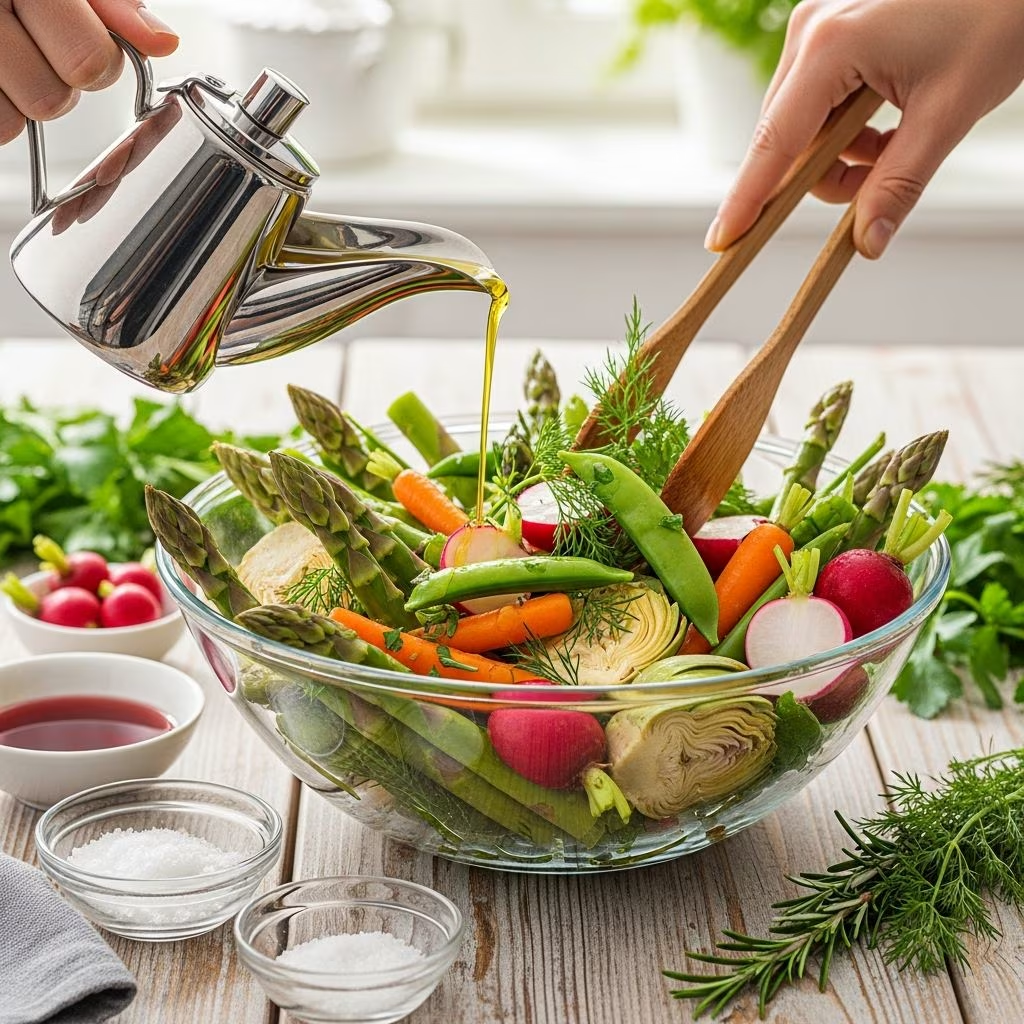
Once the marinade is prepared and vegetables are blanched, cooled, and dried, the combination process begins. Place blanched asparagus, shelled fava beans, and any additional vegetables into a mixing bowl, then drizzle the marinade over them. Using a gentle tossing motion with salad servers or clean hands ensures even coating without bruising delicate vegetables. The vegetables should be submerged or at least well-coated with marinade, though they need not be swimming in liquid.
Transfer the marinated vegetables to appropriate storage containers, ensuring they remain in contact with the marinade throughout storage. Glass containers with tight-fitting lids provide ideal storage conditions, as glass does not interact with acidic marinades and allows for visual monitoring of vegetables and marinade clarity.
Storage Duration and Flavor Development
Marinated spring vegetables develop flavor over time as the acid penetrates cell structures and aromatics gradually infuse throughout. Initial tasting after four to six hours of marinating provides one flavor profile, while extended marinating of twenty-four to forty-eight hours yields more pronounced, fully developed tastes. Most properly prepared marinated vegetables maintain excellent quality for up to two weeks when stored in the refrigerator at temperatures between thirty-five and forty degrees Fahrenheit.
The preservation properties of acidic marinades mean that properly stored marinated vegetables remain safe for consumption for extended periods. However, optimal flavor and texture typically occur within the first two weeks. After this point, vegetables may become increasingly soft as the acid gradually breaks down cellular structures, though they remain perfectly safe to consume.
Alternative Marinade Approaches
While the mustard-based marinade represents a classic preparation, numerous variations provide different flavor profiles suited to various culinary applications. An herb-forward marinade emphasizing fresh basil, mint, and lemon zest creates a lighter, more delicate finish ideal for serving alongside fish or poultry. A warm-spiced marinade incorporating garlic, ginger, and subtle heat from red pepper flakes offers an Asian-influenced flavor profile that pairs well with noodle dishes and rice preparations.
A simpler vinaigrette-based marinade using only quality extra virgin olive oil, wine vinegar, minced garlic, and fresh herbs provides maximum flexibility, allowing vegetables to showcase their natural qualities while providing basic flavor enhancement and preservation. This minimalist approach works particularly well when vegetables are of exceptional quality from farmers’ markets or local sources.
Creative Serving and Application Ideas
Marinated spring vegetables offer remarkable versatility in the kitchen, functioning as components in numerous dishes rather than merely standalone sides. Serve them as part of an antipasto platter alongside cured meats, aged cheeses, and crusty bread. Incorporate them into composed salads with fresh greens, shaved cheese, and nuts for textural contrast. Use them as pizza toppings, adding them after baking to preserve their texture and marinade flavors.
Marinated vegetables can be combined with grains such as farro, barley, or quinoa to create satisfying grain bowls that work as lunch components or light dinners. They pair beautifully with roasted or grilled proteins, providing acidic contrast to richly cooked meats. Even simple applications like arranging marinated vegetables on crostini topped with fresh ricotta create elegant appetizers suitable for entertaining.
Practical Storage and Make-Ahead Strategies
The advance preparation capability of marinated vegetables makes them ideal for busy home cooks seeking to streamline meal preparation. The marinade can be prepared a full day ahead and stored separately in a covered container, allowing quick assembly when vegetables are ready. This approach provides flexibility if unexpected schedule changes occur or if fresh vegetables arrive at different times.
Pre-blanched and cooled vegetables can be stored in covered containers for up to three days before marinating, though they should not be combined with marinade until ready to begin the flavor development process. By preparing individual components in advance and combining them strategically, home cooks can maintain flexibility while maximizing fresh vegetable availability during peak spring season.
Nutritional Considerations and Health Benefits
Spring vegetables including asparagus and fava beans offer substantial nutritional benefits that are preserved and sometimes enhanced through the marinating process. Asparagus provides significant quantities of vitamins K and folate, while fava beans offer plant-based protein and fiber. The brief blanching process employed in marinade preparation minimizes nutrient loss compared to longer cooking methods, while the acidic marinade may enhance mineral bioavailability through chelation effects.
The preservation properties of marinated vegetables mean that seasonal produce can contribute nutritional value throughout the year, though freshly prepared marinated vegetables offer optimal nutritional density compared to extended storage preparations. The oil component of the marinade facilitates absorption of fat-soluble vitamins A, D, E, and K naturally present in fresh vegetables.
Troubleshooting Common Marinating Challenges
Over-blanched vegetables may become mushy and lose their appeal despite successful marinating. Prevention requires careful timing and immediate ice bath cooling. Under-blanched vegetables retain raw, squeaky textures that resist marinating and may present food safety concerns if vegetables were not cooked sufficiently to eliminate potential pathogens. Achieving tender-crisp texture requires practice and understanding of specific vegetable varieties used.
Bland marinades result from insufficient seasoning or low-quality vinegar and oil selections. Tasting the marinade before combining with vegetables allows for adjustment of salt, acid, and aromatic components. Marinated vegetables that become excessively soft during storage indicate either over-marinating time, excessive acid concentration, or vegetables that were over-blanched initially.
Seasonal Availability and Substitutions
While asparagus and fava beans define spring vegetable season in many regions, local availability varies significantly based on geography and climate. Alternative spring vegetables suitable for marinating include tender young artichoke hearts, fresh peas, spring onions, and delicate leafy greens. Adjusting cooking times to account for different vegetable densities and textures ensures that mixed marinated vegetable preparations achieve uniform quality.
FAQ Section
How long should vegetables marinate before serving? Initial flavor development occurs within four to six hours, though more pronounced flavor develops after twenty-four hours. Most preparations reach optimal flavor balance between twenty-four and forty-eight hours of marinating.
Can marinated vegetables be frozen? Marinated vegetables may be frozen, though texture changes occur as ice crystal formation affects cell structure. Thawed vegetables work best in preparations where texture is less critical, such as grain bowls or soup components.
How should marinated vegetables be served if they’ve been refrigerated? Remove marinated vegetables from refrigeration thirty minutes before serving to allow them to reach room temperature, which optimizes flavor perception and texture appreciation.
What happens if the marinade becomes cloudy? Some cloudiness results from natural vegetable starches and proteins and does not indicate spoilage. If odor or visible mold appears, discard the entire preparation.
References
- Spring Asparagus and Fava Salad with Mustard Vinaigrette — Honest Cooking. 2024. https://honestcooking.com/spring-asparagus-and-fava-salad-with-mustard-vinaigrette/
- Sautéed Asparagus with Fava Beans — Sharon Palmer, MS, RDN. 2024. https://sharonpalmer.com/fava-bean-asparagus-saute-vegan-gluten-free/
- Asparagus With Fava Beans — Edible Communities. 2024. https://ediblecommunities.com/recipes/bacon-asparagus-fava-beans/
- Spring Ragout Recipe — 101 Cookbooks. 2024. https://www.101cookbooks.com/archives/spring-ragout-recipe.html
- A Medley That Evokes Spring — Cooks Without Borders. 2024. https://cookswithoutborders.com/new-story/spring-vegetables
- Vignarola: A Celebration of Spring Vegetables — Our Italian Table. 2024. https://ouritaliantable.com/vignarola-celebration-spring/